Thursday, April 27, 2023

Clubhouse needs to fix things, and today it cut more than half of staff

Clubhouse, a once skyrocketing social audio app built by Paul Davison and Rohan Seth, has laid off more than half of its staff. The startup’s co-founders made the decision in response to customer habits changing in a post-COVID world and remote work complexities, according to a blog post.

Those who were impacted will receive severance and continued healthcare coverage for the next few months. A spokesperson for Clubhouse declined to comment on the number of people impacted by today’s workforce reduction or the number of employees who remain at the company. Last October, Davison told TechCrunch that Clubhouse had close to 100 employees.

Layoffs come under a year since the company last laid off a portion of staff as part of another restructuring. The company then told TechCrunch that “a few individuals have decided to pursue new opportunities and a handful of roles were eliminated as part of streamlining our team. We are continuing to recruit for roles in engineering, product and design.”

The social app, backed with more than $100 million in venture capital and once valued at $4 billion by investors including Andreessen Horowitz, Tiger Global and Elad Gill, took a different tone in today’s larger layoff.

“As the world has opened up post-Covid, it’s become harder for many people to find their friends on Clubhouse and to fit long conversations into their daily lives. To find its role in the world, the product needs to evolve,” the co-founders wrote in a blog post. They went on to write that the business has tried to change with its current team size but has been unable to due to the size of the team. “It’s difficult for us to communicate the strategy to cross-functional teams when it’s evolving by 1% each day, or to make quick changes when each surface is owned by a different product squad. Being remote has made this especially challenging for us.”

Unlike many entrepreneurs, the co-founders did not cite the economy when announcing the layoffs. Instead, Clubhouse seems to be responding to complexities that arise from overhearing and a remote work environment, both in running a business internally, and building something people want externally.

“Our belief is that as the world opens up, a couple things will happen: there will be more of an acute need to have a place where you can go and be among friends and meet their friends and have great conversations. I also think that an audio product is designed to be hands-free, designed so that you can multitask…I think the trends we’re building toward are permanent,” Davison shared on stage last year at TC Disrupt, offering a window into his product philosophy around social audio and remote work.

On stage he also responded to the ongoing critique and scrutiny around Clubhouse’s fall from hype. “The nice thing about having done this a few times before is that you tend not to get caught up in your own hype. When things are going like gangbusters, you sort of say that’s gonna come down when, when things are hard, you say we’re going to figure this out.”

Going forward, Clubhouse’s smaller team will be focused on building “Clubhouse 2.0.”

“As remote living, empty scrolling and Zoom meetings become more common, this is truer than ever. We have a clear vision for what Clubhouse 2.0 looks like and we believe that with a smaller, leaner team we will be able to iterate faster on the details, build the right product and honor our teammates who helped us get here,” today’s blog post says. TechCrunch reached out to a number of Clubhouse’s investors and many expressed not yet knowing what the remaining team there is cooking up. Last year, Davison mentioned the movement of Clubhouse activity away from “live podcast” and broadcasting behavior and into private rooms, intimidate internal conversations.

The business still has time to offer further answers. Clubhouse did confirm that it has “years of runway left” and now has more as a result of today’s layoffs. The company is not enacting a hiring freeze as of yet, a spokesperson said.

Those with knowledge about Clubhouse can reach Natasha Mascarenhas on Twitter @nmasc_ or on Signal at +1 925 271 0912. Anonymity requests will be respected.  

Clubhouse needs to fix things, and today it cut more than half of staff by Natasha Mascarenhas originally published on TechCrunch




Chief, a professional network for women leaders, cuts staff amid restructuring effort

Chief, a professional network designed for women in leadership, has cut 14% of staff, or 43 jobs today, saying in an email seen by TechCrunch that the move is a response to the economy and that the outfit is restructuring to further focus on member experience.

The layoff largely hit Chief’s U.S. employees as the business’s newly launched U.K. presence is smaller. Around 262 employees remain at the company. Those who were impacted received at least 12 weeks of severance and continued healthcare insurance. Chief closed its New York office for today as employees process the news.

Chief co-founders Lindsay Kaplan and Carolyn Childers wrote the email to staff explaining the decision. Beyond attributing the “challenging macroeconomic environment” that has plagued a vast number of tech startups over the past year, the duo highlighted four priorities for the business going forward: more in-person opportunity, personalization to support members, simplification of the digital experience, and lastly, to continue “to embed diversity, equity, inclusion, and belonging into all aspects of the Chief experience.”

The last priority that was emphasized by the co-founders – to bring diversity into all of the Chief experience – comes less than one month after the New York Times published a story looking into turmoil at the business over some members’ perspective that Chief should speak up on social and economic issues that impact marginalized women. Around 33% of Chief’s membership base identifies as coming from a diverse background, down from 35% in October. The company recently hit 20,000 members.

At TechCrunch Disrupt last year, Chief’s co-founders spoke to the “extra scrutiny” that mission-oriented companies receive. “For Lindsay and I, that has always just been like, the forefront of everything that we have thought about as we thought about the teams and the culture and what we want to build,” Childers said. “We have actually felt that more because we are a mission-based company, than being women CEOs or founders.”

Kaplan added that the extra scrutiny “doesn’t feel like a ticking time bomb. It’s us making sure that we’re always walking the walk and practicing what we preach.”

Chief clearly wants staff, members and the world to know that it is focused on experience. The workforce reduction comes one week after the business announced that it hired another executive: Sujean Lee, former chief experience officer at HypeBeast, as Chief’s first ever chief experience officer.

The company hit a $1.1 billion valuation in a matter of three years, last raising a $100 million Series B round led by Alphabet’s CapitalG in 2022. Like many others, valuations have been harder and harder to defend as the market worsens. For example, 70% of Chief members see their membership, which costs up to $7,900 annually, paid for by employers. Now those same employers are looking for expenses to cut, and slashing workforces themselves.

Chief declined to comment on the layoff and financials beyond the e-mail.

Chief, a professional network for women leaders, cuts staff amid restructuring effort by Natasha Mascarenhas originally published on TechCrunch



Replit, the web-based IDE developing a GitHub Copilot competitor, raises $100M

Investors continue to pump money into generative AI tech. Case in point, Replit, an IDE startup developing a code-generating AI-powered tool called Ghostwriter, this week raised nearly $100 million ($97.4 million) at a $1.16 billion post-money valuation.

Andreessen Horowitz led the round — a Series B extension — with participation from Khosla Ventures, Coatue, SV Angel, Y Combinator, Bloomberg Beta, Naval Ravikant, ARK Ventures and Hamilton Helmer.

“We are relentless in our mission to empower a billion software developers,” Replit founder and CEO Amjad Masad said in a statement, adding that the new funds — which bring Replit’s total raised to over $200 million — will be put toward further developing the core product experience, expanding Replit’s cloud services and “driving innovation” in AI.

“AI has already brought that future closer,” Masad continued. “We look forward to expanding our offerings for professional developers.”

Based in San Francisco, Replit was co-founded by programmers Amjad Masad, Faris Masad and designer Haya Odeh in 2016. Before creating Replit, Masad worked in engineering roles at Yahoo and Facebook, where he built software development tooling.

Replit

Replit offers a web-based IDE for software development.

Replit offers an online, collaborative IDE that supports a range of programming languages, including JavaScript, Python, Go and C++. With Replit, users can share a workspace with one or many users and see real-time edits across files, message each other and debug code together. Beyond that, users can share projects, ask for help, learn from tutorials and use templates.

But perhaps its headlining feature is Ghostwriter, a suite of features powered by an AI model trained on publicly available code. Ghostwriter — much like GitHub’s Copilot — can make suggestions and explain code, considering what users type and other context from their accounts, like the programming languages they’re using.

Ghostwriter appears to be the driver behind Replit’s recent explosive growth, leading to a partnership with Google Cloud and a user base eclipsing 22 million developers. But like all generative AI tools, it comes with risks — and potentially legal consequences that have yet to fully play out in the courts.

Microsoft, GitHub and OpenAI are being sued in a class action lawsuit that accuses them of violating copyright law by allowing Copilot to regurgitate sections of licensed code without providing credit. Liability aside, some legal experts have suggested that AI like Copilot could put companies at risk if they were to unwittingly incorporate copyrighted suggestions from the tool into their production software.

It’s unclear whether Ghostwriter, too, was trained on licensed or copyrighted code. But Replit does note that the code Ghostwriter suggests might contain “incorrect, offensive or otherwise inappropriate” strings.

That includes insecure code. According to a recent study out of Stanford, software engineers who use code-generating AI systems are more likely to cause security vulnerabilities in the apps they develop. While the study didn’t look at Replit specifically, it stands to reason that developers who use it would fall victim to the same.

Replit has its work cut out for it, that’s all to say.

Replit, the web-based IDE developing a GitHub Copilot competitor, raises $100M by Kyle Wiggers originally published on TechCrunch



There’s a Disrupt pass for every role and budget

More than 10,000 people from across the country and around the world will converge on San Francisco for TechCrunch Disrupt 2023 on September 19–21. A startup crowd that size has a wide range of roles, interests and budgets, and we’re proud to offer six different pass types — plus a group option — to meet those diverse needs.

Pick the perfect pass to TechCrunch Disrupt 2023

Let’s break it down so you know exactly which pass type suits your specific circumstances. A friendly heads-up: Buy the pass that’s right for you right now and save — prices go up May 12 at 11:59 p.m. PDT.

Expo+ Pass: This three-day, limited-feature option lets you access the expo floor where you can meet, greet and network with the Startup Battlefield 200 companies — our curated cohort and the only early-stage startups allowed to exhibit. Check out their cutting-edge technologies, strike up conversations and make meaningful connections. Hear them pitch live from the Showcase Stage. Attend Partner Roundtable and Partner Breakouts. Limited event app features. Price now: $45. After May 12: $195.

General Admission Pass: Perfect for tech enthusiasts, marketers, other industry insiders or anyone interested in exploring or joining the startup world. This three-day option gives you access to 1:1 networking through the event app, curated content on every stage — including the six new industry stages. Explore the exhibition floor and attend all breakouts, small group roundtables, networking events and parties. Includes access to session recordings and transcripts. Price now: $450. After May 12: $1,250.

Founder Pass: For verified early- and late-stage founders only. You receive the same benefits of a General Admission Pass plus access to our exclusive investor/founder networking lounge, VC roundtables and VC Office Hours. Price now: $350. After May 12: $1,175.

And now for something new this year: TC Include Founders. We created this program to promote attendee diversity by making our events more accessible to minority and nontraditional founders. Now through August 18, eligible founders can save 75% off the current Founder Pass rate. Ticket supplies are limited, so apply ASAP. Who’s eligible?

  • Founders with disabilities
  • Founders who are active military or veterans
  • Founders who are minorities
  • Founders who identify as women
  • Founders who are LGBTQ+
  • Founders who are age 65 and over

Investor Pass: For verified investors only. You receive the same benefits of a General Admission Pass plus access to our exclusive investor/founder networking lounge, investor-only reception and investor-only workstations. Price now: $450. After May 12: $1,250.

Nonprofit Pass: For verified nonprofit, military and government employees only. You receive the same benefits of a General Admission Pass. Price now: $95. After May 12: $275.

Student Pass: For verified students or recent graduates only. You receive the same benefits of a General Admission Pass. Price now: $95. After May 12: $275.

Bundle Pass: Available for select pass types. Save 15% when you purchase for a group of 4 to 9 people. Need passes for a group of 10 or more? Email events@techcrunch.com for assistance.

TechCrunch Disrupt 2023  takes place on September 19–21 in San Francisco, and we have the perfect pass for wherever you fit into the startup ecosystem. Remember, prices go up on May 12 at 11:59 p.m. PDT. Buy your pass now and save — then get ready to dive into everything you need to drive your business to the next level and beyond.

Is your company interested in sponsoring or exhibiting at TechCrunch Disrupt 2023? Contact our sponsorship sales team by filling out this form.

There’s a Disrupt pass for every role and budget by Lauren Simonds originally published on TechCrunch



Event platform POSH wants to democratize event planning

POSH is an event management and ticketing platform for all users to host events large or small, regardless of if you’re an event organizer, promoter, or if you just want to charge your friends a cover for drinking all the expensive alcohol at your birthday party.

POSH announced its public launch Thursday after being in beta since October 2020.

Alongside the launch, the company also announced its $5 million seed round, co-led by Companyon Ventures and EPIC Ventures, with participation from Day One Ventures, Pareto Holdings, DoNotPay founder Joshua Browder and others.

“We are thrilled to invest in [POSH co-founders Avante Price and Eli Taylor-Lemire] as they continue to redefine the live events management experience for organizers and attendees,” said Tom Lazay, co-founder and general partner of Companyon Ventures, in a statement.

The funding will go towards expanding its team, working on new features and updating its mobile app.

Currently, POSH has an iOS app for event curators only. The app will launch on Android devices next month. In June, the POSH is adding updates that will focus on features for the attendee/eventgoer side of the platform, including an explore tab and social elements.

POSH wants to be a “Shopify for all events,” said Price (22) and Taylor-Lemire (22) when speaking with TechCrunch. The platform is designed to provide an all-in-one, self-serve platform for organizers to create white-labeled event pages, send out unlimited text blasts and emails to eventgoers, and access custom payment plans, community management features and analytics like attendee demographics, tracking link data and more.

Like Shopify, POSH has integrations with third-party apps, including MailChimp, Stripe and Twilio. Additionally, the platform has an API so organizers can list POSH events on third-party marketplaces like EDMTrain. There’s also a webhook feature that gives users real-time updates about transactions.

One differentiator from other event platforms is that POSH users can customize their own “marketplace” of sorts to fit their brand. This will likely be valuable for smaller, independent event organizers who want to scale their businesses.

“If you’re a much bigger brand and you go on Dice, Ticketmaster or Eventbrite, the ticketing platforms’ branding is all over your event page. And your branding is basically not seen at all,” Taylor-Lemire said. “When we go and ask attendees that go out using platforms like Dice or Ticketmaster, ‘Hey, do you know the event production company that put together this event?’ They usually are just like, ‘No I just purchased the tickets on Dice.’”

Taylor-Lemire added that POSH has more “subtle branding” so attendees can focus on the organizers themselves.

Image Credits: POSH

The platform offers various tools for users to customize their event page. This includes personalizing the background appearance with accent colors as well as adding a flyer, venue photos, artist line-ups, website code embeds, custom aerial seat maps and more.

Event organizers get a profile where they can promote all their events in one place. There’s a section at the top that lists the total number of events as well as how many eventgoers have attended.

POSH also has options where organizers can approve an attendee before inviting them. In addition, they can request attendees to RSVP with their social media info—whether that be a LinkedIn, Instagram or Twitter account. For extra security, they have the option to lock the event with a password.

Image Credits: POSH

Another notable feature is POSH’s proprietary “Kickback” tool. The attendee-to-affiliate conversion tool feature allows guests to invite their friends to events and receive a commission on ticket sales. The affiliate receives a link that they then share. They can connect their debit card to get instant cash back. The organizer sets the reward percentage. For example, affiliates could get 20% of the ticket order value.

The feature is a sure way to incentivize more ticket sales, however, POSH also wants to show attendees that they can become event organizers too.

“If you’re a micro-influencer… you get that soft introduction to bringing people to an event. And then you can use our tools to actually start your own event brand. That’s kind of the goal with this tool,” Taylor-Lemire said.

“Attendees usually don’t just go from going to a bunch of events to throwing a massive party. There’s some intermediary steps like you become a promoter, or you work as a photo/video person for a company or a DJ– you can monetize your social influence,” he added.

Right now, attendees can only see the Kickback offer if they’ve received a link to the event. Eventually, POSH plans to include the offer on the explore tab for everyone to see.

POSH allows attendees to chat and interact with one another before and after the event via the platform. Party RSVP website Partiful has a similar feature that lets users comment directly on the event page.

However, POSH is also considering adding a monetization feature where attendees can anonymously “like” names on the guest list, Price explained. The attendee would have to pay a fee in order to see who liked them. The concept is interesting, yet we’re not sure if many people would want to pay for that type of feature.

Avante Price (left) and Eli Taylor-Lemire (right) Image Credits: POSH

Notably, POSH claims it has over half a million users and $30 million in processed tickets. While the company declined to share valuation or revenue run rate, it says it recently achieved profitability.

“We’re very excited for the launch and having our story told as young African American founders. There were very few role models for us when we were getting into space… to get to where we are today was an uphill battle,” Taylor-Lemire said. “And so, we want to inspire any other young founders out there like us who were passionate about building but really didn’t know how to go about the venture or tech side of things that it is possible…You can make things happen.”

POSH launched in 2019 as an events company after Price and Taylor-Lemire became frustrated working as freelancers in NYC nightclubs. Price was the DJ and Taylor-Lemire handled the photography and video content.

“People were paying us late and giving us false promises and all these other things,” Price said. “The biggest thing was a lot of these brands were run by older people who didn’t really understand what the college kids wanted, whether it’s the vibe, etc.

Price and Taylor-Lemire initially created POSH to host events for college students and young professionals.

“You would apply with your LinkedIn or Twitter, [tell us] what value you bring to the community, we accept, you’d come to our weekly events. It’s still a party. It wasn’t a networking experience by any means. But it was a little bit more classy, and that’s kind of where the name POSH came from,” Price added.

The company soon evolved into the management and ticketing platform it is today.

While Price and Taylor-Lemire are only 22 years old, respectively, the two NYU dropouts have experience in both the tech world and the entertainment space.

Price had quite an early start in entertainment, to say the least. He was five years old when his father, a local DJ, taught him how to DJ on vinyl.

Admittedly at first, we found it hard to believe that a child would know how to mix and scratch a turntable. During the TechCrunch interview, Price showed us a YouTube video of him doing just that.

As a high schooler, he started his first startup called ChoreBug, a TaskRabbit-like service where users could hire local high schoolers in the area to do everyday tasks.

Meanwhile, Taylor-Lemire was fascinated with YouTube growing up and eventually found his way into music video production, shooting for local rappers in his area.

In high school, he co-founded a startup called Stumped, a school community-building app.

He later started a freelance photo agency, producing content for fashion magazines and working with Sony and ROC Nation-signed artists. Taylor-Lemire also created Music Video Express, a service where people could book videographers in the area.

Updated 4/27/23 at 9:18 a.m. ET with the removal of sentence, “Users can host events with a maximum of 10,000 guests.” There is no maximum number of guests, event organizers can host as many attendees as they want.

Event platform POSH wants to democratize event planning by Lauren Forristal originally published on TechCrunch



Easyship strikes agreement to support eBay’s new International Shipping program

Easyship, the New York- and Singapore-based startup that enables e-commerce sellers to integrate with more than 250 courier services, announced today it has expanded its partnership with eBay to support eBay International Shipping, a newly-launched program. This means that buyers can now access more regional and express shipping solutions for international destinations through eBay’s platform.

Easyship’s API has already been used in several services on eBay, including label generation, cross-border compliance and tracking in the U.S. It’s also supported domestic and international shipments in Canada and Australia since 2019.

TechCrunch last covered Easyship when it joined the Shopify Plus Technology Partner Program in 2020, at that time making it the only shipping app in Asia for Shopify Plus.

The startup was founded in 2015 by Lazada veterans Tommaso Tamburnotti and Augustin Ceyrac, and former banker Paul Lugagne Delpon, and its backers include Lazada founder Maximilian Bittner and former Richemont CEO Richard Lepeu.

According to the Business of Apps, eBay made about $9.7 billion in revenues in 2022, half of which came from outside the United States. Seven million of eBay’s 25 million sellers are based in the U.S., and eBay’s partnership with Easyship will enable them to start shipping internationally.

In a statement, eBay US vice president Adam Ireland said, “With eBay International Shipping, we’re making global connections more accessible, affordable and profitable, significantly increasing the volume of items available to 200+ countries. Our partnership with Easyship makes it even easier for our sellers to tap into a universe of a new business opportunities.”

Easyship strikes agreement to support eBay’s new International Shipping program by Catherine Shu originally published on TechCrunch


Capital efficiency is the new VC filter for startups

The VC landscape has undergone a tectonic shift in the past year. A year ago, 90% of VC meetings with startups would have been about growth, with little regard for how that growth would be achieved.

It didn’t matter whether you were burning money left and right: As long as you had chubby growth numbers, a strong story and charisma, your round was pretty much guaranteed.

But as cash becomes more expensive, investors are giving more and more attention to resource-focused, shrewd founders who can handle the hard times ahead. In 2023, most VC meetings focus on whether a business can deliver sustainable, efficient growth during the downturn. And, as far as our anecdotal evidence is concerned, most founders haven’t quite adjusted to the change.

We repeatedly see startups at all stages failing to raise at the same multiples and velocity they used to because, by current standards, they are terribly capital inefficient and may not even be aware of that.

In this article, we will explain why that happens, and whi h metrics to track to understand where you stand on the capital efficiency scale. We also explore potential solutions that have proven helpful to companies we worked with.

But first, let’s talk about how you shouldn’t measure your capital efficiency.

The biggest mistake in measuring your capital efficiency

Understanding where you stand as a business boils down to the metrics you use and how well you can interpret them. In this respect, capital efficiency remains the blind spot for most founders, who rely on a single metric to draw conclusions. This figure can be found by dividing Customer Lifetime Value by Customer Acquisition Cost (LTV:CAC ratio).

The biggest problem with treating LTV:CAC as the holy grail of capital efficiency boils down to its oversimplified and often straight-up misleading nature. In fact, the rate at which this metric gets misconstrued by SaaS companies has even started conversations about the need to retire the metric altogether.

The biggest problem with treating LTV:CAC as the holy grail of capital efficiency boils down to its oversimplified and often straight-up misleading nature.

For this method to be foolproof, you must use reliable retention data, which can be hard to come by for startups with little historical data. As an example, we worked with several startups who calculated their CAC wrong or based LTV calculations on unrealistic churn assumptions in absence of historical data. This, in turn, showed “fake good,” bogus LTV:CAC ratio numbers.

Whether or not SaaSs should ditch the LTV:CAC metric entirely is debatable, but the point still stands: you can’t measure your capital efficiency only that way. Today, investors zoom in on other efficiency metrics that paint a more reliable and comprehensive picture of the startup’s capital efficiency, and so should you. Let’s see what they are.

Look into your CAC Payback

CAC Payback is one of the focal and most telling metrics you can turn to if you need to understand how efficiently you use your capital. It shows how long it will take for your customer acquisition costs to pay off.

CAC Payback = Average CAC per customer / Average ARR per customer

How long should your payback time be? Ideally – as short as possible, with specific ballparks depending on your industry and business model. According to Bessemer Venture Partners, here are the benchmarks for B2B SaaS that investors will measure your payback against:

B2B SaaS CAC Payback benchmarks
SMB Mid-Market Enterprise
Good 12 18 24
Better  6 – 12  8 – 18 12 – 24
Best   < 6  < 9  < 12

The importance of staying within these benchmarks is vital when you compete with companies in the same space. For example, while Asana takes almost five years to recoup its CAC, Monday achieves this 2.3 times faster, with a CAC payback of 25 months.

Unfortunately, we see startups falling outside of these benchmarks all the time. One of the startups we worked with turned out to have a CAC payback of over 35 months. Just think about it: almost three years to break even on a single customer acquisition!

How do you fix a situation like this? There are a few key steps that will bring your payback time down:

Uncover sagging areas

Capital efficiency is the new VC filter for startups by Walter Thompson originally published on TechCrunch


Wednesday, April 26, 2023

Bastion is an all-in-one cybersecurity solution for small businesses

Meet Bastion, a French startup that was created in October 2022 to help small companies tackle cybersecurity risks without too many complexities. Created by former Palantir employees, the company has already raised $2.8 million.

What makes Bastion different from other cybersecurity startups is that it wants to be your first and last cybersecurity subscription. It bundles several different products that all revolve around cybersecurity risks with a software-as-a-service approach.

Frst, Global Founders Capital, Kima Ventures and Motier Ventures invested in the company, as well as several business angels, such as Denis Duverne, Joshua Motta, Renaud Deraison and Gaëlle Olivier.

At Palantir, the four co-founders Arnaud Fournier, Arnaud Drizard, Sébastien Duc and Robin Costé were already working on cybersecurity in one way or another. Some of them were part of a small team in charge of cybersecurity excluding governments and public administrations. One of them was in charge of anti-fraud offerings for big banks and insurance companies.

“Companies we talk with tell us: ‘We have an insurance broker, an accountant, why would we have multiple cybersecurity products?’” co-founder and CEO Arnaud Fournier told me.

When you want to lock your bike in a big city, you can either use three different locks to make sure the wheels are properly secured and the bike itself is attached to a pole. This way, you can be near 100% sure that your bike won’t get stolen.

Or you can buy a proper U-lock to make sure that it is more securely attached than most bikes. And this is Bastion.

Essentially, Bastion’s ideal customer just wants to make sure that their company is safe and there isn’t a big vulnerability that could end up creating a big mess down the road.

Right now, Bastion has four different modules. First, the startup runs phishing simulation tests because many security issues come from employees handing out credentials. With this training module, Bastion competes with Riot.

Second, Bastion scans your infrastructure and web applications to make sure that your attack surface is as small as possible. The company hands you a list of fixes to improve your configuration.

Third, Bastion scans and protects endpoints, such as employee laptops. “We provide an EDR solution, which is a sort of improved antivirus tool with a team that looks at what’s happening in real time,” Fournier said. EDR stands for ‘endpoint detection and response’. For this product, Bastion partners with a white-label EDR provider.

And finally, Bastion wants to help companies monitor incoming emails with its fourth module. Right now, clients can forward suspicious emails so that they know for sure whether it’s a legit email or not. At some point, the startup also wants to help you set up filters on incoming emails so that they never even appear in your employees’ inboxes.

“For some of these products, we found that existing products on the markets were very expensive for what they offered. We leverage open-source building blocks or we re-build 80% of what’s needed,” Fournier said.

Bastion offers the entire suite for around €10 per employee per month. This isn’t cheap, but some companies can choose to subscribe to a portion of what Bastion has to offer.

Interestingly, the company doesn’t plan to sell its product directly to small companies. Instead, the company partners with outsourced security service providers, banks, insurance companies and more.

In the coming months, Bastion plans to build a network of partners that are already helping small and medium businesses and that can also start selling Bastion to their own customers. And, of course, there will also be new features and product improvements.

The four co-founders behind Bastion

Image Credits: Bastion

Bastion is an all-in-one cybersecurity solution for small businesses by Romain Dillet originally published on TechCrunch


Daily Crunch: Lookout sells consumer security segment for $223M to become ‘pure-play enterprise company’ 

To get a roundup of TechCrunch’s biggest and most important stories delivered to your inbox every day at 3 p.m. PDT, subscribe here.

Hi, folks! It’s Wednesday, and we’re running around like crazy, so let’s get to it! Wooooo!

Christine and Haje

The TechCrunch Top 3

  • Can you see it?: Enterprise security company Lookout is selling its consumer cybersecurity business to F-Secure in a $223 million deal that Paul writes will “now evolve [Lookout] into a pure-play enterprise company” that will focus on mobile endpoint security and cloud security.
  • Hello?: Christmas comes early for iPhone and Windows users — iMessage finally comes to Windows 11 with the global rollout of Phone Link for iOS, reports Sarah.
  • You’ll definitely notice this car go by: China’s MG Motor debuted what looks like a green highlighter on wheels in India. But seriously, it is a cute compact hatchback electric vehicle meant to navigate the country’s tight mobility needs. Jagmeet has more.

Startups and VC

Greycroft, the self-styled “seed-to-growth” venture capital firm, today announced the closing of over $1 billion in capital commitments across new funds, Kyle reports. The firm’s two flagship vehicles, Greycroft Partners VII and Greycroft Growth IV, closed on more than $980 million, according to co-founder and managing partner Dana Settle — cash that’ll be put toward investing in both early- and growth-stage enterprise and consumer businesses.

In light of the micromobility industry’s growing popularity, the Japanese government has been proactive in loosening e-scooter regulations to further stimulate this sector, Kate reports. Starting this July, amendments to the country’s Road Traffic Act will permit e-scooter users to ride without driver licenses or helmets, as long as they maintain a maximum speed of 20 kilometers per hour. Luup has now amassed a total of $68 million in equity, debt and asset financing to date, at what sources said valued the firm at more than $100 million.

Let’s take a look at the best of the rest:

Ask Sophie: My STEM OPT expires in 30 days, what are my options?

lone figure at entrance to maze hedge that has an American flag at the center

Image Credits: Bryce Durbin/TechCrunch

Dear Sophie,

My STEM OPT expires in a month, and my company did not register me in this year’s H-1B lottery.

I’m not sure what options I have now. Help!

— Sleepless in Silicon Valley

Three more from the TC+ team:

TechCrunch+ is our membership program that helps founders and startup teams get ahead of the pack. You can sign up here. Use code “DC” for a 15% discount on an annual subscription!

Big Tech Inc.

There must be a large number of cat fans among our readership who also need help finding their cats around the house, because this story really went viral today. Tile launches a new cat tracking tag with three-year battery life, Ivan reports. Or maybe you are just impressed by a long battery life. No judgment.

Speaking of fans, there must also be a lot of “Black Mirror” fans excited for the new sixth season that will premiere in June. For those of you who have not seen this show yet, Lauren reports that “each episode of the satirical anthology series comments on society in some shape or form, such as the issues centered around webcam hackers, identity theft, weird robotic dogs and the toxicity of social media.”

And we have five more for you:

Daily Crunch: Lookout sells consumer security segment for $223M to become ‘pure-play enterprise company’  by Christine Hall originally published on TechCrunch


Grubhub, Joco team up to give NYC delivery workers access to e-bikes

Grubhub is launching a pilot program with Joco, a docked e-bike rental platform based in New York City, to provide at least 500 gig delivery workers with free access to e-bikes.

Ensuring that delivery workers have access to high-quality e-bikes has been a major discussion point in NYC after a spate of battery fires. Grubhub’s partnership with Joco comes after the delivery platform issued a $100,000 grant to the FDNY Foundation to help spread awareness and safe practices for using lithium-ion batteries.

Grubhub is also actively working to establish a battery recycling program to take in non-certified e-bikes, the company said.

“Delivery workers are essential to thousands of communities and businesses, including Grubhub’s, and helping to ensure their safety – and the safety of all New Yorkers – is a top priority,” said Amy Perlik Healy, vice president of government relations at Grubhub, in a statement. “These new partnerships are an expansion of our ongoing work to address safe use of e-bikes and handling of batteries by delivery partners, and we will explore any reasonable means to prevent tragic fires from occurring in the future.” 

Grubhub’s pilot with Joco will begin in mid-June, according to the companies. Certain Grubhub delivery workers will get Joco credits that they may use for partial day, daily or weekly e-bike rentals. The workers will have access to Joco’s 55 stations and 1,000 bikes across Manhattan, Brooklyn and Queens.

Grubhub also plans to sponsor a Joco rest stop hub for delivery workers in downtown Manhattan, where they can relax, use the bathroom, charge their phones, switch out bikes with dead batteries for fully charged ones and access delivery rider gear.

Joco says its battery charging cabinets are fireproof and have been tested at a nationally recognized testing laboratory. The batteries are certified to IEC 62133 standard, the company says.

Joco originally launched in NYC in 2021 as a Citi Bike competitor. The startup tried to sidestep Lyft-owned Citi Bike’s exclusive vendor agreement with the Department of Transportation by placing its docked bikes in private parking lots, rather than on public property. However, Lyft sued the budding company, so Joco decided to pivot to target gig economy workers.

The initial pilot will run for six months, and will hopefully expand from there, according to Jonathan Cohen, co-founder of Joco.

“We want to help the delivery community as much as possible, and we want to ensure that delivery riders can get safe vehicles in an easy manner, which is not something that’s easy in today’s environment,” Cohen told TechCrunch.

Grubhub, Joco team up to give NYC delivery workers access to e-bikes by Rebecca Bellan originally published on TechCrunch


Revolut’s valuation troubles signal a stormy horizon for less-profitable neobanks

While the banking world watches American lender First Republic publicly convulse after its earnings report detailed a widespread evaporation of its deposit base, the startup world of neobanks is taking blows as well.

Earlier this week, Revolut, a highly-valued, UK-based neobank saw its valuation decline by some 46% in the eyes of one of its backers.


The Exchange explores startups, markets and money.

Read it every morning on TechCrunch+ or get The Exchange newsletter every Saturday.


Given that Revolut last raised $800 million at a $33 billion valuation in mid-2021, it stands to reason that it was likely overvalued at the time — show us a nine-figure startup round from those times that fits neatly against today’s valuation marks and we’ll buy you a smoothie.

But Revolut getting such a sharp valuation cut nearly two years after it was last priced made us sit up and take notice.

There was a time when the neobank-for-x-market was amongst the most popular startup models, after all. Mountains of capital were invested into dozens of global startups looking to reinvent or at least revamp consumer and SMB banking. It even led to some liquidity, including the massive Nubank IPO and its resulting 11-figure valuation.

Revolut’s revaluation raises a few questions: How much trimming is there left to do in the fintech world? And, are we likely to see something similar more generally in the neobanking startup sector?

This morning, we’re parsing what happened in venture in Q1 2023 as well as a handful of data points from F-Prime’s fintech index and resulting reports. Then, we’ll cover the most recent neobank financial results we have, and come to a conclusion on how much pain — or how little — neobanks can expect in the months ahead. To work!

Subscribe to TechCrunch+Money in, money out

We have fintech funding data from CB Insights for Q1 2023, but it comes with a huge asterisk. Without additional context, funding to fintech startups increased 55% from the fourth quarter of 2022, making for a global tally of $15 billion.

The caveat, though, is that Stripe’s latest $6.5 billion raise alone accounted for more than a third of that sum. If you exclude that round, the tally comes down to $8.5 billion, which represents a 12% quarter-on-quarter decline.

That’s the big picture. Looking at the fintech cohort more closely, we are curious about which categories outperformed others. Data of that kind on private companies is hard to come by, but we have some interesting insights on public companies.

Revolut’s valuation troubles signal a stormy horizon for less-profitable neobanks by Anna Heim originally published on TechCrunch


Register now to attend today’s filming of TechCrunch Live with ClassDojo and SignalFire

Register for this TechCrunch Live right here. The show broadcasts live today, Wednesday, April 26 at 12 p.m. PDT.

Sam Chaudhary takes his time. The founder of ClassDojo, an edtech consumer app that focuses on student classrooms, spent eight years building the company before introducing a formal revenue model. All while raising over tens of millions in venture capital from elite Silicon Valley investors and eyeing a big mission: become the brand families can turn to when they think about a child’s education.

Today, ClassDojo has raised over $200 million in venture capital. On this episode of TechCrunch Live taking place on April 26 at 12 p.m. PDT, we’ll get into how Chaudhary played the long-game in edtech and what he’d do differently if he was starting all over again. We’ll talk about opportunity in the sector in a post-pandemic landscape — and how he landed investor patience. Chaudhary will speak about his entrepreneurial journey with his investor Chris Farmer, the founder and CEO of SignalFire.

Farmer leads SignalFire, a seed-stage venture firm that recently raised $900 million across four new funds. He describes SignalFire as “the only venture firm with a true ML system where it’s a closed loop.” Before SignalFire, Farmer led General Catalyst’s seed program, helping land deals in Coinbase, Discord, and Stripe. He will talk about investing in companies that aren’t rushing to monetize, market competition and the next generation of entrepreneurs.

TechCrunch Live is free. Come join us virtually at 12:00 p.m. today and add your questions right in the chat! Register here. Got a startup? We’d love to have you participate in Pitch Practice, where you’ll have 2 minutes to pitch the show’s guests and get 4 minutes of feedback. It’s fun and helpful.

Register now to attend today’s filming of TechCrunch Live with ClassDojo and SignalFire by Natasha Mascarenhas originally published on TechCrunch


AirOps is helping companies build AI-enabled applications on top of LLMs

There is a shift in the air, and it feels like companies need to be thinking about how to put large language models to work, but as with any new advanced technology, it’s often easier said than done, especially for less technical organizations.

AirOps, an early stage startup is in the right place at the right time, helping companies take advantage of these new capabilities to build AI-enabled applications on top of large language models. Today, the company announced a $7 million seed round, which actually closed at the beginning of last year.

Company CEO and co-founder Alex Halliday says that with the recent interest in LLMs, there is a challenge for businesses trying to get involved. “There is a really large gap to close between these amazing capabilities that folks can play with in things like ChatGPT, and then [applying that] to the kind of hardest challenges in the business. So we’re creating a platform that lets folks come in and create custom solutions on top of these algorithms that really move numbers in the business,” Halliday told TechCrunch.

The company is currently helping customers build applications on top of three LLMs: GPT-4, GPT-3 and Claude. The idea is to help users do things like automating processes, extracting insights from data, generating personalized content and performing natural language processing techniques. according to the company.

Halliday says that current customers are looking for ways to take advantage of their own data and content in conjunction with LLMs to build new content from that existing corpus or build a generative AI experience on top of their existing software.

One of the primary value propositions of the company is helping customers use these models more efficiently and effectively because it can get expensive. “What’s kind of really interesting is that you can actually use the larger models to train smaller models. So maybe for the first couple of months you would run using GPT-4, and that would create the training outputs to then use a smaller, open source model that’s been fine tuned,” he said.

And AirOps can help you move through those steps. “We’re really learning the right recipes and architectures here, but we expect over time the kind of boil-the-ocean, sledgehammer approach will give way to a more nuanced and a better understanding of how to take advantage of the menu of choices people have,” he said.

The company launched last year with the goal of helping get value from their organizational data, but as LLMs moved into the public consciousness, the company shifted its focus. “As we started to look at the application of LLMs to the data space, we realized that actually a much larger opportunity was helping people blend LLMs with their data to create custom workflows and applications,” he said. Last fall they really shifted their focus to that approach.

The company has 14 employees with a few open roles. Halliday says he sees diversity across many dimensions, but he is aiming to build a diverse employee base as he builds the company, and this is especially true given how new LLMs are. “We’ve really been very open minded when hiring to people with different backgrounds and different levels of experience,” he said.

The $7 million seed investment was led by Wing VC with participation from Founder Collective, XFund, Village Global, Apollo Projects and Lachy Groom.

AirOps is helping companies build AI-enabled applications on top of LLMs by Ron Miller originally published on TechCrunch


Lookout sells its consumer cybersecurity business to F-Secure and goes all-in on the enterprise

Lookout’s long-running transition to becoming an enterprise security company is all but complete, revealing today that it’s selling its consumer mobile security business to Finland’s F-Secure. Terms of the deal were not disclosed.

Founded out of Boston in 2009, Lookout originally started out as a consumer-focused smartphone security and data backup business, garnering millions of users and hundreds of millions in funding from esteemed investors including Andreessen Horowitz, Accel, Greylock, Morgan Stanley, Deutsche Telekom, and Jeff Bezos.

Over the past 10 years, Lookout has gradually extended its reach into the business realm, notching up enterprise partnerships with technology giants such as Samsung along the way. A couple of years back, Lookout went most of the way toward cementing its B2B credentials when it snapped up cloud-native cybersecurity startup CipherCloud, a company focused on the growing secure access service edge (SASE) security segment.

Fast-forward to today, and while Lookout still offers a suite of security products for the consumer market including antivirus software for smartphones, it’s clear that its trajectory in recent years has been heading much closer to the enterprise, which is why it’s offloading pretty much all of the remnants of its consumer business to F-Secure — a long-established European consumer cybersecurity company that sells everything from password management tools to antivirus applications.

Lookout says that with this transaction, which it expects to conclude within the next two months, its business will “now evolve into a pure-play enterprise company,” focusing on mobile endpoint security and cloud security. While it didn’t disclose how much it gained for its consumer business, it said that the proceeds will be be plowed back into its enterprise products, alongside the $150 million in debt-financing it secured from BlackRock last summer.

“Our success in the highly competitive enterprise market has compelled us to focus our product and go-to-market efforts to gain advantage,” Lookout CEO Jim Dolce noted in a press release. “By doubling down on the enterprise market, we’ll be better positioned to capitalize on its projected hypergrowth, fueled by an increase in remote and hybrid work, a shift to cloud-based delivery models and the transition to zero-trust architectures.”

Lookout sells its consumer cybersecurity business to F-Secure and goes all-in on the enterprise by Paul Sawers originally published on TechCrunch


Smile Identity expands African footprint with acquisition of Appruve to strengthen ID verification services

Smile Identity, a KYC compliance and ID verification partner for many African fintechs and businesses, has acquired Inclusive Innovations, the parent company of Appruve, a Ghanaian developer of identity verification software.

In a statement shared with TechCrunch, Smile Identity said it is “actively fulfilling regulatory requirements to finalize the transaction for the [Inclusive Innovation] affiliated entities in Africa.” This strategic acquisition will expand Smile Identity’s footprint across Africa and solidify its position as the continent’s leading identity verification and digital KYC provider, a part of the statement read. While the terms of the deal were not disclosed, sources close to the matter say the cash-and-stock deal was “not more than $20 million,” with a large chunk as stock.

As fintech services proliferate across different African markets, the need to have sufficient KYC and identity verification processes in place has intensified amid increasing fraud challenges and more stringent regulatory requirements.

Founded by Mark Straub and William Bares in 2017, Smile Identity is a major player in Africa’s ID verification and KYC compliance industry. Buoyed by venture capital investment of more than $30 million (including a recently announced $20 million Series B) and backed by investors such as Costanoa Ventures, Future Africa and Norrsken22, among others, the company has built its business by combining document verification, face verification, biometrics, and data integrations into local trusted ID authorities to verify people’s identities. Other prominent use cases include AML checks, customer onboarding and fraud prevention.

On the other hand, Appruve, which provides an API that verifies user identity, fraud detection and digital documentation, primarily focuses on new datasets that enable or complement traditional government data such as international passports and national IDs. Within the last 18 months, the four-year-old startup worked on analyzing fraud data from global money networks, verification of mobile money financial statements and blocklist data from various banks and fintechs within the last 18 months. (The four-year-old digital verification upstart has received less than $500,000 in venture capital funding since its inception as well as $450,000 in grant money from DFS Lab through the Bill & Melinda Gates Foundation, Google’s launchpad studio accelerator, and others.)

“These are relevant localized data that have long been left out of the bigger pool of KYC and fraud prevention. It’s these capabilities, experience, and know-how that we are bringing on board, working together with Smile, which just launched an AML product, to build a fully comprehensive product and solution for the market,” said Appruve founder and CEO Paul Damalie on what his startup brings to Smile Identity’s table.

Here’s also how it fits into Smile Identity’s current growth strategy from a product but geographic-led standpoint. Document verification and face recognition and matching comprise Smile Identity’s base-level product that works across Africa. While the platform has added depth in some markets with more advanced fintech regions, such as Nigeria, Kenya and South Africa, where it can query against government databases, such depth is lacking in other markets, including Francophone Africa. In a February interview, Straub noted that Smile Identity would use the growth capital it had secured to expand its KYC capabilities into the market, among other things. Thus, in addition to supplying Smile Identity with a skilled and experienced team, APIs and customers, Appruve presents the Costanoa-backed KYC identity provider with a gateway into the Francophone market (focusing on Ivory Coast and Senegal) and also Uganda, Straub told TechCrunch over a call.

“We have product depth in Nigeria already. We’re interested in replicating the product depth to more markets and realizing our ambitions to have product depth for all of Africa,” Straub said on the call. “Fraud data, mobile money data, government data queried against national ID systems, AML, PEP screening checks, sanction screening, both global and local KYB business verification data. We want to add that depth in more markets, and Appruve gives some of that.”

Smile Identity, according to its statement, said the Appruve acquisition — which expands its suite of APIs, including mobile money, data, and anti-fraud checks — will allow it to “cover over 1 billion Africans, the African diaspora, and 100 million African businesses, supporting over 230 documents and data types with integration options for every device and operating system combination in Africa.” Before the acquisition, Smile Identity had just crossed over 60 million verifications. Meanwhile, Appruve processed up to 100,000 verifications monthly, Damalie disclosed in the interview.

Straub asserts that the combination of Smile Identity and its new subsidiary Appruve alongside the intervention of other KYC and AML services, will help decrease the potential for fraud despite increased usage of digital wallets, banking apps, and mobile money services across the continent. He added that protecting consumers’ data is paramount to Smile Identity’s business, and both Smile and Appruve “have been working diligently to achieve and maintain the appropriate licensing regimes where required and various data protection policies.” In line with that, Damalie, who will now head international expansion efforts for Smile Identity, says, in a couple of years, the company sees itself acting as “the digital infrastructure that will enable trust among African businesses” as the intra- and inter-continental movement of goods and services across borders become more pronounced.”

Smile Identity expands African footprint with acquisition of Appruve to strengthen ID verification services by Tage Kene-Okafor originally published on TechCrunch


Luup raises $30M ahead of Japan’s new micromobility rules

Japanese shared micromobility startup Luup has raised $30 million (4.5 billion yen) in a Series D financing round, which consists of 3.8 billion yen in equity and 700 million yen in debt.

Luup has now amassed a total of $68 million in equity, debt, and asset financing to date, at what sources said valued the firm at over $100 million. The company declined to comment on the valuation.

In light of the sector’s growing popularity, the Japanese government has been proactive in loosening e-scooter regulations to further stimulate the micromobility industry. Starting this July, amendments to the country’s Road Traffic Act will permit e-scooter users to ride without driver licenses or helmets, as long as they maintain a maximum speed of 20 kilometers per hour.

In an interview with TechCrunch, Luup CEO Daiki Okai said the startup’s ambitious plan is to expand its e-scooter and e-bike business across Japanese cities and tourist destinations. It aims to achieve a scale comparable to traditional public transportation modes, such as trains, catering to hundreds of thousands of daily commuters. Luup also wants to transform underutilized open spaces into “ports”, or delegated parking stations for its e-scooters and e-bikes, including office buildings, condominiums, storefronts, and smaller urban spaces.

Historically, Japanese cities were developed around major train stations, which has resulted in an inconvenient transportation system for those living far from these central hubs. Luup aims to make the entire city “a station front,” creating a high-density network to bridge the convenience gap for those living farther from train stations, he said.

Founded in 2018, Luup introduced its shared e-scooters in 2021 and has grown its fleet to approximately 10,000 e-scooters and e-bikes. The company reports over 1 million app downloads in Japan and has expanded its network of ports to 3,000 across six cities this year. Luup’s goal is to operate more than 10,000 parking stations by 2025.

Although other companies such as Docomo Bike Share and Open Streets also operate shared e-bikes, they lack e-scooters and have fewer ports than Luup. The Japanese startup currently holds the largest number of ports in Tokyo, Osaka, and Kyoto. Some global e-scooter operators have also entered the Tokyo market, such as the U.S.-based Bird and South Korea-based Swing, but they have had limited success so far.

With the revised Road Traffic Law going into effect this July, Okai said he anticipates a surge in commuters, including foreign visitors, as e-scooters will no longer require a Japanese driver’s license. He also sees potential for Luup’s high-density station network to facilitate expansion into broader infrastructure businesses, such as drone and delivery robot hubs.

Luup raises $30M ahead of Japan’s new micromobility rules by Kate Park originally published on TechCrunch


Tuesday, April 25, 2023

UniSieve’s filters use special crystals to reduce industrial emissions

The energy-intensive process of separating and purifying chemicals and gases is a big reason why industries like plastic manufacturing cause so much pollution. UniSieve wants to reduce their carbon emissions and operational costs with its tech, which uses a high-precision membrane with special crystals that can filter specific molecules and ions.

Today the Zurich-based startup announced it has raised $5.5 million in seed funding to pilot and expand its operational capacities. The round, which UniSieve said was oversubscribed, included participation from the Amadeus Apex Technology Fund, Wingman Ventures, CIECH Ventures and Zürcher Kantonalbank.

UniSieve was founded in 2018 by ETH Zürich classmates Samuel Hess and Elia Schneider. During the course of their work, they developed a way to integrate porous crystals called zeolitic materials into polymeric membranes and use them for high-precision filters.

They also figured out how to make manufacturing scalable. UniSieve is already making revenue and currently has over 24 clients, including chemical and energy companies. Currently focused on CO2 capturing, UniSieve is also piloting hydrocarbon (organic compounds made of hydrogen and carbon) separation applications.

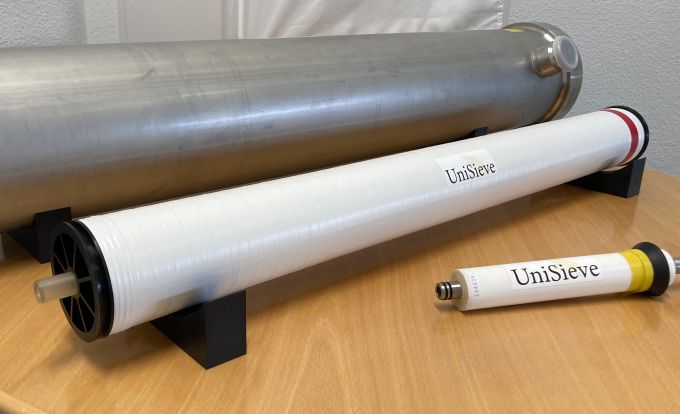
Heavy industries, including plastics, chemical and gas plants, have legacy systems in place that are worth billions of dollars, said Hess. These often include processes for separation and purification that require a lot of thermal energy. UniSieve’s modular filters, which Hess compared to Nespresso capsules, can be integrated into existing manufacturing systems.

UniSieve's membrane cartridges

UniSieve’s membrane cartridges

UniSieve stands for “universal sieving” and its technology does not use thermal energy. Instead, its membranes separate chemicals, energy carriers and CO2 from flue gas based on size exclusion. To use another coffee-related metaphor, UniSieve’s membranes are like the coffee filters that keep your drink free from grounds. Like Nespresso or printer manufacturers, UniSieve sells containerized separation systems and membrane replacement services.

When asked to explain what it means to “integrate zeolitic materials into polymeric membranes” in layperson’s terms, Hess explained that “it’s like adding special filters to a plastic membrane to make it work better at purifying water, filtering gases and performing other tasks.”

Hess and Schneider originally worked on water purification membranes before they had their “lightbulb moment.” The two introduced zeolitic materials, or porous crystals, into polymeric, or plastic-like, membranes. Hess explained that zeolites have a well-defined pore structure that can trap or selectively filter certain molecules or ions. When added to polymeric membranes, the combination results in better selectivity, permeability and stability, especially for separating gases.

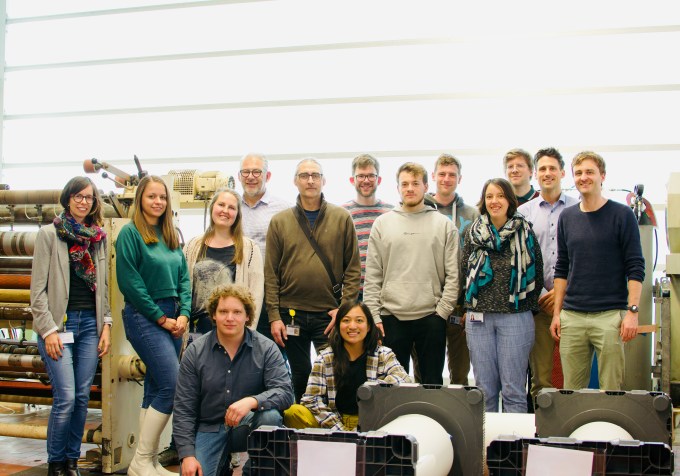
The team behind purification and filtration tech startup UniSieve

Team UniSieve

One challenge UniSieve had to solve is that chemicals can vary in size by a fraction of an angstrom (or one-tenth of a nanometer). That means its filters have to be extremely accurate. Hess said UniSieve’s ability to be precisely tuned means it can be adapted to many different applications, including separating other gases besides CO2.

Hess said UniSieve competes against other new technologies like distillation or amine scrubbing, which uses special solvents to remove acid gas. “Compared to such systems, UniSieve’s membrane solution is up to 90% more energy efficient and can be applied at small, as well as large scale. There are a few emerging companies trying to get into the chemical purification market with membranes, too,” Hess said. “Due to operational limitations, a broad application of these competing membranes does not seem realistic.”

In a statement, Wingman Ventures founding partner Lukas Weder said, “The UniSieve technology solution has been tried, tested and is ready to be deployed and so, perfectly positioned to help companies quickly over to build very powerful energy efficient production processes.”

UniSieve’s filters use special crystals to reduce industrial emissions by Catherine Shu originally published on TechCrunch


5 investors discuss what’s in store for venture debt following SVB’s collapse

There are many questions around the implications of Silicon Valley Bank’s (SVB) collapse that won’t be answered for a long time. But there’s...