Tuesday, March 28, 2023

StellarFi lands $15M to help people build credit by paying bills, rent on time

Building credit is hard when it’s difficult to even get credit.

And while it’s not impossible to get loans or credit cards, they are usually offered at high interest rates to the people who can least afford to pay them.

One Austin-based startup is out to help people build — or get — credit without taking on debt. And that startup, StellarFi, has just closed on a $15 million Series A round of funding to help it advance on that goal.

Lamine Zarrad started StellarFi in 2021 after selling another fintech company he’d started, banking app Joust, to ZenBusiness in 2020. Having faced his own struggles receiving credit as an immigrant, Zarrad was looking for a way to help others gain access to credit. 

He started StellarFi on the premise that people should be able to see benefits to their credit scores just by doing everyday things such as paying rent and bills on time. It does this by charging a subscription — either $4.99 or $9.99 — to manage members’ bills and recurring payments such as rent, subscriptions and utilities. Its goal is not only to help consolidate the payments, but to help ensure members pay on time. StellarFi then reports those on-time payments directly to the four main credit bureaus — Experian, Equifax, TransUnion and Innovis.

The company does not require a credit check or deposits and doesn’t charge any interest. It claims that members see an average increase of 26 points in the first month. The average credit score of users at signup is 580.

As a public benefit corporation, StellarFi’s mission is to help “financially disadvantaged” communities with support to build good credit. With its new capital, the company intends to build a marketplace to then link members to lenders.

Since launching its offering in late June, the company’s growth has exceeded expectations, according to Zarrad. StellarFi closed out the year with over $2 million in annual recurring revenue (ARR) — about double what it was projecting.

In 134 days, we had hit $1 million in ARR,” he told TechCrunch. “I’ve built a unicorn before, but never seen this kind of growth.”

While Zarrad did not disclose the company’s new valuation after its latest raise, he shared that it was a significant “up round.” In total, StellarFi has raised $22.2 million in funding. Repeat backer Acrew Capital led its Series A, which included participation from Trust Ventures, ATX Venture Partners, Dream Ventures, Interplay, Accomplice Ventures, Vera Equity, FJ Labs, Fiat Ventures, Gaingels, Kelmhurst, Oyster Funds, Hilltop Ventures, Permit Ventures, Kindergarten Ventures, J2 Capital, Socially Financed and Kapital Ventures. 

“Every single seed investor participated in this round,” Zarrad said. “And we added new ones. Everyone is energized.”

StellarFi was set to close on $5 million in venture debt from Signature Bank for runway extension — a deal that fell through once that institution was forced to shutter earlier this month. It plans to still secure debt from another institution.  

Last September, Experian — perhaps in response to the increasing number of fintechs tackling this problem — released a new product called Experian Boost that, in its own words, lets people “get credit” for paying their rent on time. According to Zarrad, Experian Boost allows users to link their bank accounts via Finicity, then automatically identifies certain recurring bills like utilities and rent and extracts that data into their internal model designed to showcase alternative payment behaviors. This model resides only at Experian, Zarrad points out, as TransUnion, Equifax or Innovis don’t have access to it.

“More importantly, it’s not used by lenders in credit decisions,” he added. By contrast, as mentioned above, StellarFi operates as a bill-pay manager to help members continue to make on-time payments, and reports payments to all four credit bureaus, to impact all credit score models. 

“Unlike Boost, StellarFi does not report payment history derived from linked bank accounts. Instead, StellarFi actually pays the bills and then members pay us back,” Zarrad told TechCrunch. “Therefore, we’re able to create a credit relationship that we report to all bureaus that generate consumer reports used by lenders. In other words, our members are covered, no matter which credit report their lenders pull.”

The company has added affiliate partners and is investing in SEO and is seeing even faster growth this year, according to Zarrad.

“We’ve signed contracts with neobanks and other fintechs are sending us their customers,” he said. “We’re still onboarding lenders and financial institutions.” 

StellarFi has put a lot of eggs into the affiliate basket, Zarrad said, because he believes it creates trust and that conversions “are much higher” versus “going online and buying folks on social media.”

The company intends to build out more features and is still developing its mobile app.

“Our next goal is to conquer the mobile experience completely,” he said. “Once that’s done, members can not only get better credit, but also access to capital. We want to help them get that money through partners.”

Surprisingly thus far, Zarrad said that StellarFi has had “zero defaults” but has seen tons of fraud. “But we’ve built sophisticated algorithms to catch it upfront and quarantined attempted fraudsters.”

John Gardner of Acrew Capital said his firm first invested in StellarFi at the seed stage because it “held strong conviction” in Zarrad and his team’s ability “to scale another fintech business, considering their success building Joust.”

“Stellar’s approach is exciting because it meets consumers where they are – internet bills. We think this form factor is much easier for users to understand and link, helping them see quick and persistent boosts to their credit score in a fairly short time frame. Stellar also reports into a broader set of FICO models, meaning the score benefit is applicable to heftier loans, like auto or mortgage,” he wrote via email. “When it came time for the Series A, it became readily apparent that Stellar’s team could execute on their plans with a maniacal focus. They demonstrably improved credit scores within 30 days for members, scaled to over $1mm in ARR within a few months of launch and set up unique distribution partnerships to efficiently reach the right audiences. For consumer fintech, we get really excited by these growth characteristics, particularly when there is a clear line of sight to profitability.”

Want more fintech news in your inbox? Sign up here.

Got a news tip or inside information about a topic we covered? We’d love to hear from you. You can reach me at maryann@techcrunch.com. Or you can drop us a note at tips@techcrunch.com. Happy to respect anonymity requests.

StellarFi lands $15M to help people build credit by paying bills, rent on time by Mary Ann Azevedo originally published on TechCrunch




Daily Crunch: Zoom’s new AI-powered features include whiteboard generation and meeting summaries

To get a roundup of TechCrunch’s biggest and most important stories delivered to your inbox every day at 3 p.m. PDT, subscribe here.

Happy Tuesday Crunch!

To meet the changing startup landscape, we’re refreshing and reimagining TechCrunch Disrupt 2023 in a big way, with more of what you love and new ways to accelerate your growth — new stages, new content, and new opportunities. Panzer breaks down what you have to look forward to in his post today — don’t miss it! Oh, and if you were laid off recently, we are offering a free Expo+ pass to TC Disrupt 2023. Join us!

Christine and Haje

The TechCrunch Top 3

  • It was only a matter of time: Zoom doesn’t want you to stray far from its platform and has added new features, including email, assistant and calendar, so that it can go head-to-head with Slack, Calendly, Google and Microsoft, Ivan reports. That’s a lot of sparring. We hope Zoom is up to the task.
  • RIP: Natasha L makes her case for why “Twitter is dying.” We won’t spoil it for you, but it involves a certain person taking it over. If you need any further evidence, only verified accounts will show up in the “For You” section starting April 15. Yes, the people who paid $8 for the blue check.
  • More layoffs: Manish reports that GitHub laid off “virtually its entire engineering team in India as the Microsoft-owned firm cuts its expenses amid weakening global market conditions.”

Startups and VC

Gotta love some solid startup drama, and Brian covers it in his summary of Turntable and all its iterations over the years: Turntable LIVE raises $7 million ahead of public launch, after years of co-founder disagreements and music licensing challenges.

We’ve all seen “Jurassic Park,” so we conclude that there’s nothing that could possibly go wrong from taking mammoth DNA and vat-growing mammoth burger meat. That’s right, a cultured meat firm resurrects the woolly mammoth so you can get a whole new (well, old) sensory experience, Paul reports. Personally, we can’t wait for dino-burgers next. Next step: Triceratops tri-tip, Stegosaurus steak and Brachiosaurus burgers all around.

And we have five more stories for you, home grown in small artisanal batches by your friendly, local TechCrunch writers:

Q1 VC results tread water, but that’s cold comfort for SaaS unicorns

an isometric illustration for The Exchange, rendered in blue

Image Credits: Nigel Sussman/TechCrunch

As Q1 2023 draws to a close, Alex Wilhelm reviewed early data from PitchBook to get a feel for key VC trend metrics like deal count and total capital invested.

“The picture forming from Q1 2023 venture data is one of measured decline compared to the end of 2022,” he found.

“And March brought with it something akin to a boomlet in domestic venture activity, which could become an even brighter spot if the last bits of first-quarter data further bolster the month’s totals.”

Three more from the TC+ team:

TechCrunch+ is our membership program that helps founders and startup teams get ahead of the pack. You can sign up here. Use code “DC” for a 15% discount on an annual subscription!

Big Tech Inc.

If you’re a fan of listening to music without words while you work, as Christine does, then Apple has a treat for you. Apple Music Classical is now available for download and includes over 5 million tracks, Ivan and Sarah report. Tweet at Christine and let her know your favorite piece. Hers is “Isle of the Dead, Op.29” composed by Sergei Rachmaninoff. It’s a delightful 19 minutes.

Also in today’s Apple headlines is the launch of Apple Pay Later, which enables users to split the cost of an Apple Pay purchase into four equal payments over six weeks without interest or late fees. Kyle has more.

Meanwhile, it’s time to take a walk on Amazon’s Sidewalk, a low-bandwidth, long-range network that the delivery giant opened to developers. Sidewalk can be used to connect Internet of Things (IoT) devices and “developers will be able to check their local signal strength on a map to get a better sense of whether their devices will be able to connect to the network before they start working on a product,” Frederic writes.

And we have five more for you:

Daily Crunch: Zoom’s new AI-powered features include whiteboard generation and meeting summaries by Christine Hall originally published on TechCrunch



Italy’s ban on cultivated meat could set the industry back

Just when the U.S. government was getting more comfortable with the concept of cultivated meat, the Italian government put forth a bill banning the use of lab-grown food.

The process of making cultivated meat includes a method, like precision fermentation in a laboratory, that uses animal cells without slaughtering the animals.

Reuters reported that the bill “aims to safeguard the country’s agri-food heritage,” according to the country’s agriculture minister, Francesco Lollobrigida, who also said, “Laboratory products in our opinion do not guarantee quality, well-being and the protection of our culture, our tradition.”

The bill will now go in front of parliament, and if passed, any violation of the law in the future could result in fines of up to €60,000, or about $65,000.

In a response to the proposed ban, Cellular Agriculture Europe called it “bad public policy,” and that it would “reduce consumers’ ability to choose the food they want,” especially new products for those “who are concerned about animal welfare and the environmental impact of their food.”

Currently, Singapore is the only country allowing sales of cultivated chicken. Good Meat was the first company to get approval to sell its cultivated chicken product there and received a U.S. Food and Drug Administration clearance last week, joining Upside Foods, as the only two companies to move to the next stage of commercializing their products in the U.S.

Dozens of companies, both in the U.S. and elsewhere, are not far behind in getting cultivated, or cell-cultured, meat products on the market. In the U.S., these companies have to receive approval from both the FDA and U.S. Department of Agriculture before commercializing their products in this country.

If you have a juicy tip or lead about happenings in the venture and food tech worlds, you can reach Christine Hall at chall.techcrunch@gmail.com or Signal at 832-862-1051. Anonymity requests will be respected.

Italy’s ban on cultivated meat could set the industry back by Christine Hall originally published on TechCrunch



Saildrone takes the wraps off its Voyager autonomous research vessel

Saildrone has quickly risen to the surface of the growing field of autonomous seagoing vehicles — a category you could be forgiven for not knowing about, but which is increasingly important across numerous industries. Its latest vessel, the Voyager, strikes a balance between its shorter Explorer and large-scale Surveyor, and they’re already making one a week.

The Voyager is a 33-foot uncrewed surface vehicle or USV, intended for near-shore maritime operations like coastal and lake mapping. In addition to the expected sonar equipment, each craft is equipped with traditional cameras, radar, and “sub-surface passive acoustics” to help build a picture of the sea or lake bed down to a depth of 900 feet. It also integrates other improvements, like more power and a more consistent data uplink.

You can imagine how useful it would be to send one of these things around every month to provide up-to-date metrics on your harbor or channel. In addition to the ordinary changes that come with tidal action and redistribution of silt and soil, it could identify illegal dumping sites, drifting trash like tangles of fishing equipment, and other unwelcome developments.

Naturally there are security applications as well: “illegal, unreported, and unregulated fishing” is a huge problem, especially given the fragile state of marine ecosystems right now. And more traditional law enforcement operations like combating smuggling would also benefit from a bit of all-hours surveillance.

It doesn’t just have to be a floating cop, though. The data provided by autonomous platforms like Saildrone’s is useful for research purposes. The various sensors on board can detect wave action, salinity, water temperature, and lots of other metrics that oceanographers, meteorologists and the like can’t get enough of.

Image Credits: Saildrone

And as near-shore industries like seaweed farms and fisheries multiply in the new blue economy, this data contributes to a more accurate picture of the ever-changing ocean. Saildrone vessels don’t need people on them, of course, which means they can spend lots of time at sea or at inhospitable locations like polar waters.

The Voyager has been undergoing testing since February of last year when the first prototype went into the water, and has been revised several times since — the company said it is really always in development mode as new technologies and use cases become available.

Saildrone is now moving into full production mode. The company has built 100 of its smaller Explorer craft since it was founded years ago, but now is ready to pump out a Voyager a week. To do so it must outsource manufacturing of the wing, keel, and hull to partners Janicki Industries and Seemann Composites, though the final vessel will be assembled and serviced at Saildrone’s main space in Alameda, CA.

Saildrone takes the wraps off its Voyager autonomous research vessel by Devin Coldewey originally published on TechCrunch


Ask Sophie: What to do if selected/not selected in H-1B lottery?

Here’s another edition of “Ask Sophie,” the advice column that answers immigration-related questions about working at technology companies.

“Your questions are vital to the spread of knowledge that allows people all over the world to rise above borders and pursue their dreams,” says Sophie Alcorn, a Silicon Valley immigration attorney. “Whether you’re in people ops, a founder or seeking a job in Silicon Valley, I would love to answer your questions in my next column.”

TechCrunch+ members receive access to weekly “Ask Sophie” columns; use promo code ALCORN to purchase a one- or two-year subscription for 50% off.


Dear Sophie,

After three tries, I was finally selected this year in the H-1B lottery! What do we do next?

— Wondering Winner

Dear Sophie,

I’m on STEM OPT. My employer put me in this year’s H-1B lottery for the third time, but I wasn’t selected again! What do I do?

— Lottery Loser

Dear Wondering and Lottery,

USCIS received enough electronic lottery registrations to max out the number of H-1Bs that can be allocated in the new fiscal year.

Thank you both for reaching out to me! Since your questions are on the minds of thousands of others who are in the same situation, I wanted to address them together. My colleague Nadia Zaidi and I offer some guidance on both of these questions in this podcast.

Yesterday, U.S. Citizenship and Immigration Services (USCIS) announced that it received enough electronic lottery registrations to reach the maximum total number of H-1Bs that can be allocated in the new fiscal year. All employers have been notified if their candidates were selected and the attorney and employer can download the PDF confirmation through the USCIS portal.

The selection notices started trickling in over the weekend, including on Saturday and Sunday, well before the end of the month. We don’t yet know how many H-1Bs were submitted in this year’s lottery, but based on the selection percentages, many experts are estimating that there could have even been more than last year’s record-breaking number of 483,927 for the 85,000 available spots, because selection rates for the master’s cap and regular cap both seem to have decreased for many colleagues in the field.

Let me dive into Wondering’s question first in a little more detail and provide some insight on what employers and beneficiaries need to do now for individuals who are selected. Keep in mind — this is only a stepping stone to having an H-1B, and getting selected means that you have the chance to apply, so you need to continue to pay careful attention to this process.

What do I do now that my H-1B registration was selected?

A composite image of immigration law attorney Sophie Alcorn in front of a background with a TechCrunch logo.

Image Credits: Joanna Buniak / Sophie Alcorn (opens in a new window)

First of all, congratulations to you and your employer! This is a significant milestone for both of you. If you were an international student in the U.S., this amazing step might provide you with a little more ease, especially if you have gone through the lottery for multiple successive years.

You and your employer should familiarize yourself with the process and upcoming deadlines. Your employer will have at least 90 days, likely until June 30, 2023, to submit an H-1B application on your behalf to USCIS. This requires that you first get U.S. Department of Labor (DOL) approval of a Labor Condition Agreement (LCA) to include with the H-1B application. For the LCA, your employer agrees to pay you the prevailing wage based on your position and geographical location to ensure you are compensated fairly. Your employer also attests that hiring you will not have a negative impact on the wages and working conditions of American workers.

You’ll need to confirm key details, and I always recommend that all employers work with experienced immigration attorneys to file their H-1Bs — they are high-stakes and getting the details right matters. Some of the factors to pay attention to include where you are in the world and your international travel plans, how long you are maintaining status if you are in the U.S., whether you’re applying for a change of status or consular processing, and if you plan to work from home or have multiple worksites.

The earliest you can begin working on an approved H-1B is Oct. 1, 2023, the beginning of the federal government’s fiscal year. If you are an F-1 student on Optional Practical Training (OPT) or STEM OPT, which is the two-year OPT extension for STEM graduates, and your final year of eligible work authorization is scheduled to end before Oct. 1, you’ll be ok!

Ask Sophie: What to do if selected/not selected in H-1B lottery? by Jenna Routenberg originally published on TechCrunch


Monday, March 27, 2023

‘High conviction, low volume’: Playfair launches $70M pre-seed fund for European startups

Early-stage investments inherently have a higher risk of failing, but these risks also come with potentially higher rewards — getting in at the ground floor of a startup’s journey gives VCs more negotiation clout. This is particularly true at the very early pre-seed stage, where companies might barely have a functioning product to shout about. And this is something that London-based generalist VC firm Playfair Capital knows all about, given its focus on backing super young startups that have yet to make much of a ripple in their respective industries.

In its 10 year history, Playfair has invested in around 100 companies, including well-established unicorns such as Stripe, and Mapillary, a startup that exited to Facebook back in 2020. Those specific investments were from Playfair’s inaugural fund which wasn’t focused on any particular “stage” of company. But Playfair transitioned into more of a pre-seed firm with its second fund announced in 2019, a focus that it’s maintaining for its new £57 million ($70 million) third fund, which it’s announcing today.

While many early-stage VC funds might look to make a few dozen investments annually, Playfair has kept things fairly trim throughout its history, committing to no more than eight investments each year, while ringfencing some of its capital for a handful of follow-on investments. Its latest fund comes amid a swathe of fresh early-stage European VC funds, including Emblem which announced a new $80 million seed fund last week, while France-based Ovni Capital emerged on the scene last month with a $54 million early-stage fund.

‘High conviction, low volume’

Playfair, for its part, seeks out founders “outside of dominant tech hubs,” as well as founders working on projects that may run more tangential to where the main hype and “buzzy-ness” exists. This is perhaps even more integral if its stated goal is to only invest in a handful of startups each year — they don’t have the luxury of spreading a lot of money around to increase their chances of finding a winner. “High conviction, low volume” is Playfair’s stated ethos here, and identifying true differentiators is a major part of this.

“I’d say probably half the funding in our portfolio is pre-product, pre-traction,” Playfair managing partner Chris Smith explained to TechCrunch. “And the other half have some sort of really early traction, maybe a MVP (minimal viable product) or a couple of POCs (proof-of-concepts). But we tend to invest where there’s very little in the way of traction.”

It wasn’t that long ago when autonomous automobile technology was all the rage, dominating just about every trade show and tech conference. And there was one specific event several years back, the EcoMotion mobility event in Israel, that Smith says really helps to highlight its investment ethos.

“I went in to look at the roughly 120 companies exhibiting, about 116 of the companies were doing autonomy for cars,” Smith said. “And as an investor, I look at this and think that if you’re writing tons of checks a year, you probably just invest in lots of them, and try and find a winner — but we don’t, we only do six to eight [annual investments]. So my view was, ‘I don’t want to play in that space’. The only real distinction between them was whether they were choosing LIDAR or computer vision. There just wasn’t enough differentiation.”

However, at this same conference, there were four companies doing something completely different. One of them was Orca AI which was developing a collision-avoidance system for ships, and it was this company from a sea of samey startups that Playfair ended up investing in — both in its 2019 pre-seed funding round, and its follow-on Series A round two years later.

“That’s where we like to look,” Smith said. “We like these nascent markets — I call them ‘overlooked and unsexy sectors’. That’s where we really like to get stuck in, and where I see the opportunity.”

A large chunk of early-stage deals fall apart in the due diligence phase. But if a company doesn’t have any market traction or even a fully-working product yet, how exactly do VCs go about deciding who’s worth a bet? While one of the oldest investment cliches says something about the importance of ‘investing in people rather than companies,’ that is perhaps even more true at the super early stage. And while having previous exits and success in the business world can be a useful indicator, there are many things that can ultimately determine whether a founder or founding team are intrinsically investable.

“We look for a few things, including examples of exceptional performance,” Smith said. “And I think the key thing is that it doesn’t necessarily have to be in the business world, or even in the domain they’re building the company.”

Playfair capital staff portraits Image Credits: Playfair Capital

By way of example, PlayFair recently re-invested in AeroCloud, a four-year-old SaaS startup from the Northwest of England that’s building airport management software, having also invested in its seed round some two years previous. AeroCloud co-founder and CEO George Richardson had been a fairly successful professional racing driver since the age of 15, but he didn’t really have any direct experience of the aviation sector before setting up AeroCloud.

“He didn’t know anything about airports before he started the company,” Smith said. “But we thought, if someone can podium at Le Mans and exist under such enormous pressure, that’s an amazing character trait path for a founder.”

Obviously there are many other factors that go into the due diligence process, including meticulous industry research to establish the scale of a problem the startup proclaims to be solving. But some sort of successful track record, in just about anything, is a useful barometer at the early investment stage.

“If you can play a musical instrument to an incredible level, or [if you’re] a professional racing driver, or golfer or whatever it is — I do think that is quite a useful predictor of future performance,” Smith said. “But it’s [investing due diligence] a combination of spending plenty of time with the founders and getting to understand what makes them tick. Then going really deep to support the thesis.”

Insulated

A lot has happened in the world between 2019 and 2023, with a global pandemic and major economic downturn intersecting Playfair’s second and third funds. In the broader sphere of Big Tech, startups, and venture capital, we’ve seen major redundancies, plunging valuations, and delayed IPOs, but in the early-stage world Playfair inhabits, it’a been a slightly different experience.

“At pre-seed where we invest, we’re quite insulated from what’s happening in the IPO markets, or what’s happening with growth funds,” Smith said.

That’s not to say nothing has changed, though. Its third fund is more than double the size of its second fund, which reflects the size of checks it’s now having to write for companies, growing from an average of around of perhaps £500,000 previously, to around £750,000 today, thought that figure may creep up toward the £1 million mark. So what has driven that change? A combination of factors, as you might expect, including the simple fact that there is more capital around, and the economic conditions that everyone is currently facing.

“In 2021, there was this crazy peak, now it’s settled again — but rounds are still significantly higher than they were in 2018-2019,” Smith said. “We’re actually really fortunate in the U.K. to have the SEIS  and EIS schemes (tax-efficient schemes for investors) because they brought in a ton of angel capital, and then also capital from funds that take advantage of the tax breaks — there’s basically just more money around. I actually think inflation has played a part too. So whilst in some senses the cost of building a startup has fallen, such as access to certain tools, at the same time salaries have gone up a lot. So, startup founders back in 2018-2019 might have paid themselves £30-40,000 [annually], you see founders now being paid maybe £60-70,000. So founders need more to be able to live comfortably while they build their company.”

This, of course, follows through to the hiring and building of teams, who will also now be expecting more money to counter the cost-of-living increases across society. Throw into the mix, perhaps, a growing understanding that a fledgling company might need a little more runway to stand a chance of succeeding, and all this might go someway toward explaining growing check-sizes in the early seed stages.

“I think that Europe has maybe learned a few lessons from the U.S., which is that there’s no point in putting really small amounts of money into companies, giving them really short runways, putting unnecessary pressure on them, and then watching them fail,” Smith said. “You want to give companies enough money so that they’ve got 18 to 24 months, time to pivot, time to figure stuff out. That increases the chances of success.”

Advantages

While not unique in the early-stage investment fray, Playfair has a sole limited partner (LP) in the form of founder Federico Pirzio-Biroli who provides all the capital, and who ran it initially as both a managing partner and LP. Smith stepped in for Federico for the second fund, and Federico has since moved to Kenya where he now has a more passive role in terms of day-to-day involvement. And having a single entity providing the capital simplifies things greatly from an investment and management perspective.

“It gives us a ton of advantages — it means I don’t spend 40-50% of my time fundraising, and I can spend my time working with our founders,” Smith said. “And I think it’s also just a huge vote of confidence.”

This “vote of confidence,” according to Smith, stems from Playfair having already returned the entirety of its first fund in cash, helped in part by several exits. This number will likely receive a major boost too, with Stripe gearing up for a bumper IPO — Playfair invested in the fintech giant at its Series C round in 2014 before it narrowed its focus to pre-seed. And for its second fund, Smith said they’ve reached somewhere in the region of 95th percentile for TVPI (total value vs paid in capital).

According to Dealroom data, some 19% of seed-stage companies raise a Series A within 36 months. By contrast, Playfair says that 75% of its fund 2 investments have now also raised a Series A investment, and in 2022 alone its portfolio companies secured $570 million in follow-on funding from various VCs.

“Success for our founders is basically the same as success for us, which is getting them from pre-seed to a successful Series A round,” Smith said.

And while Playfair does typically pass the lead-investor baton on to another VC firm for subsequent rounds, it will often lead again on the seed round, as well as participating in Series A rounds and very occasionally later. In part, this is as much about displaying confidence as it is providing capital, which is crucial as a startup is gearing up to hit the market.

“I think that’s really important, because if your existing pre-seed investor won’t lead your seed, that can be quite a difficult moment to go out to the market, when you may not have that many proof-points to try and get another external investor in,” Smith added.

‘High conviction, low volume’: Playfair launches $70M pre-seed fund for European startups by Paul Sawers originally published on TechCrunch


Daily Crunch: Twitter tells GitHub to remove proprietary source code and help them ID who posted it

To get a roundup of TechCrunch’s biggest and most important stories delivered to your inbox every day at 3 p.m. PDT, subscribe here.

Happy Monday Crunch, our Crunch-a-licious friends!

Our favorite part of Lorenzo’s excellent piece on how the feds busted a cybercrime forum: “​​In a spectacular snafu on the hacker’s part . . . the second piece of evidence came from Pompompurin himself. . . . He said he noticed a data breach posted on the site did not include ‘one of my old emails,’ which he looked up on the legitimate data breach notification site Have I Been Pwned.”

Go get ’em. Or, if your business is more of avoiding than getting, go avoid ’em!

Christine and Haje

The TechCrunch Top 3

  • Come together: If you find yourself grumbling about using Microsoft Teams, this story might bring a smile to your face: Frederic reports that Microsoft rebuilt Teams from the ground up, promising some neat things, like 2x faster performance and only half the memory being used.
  • Riding the WaveOne: If you’re having a “Silicon Valley” experience right now, you’re not alone. Apple acquired WaveOne, a startup using AI to compress videos, Kyle reports.
  • Ahead of the game: A GitHub user named “FreeSpeechEnthusiast” wanted to get the drop on Elon Musk’s promise to open source all code used to recommend tweets on March 31 by creating a repository on GitHub that contained Twitter’s source code. Ivan explains what happened next.

Startups and VC

First Citizens Bank has agreed to buy $72 billion in deposits and loans from Silicon Valley Bridge Bank, the California lender formerly known as Silicon Valley Bank that was taken over by the FDIC two weeks ago, Manish reports.

Another handful to keep you ready for this week’s watercooler moments:

Just starting out angel investing? Avoid these 7 mistakes.

Angel wings with halo. Just starting out angel investing? Avoid these 7 mistakes.

Image Credits: Alyona Jitnaya (opens in a new window) / Getty Images

Becoming an angel investor isn’t easy, and that’s on purpose.

Those who claim the title must satisfy a few requirements with regards to income and licensing. If not, just about anyone could schedule Zoom calls with founders to talk about making their dreams come true.

Business schools teach the basics, but Mysty Rusk, who’s reviewed around 4,500 deals over the last 20 years, says the most important lessons she learned were the result of mistakes she made along the way.

“There may be no way to foresee a global crisis, a stealth competitor, or other risks that are completely outside the startup’s control,” writes Rusk, “but some obstacles are avoidable with the right knowledge.”

Three more from the TC+ team:

TechCrunch+ is our membership program that helps founders and startup teams get ahead of the pack. You can sign up here. Use code “DC” for a 15% discount on an annual subscription!

Big Tech Inc.

It’s springtime, so we are guessing it was the right time for Alibaba founder Jack Ma to be seen again. Rita reports that Ma returned to China after a year of uncertainty that included China “trying to voice support for the private sector following a years-long crackdown on the tech industry, including shelving the IPO plans of Ant Group, the fintech affiliate of Alibaba. The movement prompted some founders to move abroad and seek to expand their businesses overseas.”

It seems Salesforce did a good job in convincing investors that it is on the right path. Activist investor Elliott Investment Management, which had probably been a thorn in Salesforce’s side for the better part of this month, said it was ditching its director nomination plans. Paul has more.

And we have five more for you:

Daily Crunch: Twitter tells GitHub to remove proprietary source code and help them ID who posted it by Christine Hall originally published on TechCrunch



Disrupt 2023 — we’re shipping a big new release

If the past few years, and even the past week, has reminded us soundly of anything — it’s that the startup world will never be predictable. To meet the changing startup landscape, we’re refreshing and re-imagining TechCrunch Disrupt 2023 in a big way, with more of what you love and new ways to accelerate your growth.

What’s new at TechCrunch Disrupt 2023?

Industry Days

TechCrunch has created six new programming days around the most groundbreaking industries in the startup world. In these salon-like sessions, industry leaders will share their deep expertise, insights and trends within your sector.

At these shows-within-our-show, you’ll engage with smart, driven founders, and investors and members of your community, and have the opportunity to cross-collaborate with leaders from other industries.

Here are the big new stages spread out across this year’s Disrupt:

  • The Artificial Intelligence Stage:
    Explore the rapidly expanding capabilities and potential of artificial intelligence; dig into the science behind the deep tech, the products it powers and the ethical, social and legal challenges that come with it.
    Featuring topics like biometrics, deep learning platforms, natural language generation, peer-to-peer network, reactive machines, robotic process automation, speech recognition and virtual agents
  • The Sustainability Stage:
    Discover emerging technologies that transform the way we engage with our environment, impact society and how we move from place to place.
    Featuring topics like green infrastructure, new mobilities, sustainable tech, urban mobility
  • The Fintech Stage:
    Dive into the evolution of monetary exchanges and follow the technology that is powering new ways of capturing and distributing value and wealth.
    Featuring topics like blockchain, challenger/neo banks, DeFi, fintech, NFTs and web3
  • The Hardware Stage:
    Uncover the mechanics and code behind the machines that enable us to get things done faster, smarter and more efficiently at work and at home.
    Featuring topics like articulated robots, autonomous mobile robots (AMRs), commercial hardware, humanoids, IoT/consumer hardware and interstellar technologies
  • The SaaS Stage:
    Discover software-as-a-service tools that reveal insights, power productivity and allow creativity and efficiency to blossom within your organization.
    Featuring topics like mobile apps, cloud-based resources, collaboration tools, creator communities, developer tools, e-commerce, low code, recurring revenue and marketing tools
  • The Security Stage:
    Gain the keys to protecting sensitive information and thwarting hackers intent on unlocking details of your business and your life.
    Featuring topics like data protection, information sharing, privacy regulations and risk management

Introducing the Builder Stage

You’ll continue to find top leaders and subject-matter experts speaking throughout Disrupt. That’s certainly true for the Builder Stage. It’s your new destination for business building advice and how-to discussions with experts who are deep in the trenches, ready to share their knowledge and answer your questions. 

On the Builder Stage you can expect to learn how to build your early VC network, finding product-market fit early and negotiating your first term sheet among many other topics of immediate value to any founder.

In addition to topic-specific sessions, you can expect several fireside chats with today’s biggest founders and investors. With this new stage, Disrupt 2023 is reaffirming its mission — supporting founders, builders and investors across the entire startup spectrum.

New and more ways to connect

While the Disrupt event app remains an essential connection and scheduling tool, we’re creating more organic networking opportunities where you can experience moments of magic in a variety of settings.

  • Deal Flow Café, our brand-new investor-to-founder networking area
  • Enhance your trip to San Francisco at After-Hours Events happening during Disrupt week throughout the city
  • Meet like-minded travelers in the many engaging workshops, discussions, meetups and Q&A sessions in the expo
  • Recharge and reconnect at the TechCrunch+ Lounge, where TC+ subscribers can network and chat with our writers and other special guests

Startup Battlefield 200 Returns

Last year, we launched the Startup Battlefield 200. By making the cohort invite-only, we transformed our show floor into a highly curated group of the world’s next big companies. It’s one of the world’s highest-quality company showcases and it’s right there inside of Disrupt.

We’re happy to say that Startup Battlefield 200 will return this year, and we eagerly anticipate the next cohort of 200 startups that will exhibit on the show floor — especially the top 20 who will pitch on the Disrupt stage.

TechCrunch’s Startup Battlefield program, one of the most coveted cohorts to belong to, consists of more than 1,100 startups that have collectively raised $13 billion and generated more than 126 exits. Do you think you’ve got what it takes to rise to the top? Submit your Startup Battlefield 200 application here before May 15 to be considered.

Final Thoughts

In addition to everything we’ve mentioned above, our partners are another reason to choose Disrupt. Companies like Brex, Hedera, JetBlue Technology Ventures, Mayfield, Visa and many others consistently deliver a high level of relevant content, educational expertise, resources and connection. 

Disrupt is the startup world’s big tent. It draws founders, investors, CEOs, tech professionals, scientists, policy makers, researchers and entrepreneurs. It’s where you’ll find inspiration, gain knowledge, forge new relationships and find the tools to help you build your business.

Wherever you fall on the startup continuum — ideation, early, growth or late stage — we hope you’ll join this global community of makers building the future of tech in San Francisco on September 19-21. Early Bird tickets are now on sale through May 12 — book your pass here. See you there!

Disrupt 2023 — we’re shipping a big new release by Matthew Panzarino originally published on TechCrunch


What’s Turo worth?

Late last week, Turo, a startup that allows consumers to rent their cars to one another, updated its IPO filing to include full-year data from 2022, giving us a better understanding of its post-COVID performance.

Turo, a venture-backed company that has raised hundreds of millions while private, filed privately to go public back in 2021. That initial document was converted into a public filing the next year, with Turo updating its S-1 documentation regularly since — most recently to include Q4 2022 data.


The Exchange explores startups, markets and money.

Read it every morning on TechCrunch+ or get The Exchange newsletter every Saturday.


While TechCrunch and other publications have discussed unicorns like Instacart and Reddit as potential companies first out the IPO gate when the public-offering window reopens, perhaps we were looking in the wrong places. Turo could be the first.

And a Turo IPO would not be a small affair. PitchBook pegs the company’s most recent private-market price at $1.28 billion, making it a unicorn long in the making, having raised capital as early as 2009. Readers may recall that Turo was once called RelayRides, and has over time extended its model to support users offering more than one car for its platform.

Let’s sit down and look at Turo’s numbers in detail and dig up what we can from the recent rocky SPAC combination of Getaround, which has a similar model and may provide valuation clues for Turo. To work!

Pretty good, really

What’s Turo worth? by Alex Wilhelm originally published on TechCrunch


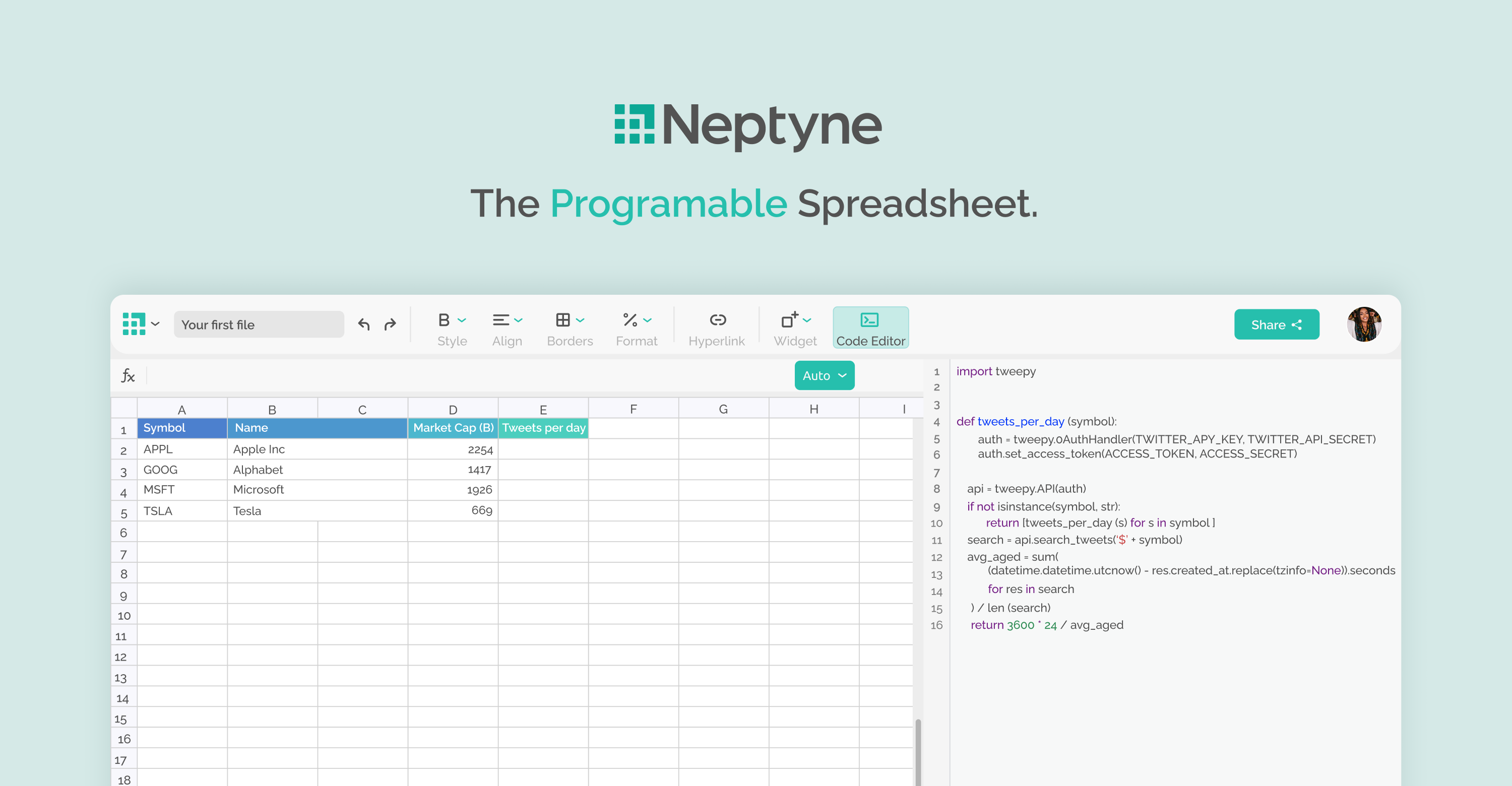
Neptyne is building a Python-powered spreadsheet for data scientists

Douwe Osinga and Jack Amadeo were working together at Sidewalk Labs, Alphabet’s venture to build tech-forward cities, when they arrived at the conclusion that most spreadsheet software doesn’t scale up to today’s data challenges. Data science tools like Pandas and Jupyter Notebooks do, but they tend to be too inaccessible to the layperson — at least in Osinga and Amadeo’s experience.

“Talk to any analyst or financial modeler and they’ll tell you that Excel just doesn’t cut it anymore,” Osinga said. “Everybody is aware of the need to move to more powerful solutions and Python is the obvious candidate. Yet collaborating with today’s tools is underwhelming.”

Osinga and Amadeo’s solution was Neptyne, an app that uses an AI assistant to help users program spreadsheets without learning how to code. A member of the Y Combinator winter 2023 class, Neptyne this month closed a $2 million pre-seed round from Y Combinator and a group of high-profile angels, including Google AI lead Jeff Dean and Google Maps co-founder Lars Rasmussen.

Neptyne joins a raft of startups on a mission to transform the traditional spreadsheet. There’s Airtable, of course, plus upstarts like Spreadsheet.comActiondesk and Pigment — the last of which raised $73 million last November for its data analytics and visualization service. Most recently, Equals, a San Francisco-based venture, raised $16 million for its spreadsheet platform that incorporates tools like live data integrations.

Neptyne

Image Credits: Neptyne

Neptyne is different in that it packs a Python-based spreadsheet engine, Python being the programming language popularly used for data science. Osinga describes it thusly: It’s a spreadsheet where everything works the way you’d expect it to work in a spreadsheet, but that also offers access to the Python ecosystem — including libraries, frameworks and tools.

“The large language models [like OpenAI’s GPT-4] that have recently produced mind-blowing results happen to be very good at writing Python code,” Osinga said. “Since Neptyne natively speaks Python, it means that the AI doesn’t just help you write formulas or visualize data — you can have a dialog with the AI about the spreadsheet application in front of you and have it modify it for you.”

For example, imagine you have a pivot table built using Pandas, an open source Python library for data analysis, that summarizes data both by product and region. With Neptyne, you can ask the AI assistant to modify the pivot table calculation to include or exclude products or change the grouping criteria, such as by product category instead of individual product. Neptyne updates the calculations in real time, allowing you to explore different options.

“A lot of important modeling and calculations today is hidden in complex spreadsheets or data processing systems and modifying requires experts to dig in deep,” Osinga said. “Neptyne’s powerful AI integrations eliminate the limitations of normal spreadsheets while dramatically reducing the complexity of using advanced data tools.”

Them’s fighting words. But it’s early days for Neptyne — the company is pre-revenue and isn’t disclosing the size of its customer base. Osinga optimistically expects growth this year, so much so that he’s anticipating hiring six staffers to round out Neptyne’s current four-person workforce.

Neptyne is building a Python-powered spreadsheet for data scientists by Kyle Wiggers originally published on TechCrunch


Deep Agency shows the perils of applying AI to the fashion industry

Generative AI is disrupting industries — with understandable controversy.

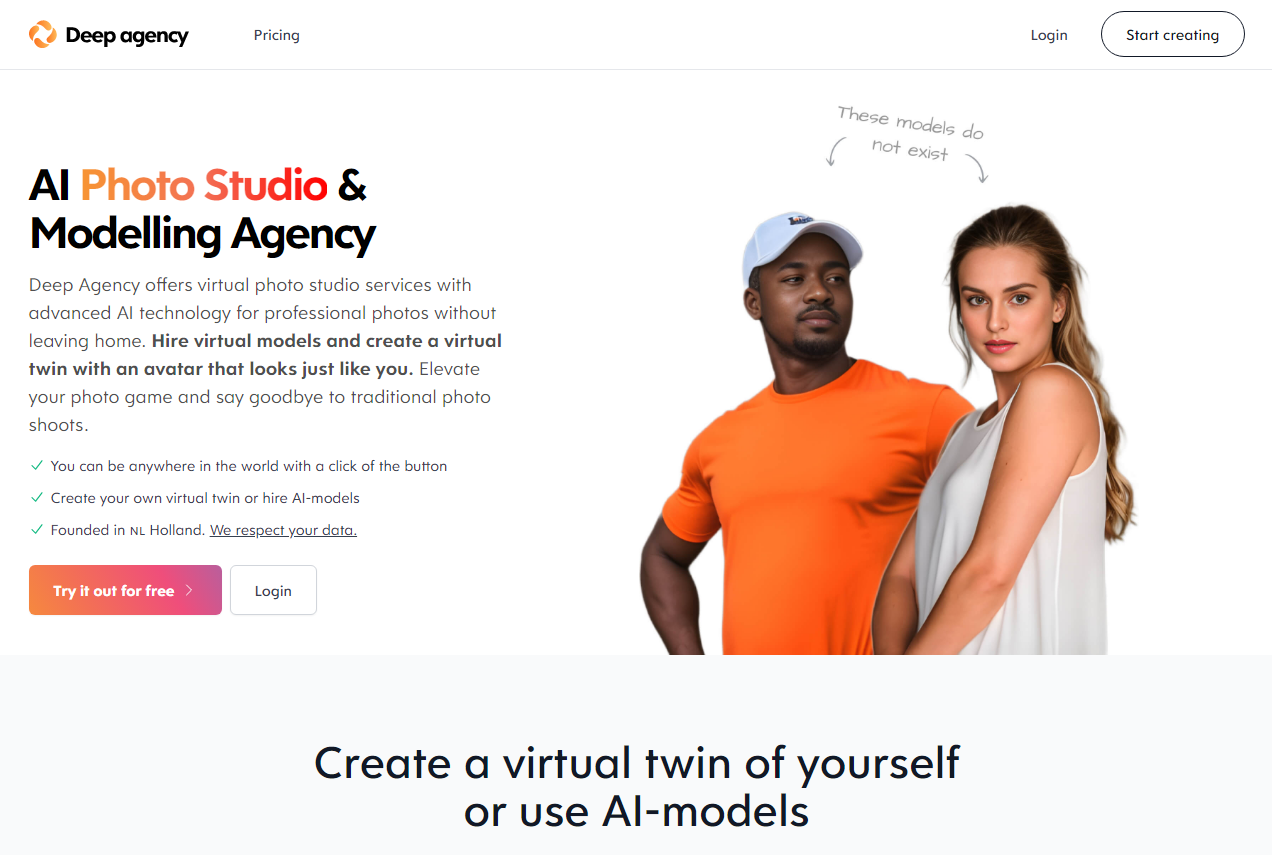
Earlier this month, Danny Postma, the founder of Headlime, an AI-powered marketing copy startup that was recently acquired by Jasper, announced Deep Agency, a platform he describes as an “AI photo studio and modeling agency.” Using art-generating AI, Deep Agency creates and offers “virtual models” for hire starting at $29 per month (for a limited time), letting customers place the models against digital backdrops to realize their photoshoots.

“What is Deep Agency? It’s a photo studio, with a few big differences,” Postma explained in a series of tweets. “No camera. No real people. No physical location … What’s this good for? Tons of things, like automating content for social media influencers, models for marketeers’ ads and ecommerce product photography.”

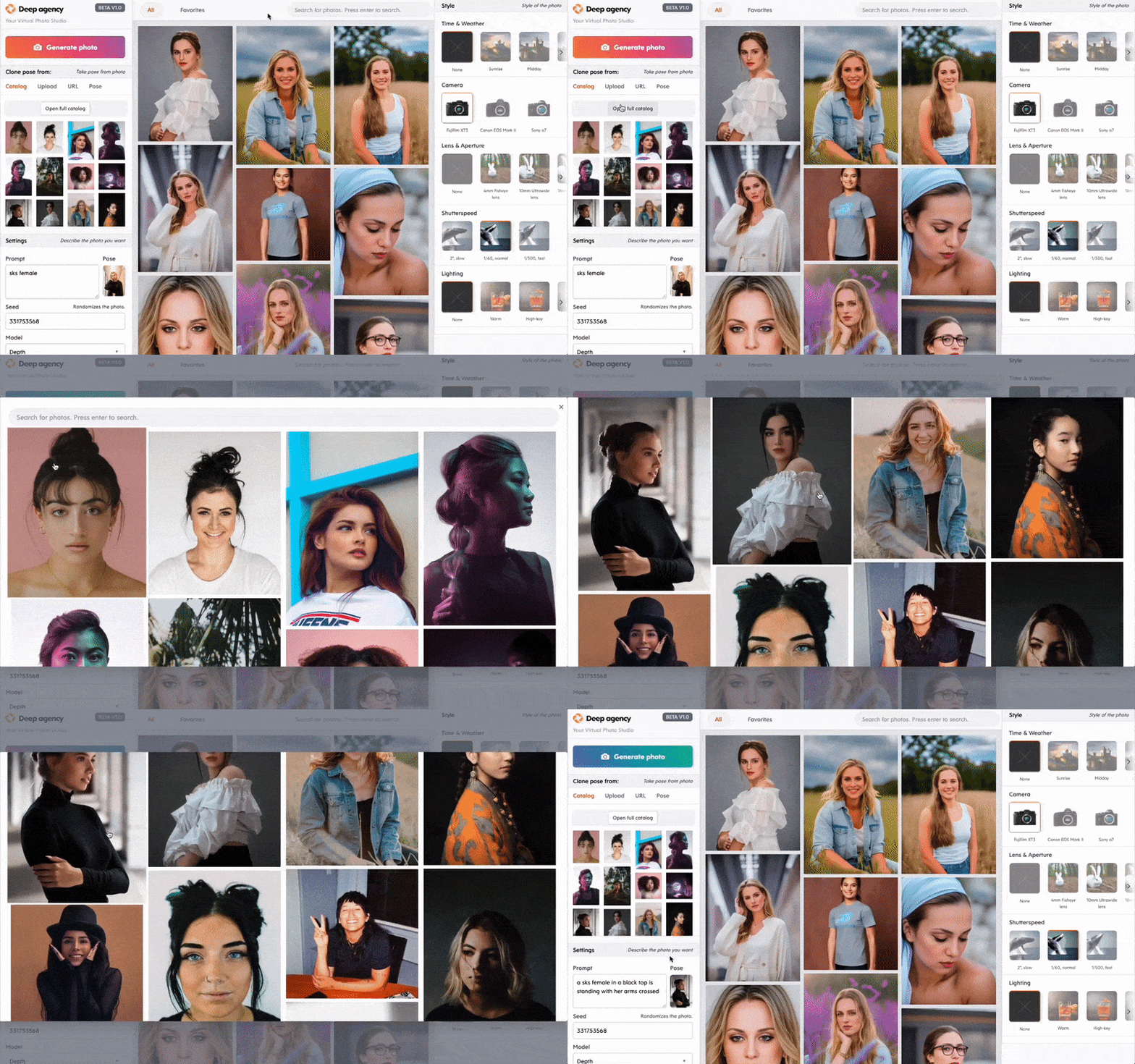
Deep Agency is very much in the proof-of-concept phase, which is to say… a tad borked. There’s a lot of artifacting in the models’ faces, and the platform places guardrails — intentional or not — around which physiques can be generated. At the same time, Deep Agency’s model creation is strangely hard to control; try generating a female model dressed in a particular outfit, like a police officer’s, and Deep Agency simply can’t do it.

Nevertheless, the reaction to the launch was swift — and mixed.

Some Twitter users applauded the tech, expressing an interest in using it for modeling clothing and apparel brands. Others accused Postma of pursing a “deeply unethical” business model, scraping other peoples’ photography and likenesses and selling it for profit.

The divide reflects the broader debate over generative AI, which continues to attract astounding levels of funding while raising a host of moral, ethical and legal issues. According to PitchBook, investments in generative AI will reach $42.6 billion in 2023 and skyrocket to $98.1 billion by 2026. But companies including OpenAI, Midjourney and Stability AI are currently embroiled in lawsuits over their generative AI technologies, which some accuse of replicating the works of artists without fairly compensating them.

Deep Agency

Image Credits: Deep Agency

Deep Agency seems to have especially touched a nerve because of the application — and implications — of its product.

Postma, who didn’t respond to a request for comment, isn’t shy about the fact that the platform could compete with — and perhaps harm the livelihoods of — real-world models and photographers. While some platforms like Shutterstock have created funds to share revenue from AI-generated art with artists, Deep Agency has taken no such step — and hasn’t signaled that it intends to.

Coincidentally, only weeks after Deep Agency’s debut, Levi’s announced that it would partner with design studio LaLaLand.ai to create customized AI-generated models to “increase the diversity of models shoppers can see wearing its products.” Levi’s stressed that it planned to use the synthetic models alongside human models and that the move wouldn’t impact its hiring plans. But it raised questions as to why the brand didn’t recruit more models with the diverse characteristics it’s seeking, given the difficulty these models have had finding opportunities in the fashion industry historically. (According to one survey, as of 2016, 78% of models in fashion adverts were white.)

In an email interview with TechCrunch, Os Keyes, a PhD candidate at the University of Washington who studies ethical AI, made the observation that modeling and photography — and the arts in general — are areas particularly vulnerable to generative AI because photographers and artists lack structural power. They’re largely low-paid, independent contractors to large companies who look to cost-cut, Keyes notes. Models, for instance, are often on the hook for high agency commission fees (~20%) as well as business expenses, which can include plane tickets, group housing and the promotional materials required to land jobs with clients.

“Postma’s app is — if it works — in fact designed to further kick the chair out from under already-precarious creative workers, and send the money to Postma, instead,” Keyes said. “That’s not really a thing to applaud, but it’s also not tremendously surprising … The fact of the matter is that socioeconomically, tools like this are designed to further core out and concentrate profit.”

Other critics take issue with the underlying technology. State-of-the-art image-generating systems like the type Deep Agency uses are what’s known as “diffusion models,” which learn to create images from text prompts (e.g. “a sketch of a bird perched on a windowsill”) as they work their way through web-scraped training data. At issue in artists’ minds is diffusion models’ tendency to essentially copy and paste images — including copyrighted content — from the data that was used to train them.

Deep Agency

Image Credits: Deep Agency

Companies commercializing diffusion models have long claimed that “fair use” protects them in the event that their systems were trained on licensed content. (Enshrined in U.S. law, fair use doctrine permits limited use of copyrighted material without first having to obtain permission from the rightsholder.) But artists allege that the models infringe on their rights, in part because the training data was sourced without their authorization or consent.

“The legality of a startup like this isn’t entirely clear, but what is clear is that it’s aiming to put a lot of people out of work,” Mike Cook, an AI ethicist and member of the Knives and Paintbrushes open research group, told TechCrunch in an email interview. “It’s hard to talk about the ethics of tools like this without engaging with deeper issues relating to economics, capitalism and business.”

There’s no mechanism for artists who suspect their art was used to train Deep Agency’s model to remove that art from the training dataset. That’s one worse than platforms like DeviantArt and Stability AI, which provide ways for artists to opt out of contributing art to train art-generating AI.

Deep Agency also hasn’t said whether it’ll consider establishing a revenue share for artists and others whose work helped to create the platform’s model. Other vendors, such as Shutterstock, are experimenting with this, drawing on a combined pool to reimburse creators whose work is used to train AI art models.

Cook points out another issue: data privacy.

Deep Agency provides a way for customers to create a “digital twin” model by uploading around 20 images of a person in various poses. But uploading photos to Deep Agency also adds them to the training data for the platform’s higher-level models unless users explicitly delete them afterward, as outlined in the terms of service agreement.

Deep Agency’s privacy policy doesn’t say exactly how the platform handles user-uploaded photos, in fact, or even where it stores them. And there’s seemingly no way to prevent rogue actors from creating a virtual twin of someone without their permission — a legitimate fear in light of the nonconsensual deepfake nudes models like Stable Diffusion have been used to create.

Deep Agency

Image Credits: Deep Agency

“Their terms of use actually state that ‘You understand and acknowledge that similar or identical generations may be created by other people using their own prompts.’ This is quite amusing to me because the premise of the product is that everyone can have bespoke AI models that are unique every time,” Cook said. “In reality, they acknowledge the possibility that you may get exactly the same image as someone else did, and that your photos are fed to others for potential use as well. I can’t imagine a lot of big companies liking the prospect of either of these things.”

Another problem with Deep Agency’s training data is the lack of transparency around the original set, Keyes says. That is to say, it’s not clear which images the model powering Deep Agency was trained on (although the jumbled watermarks in its images give clues) — which leaves open the possibility of algorithmic bias.

A growing body of research has turned up racial, ethnic, gender and other forms of stereotyping in image-generating AI, including in the popular Stable Diffusion model developed with support from Stability AI. Just this month, researchers at AI startup Hugging Face and Leipzig University published a tool demonstrating that models including Stable Diffusion and OpenAI’s DALL-E 2 tend to produce images of people that look white and male, especially when asked to depict people in positions of authority.

According to Vice’s Chloe Xiang, Deep Agency only generates images of women unless you purchase a paid subscription — a problematic bias off the bat. Moreover, Xiang writes, the platform tends to skew toward creating blonde white female models even if you select an image of a woman of a different race or likeness in the pre-generated catalog. Changing a model’s look requires making additional, not-so-obvious adjustments. 

“Image-generating AI is fundamentally flawed because it depends on the representativeness of the data the image-generating AI was trained on,” Keyes said. “If it predominantly includes white, Asian and light-skinned Black people, all the synthesis in the world won’t provide representation for darker-skinned people.”

Despite the glaring issues with Deep Agency, Cook doesn’t see it or similar tools disappearing anytime soon. There’s simply too much money in the space, he says — and he’s not wrong. Beyond Deep Agency and LaLaLand.ai, startups like ZMO.ai and Surreal are securing big VC investments for tech that generate virtual fashion models, ethics be damned.

“The tools aren’t really good enough yet, as anyone using the Deep Agency beta can see. But it’s only a matter of time,” Cook said. “Entrepreneurs and investors will keep banging their heads against opportunities like this until they find a way to make one of them work.”

Deep Agency shows the perils of applying AI to the fashion industry by Kyle Wiggers originally published on TechCrunch


5 investors discuss what’s in store for venture debt following SVB’s collapse

There are many questions around the implications of Silicon Valley Bank’s (SVB) collapse that won’t be answered for a long time. But there’s...