Friday, September 2, 2022

Daily Crunch: Nvidia chips become collateral damage in new US sanctions targeting China

To get a roundup of TechCrunch’s biggest and most important stories delivered to your inbox every day at 3 p.m. PDT, subscribe here.

Happy Friday! For those of you excited to see us in your inbox for your daily dose of tech news, unfortunately, you will have to wait until Tuesday to hear from us again because Monday is Labor Day in the U.S. We will be out grilling, wearing white for the last time this year and snoozing in hammocks. We wish you a safe and enjoyable weekend wherever you are.  — Christine and Haje

The TechCrunch Top 3

  • No chips for you: Nvidia is caught up in the new sanctions the U.S. is imposing on China. Rita reports the company said it will not be able to export two of its AI chips to China, its second-largest market. That will likely cost Nvidia some $400 million in lost sales for this third quarter and interrupt some production that happens in China.
  • Just got paid: Google is expanding its alternative payment systems, like third-party, for in-app purchases to more countries, Ivan writes. This includes some of Android’s largest markets, including India and Indonesia.
  • More cuts: Tage wrote about Nigerian digital bank Kuda, which is the latest African startup to lay off some employees. He notes that Kuda’s 5% reduction affected about two dozen people as the company decided to remove redundant positions and low-performing staff in efforts to cut costs.

Startups and VC

“A red-headed woman stands on the moon, her face obscured. Her naked body looks like it belongs on a poster you’d find on a hormonal teenager’s bedroom wall — that is, until you reach her torso, where three arms spit out of her shoulders,” Kyle and Amanda write in a story that has more twists and turns than a mountain pass.  AI is getting better at generating porn. We might not be prepared for the consequences, they ponder.

The rest of our top stories have less nudity, but also less arms growing where they shouldn’t. We’ll call it a draw, shall we:

Stop sensationalizing the ‘collapse’ of VC: Look at the data

Card House Against Blue Skies

Image Credits: perrygerenday (opens in a new window) / Getty Images

For founders who are looking to raise, this is a terrible time: It’s taking much longer than it used to, and valuations are so much lower than just a few months ago.

For investors, however, things are settling back to earth, says Brian Walsh of WIND Ventures.

“The reality is that there was an unprecedented hype cycle in 2021, and what we have seen since the beginning of 2022, objectively, is a ‘reversion to the mean’ in line with long-term trends.”

(TechCrunch+ is our membership program, which helps founders and startup teams get ahead. You can sign up here.)

Big Tech Inc.

To start your weekend off right, Zack has the 411 on a data breach over at Samsung, which apparently is the second such incident this year. The company told Zack the breach happened in late July and that customer data was compromised in early August, though would not get specific on how many customers were affected or why customers are now just being told.


This startup wants to scale anonymous mental health support – starting with founders

Nate Tepper first went to Alcoholics Anonymous (AA), an international program dedicated to helping people recover from alcoholism with a 12-step program, in the heart of the COVID-19 pandemic. He didn’t show his face or share his story, but says that being in the presence of vulnerability was immensely impactful.

Following the recommended level of frequency for folks getting into the program, Tepper went to 30 meetings in 30 days. Now, two years later, he’s starting a company to scale his favorite parts of the program in hopes of reaching other people in need.

The result is Humans Anonymous, a social audio platform that connects people with similar identities, whether that’s a teacher or a single parent, to create an anonymous space to freely share their experiences. Unlike other mental health-focused startups out there, it’s not trying to provide support through life coaches or trained professionals — it’s just trying to provide space. (AA, in contrast, has a wealth of liturgy that provides a framework for its adherents to follow.)

After launching publicly last month after more than a year in stealth, Humans Anonymous has now announced fresh funding in the form of a $1.7 million pre-seed round led by Glass Ventures and Backend Capital, with participation from Ten VC and Authentic Ventures.

Upon entering a Humans Anonymous room, users are invited to share in three-minute chunks, one person at a time. There’s no ability for others to unmute, chime in or even “take over” a conversation, Tepper said. While this could spiral pretty fast — let’s say one person gets an unfiltered opportunity to target someone who just spoke up — there is always a moderator in the channel who has authority to block or ban people. To keep control of conversation setup and flow, Humans Anonymous doesn’t allow users to create their own room.

Humans Anonymous is pitching a different vibe from Clubhouse, one of the most well known audio social platforms out there, which feels more socratic, or seminar-like, and allows speakers to mute or unmute at their own leisure. Humans Anonymous is less about personal brand and more about anonymous conversations.

The startup makes money through a subscription model, charging users $5 per month or $50 for an annual fee. Users who want to try out the app can have a free hour trial, or enter the general room, which Tepper says will always be free to keep programming accessible.

The app is launching publicly with an explicit focus on founders. When brainstorming for the app, Tepper e-mailed Y Combinator founders and got positive feedback on a need for something like Humans Anonymous.

“I always had this thought that like this is for everyone, right? Hence the name Humans Anonymous,” he said. “Founders happen to be in the first wave, and then our next communities are nurses, and teachers alike. And these are all groups who struggle in their daily jobs, like don’t necessarily have to share their struggles. And I think one of the learnings along the way, and you found this anonymous and we learned that people wanted to be a part of a community they possibly identify as nurses, teachers. So that’s why our way in the market is like starting with the profession-based communities. And then ultimately, we want to expand beyond that.”

Image Credits: Humans Anonymous

At its core, Humans Anonymous is a platform seeking to provide community service through a virtual medium. It’s a mission that could clash with its decision to raise venture capital, an asset class that requires exponential growth for an outlier exit, and choice to build a for-profit organization. Tepper defended his choice, saying that he’s always had the belief that for-profit organizations are more impactful than nonprofit organizations. “They allow you to focus on the mission, instead of fundraising or collecting donations,” he said.

Since the startup is still at the earliest stages of building, many questions remain to be answered. For example, anonymity is a big promise, and in the security world, one of the hardest to actually fulfill. What if you recognize someone’s voice on it? Are there any guardrails in place that stop a user from recording another user’s deepest stories?

The other challenge sits on the legal front. While Humans Anonymous isn’t affiliated with Alcoholics Anonymous, AA could be bothered over just how inspired the competitive product is. Tepper says that he does have a trademark for Humans Anonymous, and emphasized that he’s just inspired by AA’s framework. He still goes to a meeting almost every day, two years after his first.

“In terms of the branding, there is a potential that AA could reach out to us and potentially say something to us,” he said. “Ideally, we can be on the same team.”


How tech giants are responding to the growing green card backlog

In early August, Amazon’s SVP of human resources, Beth Galetti, penned a blog post urging the U.S. Department of Homeland Security to expedite the processing of employment-based green cards.

The plea was, of course, self-serving — Amazon topped the list of companies applying for green cards in 2019 with 1,500 applications, according to U.S. Department of Labor data. But it did serve to spotlight that U.S. Citizenship and Immigration Services (USCIS) — the agency responsible for issuing green cards — is barreling toward a failure to adjudicate tens of thousands of applications before a September 30 deadline.

Green cards are highly sought after. Unlike temporary work visas (e.g., H-1Bs), they allow workers to freely switch jobs without losing their immigration status. In response to demand (and political pressure), Congress allotted 281,000 employment-based green cards in 2022, up from 262,000 in 2021. (The typical cap is 140,000.) But the pandemic — and restrictive laws under the Trump administration — threw an additional wrench in the largely manual, paper-driven process.

U.S. embassies and consular offices were temporarily closed, creating a long queue of appointments to collect fingerprints and photographs. Annual per-country caps didn’t help matters — according to the Cato Institute, about 875,000 approved petitions for green cards were waitlisted in 2021 because of the limits.

This year, the USCIS claims to have taken steps to expedite adjudication, telling Bloomberg Law in July that it shifted staff resources to prioritize processing green cards and adopted a “risk-based approach” to waive interview requirements. But it’s unclear whether this will be sufficient to prevent tens of thousands of green cards from going unused. As of July 31, the USCIS reported that it had adjudicated around 210,000 applications, leaving over 70,000 to be processed.


2-for-1 sale on TC Sessions: Crypto passes!

What’s better than saving some coin in your wallet? Saving coin AND getting something for free! Book your TC Sessions: Crypto general admission Launch pass today and get a second pass for free!

One general admission Launch pass typically costs $199, but our Labor Day sale gets you two Launch passes for the price of one — that’s just $99.50* each!

Time-sensitive tip: Buy your pass now because this offer won’t last long. It disappears September 7!

What’s in store for you once you take advantage of this amazing offer? Expect to connect and engage with the leading founders, investors, engineers and other bold risk takers across the blockchain, crypto, DeFi and web3 ecosystems. You’ll find a double fistful of awesome early-stage startups exhibiting on the show floor, gutsy VCs looking for a rising star, and members of the press chasing the next big crypto stories.

You’ll have plenty of opportunities to expand your network and grow your business:

  • Explore possibilities with exhibitors.
  • Schedule meetings with other attendees through the event app.
  • Try your hand at speed networking.
  • Enjoy ad hoc conversations in between main stage speakers and breakout sessions.

We’re building an outstanding agenda for you, and while we’re not ready to show you the full monty just yet, we can share that FTX Ventures’ Amy Wu and Phantom’s Brandon Millman are just two of the high-caliber crypto leaders you’ll hear at the show.

Don’t miss your chance to go mining for savings – book your two-for-one general admission Launch pass to TC Sessions: Crypto right now! We’ll see you in Miami on November 17!

Is your company interested in sponsoring or exhibiting at TC Sessions: Crypto? Contact our sponsorship sales team by filling out this form.

*Discount is limited-time only, and does not apply to student tickets or Startup Exhibitor Packages.


An action plan for founders fundraising in fintech’s choppy waters

This past year has seen a wholesale shift in how the market feels about fintech. A year ago, nearly every investor had a fintech thesis, companies were racing to go public and investors at nearly every stage of the market were fighting to jam money into the hands of founders.

That’s not true any longer. The collapse in valuations on the public market has been extreme. A significant number of the biggest fintech companies to go public in the last couple of years are now worth less than the money they’d raised. And that drop in confidence has now permeated to all stages of the market.

Understandably, many early founders are unprepared to contemplate that the valuation of their idea — which will likely take about a decade to come to fruition — is now worth 75% less than it would have been six months ago.

But the long-term outlook of the sector remains unchanged for most investors and founders. The good news is, we’re still seeing deals getting done. The founders who are succeeding in this environment have adapted to the new reality quickly.

Money tends to attract money, so find ways to get the ball rolling.

Here are four strategies that the best early-stage fintech founders are now employing to fundraise:

Recognize that bid/ask spreads are going to be wide

It’s not you; it’s the market. The best founders recognize that the goal is to close a round, not to maximize the price or minimize dilution.

Minimizing dilution is good but not at the cost of losing a deal.

Plan for a long fundraise

While quick deals with proven founders and exceptional teams still happen, the average fundraising round, including diligence and paperwork, can now take up to four to five months. The days of the Notion-doc-over-a-weekend are firmly in the past.


Nigerian digital bank Kuda is the latest African startup to lay off employees

Kuda, the challenger bank based in Nigeria and the U.K., has joined the ranks of tech companies in Africa that are pruning their workforce.

The news of the layoffs, which was first disclosed to TechCrunch by sources, was confirmed by Kuda via email, saying it laid off less than 5% of its 450-strong workforce, or about 23 people.

The company’s numbers are small compared to other layoffs that have taken place within Africa’s tech ecosystem over the past few months, especially among startups that have raised vast sums of venture capital within the last year or two; for instance, Swvl laid off 400; Wave, approximately 300; 54gene, 95; and Vezeeta, 50. However, the event speaks to varied efforts startups — including soonicorns and unicorns — are making. It’s not entirely a surprise, in Kuda’s case, even though the company went on a hiring spree for designers in July. When Kuda held a town hall meeting last month, cutting down seemingly redundant roles and dismissing nonperforming staff to reduce costs and extending runway were topics of conversation in light of current macroeconomic trends, according to sources.

Meanwhile, it was just last August that the digital bank, which provides zero to minimal fees on cards, account maintenance and transfers and is one of Africa’s soonicorns, raised $55 million — money that it planned to use to not only double down on new services for Nigeria but also to prepare its launch into more countries on the continent like Ghana and Uganda — in a Series B round that saw it valued at $500 million.

The company, having raised more than $90 million in total from investors such as Valar Ventures and Target Global, is also planning an expansion outside Africa to Pakistan. It recently hired Pavel Khristolubov, an ex-Tinkoff executive, as its global chief operating officer and Elena Lavezzi, a former Revolut executive in Europe, as chief strategy officer to oversee efforts in this regard and also grow its over 4 million customer base.

As Kuda positions itself for pan-African and international expansion amidst an uncertain venture capital environment, it depicts the recent cut in its workforce as part of strategic steps for sustainable growth. “Kuda is currently making some strategic changes to serve its customers better and continue to make financial services more accessible, affordable and rewarding to every African,” said the four-year-old company, citing reasons for the layoffs.

Kuda said in the email that affected staff cuts were made across various departments in the company. Per sources, this includes growth, marketing and product departments.


Thursday, September 1, 2022

Daily Crunch: Ring wants to upgrade your apartment’s intercom system

To get a roundup of TechCrunch’s biggest and most important stories delivered to your inbox every day at 3 p.m. PDT, subscribe here.

Today, Haje is particularly psyched that he was able to talk the TechCrunch Plus team into letting him publish one of his Pitch Deck Teardowns without the paywall. If you’re not a TC+ subscriber, and you’re curious what a critique of a $65 million funding round at a $1.7 billion valuation looks like, it’s your lucky day. In addition to the freebie, it may be a particularly good time to subscribe, though, because we’re running a Labor Day sale on annual TC+ memberships.

We’re also going to Minneapolis soon, and we just published the agenda for the free TechCrunch virtual event that should totally have been called “All Eyez on Mi(nnesota).” With apologies to Tupac.

Happy rest-of-your-Thursday, and know that Friday is so close we can almost perceive the sweet stench of a long Labor Day weekend. Aaaaaah. — Christine and Haje

The TechCrunch Top 3

  • When the doorbell beckons: Ring has a shiny new feature called Ring Intercom, designed to pair with existing apartment intercom systems. Brian has more.
  • Valuation bump: Fintech fraud fighter Alloy is now worth $1.55 billion after banking $52 million in new funding, Mary Ann reports.
  • Sharing is caring: Kyle spoke to Slack executive Steve Wood about the company’s new automation features that make workflows more shareable and discoverable by other Slack users, and where the company goes from here.

Startups and VC

Reddit’s acquisition spree is continuing this morning with news that the company is bringing the audience contextualization company Spiketrap’s technology in-house. Deal terms were not disclosed, but Reddit says Spiketrap’s AI-powered contextual analysis and tools will help Reddit to improve in areas like ad quality scoring and will boost prediction models for powering auto-bidding, Sarah reports.

A few more, now with Moar Emoji!

9 strategies that will help you overcome your fear of fundraising

Pleasure cruises usually start with a ship-wide safety briefing where passengers put on life vests and learn what to do in an emergency.

Similarly, there’s no reason to be afraid to raise money to start a new venture, but founders should have a healthy respect for a process that’s not completely under their control.

“Any change is an opportunity to create leverage, and a downturn is no exception,” writes Masha Bucher, founder and general partner of early-stage VC firm Day One Ventures.

In this TC+ post, she discusses the current environment and shares “actionable tips for closing pre-seed to Series B rounds.”

(TechCrunch+ is our membership program, which helps founders and startup teams get ahead. You can sign up here.)

Big Tech Inc.

Yesterday, we reported on Snap laying off 20% of its workforce, which apparently included the entire Zenly team. Today we enjoyed Paul’s and Romain’s second-day look at what happened to the social mapping app, which was acquired by Snap in 2017, and perhaps to answer the bigger question of: “Zenly is still hugely popular, so why’s Snap shutting it down?

  • Yo ho, yo ho, it’s a commerce life for me: Ivan has the skinny on news that Disney+ is looking to have an in-app commerce feature that will enable users to scan a QR code and be taken to a site with branded goods.
  • Taking a stand: A group of Googlers continues to speak out against their employer about the $1.2 billion Project Nimbus contract and the fear that Google’s technology will add to the digital surveillance in occupied Palestinian territories, Amanda reports.
  • Edit yourself: Later this month, Twitter Blue subscribers will be among the first to get a chance to try out Twitter’s new feature that will enable them to edit their tweets, Ivan writes.
  • Price tag: Instacart is acquiring Eversight, an AI-powered pricing and promotions company. Aisha writes that this pairing will “give retailers and CPG brands access to new individualized and customized pricing tools.”
  • To the moon: Or really to the International Space Station. NASA is paying $1.4 billion to SpaceX in exchange for five more astronaut transportation flights, Aria writes.


Cantos launches its third fund, ploughing $50M into near-frontier startups

Hard tech is hard, but when there are major breakthroughs, that can come with outsize returns and enormous opportunities. Cantos just closed its third fund to invest in science-forward companies at the pre-seed and seed stages to ‘improve billions of lives and saving the planet.’

“I have a bachelor’s in international relations. I’m not technical at all. I’ve always been sort of a reader and watcher of science fiction,” admits Ian Rountree, GP and founder at Cantos Ventures. “You hear all these truisms that I think are largely a myth of modern venture capital. Those myths include that ‘hardware is hard and slow’ and that hard tech is more capital intensive. There are assumptions that it isn’t as good as investment. And yet, if you’re looking at the biggest problems in the world, it makes you wonder. If we’re gonna mitigate climate change, disease, armed conflict, existential risk, poverty — building real shit in the real world is probably more impactful than software in many cases, but venture capital was basically scared away from it. That didn’t really sit well with me.”

Rountree took a deeper look at the sector, and where others saw risk, he saw opportunity.

“If all of Sandhill Road is categorically saying I’m not investing in hardware and bio, then maybe it’s actually an interesting gap to step into,” says Rountree. 

Cantos 3 is focusing on pre-seed and seed-stage investments in deeply technical climate, TechBio, aerospace and next-gen computing startups. It specializes in taking technical risk alongside founders and will tolerate more of it than other venture firms, it claims.

“We seek to minimize market risk, and we look for companies making commodities cheaper and with a lower carbon footprint, raising the standard of care, or improving the defense capabilities of democratic nations. We believe the largest companies can also have the biggest positive impact on people and our shared planet when stewarded well, so we aim to back entrepreneurs with the ambition to build $10 billion to $100 billion companies and beyond,” Rountree says. “Our thesis is that such companies will either offer platform potential or be full-stack. We view our founder partners as the new industrialists.”


Planted gets $72M to put whole cuts of vegan chicken on Europe’s menu

Planted, a Swiss startup that’s cooking up alternative proteins using biostructuring and fermentation to serve “clean” cuts of vegan meat — such as the plant-based chicken breast plated up above — has raised again, nabbing CHF 70 million (~$72 million) in Series B funding after a $21 million pre-B round a year ago.

The Series B was led by consumer-focused private equity firm, L Catterton, which has links to LVMH — the Paris, France based multinational corp and conglomerate with a focus on luxury consumer goods. So it’s presumably bought into a vision of the well-heeled being persuaded to abandon bloody filets mignons to bite down on guilt-free vegan cutlets.

The 2019-founded Zurich-based foodtech startup says the new funding will be used to launch its new whole-cut line of products, such as the above chicken breast (or ‘chicken’t’ as one colleague wittily dubbed it) — expanding out from its current range of smaller faux chicken pieces, mock pulled pork and kebab meat, and breaded schnitzel, which can so far be found in some 4,200 retailers and 3,000+ restaurants across three regional markets.

Further international expansion (within Europe) is on the cards now. Planted tells TechCrunch it has the Benelux markets (Belgium, the Netherlands, and Luxembourg) in its sights, using the Series B funds to build on its early focus on German-speaking markets (Germany, Austria and Switzerland).

Funding will also go on boosting its production capacity as it works to optimize its processes to shrink the price gap between actual animal flesh and its pea-protein-based vegan chicken alternative. (It also uses oat and sunflower protein in other mock meats in its range.)

For its vegan chicken, its website lists just four ingredients: Pea protein, pea fiber, canola oil and water (it also adds vitamin B12) — hence the “clean” claim, with its marketing further emphasizing: “We do not use any flavouring or preservatives, chemical additives, soy, gluten, lactose or GMO ingredients.” (Some may quibble over the healthiness of canola oil, which has faced some popular controversy in recent years — although it’s less clear whether the concern is merited.)

Alternative proteins face several barriers to mass adoption — a major one being price, as they do not enjoy the same kind of subsidies typically ploughed into traditional food production, meaning it’s not a level playing field when it comes to competing with meat. Often buying actual meat is cheaper than a plant-based alternative, despite the vastly higher environmental costs attached to traditional meat production (not to mention the animal welfare harms). So the economics are a challenge.

Planted says its current product price vs actual chicken varies depending on the market — sitting between the price of free range and organic chicken as it stands. Though, as it scales production, it envisages being able to shrink this gap, pointing to a doubling of production volume it achieved in May which enabled it to reduce prices. (A set of three of its current faux meat products, each weighing 400g, can cost around €25 for the bundle.)

“One of the main challenges to be solved is the cutting of unsustainable subsidies to the animal industry that currently are the main reason for the low prices of animal protein (also depending on the market) that we have on the market today,” Planted argues. “Price matters when it comes to food — as with everything else. Subsidies into various sectors along the animal protein value chain are maintaining this unequal equilibrium — at our own cost. We must change that to get closer to the true cost of our protein consumption.”

There can also be concern among consumers about how much processing (and potentially preservatives) go into making mock meat. Hence Planted’s focus on minimizing the ingredients used to produce its products — and on transparency around its production methods. No ‘secret blend of herbs & spices’ here.

“What we do is structuring of plant-based protein but then we have a fermentation process run over it so essentially we’re combining the two approaches… What this allows us is to have a very clean formulation,” says co-founder, Christoph Jenny, in a phone call with TechCrunch. “So we don’t have any additives whatsoever — and that seems to be the key message that resonates with consumers. We only have proteins, fibers, water and vegetable oil.”

If you’re wondering what biostructuring is, Planted’s website details the “wet extrusion” production process it uses to convert extracted plant proteins, which are spherical in shape, into “the fibrous, elongated shape of animal muscle fibre proteins” — to mimic meat.

“The ingredients in the extruder are heated and put under pressure by means of two rotating screws, while simultaneously under high shear similar to a pasta maker. This creates a dough that is pressed through a nozzle and cooled,” it explains. “In this way, we can convert plant material to the fibrous structure of meat by applying nothing more than heat, pressure and shear. The best raw materials and the right parameters are chosen for our unique setup in this innovative process without requiring chemical additives.”

“Currently pretty much everything you see in the market has additives in one way or the other. And we feel that is one of the key things — besides the price equation — that holds consumers back. And I do understand it,” Jenny adds. “That’s why we founded the company as we wanted to be able to eat something clean, that’s good for you health. That becomes more and more important — and that’s the angle or the differentiation we focus on.”

Planted also produces all its products under a glass-house production facility in Kemptthal, Switzerland — which it bills as “the first transparent meat production open to the public”. (And you certainly won’t find open-door slaughter houses — but, hey, maybe that should be a policy mandate as a ‘hard truths’ tool to educate consumers on what actual meat is made of to help speed up the transition to less harmful protein production methods…)

Planted production facility for its plant-based protein products

A Planted production facility. Image Credits: Planted

It’s also worth noting that (actual) meat can be adulterated with plenty of substances the average person may not want near their food, from the antibiotics fed to animals to increase yields, to the (‘antimicrobial’) chlorine routinely used to wash chicken carcasses in US meat production facilities (although that particular process is banned in the EU) — so there can be a double (i.e. higher) standard applied to meat alternatives, even as long accepted (i.e. tolerated) factory farming methods leave plenty to be desired.

But the vested interests in sustaining traditional animal husbandry and the jobs it creates are undeniable.

The upshot is that alternative protein makers have to work doubly hard to get their products to market and into people’s stomachs. So the growth challenge is real — even as the potential for scaling looks massive as policymakers everywhere look for ways to shrink carbon emissions. (A 2021 study reported by The Guardian found that meat production accounted for nearly 60% of the greenhouse gases associated with global food production — which itself is responsible for a third of all planet-heating gases generated by human activity — which means that greening how we eat generally, and meat specifically, is essential if we’re to avoid climate catastrophe; no ifs, no buts.)

Investors backing alternative proteins are calculating that humanity will, over the long haul, make the switch to alternative protein sources, whether gradually then suddenly or slowly and steadily — as food production systems and policy incentives are reconfigured and reformed.

“It is an honor to partner with Planted in its mission to revolutionise the way meat and protein-rich foods are consumed globally,” said Michael Farello, a managing partner in the Growth Fund of L Catterton, in a statement supporting Planted’s Series B. “Not only are their products inspired by nature but they are also free of unnatural ingredients, scalable, and able to be easily incorporated into consumers’ daily lives as well as traditional meat supply chains. With food as a strong lever to promote human health and environmental stability, Planted directly contributes to creating a healthier and more sustainable food system. We have strong conviction in the company’s continued growth, as more people across the globe continue to adopt alternative proteins into their lives.”

The European Commission has a flagship ‘green deal’ policy with the goal of shrinking the bloc’s carbon emissions to net neutral by 2050 — which includes attention to agricultural reform, under a so-called “farm to fork strategy” (to transition to “a fair, healthy and environmentally-friendly food system”, as the EU’s PR puts it). Although oxymoronical talk of “sustainable livestock” at the EU level suggests the thinking may not be nearly bold nor ambitious enough to deliver the slated eco transformation.

In the meanwhile, the reality is current EU agricultural subsidies are among those skewing the global food production playing field by propping up an environmentally unsound status quo. (A reform of the EU’s Common Agricultural Policy, adopted at the end of last year for the 2023-2027 period, was billed by lawmakers as combining higher environmental, climate and animal welfare ambitions with a fairer distribution of payments, especially to small and medium-sized family farms as well as young farmers” — with no high level message about the need for farmers to transition beyond animal protein production as yet, as commissioners shy away from a message that many traditional farmers may find hard to swallow.)

A Commission proposal for a “legislative framework for sustainable food systems” (aka, FSFS) — slated to be a flagship component of the F2F strategy — is due to be adopted by the EU’s executive body by the end of 2023 so, it remains to be seen what else is coming down the pipe, in terms of harder food system reforms, but the pace of the EU’s creeping policy change is already lagging the protein disruptors.

“There are subsidies and also the way the regulations work — which work against us,” agrees Jenny, when asked about the policy picture. “We welcome that alternative proteins are mentioned as part of the green deal — but ‘sustainable livestock’ is also a cornerstone so… ”

Despite a patchy policy picture on home turf, he still sounds confident that traditional meat’s baked in competitive advantage is shrinking — and will shrink further in the coming years — as alt protein players scale up production, optimize their processes and tap into better economies of scale. And, also, as harsher economic conditions bite.

“As we scale up — and [remember] animal farming has been around for centuries and has been totally optimized — so as we’re scaling I think we’re also A) finding better technology, more efficient technology to produce but B) also have large scale obviously — so we can optimize costs quite a bit,” he predicts.

He also points to “adverse inflation” working against animal protein production as it gets more expensive to produce meat — given animals must be fed protein to produce the meat humans eat and that’s a far less efficient means of producing edible protein for humans than getting it direct from plants. “Overall we see meat prices rising as they’re way more prone to inflation given their lower conversion ratio of protein than alternative proteins — and I think that is one of the key measures [we’re] improving.”

“Last but not least, one of the tricky [issues] to overcome is that animal meat is typically used by retailers as a way to get customers in the door so typically they put lower margins on animal meat vs alternative proteins which typically are used as higher margin products by retailers,” he adds — hence that’s why Planted does direct distribution, b2c, to customers (and presumably also explains its early focus on building relationships with restaurants so they’re supporting the product in how they’re putting it on their menus).

Planted Exec Board - f.r.t.l - Pascal Bieri Judith Wemmer Christoph Jenny Lukas Böni

Planted executive board, from right to left: Pascal Bieri, Judith Wemmer, Christoph Jenny and Lukas Böni Image Credits: Planted

“Working on these three things we see the gap shrink quite quick over the next couple of years,” he continues, emphasizing that the team is certainly not hanging around waiting for policymakers to roll out a red carpet for green foodtech but is strategizing hard to make growth happen despite all the ingrained challenges. “What we focus on is what we can impact day by day. We really focus on optimizing our production processes, and simplifying things and making sure that we don’t rely on any policymakers to make the changes — but rather we put ourselves in a position to get to prosperity.”

More problematic than policymakers being slow in serving up their fulsome support, Jenny suggests, is the role of meat industry lobbyists working actively against reform of the food system by trying to undermine adoption of alternative proteins. “The bigger issue is that lobbyists, very strong nationalist lobbyists — on the animal farming side — try to counteract us on a day to day basis, doing that on the European level or in local government,” he tells us. “A good example is the amendment 171 they wanted to pass to forbid plant-based milk.

“France for example is super aggressive that you cannot relate to any animal what we’re doing. So I think that’s the fundamental issue. Then the subsidies that come out of these policy struggles. So I think we find ourselves, on a day-to-day basis on the legislation side, rather in a back-and-forth — rather than moving forward and fixing the broken food system together. And we’re losing time day by day to really reduce our food’s carbon footprint on that side.

“That’s the daily struggle and the reality. So while the green new deal sounds promising the daily struggle with lobbyists and the economical power of the animal farming system is the reality.”

As well as competing with unreasonably cheap animal-derived meat — and fending off vicious attacks from the meat lobby — Planted is also of course competing with a growing number of alternative protein startups.

Plant-based rivals include the likes of Beyond Meat (mock chicken, burgers etc), Heura (mock chicken), Future Farm (fake mince, sausages, burgers), Impossible Burger (faux bloody burgers), and Juicy Marbles (vegan steaks), to name just a few meat-challenger startups in an increasingly-packed-like-sardines but branded-like-fancy-chocolate playing field (yes, plant-based fish is also a thing).

As if that wasn’t enough, there are also lab-grown meat plays trying to disrupt traditional animal farming by growing meat from cells to sell cruelty-free meat. (Aka, lab-grown meat or cultured meat). As well as liquid meal replacement purveyors, like Soylent, pushing the notion that there’s no need to even chew dinner… So the competition for disrupting traditional protein sources is colorful, plentiful and growing.

That makes differentiation between disruptors another potential challenge. How to make your fake chicken or faux pork stand out from other vegan alternatives?

Albeit, the size of the global meat market is more than massive enough to accommodate many different brands and approaches, given every human has to eat (and people’s food tastes will differ). So this should be a case of a rising appetite for alt proteins growing the size of the pie rather than a winner takes all scenario. Just so long as consumers can be convinced, en masse, to chow down on proteins that haven’t demanded animals are reared for slaughter as the price of eating dinner.

“We focus on the message,” says Jenny, when asked how Planted is approaching differentiation amid the growing gaggle of alternative producers. “We just founded the company in 2019 and the reception we get per market is very positive — because I think people do start to twist the pack around and look on the ingredients. So I think one of the most important communicators for us is the back of the pack and making sure that it’s clean.

“The second thing that comes out — if you do it clean and you do it proper — is that the taste profile is very, very good. So I think our repurchase rates are much higher than the industry standard. And that is very important when you get to sell the product because otherwise you’re just spending marketing money and you don’t get repeat purchases. So that’s a metric we focus on very strongly. And where I think we’re second to none.”

This report was updated with a correction: We originally stated that Planted’s investor, L Catterton, is the private equity arm of LVMH; in fact they are linked in a partnership arrangement which also includes Groupe Arnault, the family holding company of Bernard Arnault. We also changed the name of the quoted investor from the fund — from Liz Gordon to Michael Farello — on their request, after we were informed that there had been a last minute change to the press release vs the version we were sent



Alloy leans on fraud prevention to land new $1.55B valuation

When Alloy was founded in 2015, its mission was to help banks and fintechs make better identity and risk decisions using its single API service and SaaS offering. 

Since that time, the startup has evolved that offering to not only automate onboarding identity decisions but to also automate transaction monitoring and credit underwriting.

And today, Alloy is announcing that it has raised an additional $52 million at a $1.55 billion valuation eleven months after raising $100 million at a $1.35 billion valuation. The fact that the startup has managed to raise this amount of capital in such a challenging fundraising environment is impressive, but the fact that it has also increased its valuation is notable considering that many companies these days are either struggling to raise or raising at flat or even down rounds.

Increased demand for identity tools that help financial institutions land more “good” customers and weed out the “bad” ones has led to Alloy double its annual recurring revenue (ARR) over the past year, noted Tommy Nicholas, co-founder and CEO of Alloy, in an interview with TechCrunch.

Put simply, Alloy is on a mission to help banks and fintechs fight fraud and stay compliant while onboarding new customers in the U.S. and abroad. It helps its clients pull in customer information, traditional credit bureau data, and other alternative data through a single point of integration.

Earlier this month, the company announced its global expansion into 40 countries across North America, EMEA, Latin America and APAC.

The New York-based startup has over 300 customers – including Ally Bank, HMBradly, Gemini, Ramp and Evolve Bank & Trust, Brex and Petal – who use its API-based product to connect to more than 160 data sources, automate identity decisions when originating new accounts and monitor them on an ongoing basis. Alloy claims to process over a million decisions per day. The end goal, of course, is to help its customers build fintech products that are safe for them to deploy and help them grow their customer base.

Fraud threats have evolved over time to the point that there are “professional fraud brands” that are trying to use stolen and synthetic identities to open accounts and move and steal money, Nicholas said.

And increasingly, he added, there is fraud from organizations and people who are actually tricking people into committing fraud on their behalf using social media. 

“You can think of the Tinder Swindler type of thing, where it’s organized at mass scale,” Nicholas said. “And it is really becoming a bigger and bigger problem.”

Raising with $100 million in Series C money ‘still in the bank’

It’s a bit uncommon for companies to raise nearly half the amount they raised in their last financing. But for Alloy, the decision was intentional and strategic, according to Nicholas. And it was made even with its $100 million Series C money “still in the bank.”

“We looked around and said okay, well the world has changed in these ways. We have a huge opportunity ahead of us. Boardrooms are making decisions about investments differently,” he told TechCrunch. “How can we make sure that we’re still set up to execute the plan that we need to execute and go on offense when we need to?”

Nicholas added: “Also, fraud is changing quickly for our customers. We’ve gone global and we’re doing more things than ever. We know opportunities are going to arise where we’re going to…need to make R&D investments.”

Lightspeed Venture Partners and Avenir Growth co-led Alloy’s latest financing, which included participation from existing backers Canapi Ventures, Bessemer Venture Partners, Avid Ventures and Felicis Ventures. 

Justin Overdorff, partner at Lightspeed, doubled down on Alloy (his firm led the startup’s September 2021 Series C as well) because he saw “the company’s role in not only helping companies bring financial products to market faster, without increased fraud or compliance risk, but also in helping companies safely grow their customer base.”

“So as investors we see a lot of potential for the company itself, but also see what it can do to help power the entire ecosystem,” he wrote via email.

As a former Stripe employee and current fintech investor, Overdorff believes that something a lot of people don’t understand is the risk associated with the space.

“Building financial products is inherently risky – because there are rules and regulations to keep people’s money safe (as there should be) and because there are bad actors out there trying to take advantage of any vulnerability,” he added.

Alloy, according to Nicholas, plans to use its capital to continue to improve its service to existing markets, “solve global problems for global companies” and expand its offerings. It also wants to continue hiring. Presently, the startup has 290 employees.

At the time of Alloy’s last raise, early investor Brad Svrluga, general partner at Primary Venture Partners, summed up the company’s ascent in a challenging environment: “When Tommy Nicholas, Laura Spiekerman, and Charles Hearn started the company in 2015, they were swimming upstream. It was beyond tough to be a startup selling new-fangled tech into the conservative world of financial institutions. But over the past few years, Alloy has helped to lead a transformation in the degree of trust in disruptive fintech and partnerships.”

My weekly fintech newsletter, The Interchange, launched on May 1! Sign up here to get it in your inbox.


Learnsoft bags first external financing to expand its corporate upskilling platform

In the corporate sector, upskilling (teaching employees additional skills) and reskilling (training employees on an entirely different set of skills in preparation for a new role) are being prioritized across whole organizations, with much of the interest driven by various pandemic-fueled resignations and a desperate need to retain top talent. One recent report from the Society for Human Resource Management found that more than half of U.S. employers (52%) now provide upskilling training, while 73% offer initial skills training to help workers do their current jobs. Indeed, companies such as JPMorgan, Accenture and Verizon have launched high-profile, million- and billion-dollar programs designed to help their workers upskill.

It’s no surprise, then, that the market for learning management systems — the software that delivers training programs to workers — is expected to top $38 billion by 2027. Between February 2021 and February 2022, investors poured more than $2.1 billion into an assortment of companies in the “skilling” space, according to Crunchbase data.

One vendor riding the wave is Learnsoft, which today announced that it raised $16.7 million in a Series A round led by Elsewhere Partners. Founded in 1987 by Brian Wachsberger, Learnsoft started out as a consulting business that sold onsite tech certification training. But when Learnsoft customers began requesting online learning solutions with compliance functionality, the company brought on Kishor Amberkar as CTO to develop and launch a learning management system.

“Initial customers of the Learnsoft [system] were healthcare systems, and the platform naturally evolved with differentiated functionality specific to the compliance-driven and instructor-led training needs of this sector,” newly appointed CEO Robbie Abt told TechCrunch in an email interview. “With the new funding, Learnsoft has refocused solely on its software-as-a-service-based earning management system and training management system platform.”

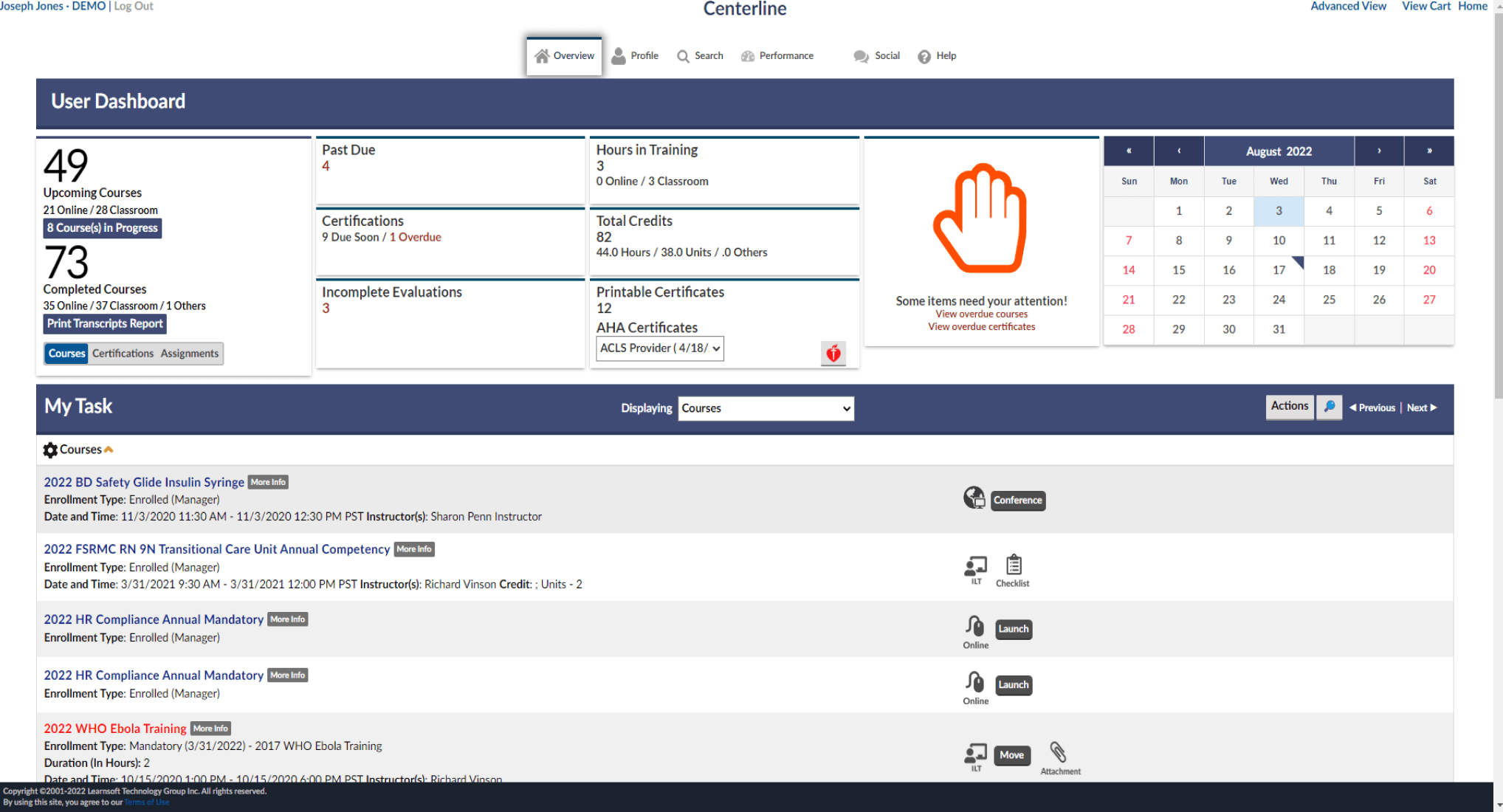
Learnsoft offers a configurable platform that’s content- and feature-agnostic and designed to integrate with existing third-party human resources systems. Using Learnsoft, companies can set training to happen automatically and track metrics like accreditation, as well as generate proof of credentials and certifications for management reviews and audits.

Learnsoft

Image Credits: Learnsoft

One of Learnsoft’s more unique capabilities is AI-powered learning recommendations based on users’ current job positions. The platform creates a job position profile broken down into sections, including requirements, skills and competencies, and performance, each of which can come with training courses. If there’s a gap or the algorithms find a worker is interested in certain paths as part of a talent development plan, the system will assign and recommend more training within the organization.

“This indirectly helps the organization with their future talent pool,” Abt said. “Traditional programs — and old-guard technology companies — don’t provide the ability to bring all training types into one single platform (e.g., instructor-led, digital), and they lack the features that learners and workers require to remain engaged with the content.”

Rivals like LearnUpon, WorkRamp and Go1 would surely beg to differ. But Abt points to Learnsoft’s growing customer base as evidence that the company is successfully standing apart from the crowd. Learnsoft currently serves 19 customers concentrated in healthcare and government, including the American Heart Association, Iowa Veterans Home, Kansas Homeland Security, MaineHealth and the Missouri Department of Natural Resources. Abt claims that the company has been profitable “since inception” — and remains that way.

“We typically come up against broad training players like Cornerstone, Oracle, Workday and other enterprise LMS solutions, but they can’t deliver the same level of industry-specific, compliance-ready solutions we can,” Abt said. “Legacy human resources technology players don’t offer software-as-a-service-ready platforms tailored to meet the needs of compliance-heavy industries such as healthcare and government in a user-, instructor- and leadership-friendly manner.”

According to Abt, the bulk of the new cash from the Series A — Learnsoft’s first external round — will be put toward a “more sophisticated” go-to-market strategy and expanding sales and marketing efforts, as well as bolstering product development. As a part of that last bit, Learnsoft plans in the coming months to launch an app to enhance the experience on mobile.

Elsewhere Partners founder Chris Pacitti added in an emailed statement: “The relationship between employers and workers has shifted dramatically in recent years thanks to pandemic pressures and the rise of the remote workforce. Companies taking a cookie-cutter approach to training and development pay the price when it comes to recruiting and retention … In addition to readily meeting employee needs and the increased call for upskilling and reskilling opportunities, both private and public sector organizations also require adaptability in their learning systems and technology that meets changing compliance demands. Learnsoft has a proven approach, technology stack and superior client service model that is ready to scale.”


Falkon closes $16M round to automate sales workflows and analyses

Falkon, a sales analytics platform that uses AI to attempt to show where successful product sales are occuring in an organization, today announced that it raised $16 million in a funding round led by OMERS Ventures with participation from Greylock Partners, Trilogy Financial, Flying Fish Partners and Madera Partners. CEO Mona Akmal says that the new money — which brings the company’s total raised to $20 million — will be used to build integrations with workflow partners, support product research and expand the size of Falkon’s team from 20 to 30 employees by the end of the year.

Akmal started Falkon in 2020 alongside Josh Zana and Aakash Kambuj as an “augmented analytics” company with the goal of improving business operations through analysis and automation. They’d all three worked together on the OneDrive team at Microsoft and went on to spend time at Dropbox, Amazon, Amperity, Code.org and Zulily. Akmal was the VP of product and engineering at Code.org and the head of product at Amperity, while Kambuj previously headed engineering at Dropbox’s search team. Zana, meanwhile, was a senior software developer at Amazon working on the Fire TV line of devices.

“Our thesis was that while companies collect mountains of data, the return on investment on it remains low because it’s predominantly used in dashboards and reporting, not daily actions and automation,” Akmal told TechCrunch in an email interview. “The modern data stack has seen billions of dollars of investment but requires a massive and expensive workforce of data engineers, scientists and analysts to mine data for insights. These people are in high demand and there aren’t enough to go around. So for the 90% of companies that can’t hire and retain such talent at scale, there must be solutions like Falkon to get the same value from data that we’ve all been promised.”

Falkon

Image Credits: Falkon

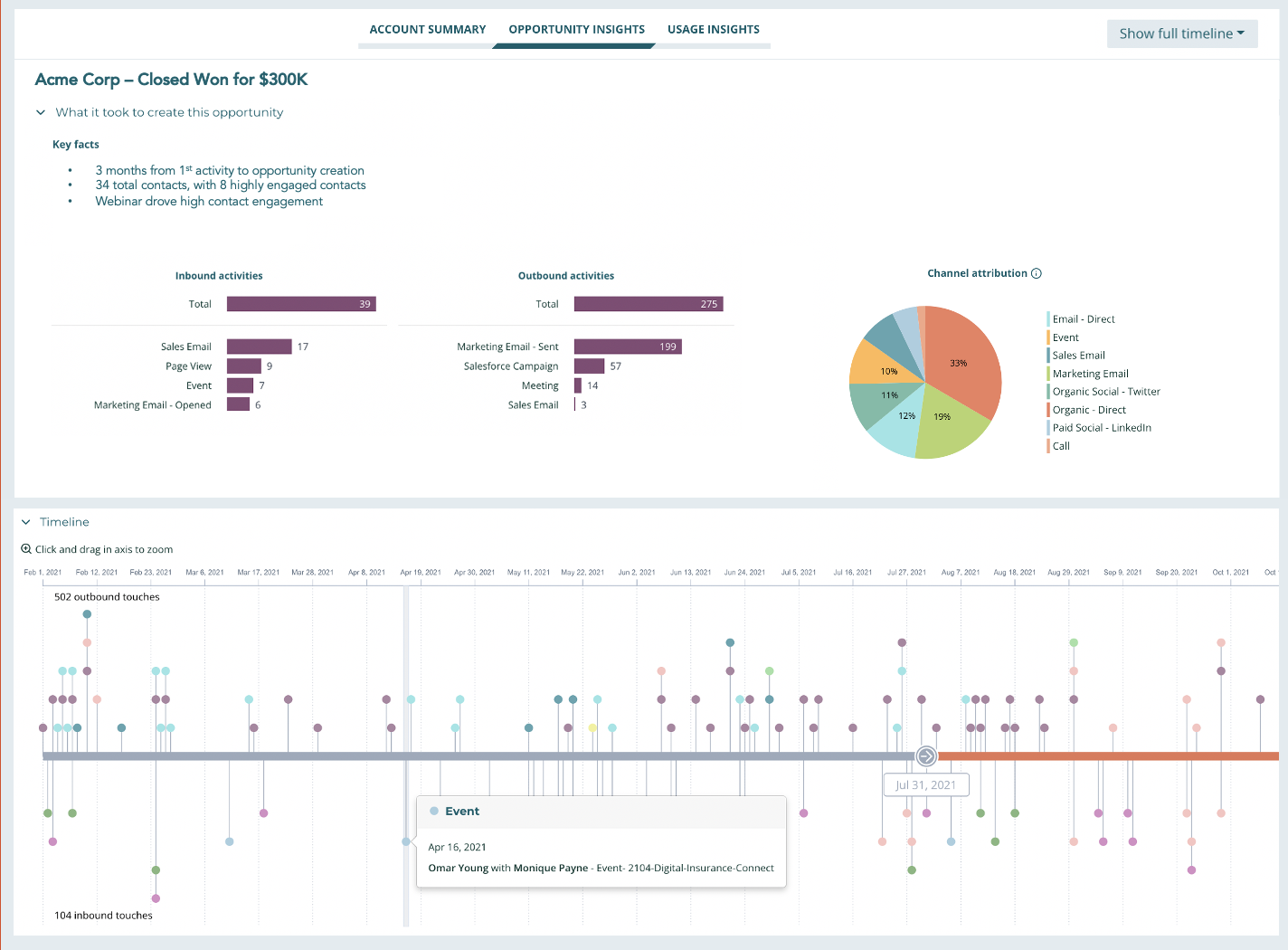
Falkon’s platform tries to unify a company’s go-to-market data (e.g. product usage metrics, customer relationship management and sales enablement data and web traffic), de-duplicating the info and generating “data-driven” recommendations for sales and marketing teams — specifically sales development representatives, account executives and account managers. Falkon can uncover “stuck” sales pipelines and find new opportunities, according to Akmal, through algorithms and a collection of apps that can be used together or individually.

Falkon users can connect business intelligence tools to the platform to do reporting on customer accounts, contacts and channels data. Insights are delivered via Slack, email and embedded apps in services from Salesforce and other vendors; Falkon can automate workflows like enrollment in marketing campaigns and Salesforce task creation.

“Go-to-market intelligence is a fractured space with many point solutions. We take a horizontal and comprehensive approach,” Akmal said. “We use econometric techniques, [relying] on one fundamental approach: Success prevalence. Tactics that are often prevalent in successful outcomes (like deals being won, standout reps and features used by customers that convert) and less often present in failure outcomes (like deals being lost and underperforming reps) are the winning tactics and companies should bet on them more than losing tactics, which are detected through the same approach.”

Akmal wouldn’t reveal revenue figures but claimed that Seattle-based Falkon is seeing brisk uptake, with a customer base that includes Redis Labs, Icertis and Zendesk.

“With the market correction that’s happening in the tech world, companies are starting to care about the operational efficiency of their go-to-market teams through insight and automation, so our message is resonating strongly,” Akmal continued. “While we’re encountering some budget freezes, we’re working through this with creative pricing … We feel good about our position there.”


5 investors discuss what’s in store for venture debt following SVB’s collapse

There are many questions around the implications of Silicon Valley Bank’s (SVB) collapse that won’t be answered for a long time. But there’s...