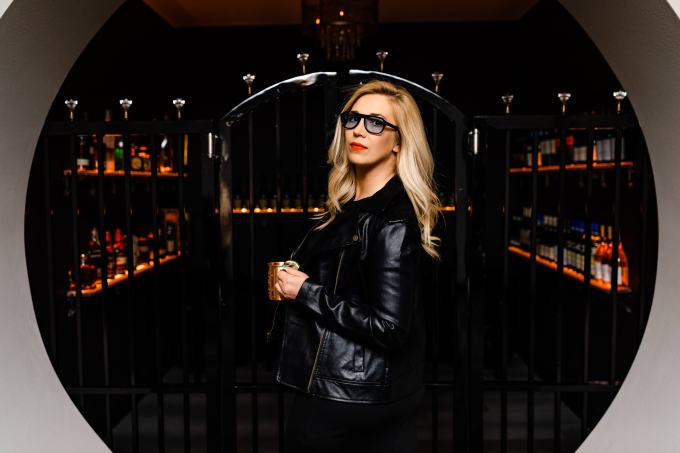
Can reading glasses actually be cool? A new eyewear company called Cheeterz Club thinks so. The startup is working to change the perception of reading glasses from being just cheap, disposable items you pick up from a rotating display rack at your local drug store to being something you’d actually be proud to wear. To do so, the company is designing its glasses with quality lenses and frames in range of styles, while still keeping the pricing affordable.
The startup — whose name is a reference to the slang term for glasses, “cheaters,” — was founded by Jennifer Farrelly, whose background includes work in advertising and sales at companies like Uber and Virool.
She said the idea to make a better set of readers came to her because she found herself frustrated by the current options on the market.
“It all started a few years ago. My friends were posting on social media these really depressing comments and posts like: ‘I’m old and turning into my parents, this is awful.’ And I [thought to myself] why does it have to be like that? I feel just as young today as I did ten years ago,” Farrelly explains. “Why are my friends and I feeling forced to feel old because of something that happens overnight?,” she says, of what felt like the sudden onset of middle age and the hardships it brings.
What’s worse, Farrelly says, is that when you finally make your way to the drugstore to pick out some reading glasses, all you’ll find are bad, plastic pairs that both look and feel cheap.
“That’s even more demoralizing,” she adds.
OLYMPUS DIGITAL CAMERA
So Farrelly teamed up with a former Warby Parker and Pair Eyewear Head of Product, Lee Zaro, to design a new line of more fashion-forward eyewear.
Zaro, who’s based in the L.A. area, immediately saw the opportunity.
“Drugstore reading glasses are typically poor in quality, and can feel like they are designed with our parents in mind, leaving a huge unmet need for sophisticated eyewear options,” he said. “When Jennifer approached me to help design her first line of eyewear, I knew it was a brilliant idea.”
To differentiate itself from lower-end readers, Cheeterz Club glasses are made with 100% acetate and feature spring hinges and stainless steel. The lenses, meanwhile, offer more clarity than is often found in reading glasses.
Image Credits: Cheeterz Club
Typically, ophthalmic plastic lens materials have an Abbe value — a measure of the degree at which light is dispersed or separated — between 30 and 58. The higher number offers better optical performance. Crown glass can have an Abbe value as high as 59, but polycarbonate readers (like those from Warby Parker, Farrelly notes) would have an Abbe value of 30. Cheeterz Club lenses, which are CR-39 lenses, are at at 58. This is a difference you can tell when trying the glasses on alongside your drugstore readers.
Cheeterz’ lenses also offer 100% UVA/UVB protection, and are oil and water repellent. They can optionally be bought in one of eight fashion tints, from pink to blue, or in two sun shades. Consumers can also opt to add Blue Light coating to help with screen-induced eye fatigue or they can choose Progressive lenses, which combine distance vision with a reading lens.
Tints are an extra $10, Blue Light protection is $25, and Progressive lenses are $40.99 — lower than market rates.
At launch, Cheeterz Club offers 14 different styles ranging from traditional to the more modern, starting at $28.99.
Farrelly says finding the right price was key, because unlike regular glasses, consumers often buy multiple pairs of readers to leave around the house or car, pack in purses and bags, and so on.
“If I break something that costs me a couple $100, I’d be really upset about it,” she says. “But at a drugstore price of under $30, I can have them in all sorts of colors and different tints.”
For Farrelly, making the startup a success goes beyond brining higher-quality reading glasses to market. It’s also about serving a demographic that often gets overlooked.
“Founders in their forties do not get representation, and it’s unfortunate. And there are also people in their forties and fifties that have disposable income and are looking for cute things. They’re spending so much money on facial creams and Botox,” she says, “but then you’re forced to put this really ugly pair of glasses on your face that make you feel bad about yourself.”
While Cheeterz Club today is selling direct to the consumer, the company is talking to eye doctors, boutiques and others who may eventually resell for them, as more of a B2B model. It’s also testing selling on Amazon with one pair of Blue Light glasses.
Cheeterz Club plans to start discussing fundraising with seed investors later this fall.
Founded in 2012, Whoop is far from a household name in the world of fitness trackers. But over the years, the company has attracted its share of converts. It hasn’t had any issue attracting venture capital over the years, either. Last time we checked in on the Boston-based company was in late-2019, when it raised $55 million. Now it’s back with a massive $200 million raise.
The Series F round brings Whoop’s total funding to nearly $405 million — a pretty massive investment for a company of its size. The round, led by SoftBank’s Vision Fund 2, puts the valuation at a jaw-dropping $3.6 billion valuation.
Additional investors include IVP, Cavu Venture Partners, Thursday Ventures, GP Bullhound, Accomplice, NextView Ventures and Animal Capital. They join a long list of former backers, including the National Football League Players Association, Jack Dorsey and a number of professional athletes.
The company’s targeting of athletes marks a strong contrast with leading consumer wearables like the Apple Watch and Fitbit. In fact, the company has a specific offering for sports teams, as well as solutions for businesses, healthcare and government/defense.
Whoop’s name made the rounds recently when Fitbit announced a “Daily Readiness Score” for the Charge 5, which many likened to the company’s more advanced analytics.
The company cites “rapid growth” in its membership offering over the past year as a motivation behind seeking additional funding. That was likely driven, in part, by the decision in 2019 to make the $500 wearable free, while focusing on a subscription service that starts at $18 a month for an 18-month membership (the shorter the membership, the more the monthly fee).
Whoop is eying international expansion beyond the U.S. and using the massive influx of cash on R&D for its hardware, software and analytics solutions. Money will also go toward expanding headcount, which is currently in excess of 500 (with nearly half of those employees having joined in the past year).
“We are thrilled to deepen our partnership with SoftBank as we grow internationally,” founder and CEO Will Ahmed said in a release. “While we have experienced amazing growth in the past year, the potential of our technology and the vast market for health monitoring remains largely untapped.”
Amsterdam-based challenger bank Bunq is updating its service with a handful of new features. In addition to Dutch, German and French bank account numbers, existing and new users in Spain can now get a Spanish IBAN.
European IBANs are supposed to work across Europe. Your employer or internet provider can’t force you to get a local IBAN. And yet, that’s rarely the case. When you move to another European country, chances are the first thing you do is that you open a local bank account.
While European fintech companies have teamed up to create a lobbying effort called ‘Accept my IBAN’, some challenger banks, such as Bunq, are adding the ability to get local bank account numbers as an intermediary fix. Bunq users can also choose to associate IBANs from multiple European countries with their account. You have to pay a one-time fee of €9.99 every time you add a new local IBAN.
Bunq is also drawing inspiration from Revolut, Wise, Vivid Money and others as you’ll soon be able to receive, convert and hold other currencies. For instance, if you’re going to a non-Euro country for an internship, you will be able to receive your salary on your Bunq account. Bunq is starting with USD accounts with plans to add more currencies down the road.
Other new features include the ability to receive reminders the day before a direct debit occurs, a subscription view that lets you view current subscriptions and when they’re set to expire, an improved search feature and the ability to automatically accept direct debits and payment requests from your friends — make sure you set up a limit before enabling that feature.
Bunq recently announced plans to raise $228 million (€193 million) at a $1.9 billion valuation (€1.6 billion). The investment round hasn’t been approved by the Netherlands’ banking regulator just yet. Bunq is currently operating in 29 European markets and has more than €&billion in user deposits.
Whether intended for business use or a consumer audience, these characteristics are pivotal in developing a successful application. Apps must be compatible with a wide range of systems and platforms, capable of effortless scaling, and intuitive without sacrificing data security. Even for a development team that’s perfected the principles of DevOps, that’s a tall order — arguably an impossible one.
The solution? Cloud-native development built on a microservices architecture. And that’s exactly where Kubernetes comes in.
What is Kubernetes?
(Image credit: Shutterstock)
As one of the world's most popular container orchestration platforms, the open-source Kubernetes automates a significant volume of the manual work typical of application development.
Originally developed by engineers at Google Alphabet before eventually being donated to the Cloud Native Computing Foundation, Kubernetes is supported by a thriving open-source community.
Through its container-based approach, Kubernetes considerably streamlines and simplifies application development.
To understand how and why, however, we'll first need to define a few basic concepts of the solution.
Kubernetes containers
(Image credit: Shutterstock)
Containers have a lot in common with virtual machines, being that they're isolated virtual environments in which software can be executed. The primary difference is that VMs typically run operating systems or virtual desktops independent of their host server. Containers, meanwhile, all share the host's OS.
How exactly does that make them beneficial from a development standpoint, though?
Per technology talent acquisition specialist Built In, the core concept of a development container is similar in nature to a meal kit. Just as meal kits include everything someone needs to prepare a meal at home, a container bundles everything required for an application to run. This is beneficial for several reasons:
Kubernetes further amplifies these benefits by automating the configuration, deployment, management, and scaling of its containers via microservices.
Kubernetes and microservices architecture
(Image credit: Shutterstock)
Generally speaking, there are two choices when it comes to architecting a cloud application. The first, monolithic architecture, is precisely what it sounds like. All components of a monolithic application are built as a single, contiguous system.
Microservices-based applications, meanwhile, are built from multiple services or components, each of which can function independently of the others. By leveraging microservices in application development, one can more easily construct complex, scalable, resilient applications.
On the other hand, microservices architecture can be extremely complex to manage, particularly in terms of load balancing, resource allocation, and integration between services.
One of the most significant benefits of Kubernetes is its capacity to automatically and strategically deploy computing resources as-needed across microservices. It also automatically facilitates communication between those services.
An organization using Kubernetes can thus put the challenges involved in microservices architecture out of mind, and instead focus on the benefits it provides.
Nodes, pods, and service discovery
(Image credit: Shutterstock)
The load balancing and automation functionality of Kubernetes is largely based on how the platform is architected and how API components are organized within the framework.
The Service Discovery Pattern is the core of how all these components slot together. It's crucial to actually running applications on Kubernetes, as well as load balancing.
Kubernetes primarily deploys and manages its components through service discovery. Each object in Kubernetes is linked to two unique values, known respectively as labels and annotations. Service Discovery leverages these values to identify pods and associate them with specific services through selectors.
In some cases, another component, known as a controller, may be leveraged when multiple services share the same endpoint or load balancer.
The importance of cloud-native development
(Image credit: Shutterstock)
Although Kubernetes is not explicitly intended for cloud application development, it's through a cloud-native approach that the platform truly shines.
Cloud-native development already allows developers to strip away infrastructure layers and their associated costs. It already enables faster deployment, particularly since there's no need to create specialized code for each operating environment.
Kubernetes takes that a step further, combining its microservices architecture with the serverless nature of cloud development to facilitate self-healing containers, better load balancing and resource distribution, automatic scaling, and credential management.
What are the development benefits of Kubernetes?
(Image credit: Shutterstock)
We've already touched on a few of the ways Kubernetes can benefit development teams. Now that you understand a bit more about how the platform works, let's take a deeper dive. By deploying Kubernetes through a public cloud, your team can:
Why OVHcloud is the perfect Kubenetes provider
(Image credit: OVHcloud)
Deployed via a public cloud, Kubernetes provides a wealth of incredible benefits. Through OVHcloud, those benefits can be employed to their fullest extent. First and foremost, it manages the entire Kubernetes backend. That includes security patches, updates, and maintenance of all core Kubernetes components.
These components are all operated entirely in-house, maintained in its own secure data center. All you need to do is download your Kubernetes config file, and you'll have access to all the features of a certified Kubernetes service.
Your developers can focus exclusively on building and deploying their software, secure in the knowledge that their Kubernetes instance is in good hands.
OVHcloud also features powerful, on-demand availability, stable performance, and seamless upgrade capability through their public cloud instances. These flexible and scalable Discovery instances are ideal for the Kubernetes novice, allowing users to try Kubernetes without breaking the bank.
OVHcloud is also well-positioned to help your business grow. Its reliable cloud infrastructure is built to support even the most demanding high-availability applications. And the platform makes it easy to adapt and grow your Kubernetes deployment on-demand, effortlessly redefining the health conditions for any Kubernetes service.
OVHcloud's infrastructure is also built to the most exacting security specifications. The servers are compliant with regulations such as HIPAA, and fully ISO/IEC 27001, 27017, 27018, and 27701 certified. The information security management system (ISM) will also help manage risks and vulnerabilities, ensuring both peace of mind and business continuity.
Finally, because OVHcloud understands the importance of your bottom line, it offers competitive pricing on all products and services. It doesn’t charge fees on clusters on the Kubernetes offering, and the public cloud services are billable either monthly or by the hour. With OVHcloud, you pay exclusively for what you use.
A recent market analysis is showing the price of the best graphics cards ticking back up after months of decline, meaning the market might not be ready to return to normal any time soon.
Prices for AMD and Nvidia graphics cards analyzed by 3DCenter show an increase of about 9% for Nvidia cards and about 6% for AMD, putting the average price for Nvidia cards about 59% above MSRP and about 64% for AMD's.
This is still much better than it was just a few months ago, however. Back in May, as TechPowerUp points out, the average price for an Nvidia card hit a high of around 304% above MSRP, with AMD cards seeing a 202% markup on average.
It appears that even though China's cryptomining crackdown forced a lot of mining cards to be resold, this has helped ease prices, but not as much as we'd have liked as other factors keep upward price pressure on the graphics card market.
Analysis: we're not nearly out of the woods yet on graphics card woes
While the bump in prices isn't as gobsmacking as it was earlier this year, it does indicate we've reached something of a floor for graphics card prices for the time being, and prices are only set to rise.
With last week's news that TSMC is hiking the price of newly fabbed wafers, even if supply issues start to ease up later this year, it won't be enough to bring the price of the these cards down enough to their original MSRP if their MSRP gets bumped up as a result.
What's more, the cryptomining boom looks like it's more durable than its critics believed, so there isn't going to be as much let up on that side of the ledge any time soon.
All this points to a more prolonged graphics card shortage than we'd originally hoped for and even when they do get here, they're going to be more expensive regardless. How any of this eases is anyone's guess at this point.
After its unveiling way back at CES 2021, LG has finally put a release date to its brand-new gaming soundbar, the LG UltraGear Gaming Speaker GP9.
The speaker is due out in September in South Korea, the US and parts of Europe. While we still don’t know the price, LG has given us all the specs and features – some of which sound absolutely amazing for gamers, cinephiles and audiophiles alike.
Among the newly announced features are LG’s proprietary 3D Gaming Sound technology that utilizes a special HRTF (head-related transfer function) algorithm to simulate virtual surround sound that you’d hear from a gaming headset in a two-channel soundbar. It’s also DTS:X Headphone-certified which means you’ll be able to hear some spatial audio effects in movies as well.
We also now know that the GP9 will use a built-in Hi-Fi Quad DAC (ES9038PRO) and supports Hi-Res Audio, which is perfect for audiophiles who want to get in a listening session between matches, as well as a built-in microphone that allows you to talk with your teammates without putting on a headset. For gamers, that alone could be a real game-changer.
A soundbar designed with monitors – and consoles, phones and PCs – in mind
LG obviously designed the GP9 to be paired with one of its UltraGear monitors – like, say, the stunning LG UltraGear 38GN950 – but there’s no feature that’s exclusively locked to LG hardware. If you want to pair it with a different monitor, go right ahead.
In fact, according to LG, the soundbar works with both PCs and the latest gaming consoles via a USB-C and optical audio cable, but there’s also Bluetooth if you want to stream music from your phone or tablet, too.
LG isn’t the first to make a gaming soundbar by any means – Creative, Panasonic and Polk have all made a gaming-specific model – but LG’s does seem to be the most robust yet, and to our knowledge it’s the only one that supports Hi-Res Audio.
While it's unlikely to overtake your living room's surround sound anytime soon, if it's priced appropriately the LG UltraGear Gaming Speaker GP9 could be a great alternative to standard PC speakers and a replacement for your constantly breaking gaming headset.
Need a bigger soundbar for your home theater? Check out our guide to the best soundbars
The Apple TV Plus show Ted Lasso may have stolen our hearts, but the internet is abuzz that the latest episode gave us something: a quick look at a notchless iPhone, perhaps even a sneak peek at an iPhone 13, which is rumored to launch on September 14.
(Image credit: Apple TV)
That’s a massive ‘perhaps,’ but before we get into explanations, let’s look at the evidence. In the episode, the Richmond team owner Rebecca Welton’s mother is in town and receives a call on her phone. While we don’t get the best view, it looks to lack a notch – and a few seconds later, we can see it’s clearly meant to look like an iPhone 12 thanks to its flat edges and rear camera block.
(Image credit: Apple TV)
Curiously, another scene later in the episode shows Rebecca’s phone also doesn’t have a notch when she sets it on her bed. And yet, moments later, the front of the phone is shown with its signature notch. But unlike the handset shown earlier in the episode, this phone’s rounded edges suggest it’s an iPhone 11 model (at least).
(Image credit: Apple TV)
In sum, we have two seemingly different phone designs with a disappearing notch, suggesting this isn’t exactly an iPhone 13 that Apple slipped into one of its premiere original shows. Odds are this was some prop iPhone or, more likely, CGI layered on top of phones in post-production, and they either forgot to add a notch back in or just didn’t care. Who would quibble over a small black tab?
Analysis: probably not a notchless iPhone 13 – here's why
It’s entirely possible that Apple slipped one or multiple iPhone 13 models without notches into an episode of one of its shows – and specifically this episode, given we haven’t heard about a notchless iPhone before. But every rumor we’ve heard suggests we’re very likely stuck with those big black tabs in this year’s iPhone 13 range.
There is some good news: multiplerumors have suggested the notch will be smaller, in leaked component photos and 3D-printed mock-ups, with some suggesting it will be 30% slimmer than the iPhone 12’s cutout. Rumors agree across the board: the iPhone 13 will have a notch.
Rumors also suggest that the standard iPhone 13’s two rear cameras will switch to a diagonal arrangement (purportedly to fit larger lenses and/or components), while Rebecca’s mother’s phone has the same vertical rear camera setup as the iPhone 12.
Apple will likely retire the notch from its iPhones at some point, though its Face ID relies on extra sensors that have accompanied its front-facing camera, and we’re not sure if a single shooter in a punch-hole would cover it. Rumors suggest Apple is looking into under-display cameras, but that may not arrive until the iPhone 14 in 2022 or foldable iPhone Flip in 2023, as analyst Ming-Chi Kuo predicted. We’ll wait and see what the iPhone 13 actually brings, but we wouldn’t expect Ted Lasso, of all shows, to quietly give a sneak peek of the next iPhone we expect to launch soon.
The cybercriminals behind the Ragnarok ransomware have decided to close up shop and have now released the master key capable of decrypting files locked with their malware.
As reported by BleepingComputer, the Ragnarok ransomware gang didn't even leave a note explaining the move. Instead, they replaced all of the victims on their leak site with a short set of instructions that informed them how they could decrypt their files using the now publicly available master key.
At the same time, the group's leak site, which was used to shame victims into paying to decrypt their files, has been stripped of all visual elements. The site now only has several text boxes with instructions as well as an archive containing the master key and the binaries that go along with it.
Also check out our roundup of the best firewall solutions on the market
Normally when ransomware groups shut down, they often leave a note explaining their actions or reach out to a news outlet as was the case with the GandCrab ransomware group in 2019 and the Maze ransomware group last year. While GandCrab explained why it was shutting down in a post on a popular hacking forum, the operators behind the Maze ransomware personally reached out to BleepingComputer to explain their decision.
Victims off the hook
Up until recently, the Ragnarok ransomware leak site provided details on 12 victims whose companies are located in France, Estonia, Sri Lanka, Turkey, Thailand, the US, Malaysia, Hong Kong, Spain and Italy and operate across a variety of industries from manufacturing to legal services.
BleepingComputer also spoke to ransomware expert Michael Gillespie who confirmed that he was able to decrypt files locked using the Ragnarok ransomware with the master key. However, a universal decryptor for the Ragnarok ransomware is currently in development by Emsisoft which is also working on a decryption utility for the SynAck ransomware whose operators closed up shop earlier this month.
The Ragnarok ransomware group has been active in the wild since at least January of last year. The group gained notoriety for exploiting the Citrix ADC vulnerability to encrypt the systems of dozens of victims.
We'll have to wait and see if the cybercriminals behind Ragnarok are developing a new ransomware strain or if they've officially called it quits for good.
Ricardo Sangion previously launched operations for Facebook and Pinterest in Latin America, before joining operator-led global investors TheVentureCity as partner for first-ticket investments in the region.
There has been significant hype around Latin America’s startup success. For good reason, too: Startups have raised $9.3 billion in just the first half of 2021, almost double the amount in all of 2020, and mega-rounds are a growing trend.
But while the industry hails the rise of the region’s ecosystem and its growing fleet of unicorns, Latin America’s startup story has a far longer past. And it’s one we should keep in mind as entrepreneurs and investors around the world forge the region’s future.
People often ask me: How are consumers different in Brazil? How does the Peruvian market behave compared to the United States? These questions don’t really see each country for its inherent value, but instead gear people up to expect the unexpected from a historically economically disadvantaged region.
In fact, the evolution of business shares far more similarities across countries than we might expect. Latin America’s market has evolved over a very long time — as long as Silicon Valley and any other hub. This region has a global outlook, spectacular universities, a diverse population and an army of entrepreneurs.
It’s important for investors outside of Latin America to get involved in fundraising at earlier stages, when founders need extra support from everyone around.
That’s why the unicorns and megadeals should come as no surprise: They’re the natural evolution of the ecosystem, of more capital generating more success after years of hard work.
As Latin America has grown, competition has grown even more intense in the United States. VCs have more money than ever, and it’s getting increasingly expensive to invest in North America. So they’re looking to diversify their investments with high-potential opportunities abroad. Big funds are now dedicating resources to exclusively targeting Latin America, from SoftBank creating a region-specific fund, to Sequoia saying it will pay more attention to the region.
These incoming investors must bring more than money to ensure that entrepreneurship continues to grow in a healthy manner, rather than set it off balance. Investors should bring a local strategy that makes them an asset to Latin America’s startup ecosystem.
Investors should look for younger markets
Most Latin American companies reaching unicorn status and going public now were started around 2012. This is not very different from the timeline of businesses in other markets such as the United States. For instance, e-commerce giant MercadoLibre launched in Argentina around the time eBay was emerging.
What this tells us is that foreign investors would do well to keep a sharp eye on emerging opportunities beyond heavily covered markets like Brazil and Mexico. There is a huge opportunity to do what local investors did in Brazil and Mexico years ago, and play a significant role in the next chapter of countries with blossoming markets like Colombia, Peru or Uruguay.
U.S. investors remain shy
The amount of VC capital being funneled into Latin American startups has surged since 2017, with angel investment close behind. However, much of this investment comes from local and regional investors. Every top university in Brazil has a pool of angels. Investors in the Andean region cover Peru, Chile and Colombia. If today’s ecosystem is flourishing, it’s largely because native investors are lighting the spark.
Meanwhile, U.S. investor presence at the early stages is still low and risk averse. It’s much harder for a pre-seed or seed startup to get foreign investor interest than when they’ve already reached Series A or B. Investors also tend to come in on an ad hoc basis or as outliers brought about by a mutual contact. Foreign investors are the exception, not the rule.
It’s important for investors outside of Latin America to get involved in fundraising at earlier stages, when founders need extra support from everyone around. Investors should be pursuing a long-term strategy that will bring more consistency to the local ecosystem as a whole.
Money is not enough, investors should bring dedicated resources
Your contribution as an investor is largely about the resources you can offer. That’s especially challenging for a foreigner who has less of an understanding of the local industry and lacks a network and people on the ground.
While investors may say their your regular value offering is enough — network and U.S. customers — in truth, this won’t necessarily be of much use. Your hiring network might not be ideal for a Latin American company, and your thorough understanding of the U.S. market might not reflect developments in Latin America.
Remember that the region has a plethora of VC organizations who have worked with local startups over the course of a decade. Latin America is a very welcoming and open market, and local investors and accelerators will happily work with foreign investors, including in deal-sharing opportunities.
It’s crucial to create incentives within the ecosystem, which — like in the United States — largely means matching founders with unique opportunities. In North America, this often happens organically, because people are on the ground and actively engaged with what’s happening in the region, from networking events, to awards, and grants and partnership opportunities.
To create this in Latin America, foreign investors need to dedicate a team and money to their regional commitments. They will have to understand the local industry and be available to mentor founders with diverse perspectives.
In my experience helping EA, Pinterest and Facebook land in Latin America, we always had someone on the ground or working remotely but fully dedicated to the region. We had people focused on localizing the product, and we had research teams studying similarities and differences in user behavior. That’s how corporations land their products; it’s how VCs should land their money.
Only disrupt when it adds value
The idea is for foreign investors to strike a balance locally while creating disruptions when it helps startups look outward rather than attempting to overhaul steady, positive internal growth. That can mean encouraging companies to incorporate in the United States to make it easier for investors from anywhere to invest or preparing the company to go global. Local investors can help investors new to the region understand the balance of things that should or shouldn’t be disrupted.
Don’t be surprised when Latin America’s apparent “boom” starts happening in other emerging markets like Africa and Asia. This isn’t about a secret hack coming in from the outside. It’s just about creating the right environment for local talent to flourish and ensuring it maintains healthy growth.
Prive, a months-old, San Francisco-based startup founded by two former Uber product managers, just raised $1.7 million in pre-seed funding to create what it describes as a far more customizable e-commerce subscriptions platform for D2C brands.
The round was co-led by Patrick Chung and Brandon Farwell at XFund and Ben Ling from Bling Capital, with participation from Defy Partners, Halogen Ventures and Uber executives.
Founded by Claudia Laurie and Alex Craciun — who both spent two-and-a-half years at Uber and decided, based on their learnings about pricing and incentives, to leave the company earlier this year — Prive aims to better enable small retailers to compete with behemoths like Amazon.
The broad idea is that by plugging into existing APIs from Shopify and other e-commerce platforms, Prive can form an opinion that it sells to merchants about what customers tend to buy on a recurrent basis. Maybe it sees that people who buy razors also tend to buy toothbrushes on a similar cadence, for example. It passes that information along, then helps the brand create more customized, and flexible, offerings so that their shoppers are presented with items they might want, as well as can more easily cancel items that are starting to pile up.
“The market opportunity is huge, and the existing [e-commerce subscription] tools are just scratching the surface,” notes Laurie. Indeed, according to the group eMarketer, subscription e-commerce sales have grown 41% from the start of the coronavirus pandemic, and it foresees that 3% of U.S. retail e-commerce sales will come from subscriptions this year, totaling $27.67 billion. That’s up from $10 billion in just two years.
Of course, a lot has yet to be built, which is where the pre-seed funding comes in. Right now, Prive is a seven-person team with some serious competition, namely from Recharge, a seven-year-old, Santa Monica, California-based subscription e-commerce company that in May raised $277 million in growth capital at a post-money valuation of $2.1 billion. As of that announcement, Recharge had roughly 330 employees and was fueling the subscription service for what it said was 15,000 merchants and 20 million subscribers worldwide.
Other rivals include nine-year-old Bold Commerce (it has raised $44 million altogether), and 10-year-old Chargebee, which has raised around $220 million over the years, according to Crunchbase data.
“E-commerce ‘subscription’ is an incredibly hot buzzword,” Craciun acknowledges. But he also thinks today’s current product offerings are just scratching the service.
Clearly, investors are willing to gamble that he’s right, and that Prive could be a team that proves it.
“Current tools can create more headaches than they actually solve,” says Craciun. “There is a lot of rigidity in today’s subscriptions that makes it very difficult to identify the right recurring mix of offerings. We’re here to break down that mental model.”
It might be time to upgrade to the best 4K monitor. Although arguments can be made for 1080p and 1440p displays, UHD is now having its moment in the sun. 4K content and internals that support them like some of the latest graphics cards (the Nvidia Geforce RTX 3080, to name one) are fast becoming the norm. And, having the right hardware – more specifically, the right computer monitor – is the only way to experience them the way they’re meant to be experienced.
UHD (ultra-high definition) technology has been rapidly improving and becoming more accessible over the last few years, providing a tempting upgrade opportunity. In fact, while there’s a lot of 4K displays that will break the bank, more and more affordable yet still excellent options cheaper than 4K TVs are becoming available as well. A handful of these budget options also come with that curved monitor goodness for good measure.
Beyond future-proofing your rig and getting a better viewing experience, such monitors also deliver extra screen real estate, making them ideal for multitasking and for creative workflows. If you're on the hunt for the best 4K monitor, there's never been a better time to buy. And, we’re here to help you choose with these picks below. Be sure to check out our included price comparison tool while you’re at it to see the best monitor deals.
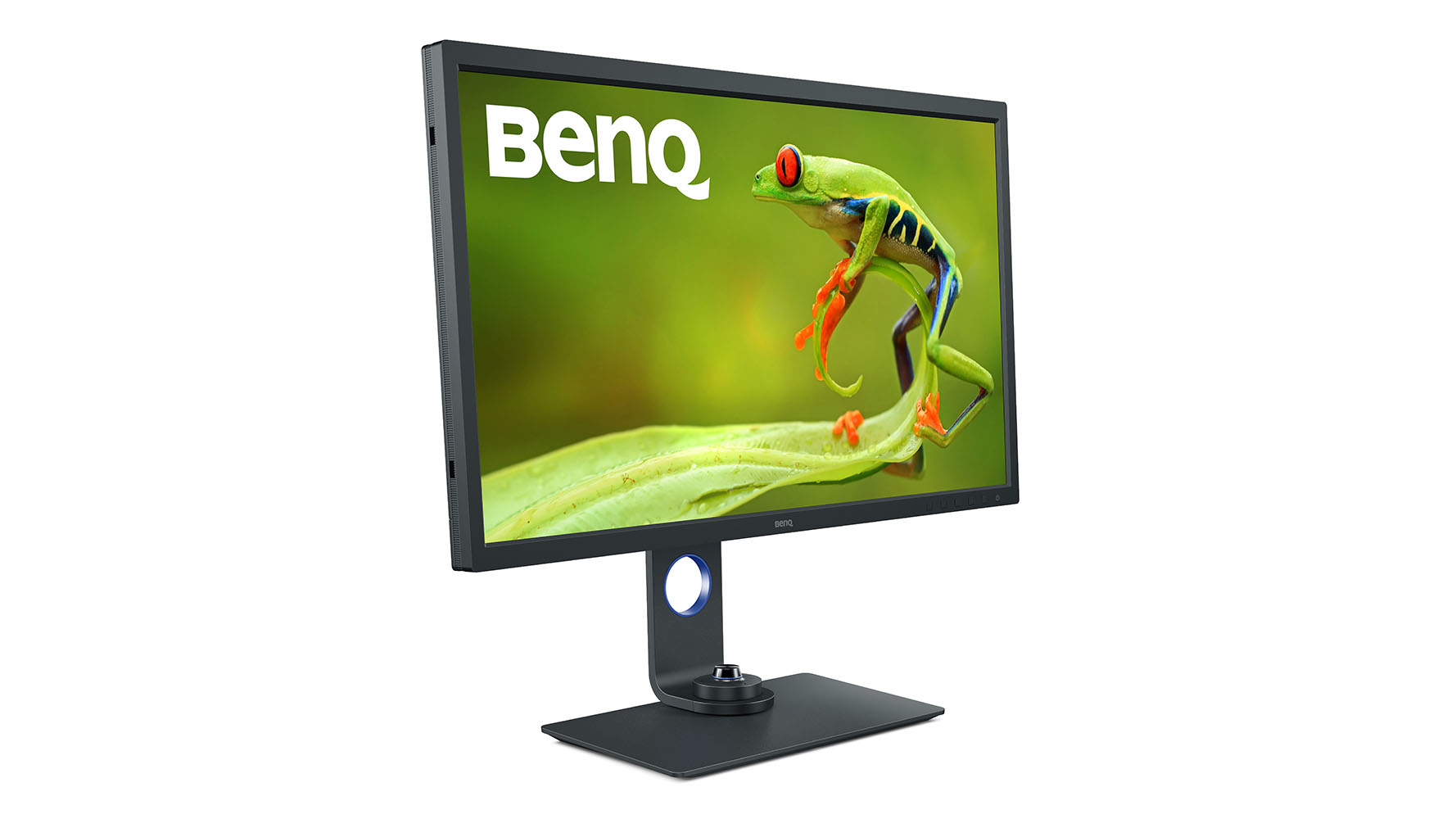
If you’re in the cinematography or photography business, you'll want the BenQ SW321C PhotoVue.(Image credit: BenQ)
‘Paper Color Sync’ needs refining to be truly useful
Pro-level displays are no longer the premium priced, inaccessible purchase they started out to be. At least as far as the BenQ SW321C PhotoVue is concerned. This 32-inch 4K photo monitor is up a step or two in terms of both performance and usability, featuring an incredibly wide color gamut of 99% of the Adobe RGB color space and 95% of DCI-P3. If you’re in the cinematography or photography sphere, that’s exactly what you need. And, that’s on top of all the other features this monitor boasts. This is among the best 4K monitors for photo editing you’ll find, and the best part is you’re getting it for cheaper than all others.
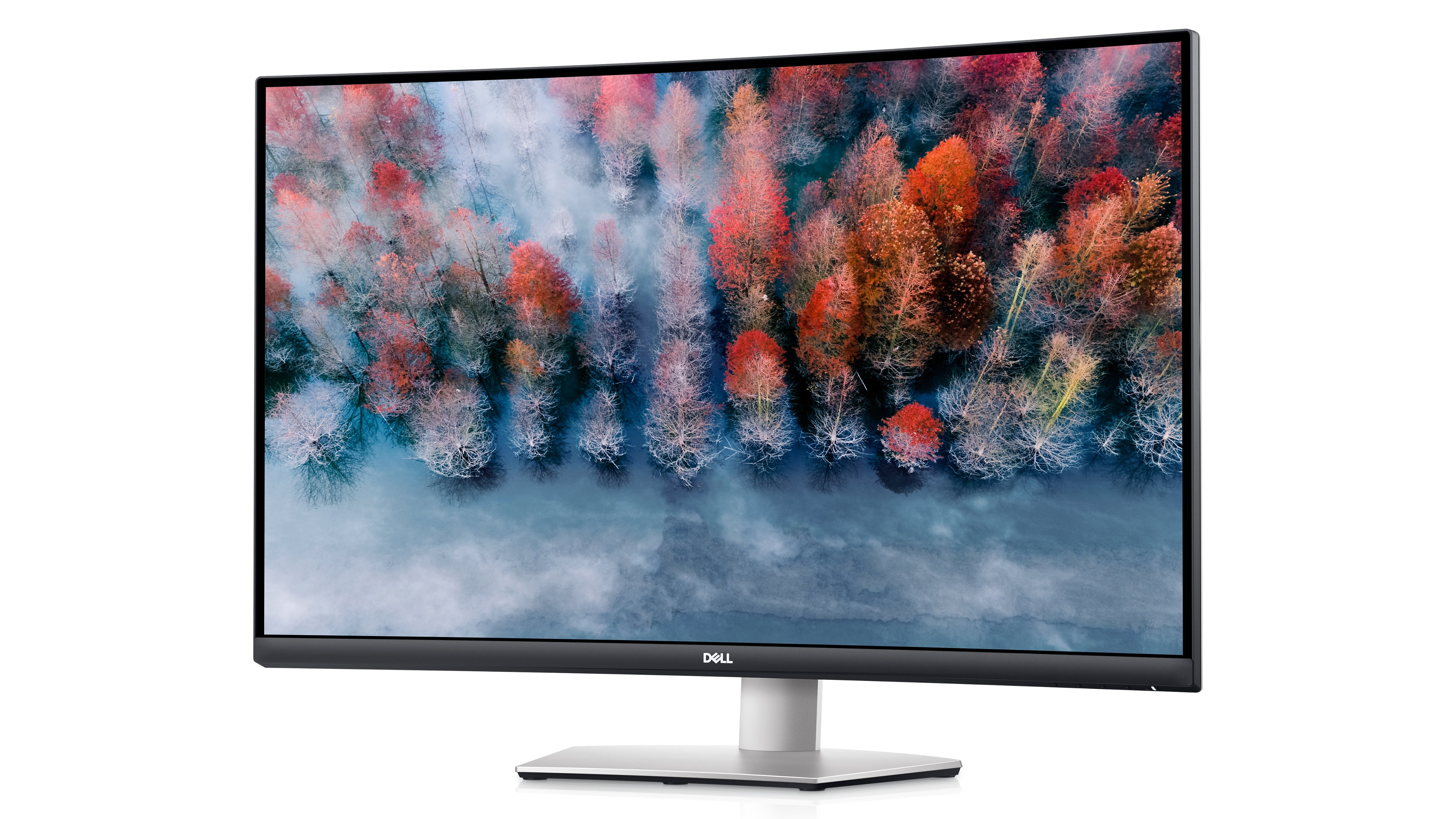
Dell’s 4K monitor is stunning inside and out. We love it’s woven arctic white design that lends to its unique elegant look, allowing it to stand out against the sea of black and gray monitors out there. Its display is impeccable as well. On top of that 4K resolution is a contrast ratio of 3,000:1, support for 1.07 billion colors, up to 4ms response time, and a 178/178 viewing angle that altogether produce stunning, crisp and vibrant visuals that are just as excellent for gaming as they are for media consumption and productivity. It isn’t the cheapest 4K option out there, but the price of entry isn’t bad either. And, considering what you’re getting, you’ll be glad to spend just a little more.
Screen size: 28-inch | Aspect ratio: 16:9 | Resolution: 3,840 x 2,160 | Brightness: 350 cd/㎡ | Response time: 5ms | Viewing angle: 178/178 | Contrast ratio: 1,000:1 | Color support: 90% color gamut, 1073.7M (10bit) | Weight: 7.6 kg
Incredibly affordable
Extremely flexible in viewing positions
Gorgeous, accurate colors
Some stuttering at higher settings
Not true HDR
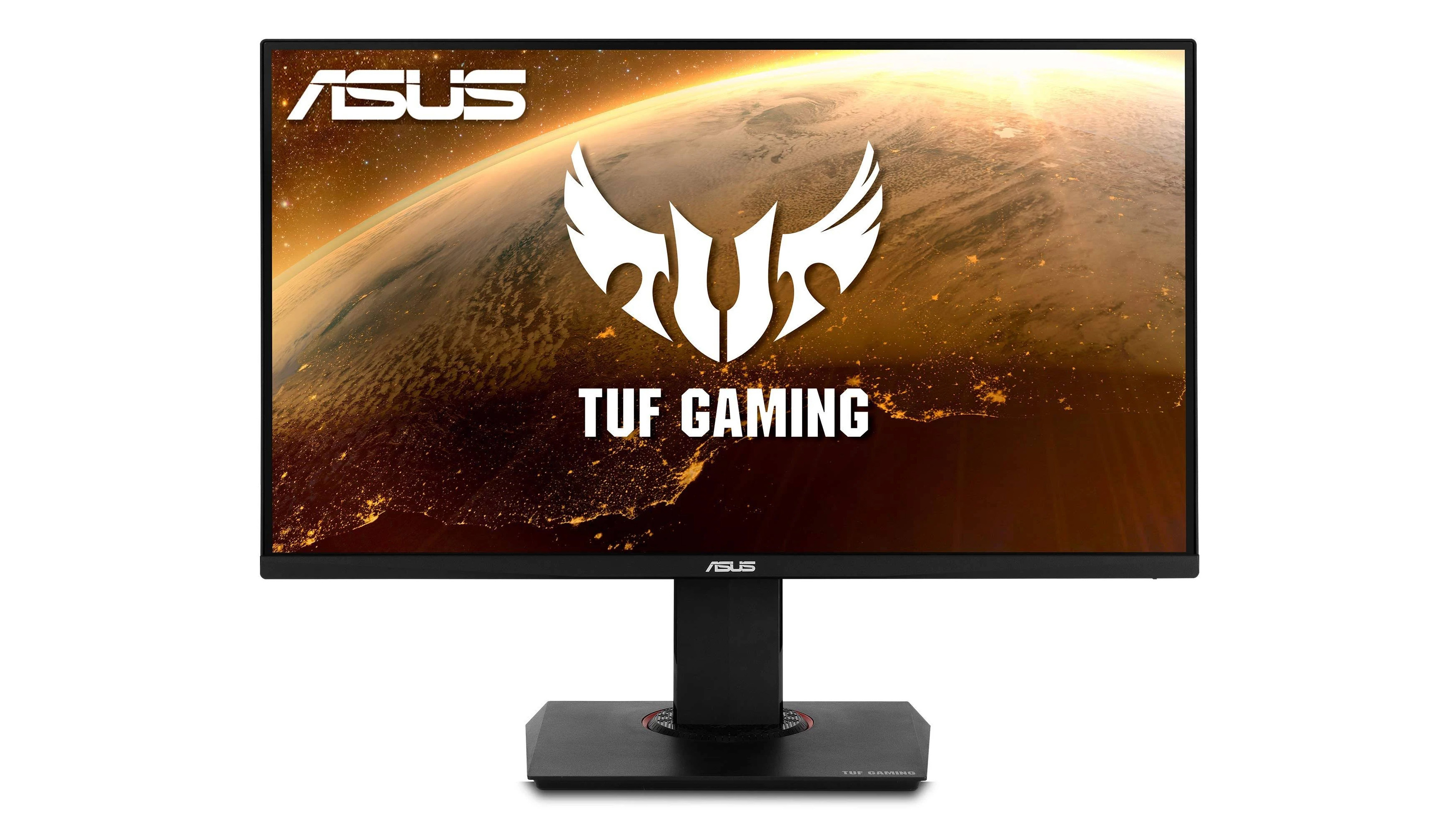
With the Asus TUF Gaming VG289Q, you’re getting a lot of value for your money – especially considering the small price of entry. One of the most affordable 4K gaming monitors right now, this 28-incher can swivel, pivot and tilt practically however which way you need it (within reason, naturally) to serve your purpose. It also has deliciously thin bezels and a nifty cable management solution, as well as a few display settings to boost your viewing experience. Thanks to its rich vibrant colors, super sharp image quality and a design that is only subtly gaming-centric, this is among the best 4K monitors not only for gamers but for regular users who consume a lot of visual media as well.
As both 4K panels and HDR technology become more ubiquitous, we’re starting to see more affordable monitors take on the market, and the Philips Brilliance 328P does just that. This 4K monitor combines a 4K VA panel with decent HDR performance at a price point that won’t force you to break open the piggy bank. Its brightness doesn’t quite reach its lofty HDR 600 rating, but at this price, it’s hard to complain. The Philips Brilliance 328P really is one of the best 4K monitors out there.
4K fans will find a lot to love in the LG Ultrafine 24MD4KL, especially if they’re photographers or videographers who need all that prime real estate and high resolution. From its 4K resolution and color accuracy, to its plethora of USB-C and Thunderbolt 3 ports and buttonless design, this 4K display is the perfect match for your Mac or ultrabook. And, despite those bizarrely thick bezels and high price tag, this display might be hard to resist.
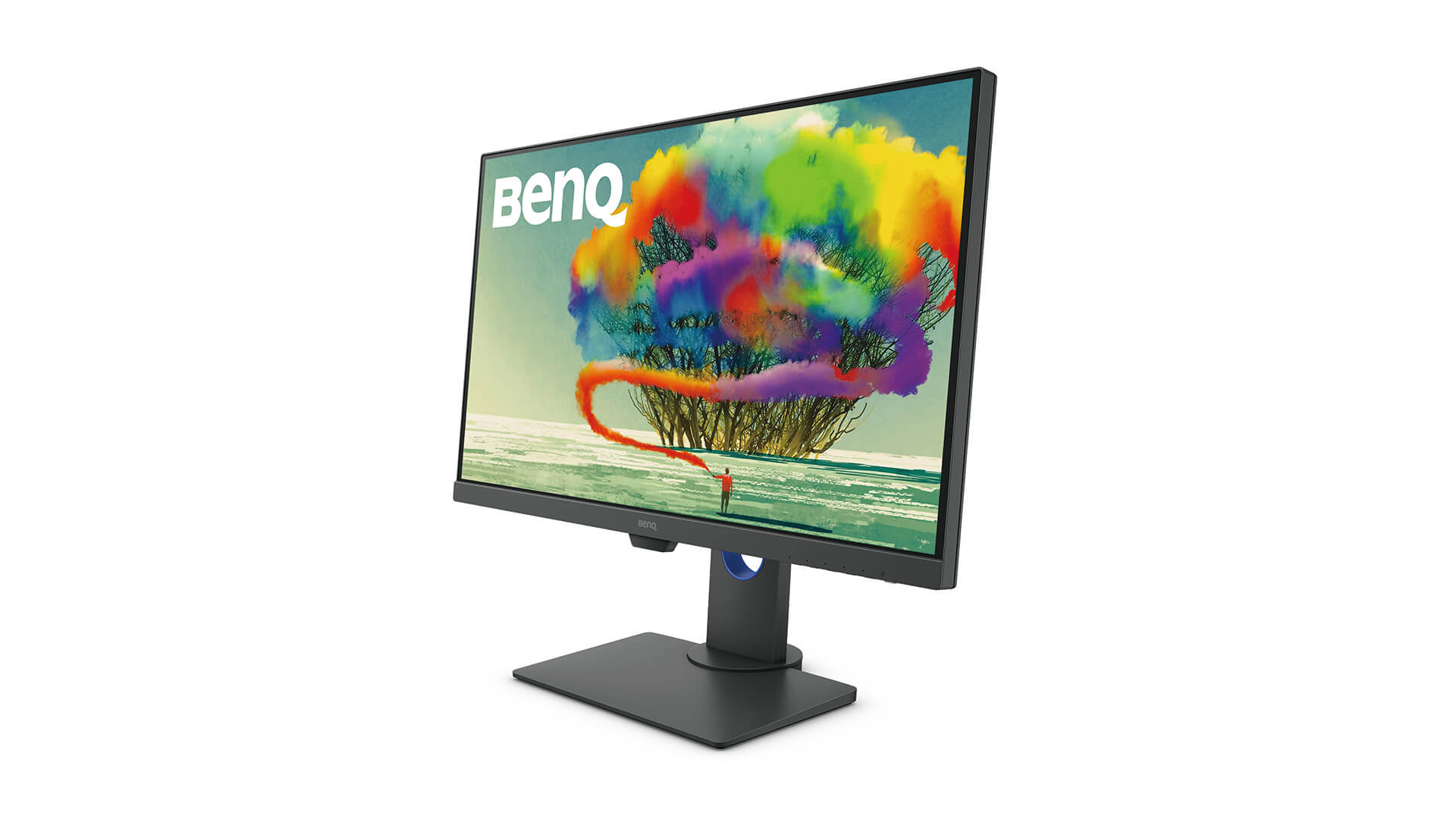
If you’re on the market for one of the best 4K monitors for everyday computing and productivity, without all the fancy bells and whistles, you’ll want the BenQ PD2700U. This monitor doesn’t feature fancy Quantum Dot tech, or Adaptive Sync, it doesn’t even have USB-C input! But, when you get the BenQ PD2700U, you are getting a lot of pixels, which is all you really need. It’s not the cheapest 4K monitor on this list, but it’s color accurate, has plenty of desktop real estate, and will comfortably fit in any office environment.
While 4K monitors are becoming more and more common, even without particularly powerful hardware, we still run into the kind of monitor that changes everything. The Asus ROG Swift PG27UQ is one of these. Asus has managed to craft a 4K gaming monitor with HDR and the kind of color support you see in professional displays – and render that all at 144Hz with G-Sync no less. There are only a few monitors out there that packs as many features as this Asus screen, and that’s why it’s one of the best 4K monitors. But, keep in mind, you’re going to have to pay for something this advanced – and we mean pay.
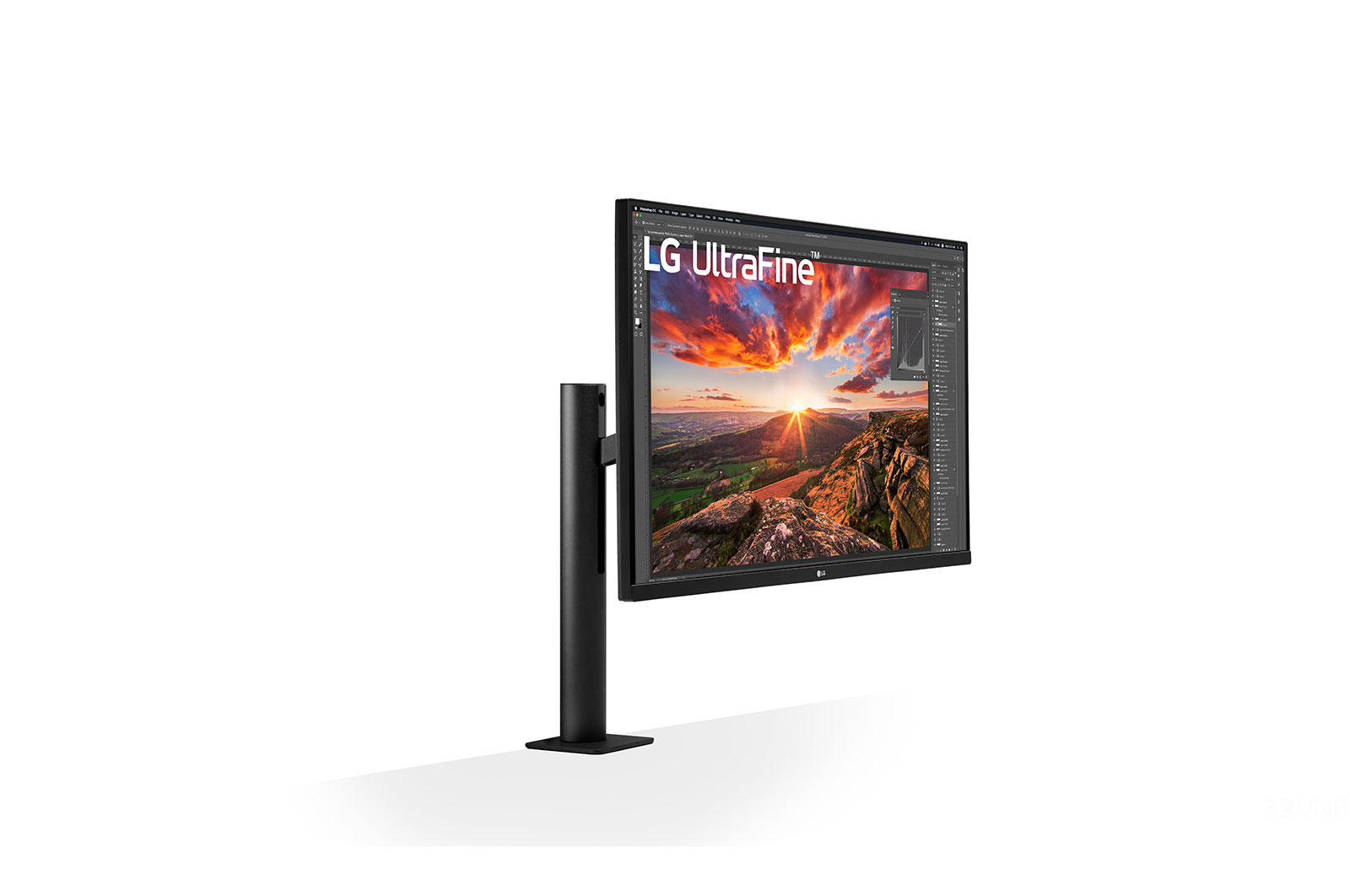
The LG 32UN880 UltraFine Display Ergo has done something cool. Instead of going for the same homogeneous mount and stand that all monitors have, it has opted for a C-Clamp, One Click Mount that allows it to extend, retract, go high, go low, tilt and pivot like no other. That’s versatility turned up to 11. It also boasts incredible color accuracy and beautiful picture quality. The best part is that you’re getting all that without burning a massive hole in your pocket. This is, without a doubt, among the best 4K monitors out there.
Screen size: 28-inch | Aspect ratio: 16:9 | Resolution: 3,840 x 2,160 | Brightness: 300 cd/m2 | Response time: 1 ms | Contrast ratio: 1,000:1 | Color support: 1.07 billion
Very low price for a 28-inch monitor
FreeSync technology
No VESA mount
4K monitors aren't going to be as cheap as their TV counterparts, but some of them do try. Take a look at this offering from AOC whose 28-inch TN panel boasts some terrific extras that add even more value to its already affordable price. FreeSync technology, excellent color accuracy, and a Picture-in-Picture feature make it a great proposition for mainstream users who like to dabble in different things, from gaming to photo editing. Of course, it also makes for a great business monitor – and you can't beat that price if you have to buy a few for the office.
Screen size: 27-inch | Aspect ratio: 16:9 | Resolution: 3,840 x 2,160 | Brightness: 1,000 cd/m2 (peak) | Response time: 4 ms | Contrast ratio: 1,000:1 | Color support: 16.7 million
Great HDR
High refresh rate
Very expensive
If you have an absolute beast of a gaming computer – think two Nvidia RTX 2080 Tis in SLI – and you need a monitor that can keep up, you might want to take a look at the Acer Predator X27. Not only is it a 27-inch 4K monitor with HDR, but it also has a refresh rate of a whopping 144 Hz. If you have the horsepower, you can play games in 4K competitively without losing an edge to the person playing in 1080p. But, as you may expect from a spec sheet like this, it’s very expensive – but if you need the tech, it’s definitely there.
For more than year now, Zoom has been on a mission to transform from an application into a platform. To that end it made three announcements last year: Zoom Apps development tools, the Zoom Apps marketplace and a $100 million development fund to invest in some of the more promising startups building tools on top of their platform. Today, at the closing bell, the company announced it has made its first round of investments.
Ross Mayfield, product lead for Zoom Apps and integrations spoke to TechCrunch about the round of investments. “We’re in the process of creating this ecosystem. We felt it important, particularly to focus on the seed stage and A stage of partnering with entrepreneurs to create great things on this platform. And I think what you see in the first batch of more than a dozen investments is representative of something that’s going to be a significant ongoing undertaking,” he explained.
He said while they aren’t announcing exact investment amounts, they are writing checks for between $250,000 and $2.5 million. They are teaming with other investment partners, rather than leading the rounds, but that doesn’t mean they aren’t working with these startups using internal resources for advice and executive backing, beyond the money.
“Every one of these investments has an executive or senior sponsor within the company. So there’s another person inside that knows the lay of the land, can help them advance and spend more personal time with them,” Mayfield said.
The company is also running several Zoom chat channels for the startups receiving investments to learn from one another and the Zoom Apps team. “We have a shared chat channel between the startup and my team. We have a channel called Announcements and a channel called Help, and another one that the startups created called Community,” he said.
Every week they use these channels to hold a developer office hour, business office hour which Mayfield runs, and then there’s a community hour where the startups can gather and talk amongst themselves about whatever they want.
Among the specific categories receiving funding are collaboration and productivity, community and charity, DE&I and PeopleOps, and gaming and entertainment. In the collaboration and productivity category, Warmly is a sales tool that provides background and information about each person participating in the meeting ahead of time, while allowing the meeting organizer to create customized Zoom backgrounds for each event.
Another is Fathom, which alleviates the need to take notes during a meeting, but it’s more than recording and transcription. “It gives you this really simple interface where you can just tag moments. And then, as a result you have this transcript of the video recording, and you can click on those tagged moments as highlights, and then share a clip of the meeting highlights to Salesforce, Slack and other tools,” Mayfield said.
Pledge enables individuals or organizations to request and collect donations inside a Zoom meeting instantly, and Canvas is a hiring and interview tool that helps companies build diverse teams with data that helps them set and meet DEI goals.
These and the other companies represent the first tranche of investments from this fund, and Mayfield says the company intends to continue looking for startups using the Zoom platform to build their startup or integrate with Zoom.
He says that every company starts as a feature, then becomes a product and then aspires to be a line of products. The trick is getting there. The goal of the investment program and the entire set of Zoom Apps tools is about helping these companies take the first step.
“The art of being an entrepreneur is working with that risk in the absence of resources and pushing at the frontier of what you know.” Zoom is trying to be a role model, a mentor and an investor on that journey.
If you're looking for cheap TV sales, then you've come to the right place. We've scoured all the best retailers in the UK to bring you the hottest TV deals on everything from cheap TVs to more premium displays. That means you can relax with your favourite show in style, and your wallet can breathe a sigh of relief as well.
We've done all the searching, so you can simply browse the TV sales below for a size and price that suits you. That means no more obscure model numbers to look up and no more wondering if you've really got the best TV deal around. We've done all that legwork and brought all the need-to-know information right here.
We've organised all the latest cheap TV sales by size here, but it's worth checking out the prices throughout because you might be surprised how large a display you can get for your cash these days. We've also picked out a TV deal of the week, which represents the best outright value for most people.
That means all of these top brands are competing to offer the best tech for the money, so even if you're on a budget, you can still bag yourself some top-shelf features in a cheap TV. Between their powerful upscaling processors, full smart home integration, and, in some cases, Dolby Atmos support, all these 4K TV deals are fantastic value.
The best cheap smart TV deals in this week's roundup all offer awe-inspiring HDR and streamlined 4K upscaling to make everything shine. If you're looking to push the budget, you can also take a look at the best OLED TV prices and deals available right now.
The best TV deal of the week
Samsung The Frame 2020 65-inch 4K QLED TV:£1,799£1,499 was at Currys
Save £300 – Score a massive $300 off this stunning 65-inch model of Samsung's The Frame TV. With Art Mode for displaying artworks and photography, customizable bezels, and a QLED display, this is a TV for those who think form should match the picture. Includes HDR10+ too.
The best cheap TV sales available now
(Image credit: Toshiba)
32-49 inch cheap 4K TV deals
JVC 39-inch Smart Full HD Android TV:£299.99£229.99 at Currys
Save £70 - If you're looking for a 39-inch budget set, this JVC HD TV is a fantastic option, and it's on sale for just £229.99. The HD TV comes with smart capabilities and the Google Assistant built in so you can use your voice to control your TV.
43-inch Hisense Roku 4K TV:£349£299 at Argos
Save £50 - This £50 price cut does mean you're still getting a lot for just £300. This is a terrific choice if you want a simple budget Smart TV that can access all the major streaming apps and is the lowest price you can expect to pay for a 4K TV of this size.
Samsung 43-inch TU7020 Smart 4K UHD TV:£429£379 at Argos
Save $50 - Argos has this Samsung 43-inch 4K TV on sale for a record-low price of £379. The 43-inch set from Samsung delivers a bright, bold picture with life-like images thanks to the Crystal processor and 4K HD resolution.
Samsung 43-inch AU8000 4K TV:£549£444.50 at Amazon Save £104.50 – This cheap Samsung TV packs in 4K HDR, HDR10+, and built-in Alexa, and it's on sale for a record-low price of £444.50. It had already seen a bit of a discount on Amazon, and now with a $100 price cut, that's hard to pass up on a screen this size.
(Image credit: Samsung)
50-59 inch 4K TV deals
55-inch Hisense Roku 4K TV:£499£399 at Argos Save £100 - You can snag a £100 discount on this 55-inch set which is a record low price on this Hisense model - a cost we have seen a few times throughout the year. It's definitely worth considering if your budget stretches that far as you'll get the best and most immersive viewing experience when watching films, TV shows, and more.
Hisense 58-inch 4K UHD Smart TV:£549£499 at Very
Save £50 - Very has this Hisense set on sale for just £449 - a fantastic price for a feature-rich 58-inch 4K TV. You're getting 4K HD resolution, DTS Studio Sound, Freeview Play, and Amazon Alexa built in for hands-free control.
TCL 50-inch QLED 4K UHD Smart TV:£599£576.09 at Amazon
Save £22.91 - Amazon has this stunning TCL 55-inch QLED on sale for £576.09, which is the best price you can find right now. Packed with premium features, this TCL set includes Quantum Dot technology, HDR 10+, Dolby Vision, and works with Amazon Alexa and the Google Assistant for voice control.
Samsung TU7020 50-inch 4K Crystal UHD Smart TV:£549£479 at Very
Save £70 - This stunning Samsung 50-inch 4K TV is on sale for £479 at Very. That's the best price you'll find for the 4K set that delivers bright, bold colors thanks to the powerful Dynamic Crystal technology.
LG 55-inch Smart 4K UHD TV:£699£479 at Amazon
Save £220 - An incredible price for a feature-packed 4K TV, AO has this LG 55-inch set on sale for a record-low price of £479. You're getting bright, bold colours and sharp contrasts thanks to the 4K HD resolution, and the smart capabilities allow you to stream your favorite movies and TV shows seamlessly from your home screen.
Samsung TU8300 55-inch Crystal Curved UHD 4K TV:£699£599 at Very
Save £100 - The Samsung TU8300 55-inch 4K TV is £100 off at Very right now. This Samsung set features a curved screen for an immersive experience and a stunning 55-inch crystal display that delivers pure colors and sharp contrasts.
Sony Bravia KD55XH81 55-inch 4K Smart TV:£999£679 at Amazon
Save £320 – This 55-inch TV from Sony is at a great price right now. Not only will you get a 4K image with HDR but it comes with Chromecast and AirPlay built into the TV, so whether you prefer Android or iOS you should be able to connect and stream content from your smartphone to the big screen.
(Image credit: LG)
60-85 inch 4K TV deals
JVC 65-inch Smart 4K Ultra HD Fire TV:£649.99£519 at Currys
Save £130 - Currys has the JVC 65-inch 4K TV on sale for just £519 - £60 cheaper than last week's price. This budget set comes with the Fire OS, so you can easily stream content from apps like Netflix, Hulu, Disney Plus, and more from the home screen of your TV.
Samsung 65-inch Crystal 4K UHD Smart TV:£699£628 at Amazon
Save £71 - One of our favorite TV deals this week, you can get this brilliant Samsung 65-inch 4K TV on sale for £628 at Amazon. The 65-inch set delivers a premium picture experience with stunning colours and deep contrast thanks to the powerful 4K crystal processor.
Samsung 2021 75-inch AU7110 Crystal UHD 4K Smart TV:£999£899 at Amazon
Save £100 - For a limited time, Amazon has a £100 discount on this stunning Samsung 75-inch 4K TV. The 2021 set features PurColour technology and a 4K Crystal processor which delivers a premium-picture experience with life-like images and bold, bright colours.
Samsung 65-inch Smart 4K UHD TV:£1,099£899 at Currys
Save £100 - Currys has this feature-rich Samsung 65-inch 4K TV on sale for £899 - £100 cheaper than last week's price. The 4K Ultra HD TV delivers a stunning picture thanks to the dynamic crystal colour technology and works with Amazon Alexa and the Google Assistant for hands-free control.
Samsung The Frame 2020 65-inch 4K QLED TV:£1,799£1,499 was at Currys
Save £300 – Score a massive $300 off this stunning 65-inch model of Samsung's The Frame TV. With Art Mode for displaying artworks and photography, customizable bezels, and a QLED display, this is a TV for those who think form should match the picture. Includes HDR10+ too.
Sony Bravia A84J 65-inch Smart 4K UHD OLED TV:£2,699.99£2,199.99 at Currys Save £500 - Sony's brilliant Bravia XR OLED TV gets a massive £500 price cut at Currys. That's the lowest price we've found for the Sony set that packs a 65-inch OLED panel, Dolby Vision, HDR10 and works with the Google Assistant for hands-free control.
More cheap TV sales from your favourite retailers
Not found the right cheap TV today? Or maybe you'd prefer to directly browse the offers at your favourite retailers instead of our highlights of the best smart TV deals? We're updating this page on a regular basis, so you may have better luck another day. If you want to take a look for yourself now though, here are the direct links to a the full collection of TV sales at multiple stores.
Argos - the best place for cheap TVs but regionalised stock
Large screen smart TV deals
If you're after larger smart TV deals, we should warn you, they don't come cheap. However, if you're after 65 to 85-inch TVs- we'd recommend heading over to John Lewis,Currys and Amazon as they seem to stock more models than most UK retailers.
If you'd like a headstart on some of the very finest TVs money can buy, be sure to take a look at our guides for the best 55-inch TV or if you're going large we've got the best 65-inch TV models covered too.
How to tell if cheap TVs are worth it
Cheap TVs can often wow with price tags but disappoint once they're at home and plugged in, however there are ways to find 4K TV deals that bring premium experiences down to lower price ranges. Sacrificing a few features you won't use to prioritise the ones you will is an easy way to get started, but finding that perfect mix might prove difficult.
On the other hand, even displays costing between £300 and £400 are often considered to be cheap TVs, so you'll want to make sure you're getting your money's worth with your new setup. That's where these TV deals come in handy - you can easily get features well above your price range included in your new cheap smart TV if you know when and where to deal hunt.
Nowadays, you'll want to be picking up a 4K TV if you're looking to spend within this price range. Straight HD and HD-ready TV deals are still kicking around some retailers and, for the price you're paying for the previous wave of technology, you could well be picking up a 4K display instead. As the price scale rises, you'll be picking up higher pixel density, better colour differentiation, deeper dynamic range, and better upscaling from pricier units. It's worth checking out the various display specifications to make sure your cheap TV matches up to what others are offering at that particular price point.
Or, you could let us do all of that for you with the 4K TV deals listed here.
(Image credit: Hisense)
Are 4K TV deals getting cheaper?
As the technology progresses, and even leaps into the world of 8K, 4K TV deals are getting cheaper and cheaper, meaning more households than ever are able to afford premium displays like the ones highlighted here. Not only does that show just how cheap these 4K TV deals have become in recent years, but it also means there's more content being made to be displayed on these 4K TVs available as well. So, not only are these sets getting cheaper, but there's also plenty more to watch on them as well.
How to find the best TV deals
We've found that the best TV deals usually come from a few retailers in particular - Very regularly discounts their cheaper models, Currys holds excellent prices on Philips Ambilight displays, and John Lewis can offer up invaluable peace of mind with their extensive warranty guarantees.
So, you know where to shop but if you're not seeing any particularly enticing offers -you might be searching at the wrong time. The best TV deals are usually between November and January, when Black Friday and holiday sales are discounting premium displays left and right. However, you'll also find the summer sales fruitful as well.
What to look for in smart TV deals
The vast majority of TV deals on offer right now will offer Smart TV functionality. It's now become the norm for your TV to offer at least a limited selection of streaming and on demand apps, but the quality of this experience will vary between models. Cheap smart TVs will typically send you home with preset apps like Netflix, YouTube, BBC iPlayer, All 4, and UK TV Play among other everyday streamers.
However, if you spend a little more you'll start finding Alexa compatibility, more niche app options like Disney Plus, CrunchyRoll, and NowTV, and a faster, slicker operating system. You'll find more options for connecting extra services on more premium smart TV deals.