Friday, March 3, 2023

For female VCs bias is a branding issue

Leslie Feinzaig, a venture capitalist, likes that her venture firm, Graham & Walker, sounds like an old, stodgy law firm. But apart from the name, there’s nothing really stodgy about it: Her fund exclusively invests in female- and nonbinary-founded startups.

It’s a relatively new name for her firm, which was originally called Female Founders Alliance. Feinzaig rebranded in 2021 in an effort to attract a more diverse set of founders and check-writers into her portfolio.

“The number one risk that we fall into is inadvertently stamping our own portfolio with a diversity signal,” she said. “And I mean that in the negative context of the word: We want our founders to stand on their own for being amazing founders. So what do we need to do? We need to become a super, high-signal VC.” In her view, that meant departing from a name that made her firm sound like it was making “diversity investments” and finding a name that didn’t include gender as a brand.

Now, she said, when she enters a room, “It’s very different to be Leslie, the CEO of Female Founder Alliance, than Leslie, managing director of Graham & Walker. Nobody questions it; it sounds like it belongs.”

That said, the investor still found a way to insert the mission into the name: Katharine Graham was the first female Fortune 500 CEO, and Madam C. J. Walker was the first female self-made millionaire.

The goal of being a VC is to generate returns for limited partners, and there’s an understanding that a diverse startup ecosystem will lead to better outcomes for all. Balancing those two, for female VCs, has often manifested in different, often frustrating ways.

A new generation of female venture capitalists is ditching institutional firms to start their own or steadily rising through leadership ranks. According to a survey analyzed by TC+, the share of women represented in director and principal positions has significantly increased over the past two years, while the percentage of women in higher-level positions, such as managing general partner or senior managing director, stands below 25% and has for the past two years. The ranks are diversifying. Slowly.

To put it simply: More women in venture means that bias and strategic branding are increasingly relevant for a larger fraction of check-writers.

For female VCs bias is a branding issue by Natasha Mascarenhas originally published on TechCrunch


Why hasn’t generative AI come up with something easier to say than ‘generative AI’?

Hello and welcome back to Equity, a podcast about the business of startups, where we unpack the numbers and nuance behind the headlines.

This week Mary Ann Azevedo, Becca Szkutak, and Alex Wilhelm gathered to riff through the week’s biggest startup and venture news. A big thank you to Becca for stepping in while Alex was on leave, and a note before we dive into topics that Natasha will be back on the podcast next week!

Now, here’s what we got into:

And that is all we had time to chew on, friends. We will talk to you soon!

For episode transcripts and more, head to Equity’s Simplecast website

Equity drops at 7:00 a.m. PT every Monday, Wednesday and Friday, so subscribe to us on Apple Podcasts, Overcast, Spotify and all the casts. TechCrunch also has a great show on crypto, a show that interviews founders, one that details how our stories come together and more!

Why hasn’t generative AI come up with something easier to say than ‘generative AI’? by Rebecca Szkutak originally published on TechCrunch


Startup PR professionals should be jumping on the AI bandwagon

It’s only been a couple of months since OpenAI’s ChatGPT exploded into the public consciousness, and it already feels like our news feeds will never be the same again.

Whether it’s headlines about AI startups securing massive funding rounds or Twitter threads about how you should be using ChatGPT, the AI news cycle is well and truly here. Sorry, web3, you had your 15 minutes of fame.

Going from all-out rage prompted by the FTX fiasco to ChatGPT setting off the red alert at Google HQ made for a sudden, even shocking shift in the tech news cycle. Crypto publication Decrypt pointed out the focus hasn’t shifted only for the media: JPMorgan’s e-Trading Edit report noted that institutional traders are also looking carefully at AI while blockchain begins to lose its allure.

In this environment, it’s going to be extremely tempting for tech startups to quickly slap the words “AI” and “machine learning” wherever they’re vaguely applicable and dial up the newsworthiness of a given announcement or market insight.

Actually, that might not be a bad idea. In fact, it’s a huge opportunity to miss.

If AI-related coverage can get a new, unknown brand into its target publications today, it could help get the brand’s pitch deck in front of potential investors tomorrow.

Clearly, AI stories are going to have a relatively easier time catching reporters’ attention in this climate. That said, the need to differentiate messaging within the AI vertical is going to rise considerably with the influx of similar pitches heading to reporters’ inboxes.

The question is whether tech startups should shift their PR messaging toward AI-related topics. Such an approach is a given for startups that actually focus on AI: ChatGPT has paved the way and now they can reap the industrywide rewards. But for companies where AI was previously No. 4 on the list of proof points, machine learning capabilities should merge into the main hook of the announcement.

But what if we’re not an AI startup?

Startups that don’t have much to do with AI will likely fear accusations of “jumping on the bandwagon” if they wade into the discussion. Startups might think they should avoid the topic altogether unless they’re an all-out AI firm. The logic is for their PR messaging to stick closer to their core technology or brand mission and prioritize the longer-term benefits of clear positioning.

Startup PR professionals should be jumping on the AI bandwagon by Ram Iyer originally published on TechCrunch


Japan’s Geniee acquires AdPushup-operator Zelto for $70 million

Japanese marketing tech firm Geniee, part of the SoftBank Group, has paid about $70 million in cash to acquire the revenue optimization platform Zelto (formerly known as AdPushup), a person familiar with the matter said, delivering 40 times return to a number of angel investors in the startup that began its journey in India.

The acquisition is a remarkable turnaround for Zelto, the 10-year-old firm that provides content creators and web publishers with tools to generate more revenue by tapping dozens of advertising exchanges, which faced near-death experiences twice in its journey. In 2014, the startup almost ran out of cash. Later, it scrambled with its product offerings after its marquee service struggled to make inroads, Zelto founder and chief executive Ankit Oberoi told TechCrunch in an interview.

The two firms announced the deal on Thursday, but did not disclose the terms of the deal. The source requested anonymity sharing private information. Oberoi of Zelto, which has been profitable for several years and raised less than $2.5 million in external funding during its startup journey, declined to disclose the terms of the deal. Elle, NDTV, Cnet, PCMag, Mashable, and GSMArena are among some of the customers of AdPushup, Zelto’s marquee offering, according to the company’s website.

“It’s been a rollercoaster ride. We had our fair share of challenges. But I think those challenging times were actually helpful,” said Oberoi. “After the launch, customers were leaving. Half of the team sort of left. But it forced us to look at the fundamental value we deliver to customers. And when we almost ran out of cash in 2014, we were forced to become frugal and profitable.”

The acquisition won’t significantly change how Zelto operates, he said. “It’s business as usual for us. But now that we have the support of a SoftBank-backed firm, we will invest a lot more in our growth and expand to Southeast Asian markets that we were not exploring earlier.” Zelto, which maintains a large team in India and started its journey in the country, identifies the U.S. as its headquarters and largest market.

“I am very happy to have this partnership that will greatly advance the purpose of Zelto and Geniee. My first encounter with Ankit dates back seven years. At the time, it was still a small company, but I invested in Ankit on the intuition that it would become a leading global entrepreneurship in the industry,” said Tomoaki Kudo, chief executive of Geniee, in a statement.

“I also feel a deep sense of respect for the fact that they have achieved high growth in the highly competitive cutting-edge markets of North America and India. In the future, we would like to learn from the North American and Indian markets, Zelto’s technology, services, knowledge, and corporate culture, and strongly promote the globalization of Geniee to realize its purpose.”

Japan’s Geniee acquires AdPushup-operator Zelto for $70 million by Manish Singh originally published on TechCrunch


Thursday, March 2, 2023

Daily Crunch: Stealth startup Figure releases first photos of its all-purpose humanoid robot

To get a roundup of TechCrunch’s biggest and most important stories delivered to your inbox every day at 3 p.m. PST, subscribe here.

G’day, friends! Good to spend some time with you again. Come spend some time with our finely crafted words and god-awful puns. It’s a service we provide. — Christine and Haje

The TechCrunch Top 3

  • My friends call me Murphy; you call me Figure: It’s “iRobot” come to life: Figure emerges from stealth with the first images of its humanoid robot, Brian reports. The robots are being tested right now on manual labor tasks such as those being done in warehouses, manufacturing and retail.
  • Can I help you?: Customer relationships got kind of dicey there for a moment during the global pandemic when customers, who could no longer go to a physical store, also didn’t want to sit on a phone or spend hours with a chatbot. Now flush with $23.5 million in new funding, Attio offers customer relationship management software with a no-code feel. Kyle has more.
  • Noodling around: Naomi Osaka, Usher and Apolo Ohno are the latest celebrities to back instant ramen startup Immi, which wants to put its warm bowl of comfort food in every household across the country, Christine writes.

Startups and VC

Former Facebook exec turned VC Chamath Palihapitiya has long been a controversial figure in the investing world. The investor says it could take three years for the market to “accurately” reprice late-stage companies, Connie reports.

Meanwhile, Connie also reports that Felicis today announced it has closed its ninth flagship fund with $825 million, compared with the $600 million core fund that it announced in the summer of 2021. The vehicle brings the firm’s total assets under management to $3 billion. The fund closed 50% more deals last year than in 2021, some as prices were still rising — and it says it regrets nothing.

And another smattering of stories to soothe the savage beast:

How to turn an open source project into a profitable business

Machine counting twenty dollars bills

Image Credits: Juanmonino (opens in a new window) / Getty Images

Many devs rely on donations and crowdfunding to monetize open source projects, but with the proper planning, teams can leverage their work for commercial clients who’ll put them in a higher tax bracket.

Offering users customer support or consulting services are common revenue streams, according to product development consultant Victoria Melnikova, who also says devs should form partnerships and use platforms like Reddit and Hacker News to reach potential paying customers.

“To find your path, talk to your clients and understand their goals and pains.”

Three more from the TC+ team:

TechCrunch+ is our membership program that helps founders and startup teams get ahead of the pack. You can sign up here. Use code “DC” for a 15% discount on an annual subscription!

Big Tech Inc.

The photo of Marc Benioff reminds us of the movie “Gladiator” where Russell Crowe’s character yells, “Are you not entertained?” Well, we hope you are entertained by the latest in what we are calling “The Salesforce Saga.” Ron and Alex report that despite all the activist investor, executive departure and layoff woes, Salesforce strikes back with better-than-expected earnings.

Meanwhile, Kirsten, Rebecca and Harri listened in on Tesla Investor Day and shared with you everything Elon Musk and execs shared (and skipped).

Now here’s the short-short version of six more:

Daily Crunch: Stealth startup Figure releases first photos of its all-purpose humanoid robot by Christine Hall originally published on TechCrunch


Indent raises $8.1M funding for its AI-powered customer video review tool

According to a recent report, 92.4% of consumers use reviews when deciding to purchase products. It’s understandable. They want confidence in their purchase choice before buying a product online.

A Seoul-based startup called Indent wants to help these shoppers through access to video reviews and product ratings, while also helping to drive sales for e-commerce merchants by providing them with this same precious customer feedback. Its video review marketing tool is called VREVIEW, and it works by sending a chatbot to a merchant’s customers to collect their video reviews and product ratings. The merchants can then upload these customer-generated video reviews and product ratings to their websites to attract more potential shoppers and consumers.

Investors like Indent’s conversion rates, seemingly. The startup just raised $8.1 million (10.5 billion won) in a Series A led by SV Investment, with participation from strategic investor LG Uplus (a telco unit of LG), Korea Investment Partners and Crit Ventures, among others. The round brings the outfit’s total funding to date to $13.7 million and it will be used to continue developing its video platform

According to Indent CEO Morgan Yoon, Indent already has about 40 clients in the U.S., China and Japan and intends to enter the U.S. market in the second quarter of this year to attract more users overseas. Within those geographies, it works with 3,800 online merchants, mainly direct-to-consumer brands. In addition, South Korean corporations, including LG Uplus, Korean cosmetics brands maker AmorePacific and MLB Korea use Indent’s services, Yoon said. 

Indent claims it has more than 12 million registered users, accounting for about 60% of total online shoppers in South Korea. According to tests conducted by Indent, consumers using the video review platform showed, on average, a 6x higher order conversion rate.

The company has plenty of competitors; other marketing tools also let merchants showcase their reviews on their websites. To stay ahead of its rivals, Yoon says the company is about to launch a new service designed for B2C users called Spray, which the startup unveiled in beta version last April. Spray is a TikTok-like video review service that allows individual consumers to upload their customer-generated video reviews and share feedback, Yoon said, adding that spray users can get monetized if new shoppers purchase products via the Spray service.

In addition, Spray analyzes users’ shopping behavior and preferences and recommends to merchants (or influencers) which products fit best for them to sell, Yoon explained.

Indent, which has been gathering data on the actions of buyers, can recommend about 66 million products, Yoon added. 

The company currently generates revenue via VREVIEW subscription fees from its merchant clients. It also charges licensing fees from D2C brand merchants when they buy user-generated content (UGC) from their consumers.

The company employs 27 people in South Korea.

Image Credits: indent

Indent raises $8.1M funding for its AI-powered customer video review tool by Kate Park originally published on TechCrunch


To fix the climate, these 10 investors are betting the house on the ocean

Climate change is a problem important and pressing enough that investors have begun to grasp the opportunities that arise when trying to solve it. Now, they’ve started to cast their nets wider for other, adjacent opportunities.

Tech that serves to conserve the oceans while using it to replace older, more harmful means of generating energy and food seems to be one such opportunity. In fact, when we asked 10 investors in the sector to share their thoughts on the space, we quickly learned that ocean conservation tech startups are seeing more and more interest from generalist investors now that climate change is hot and people are seeking more ways to mitigate its effects.

“Climate change used to be more focused on terrestrial operations. It is now ‘warming’ up to ocean conservation,” Daniela Fernandez, managing partner of Seabird Ventures, told TechCrunch.

The world’s oceans and its climate have always been tightly coupled. Winds generate ocean currents, which in turn influence weather patterns both over the open water and deep into the continents.

“Our planet is 70% ocean, so the urgency of facing and solving climate change can only be properly addressed if we include the ocean in the equation,” said Rita Sousa, partner at Faber Ventures.

The open ocean also contains tremendous amounts of energy. Previously, accessing it meant drilling into the ocean floor to tap hard-to-reach deposits of oil and gas. But today, it increasingly means tapping the enormous energy represented by the ocean’s winds and waves. Just offshore wind alone has the potential to meet global electricity demand by 2040, according to the IEA, which is well in excess of all offshore oil and gas production today.

Stephan Feilhauer, managing director of clean energy at S2G Ventures stressed the viability of technologies like offshore wind as commercial alternatives to fossil fuels: “Offshore wind has established supply chains across the globe. It is possible today to manufacture, install and operate gigawatts of offshore wind energy using technology and equipment that is well-established and has years of operational data to help us understand its performance. Offshore wind is the only ocean-based renewable technology that meets these criteria today.”

The oceans are constantly exchanging gases with the atmosphere, too, most importantly withdrawing and storing about 30% of all carbon dioxide pollution. The ocean’s capacity as a carbon sink has created problems for myriad marine life, which have depended on historically stable acidity levels that are now creeping higher. However, this very capacity also creates opportunities to put key nutrient cycles to work and capture humanity’s excess emissions.

“A healthy ocean will continue to provide crucial opportunities for carbon sequestration,” said Peter Bryant, program director (oceans) at Builders Initiative. “There are a number of opportunities for increasing the ocean’s ability to store carbon. We have biological approaches that include ecosystem restoration, seaweed cultivation and iron fertilization; chemical solutions where you use minerals to lock dissolved carbon dioxide into bicarbonates; and electromagnetic approaches that store carbon by running electric currents through seawater.”

Founders and investors have a growing appreciation for the ocean’s potential as a resource for renewable energy and its capacity to buffer and even solve some of the climate problem.  “We’re confident in the ocean’s resilience here. It’s simply one of the best resources we have in the fight against climate, and that means opportunity,” said Reece Pacheco, partner at Propeller. “We won’t achieve our climate goals without the ocean. Full stop.”

Christian Lim, managing director at SWEN Capital Partners, agreed: “It took too much time, but finally the ocean is being recognized as a critical piece of our fight against climate change.”

We spoke with:


Daniela V. Fernandez, founder and CEO, Sustainable Ocean Alliance (Seabird Ventures)

Climate change is the elephant in the room. Has the issue’s rising profile sucked the air out of the room or is it bringing attention to ocean conservation that otherwise wouldn’t be there? How have things changed in the past five years?

Climate change has been a topic for decades. It used to be a “nice to have” about a decade ago: “If you have the extra funds to perform climate risk assessment, then we will dedicate it to climate change.”

Now, it’s more of a “must have.” If we don’t address climate change, we’ll see more extreme weather events. Over the past five years, we’ve seen more focus on ocean conservation, but there is still a $149 billion annual ocean funding gap. Climate change used to be more focused on terrestrial operations. It is now “warming” up to ocean conservation.

We are just now beginning to see a distinct shift in tone. The thinking used to be that “the ocean is a victim of climate change,” but now the thought is more “the ocean can become a climate hero” and play a huge role in reducing our carbon footprint. Yet, this shift is still very much in its infancy. In particular, the philanthropic community is just starting to recognize that there is an urgent need to support efforts to develop ocean-based climate solutions.

Until now, most climate funders focused on terrestrial or atmospheric issues, and ocean funders focused on important, but only tangentially climate-related ocean issues such as ending unsustainable fishing practices and establishing marine protected areas. The ocean is already the biggest carbon sink on the planet, and we need to better understand both what absorption of all that carbon is doing to ocean ecosystems, and how much more it can potentially contribute without disrupting its other critical ecosystem functions.

It’s also been encouraging to see governments taking action to truly prioritize and create financial incentives for investing in climate/ocean innovations, such as the bipartisan Infrastructure Law passed in the U.S. in 2022. There is also an upswell of talent realizing that working a “typical” job is no longer an option if we won’t have a liveable planet in the next seven years. We are seeing society reset its priorities and climate is one of the highest ones at the moment.

Climate change has been called “recession-proof” because governments and investors have come to recognize the scope, scale and urgency of the issue. Do you think that’s true of ocean conservation tech as well?

Yes. Climate change and ocean restoration are inherently linked. The ocean is humanity’s biggest protection against climate change, as it produces more than half the air we breathe and absorbs 93% of excess heat from global warming.

Ocean tech and climate change companies and investors all have the same goal. The urgency of the climate crisis has kept passionate funders and entrepreneurs engaged in the development of solutions regardless of the state of the economy.

Climate change has affected the oceans greatly, causing everything from rising water temperatures to more acidification. How are you approaching the question of climate change in your investments?

Seabird Ventures is internally tracking impact and reporting on social and/or environmental factors in our investments. We have externally reported on the following key ocean impact areas:


  • Blue carbon & CO2e removal or avoidance: Initiatives in this category are incredibly important for capturing and avoiding harmful GHG emissions, which contribute to climate change and ocean acidification. The impact of these companies is measured by the weight of CO2e emissions reduced or sequestered as a result of the solution.
  • Waste reduction and circular use: We focus on companies that reduce the amount of solid waste and plastic polluting our ocean. Two approaches commonly used are preventing plastics from leaking into waterways, and plastic cleanup solutions. Plastic pollutants are responsible for choking marine life and destroying both marine and coastal ecosystems. Tracking impact in this category is done by measuring the mass of plastic reduced, avoided or recycled. Companies offering fully biodegradable plastic alternatives are also considered in this area for their ability to displace the use of traditional plastics.

    To fix the climate, these 10 investors are betting the house on the ocean by Tim De Chant originally published on TechCrunch


SpotDraft shows that contract lifecycle management remains profitable, raises $26M

VCs see a rich opportunity in tools to manage the contract lifecycle. Two years ago, startups developing software that helps draft, manage and review contracts raised over $70 million in venture equity. While a relatively small space compared to, say, the market for customer relationship management ($44.9 billion in 2023), contract lifecycle management, or CLM, is growing at a rapid clip. Gartner predicts that legal tech spending — which includes CLM — will increase threefold by 2025.

SpotDraft is one of a growing number of CLM vendors trying to stand out in the increasingly crowded field. Launched in 2017 by Shashank Bijapur, Madhav Bhagat and Rohith Salim, the company today closed a $26 million Series A funding round led by Premji Invest, which also had participation from Prosus Ventures, 021 Capital, Arkam Ventures, Riverwalk Fund and 100x Entrepreneur Fund.

With $30.5 million in the bank, SpotDraft says that it’ll invest in product development and “aggressive growth” in North America, aiming to double its 170-person headcount within the next 18 months.

“The capital we raised allows us to capture the market opportunity as it evolves over the next several years,” Bijapur, who serves as CEO, told TechCrunch in an email interview. “We believe that we’re stepping into a new era of legal technology and SpotDraft is going to be at the forefront of building the next generation of legal innovation that saves time and money.”

Bijapur says that the idea for SpotDraft came to him while he was an associate at NYC-based law firm White & Case. While there, he saw legal teams struggle with high volumes of contracts and sought to automate some of the more repetitive workflows. 

After teaming up with friends Rohith Salim and Madhav Bhagat, two Carnegie Mellon computer engineers, Bijapur co-founded NYC-headquartered SpotDraft.

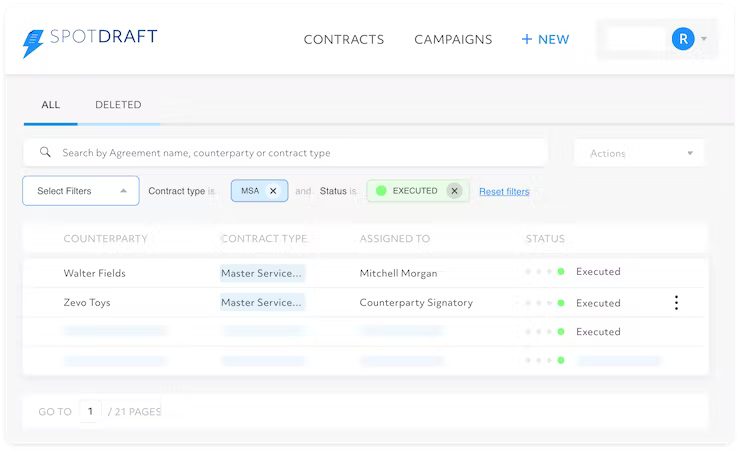
SpotDraft

SpotDraft’s management dashboard. Image Credits: SpotDraft

“We are building an AI engine personalized for legal teams to ensure that a lot of the repetitive work related to contract review and negotiations happen faster than ever,” Bijapur said. “Closing contracts faster is paramount to the organization moving faster. SpotDraft aims to provide deep insights into the overall contracting workflow to help the various teams identify bottlenecks and take steps to move faster.”

At a high level, SpotDraft — which integrates with customer relationship management software such as Salesforce and HubSpot — leverages AI to extract key details and clauses from contracts as well as classify the contracts in question. Self-serve contract templates allow organizations to set up templates with compliance guardrails and enable teams, including legal, sales and HR teams, to create and send out contracts in a few clicks.

On the AI side, SpotDraft’s platform can provide a summary of tracked contract changes received, search across contracts and generate follow-up tasks on contract execution. Bijapur claims that SpotDraft’s AI has processed over 1 million contracts to date — data that the company’s using (anonymously) to improve its algorithms.

Through SpotDraft’s automated approvals system, users can create custom workflows to trigger and automate required approvals based on conditions such as jurisdiction, deal value and entity. A unified task center shows upcoming deadlines, renewal reminders and individual and team jobs, helping teams stay organized — at least in theory.

“Data and technical decision makers love the ability to get insights into contract data just as easily as they are used to getting insights into CRM and ERP data using our open APIs,” Bijapur added. “We also support embedding contract execution into any app as part of the onboarding flow, which removes what is usually the only manual step in an otherwise automated process of onboarding vendors and customers alike.”

SpotDraft’s platform is holistic, to be sure. But — as alluded to earlier — the CLM segment is growing extremely competitive. SpotDraft competes for customers against vendors like LinkSquares, which raised $100 million last April, and Filevine which nabbed $108 million the same month as LinkSquares’ mammoth funding round.

Bijapur says that business is in good shape, though, claiming that revenue tripled this year. (He credits SpotDraft’s competitive pricing with recent client wins: Airbnb, Notion, Panasonic, Strava and Chargebee.) SpotDraft currently has “hundreds of customers” and tens of thousands of daily active users, Bijapur added.

“Not all companies out there require a full-fledged CLM yet. However, contracts and collaboration plus transparency between legal and other departments is still a problem at several of these companies. One of our goals for this year is to provide value to this segment of the market as well,” Bijapur said. “We grew really well as a business during the pandemic and are continuing to hit all our revenue targets despite the current macroeconomic headwinds. We are extremely bullish about our growth opportunities in the coming years and are very well-capitalized to capture these opportunities.”

SpotDraft shows that contract lifecycle management remains profitable, raises $26M by Kyle Wiggers originally published on TechCrunch


Renovate is building robots to install roof shingles

Roofing isn’t a glamorous job. In fact, one could reasonably argue that it checks off the classic three Ds of automation — dull, dirty and dangerous — with aplomb. It’s a prime candidate for transformation at the hands of some clever roboticists. It always ranks at or toward the top of the list of most dangerous construction jobs, and there are a lot of roofs in the world — every human who wants one should have one.

Renovate Robotics is building systems for the express purpose of installing shingles — including the asphalt and solar varieties at launch. This morning, the startup announced a $2.5 million pre-seed, led by Alley Robotics Ventures and featuring SOSV’s HAX, Newlab, Uphonest Capital and Climate Capital.

“We love backing ambitious founders tackling problems that really matter,” Alley Managing Partner Abe Murray says in a statement. “Renovate’s solution will reduce the danger of roofing, and over time provide a path for the deployment of solar shingles at scale.”

Interesting side note, HAX Associate/Analyst Dylan Crow made the jump from VC to COO of Renovate.

“I’ve seen a lot of hard tech startups go through steep inflection points from the inside during my time at SOSV, and the ones that I was always the most drawn towards were climate focused,” Crow tells TechCrunch. “All of these companies have a vision that was fundamentally disruptive, and I see the same in where we’re headed at Renovate Robotics. I have huge conviction in my co-founder Andy, as an engineer and a leader who can get us to market. There’s such a fantastic fit between the two of us, and I have a deep gut feel about the jump.”

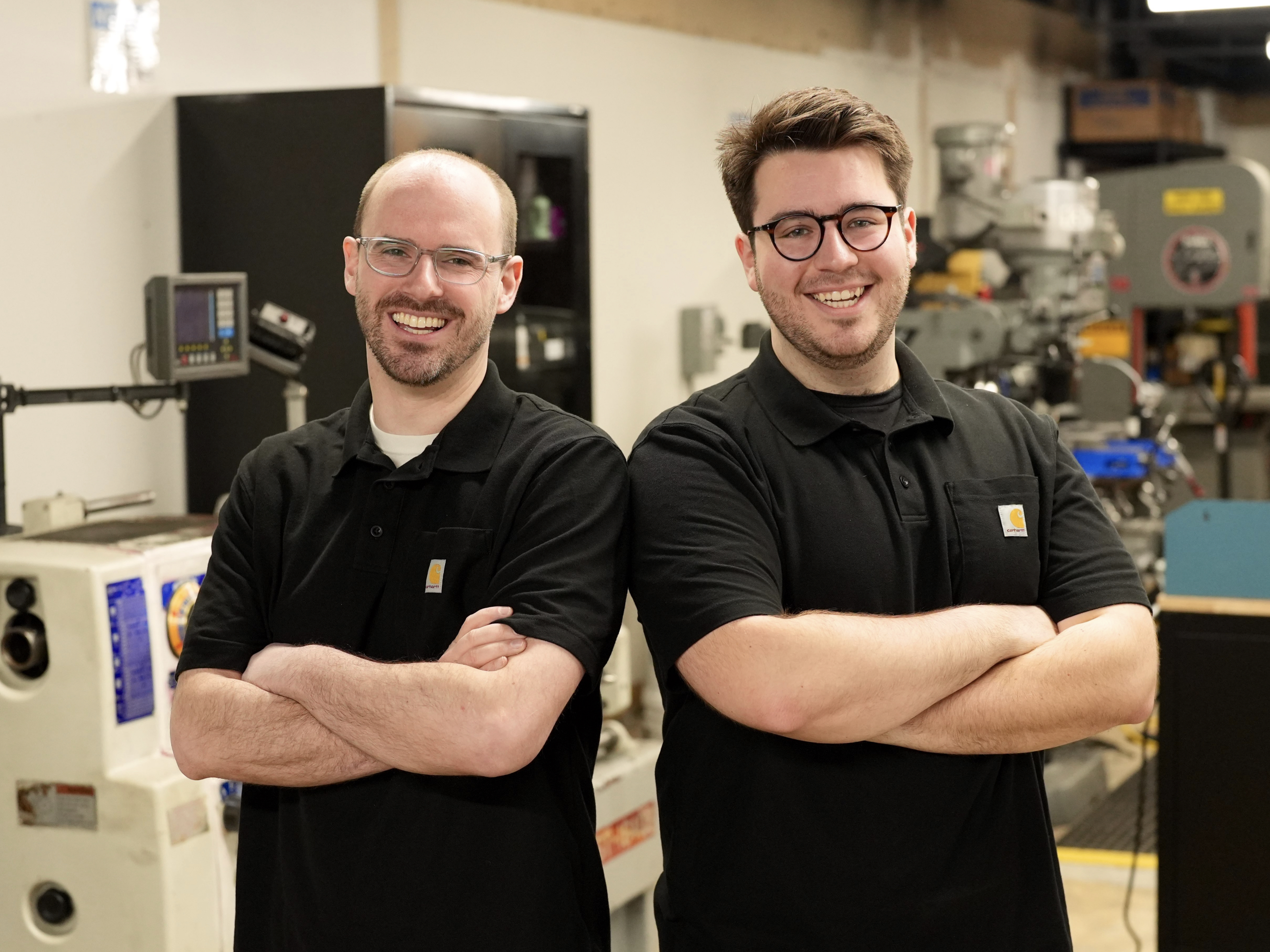
Image Credits: Renovate Robotics

Crow is now listed as a co-founder of the company. Original co-founder Andy Stulc is a mechanical engineer, who brings 12 years of robotics experience to Renovate.

The company’s robot works on a winch-based system. The robot is tethered to a roof and moves across the surface in a gantry-like X,Y axis pattern, installing shingles as it goes. Renovate is planning a few paths to monetizing the tech, while evolving the system.

“We’ll work directly with roofing contractors, and initially help them complete jobs as a subcontractor,” says Crow. “This is a common relationship in the construction industry (contractors giving jobs to other subcontractors). We’ll then transition to a RaaS model where we will lease our robots to trained contractors who can operate the system themselves on site.”

The system currently requires a human operator to monitor progress and replace shingles. “There will always be a few workers onsite for setup, monitoring and material reloading,” Crow adds. “It’s not our vision right now to have any remote monitoring. We will collect and store this data however, which will be later integrated into other feature sets (like installation validation for insurance providers).”

Renovate is building robots to install roof shingles by Brian Heater originally published on TechCrunch


Attio raises $23.5M to build a next-gen CRM platform

While a partner at a VC firm, Nicolas Sharp took on the project of finding customer relationship management (CRM) software for the firm. The process, he says, was “a nightmare,” leading him to build a CRM platform that could meet his — and his company’s — needs.

“I became a developer by night and a VC by day,” Sharp told TechCrunch via email. “After a few months, I left the venture world to continue the project.”

“The project” morphed into Attio, a CRM platform that combines a performant data model with the collaboration capabilities typically found in no-code software. Founded in 2019, Attio caught on quickly, according to Sharp — crossing the $1 million annual recurring revenue mark in December 2022.

Attio has more than 2,000 customers in over 100 countries today. And it’s raising capital, just this morning announcing that it secured $23.5 million in a Series A round led by Redpoint Ventures with continued participation from Balderton Capital.

To date, 25-employee Attio has raised $31.2 million.

“Despite the current macroeconomic climate, we’re in an excellent position right now. We have multiple years of runway and are well-positioned to build what we really need to build,” Sharp said.

Attio

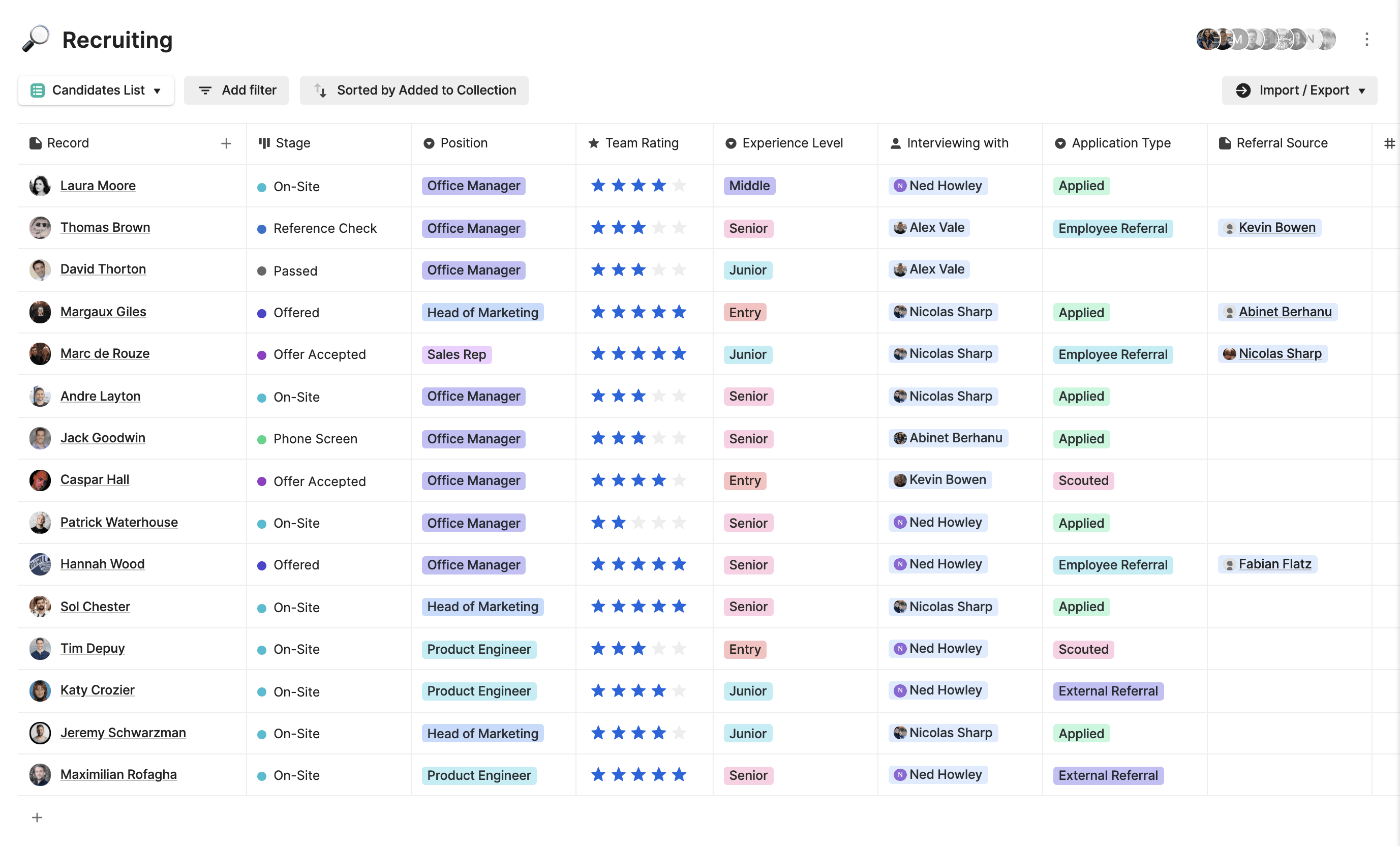
The Attio interface, table view. Image Credits: Attio

Like most CRMs, Attio’s platform creates a database of contacts and companies that a business regularly interacts with. It allows users to sort, filter and analyze customer records as well as take notes and create workflows, automatically updating details like contact information.

“When you use Attio for the first time, it syncs with your email and calendar and creates a view of your customer relationships with profiles, timelines of interactions and conversations, access to emails and intelligence on the strength of each relationship,” Sharp explained. “You can also connect any other data source to Attio through our API. From there, you can sort through and filter these records and build workflows for different industries, use cases or scenarios.”

Sharp isn’t ignorant of the fact that the CRM game has serious competition, Salesforce aside. Gameball, a customer intelligence and marketing CRM platform, recently emerged from stealth with $3.5 million in venture backing. A larger rival is Glia, valued at over $1 billion, which is developing an AI-based CRM that lets agents get hands-on to help.

Sharp sees Attio’s performance — and price ($119 per user per month on the high end) — as its key differentiators. Legacy CRMs, he avers, can be very powerful with complex data models, but also slow to deploy and costly. Meanwhile, CRM startups and in-house CRMs provide a better, stabler experience, but come with more simplistic and rigid models.

“There have been a lot of startups that have tried to challenge in the CRM space,” Sharp said. “However, the fact that even with all of these options so many people are still in ‘DIY mode’ and so unhappy with their CRM means there’s a lot of space for disruption.”

Attio, not resting on its laurels, soon plans to launch a real-time reporting feature that’ll allow users to slice, manipulate and visualize customer records. Other capabilities in the works include expanded workflow automation.

“The biggest challenge that CRM is facing is that the industry is dominated by one company. As a result, the current state of CRM is nearly the same as it was over 20 years ago,” Sharp said. “That’s why startups prefer to run on a spreadsheet for as long as they can. The Attio philosophy, which sets it apart from other CRMs, is that it’s designed to be flexible and adaptable, able to meet businesses where they are in their journey and grow with them as they scale.”

Attio raises $23.5M to build a next-gen CRM platform by Kyle Wiggers originally published on TechCrunch


Wednesday, March 1, 2023

Qwak raises $12M for its MLOps platform

MLOps platform Qwak today announced that it has raised a $12 million Series A1 funding round from Bessemer Venture Partners. The startup, which offers a fully managed platform that combines machine learning engineering and data management tools, previously raised a total of $15 million. Existing investors Leaders Fund, StageOne Ventures and Amiti also participated in this round, which doubled the company’s valuation.

Qwak’s current customers include the likes of NetApp, Lightricks, Yotpo, JLL, Guesty and OpenWeb (which we use here at TechCrunch to power our comment section). The company says it saw its revenue grow 10x year-over-year.

Image Credits: Qwak

The founding team, Alon Lev (CEO), Ran Romano (VP of Engineering), Yuval Fernbach (CTO) and Lior Penso (COO) previously worked at companies like Payoneer, AWS, VMware, ironSource and Wix. There, Lev told me, they saw how machine learning can help transform businesses.

“Despite our unique journeys, we shared similar challenges with building ML pipelines, which led each of us to the realization that if designed correctly, ML could equip companies with a powerful solution to dramatically enhance business goals,” said Lev. “The breakthroughs we each witnessed were significant, and our desire to add more ML capabilities to our solutions only grew stronger.”

He noted that as the founders explored this market, they noticed that the largest and most advanced players were building their own ML platforms, but the rest of the industry was struggling to turn their ideas into production-ready models. And while there are plenty of open source tools on the market, putting all of those together to build a cohesive platform doesn’t come easy — and that’s obviously where tools like Qwak come in.

And while there are obviously other MLOps platforms on the market, Qwak argues that its full-stack approach sets it apart from the competition. “At Qwak, we believe in a pay-as-you-go model, allowing you to get a fully managed, end-to-end ML platform that streamlines your entire ML pipeline in a very economical way. With Qwak, you can eliminate the need for cross-functional collaboration and the headache of integrating multiple vendors, enabling you to focus on what matters most — building exceptional ML models,” said Lev.

The Qwak platform currently offers a feature store, model registry, tools for deploying models and monitoring them in production, as well as a data pipeline orchestrator.

Lev noted that the company wasn’t actively looking for new funding but the team had always had a close relationship with Bessemer VP Ariel Sterman. “While catching up over coffee, I updated Ariel on our progress, and he was impressed with our vision and the strides we had made,” Lev said. “He also shared his own vision for the industry and gave his prediction for the future of ML. Following this conversation, it soon became clear to both of us that we needed to work together to achieve our shared goal, which is why we are proud to collaborate with BVP and Ariel today.”

Qwak raises $12M for its MLOps platform by Frederic Lardinois originally published on TechCrunch


Does web3 need a venture bailout now that AI has all the hype?

Shifting investor priorities, more expensive cash and a dearth of the large deals that were so common during the last startup boom could leave many late-stage web3 companies short on cash. And the clock is ticking.

People are already memeing that venture capitalists have pivoted from crypto to AI, hunting, as they’re wont to, for the next big thing. For startups stuck in a now passé category, watching venture dollars flow elsewhere cannot feel great, even if such evolutions in capital flows are normal.


The Exchange explores startups, markets and money.

Read it every morning on TechCrunch+ or get The Exchange newsletter every Saturday.


TechCrunch recently dug into venture capital data to understand how investor interest in web3 companies is faring in 2023. We also sought to glean what we could from similar searches for AI-related startup fundraising.

What did we learn? Well, the data indicates that web3 companies’ ability to raise private capital has flatlined to a fraction of its former pace (perhaps by as much as 80% in Q1 2023 if trends hold). The picture for AI-related funding is a bit less clear.

What is limpid as glacial melt is that there are a good number of late-stage startups — in web3 space and others — stuck between their last funding event, the price set during the transaction, and a new market reality in which investors don’t seem too interested in funding their efforts further.

We’ve touched on the matter before and even recently wondered how far off the unicorn death cliff is. Happily, we can bring our question concerning the terminal cash date for formerly richly-valued startups and the changing genre focus of the venture market together this morning.

Recently, tech investor and founder Elad Gil penned an interesting piece on cash balances at companies that raised money during the final go-go quarters of the 2021-era venture zenith:

Does web3 need a venture bailout now that AI has all the hype? by Alex Wilhelm originally published on TechCrunch


Culinary marketplace Shef whips up nationwide expansion with new funding, growth ingredients

In its quest to turn the culinary talents of passionate home cooks into small businesses, Shef, a chef-to-consumer marketplace, is now taking those efforts nationwide.

Shef works with local cooks making authentic, homemade dishes and provides them with business tools, like menu formation and pricing, photography, how to create their bios and how to market and promote themselves. Because a lot of the “shefs” have not sold food before, the company also requires extensive food safety training and certification during the onboarding process.

TechCrunch profiled the company in 2021 when it raised a $20 million Series A and was only in seven cities. Today, the San Francisco-based company operates in 11 states plus Washington, D.C., reaching 70 million people, said co-founder and CEO Joey Grassia, who started the company with Alvin Salehi in 2019.

Thousands of “shefs” are now using the platform — 85% of whom are women and 80% people of color — and many are immigrants or refugees cooking homemade dishes representing nearly 100 countries. In the past four years, Shef has facilitated the serving of approximately 3 million dishes and helps “shefs” bring in tens of millions of dollars in net income, Grassia said. He declined to go into more specifics as to the company’s growth.

“We had a ‘shef’ last year earning nearly $400,000 on the platform, which is a record for us,” he said. “We now have ‘shefs’ earning six figures on the platform across all of our markets, which is incredible to see. Their businesses continue to grow and our business continues to grow.”

The company’s now national expansion is driven mainly by the passage of laws in all 50 states, as of 2022, that enable the sale of certain types of homemade food. Shef, which mainly stuck to urban areas in the past, is now prepared to help some 12,000 people on its waitlist, many in suburban and rural areas, join the marketplace.

Also elevating those expansion efforts is a $73.5 million Series B round of funding that the company closed in June 2022 and only now announced, Grassia said. In total, the company has raised more than $100 million. The round was led by CRV with participation from Andreessen Horowitz and Amex Ventures. It also included $7 million in venture debt.

In addition to the expansion, Shef will grow its engineering team as it focuses on product development, including new discovery and meal preference and customization features for consumers.

When asked why announce the round now, Grassia said, “We ended up kicking off the raise in late 2021 when CRV came on board and closed out the round in early 2022, but then we came across great investors who wanted to be part of the journey and could add a lot of value, we kept the investment round open. Then we were heads-down building the operations for national expansion.”

Other investors in the Series B include celebrity chefs Andrew Zimmern, Carla Hall, Kristen Kish and Nyesha Arrington; athletes Russell Westbrook, Odell Beckham Jr. and Candace Parker; comedians Jimmy O. Yang and Lilly Singh; entrepreneur Tony Robbins, Visa CFO Vasant Prabhu, AngelList founder Naval Ravikant, Poshmark founder Manish Chandra and former Airbnb executives Belinda Johnson and Joe Zadeh.

“With the expansion, more people who need access to income opportunities can join Shef,” Grassia said. “On the demand side, we can now provide more access to healthy, high-quality, affordable meals, whereas in these more rural and suburban areas that is hard to come by.”

Culinary marketplace Shef whips up nationwide expansion with new funding, growth ingredients by Christine Hall originally published on TechCrunch


Savant Labs aims to bring analytics directly to line of business users

Too often over the last decade, line of business people have been forgotten when it comes to analytics. Even though these folks are the closest to what’s happening with customers, they tend to get left behind when it comes to tools, which are often geared for data scientists or at least people with a deep understanding of data.

Savant Labs is looking to bring analytics to line of business personnel and today the startup announced a healthy $11 million seed investment.

Chitrang Shah, founder and CEO at Savant Labs, says people charged with dealing with data spend too much time doing manual tasks to wrangle the data they need, and they do this repeatedly. He saw an area that was ripe for automation, which he sees as a key differentiator for the startup.

“So we are building a platform for [business users], and the main impetus behind it is the amount of manual work that goes on in doing analytics and reporting is staggering. You go and talk to these people and they will tell you that half their time, more than half their time sometimes, is spent just doing manual stuff over and over again. And that’s where we are out there to change. We are the first platform that brings automation to analytics,” Shah told TechCrunch.

If you feel like you’ve heard this before, Shah insists that his company is solving a problem for a group who are too often ignored by the tools vendors.

“There isn’t anything done for people who sit in the business functions and are doing the analytics…The analytics market is huge. It’s fragmented. There are a lot of different players — BI players, data analyst players — they are all building for either data engineering teams or for central analytics. Nobody is actually solving the problem for people that are sitting in the business functions,” Shah explained.

He launched the company in September 2021 as the economy was getting shaky, but he isn’t worried about the short-term macroeconomic environment. Shah says that he’s in it for the long haul and he can weather some turbulence to build a company.

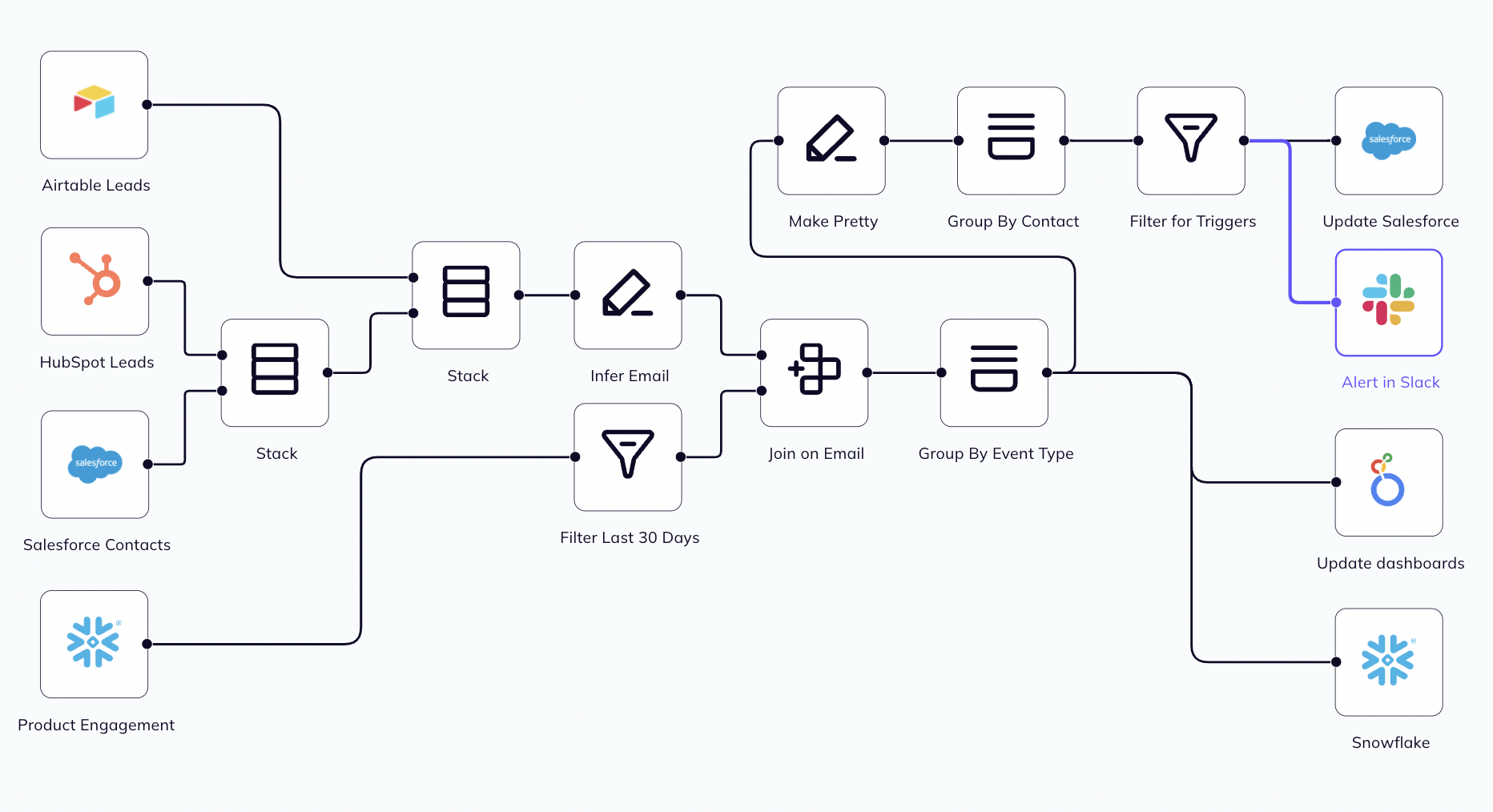
He also believes in his solution is relevant in good times or bad because automation is always going to sell. The product itself is a typical no code workflow builder with built-in connectors users can drag and drop to connect to data sources, make certain actions and events happen and finally output the data to update sources like Salesforce and Snowflake, update the related dashboard and send a message to relevant employees Slack when new data is available.

Savant Labs data workfolw tool in action, connecting to data sources, doing a join, adding action and event triggers and finally outputting to dashboards, the data warehouse and Slack notifications.

Image Credits: Savant Labs

He has 20 employees so far, and he says as a startup founder, regardless of the tech company layoffs, the challenge remains finding employees who not only have the right skill set, but are committed to doing what it takes to build a startup.

He says that when it comes to hiring, he is trying to build a diverse workforce, but there are many challenges for an early stage technical startup. But he says one advantage he has is being fully remote and being able to hire from anywhere.

“We were born digital native, so we don’t have an office. We were a globally distributed company from day one. So we have that level of diversity,” he said. But he says that so far gender diversity so far has eluded him because the hiring market remains tight for engineers in spite of the layoffs we have seen.

Today’s $11 million seed was led Cota Capital with participation from WestWave Capital, Bloomberg Beta, Uncorrelated Ventures, Handshake Ventures and several industry angels.

Savant Labs aims to bring analytics directly to line of business users by Ron Miller originally published on TechCrunch


Insurtech giant Equisoft lands $125M investment, eyes acquisitions

Montreal-based Equisoft, an insurance and investment software developer, today announced that it raised $125 million in venture equity. It’s a large amount made more significant by the fact that the investment climate for insurtech vendors is growing increasingly challenging.  A recent Gallagher Re report found that quarterly insurtech funding for Q4 fell to the lowest level since Q1 2020, decreasing 57% quarter on quarter from $2.35 billion in Q3 to $1.01 billion in Q4.

$70 million of Equisoft’s new tranche came from Investissement Québec and the government of Québec, with the remainder coming from Export Development Canada and Fondaction. CEO Luis Romero says that the funding will be put toward “global expansion,” both “organically and through strategic acquisitions.”

“The funding will strengthen our balance sheet and accelerate further development of our integrated life insurance software platform and wealth products to better serve our global customer base,” Romero told TechCrunch via email.

Romero founded Equisoft in 1994 along with a friend he’d worked with in the IT department of an actuarial consulting firm. They left the company together to pursue a more entrepreneurial path. At the time, custom-built solutions were the trend, and — according to Romero — he and his friend had the opportunity to build an asset allocation software for a mutual fund company. That software formed the basis for Equisoft.

“The original software was delivered on three floppy disks,” Romero said. “We made 1,000 copies of it and packaged it in fancy boxes to send to financial advisors. This product evolved from floppy disk to a software-as-a-service (SaaS) solution, and in the early 2000s, we added system integration into our offering. We then evolved to focus on a core set of solutions where we knew we could be the best.”

Equisoft was a self-funded company for 24 years, up until 2018. In 2018, in order to “accelerate growth” (as Romero puts it), Equisoft opened up to investors, securing around $17 million in its first round of funding.

“Our reasoning back then was we wanted to invest in our core SaaS solutions and the specialized services surrounding them,” Romero said. “We believed that there was a significant opportunity to continue to grow our customer base across the life insurance, wealth and asset management markets in the Americas and beyond.”

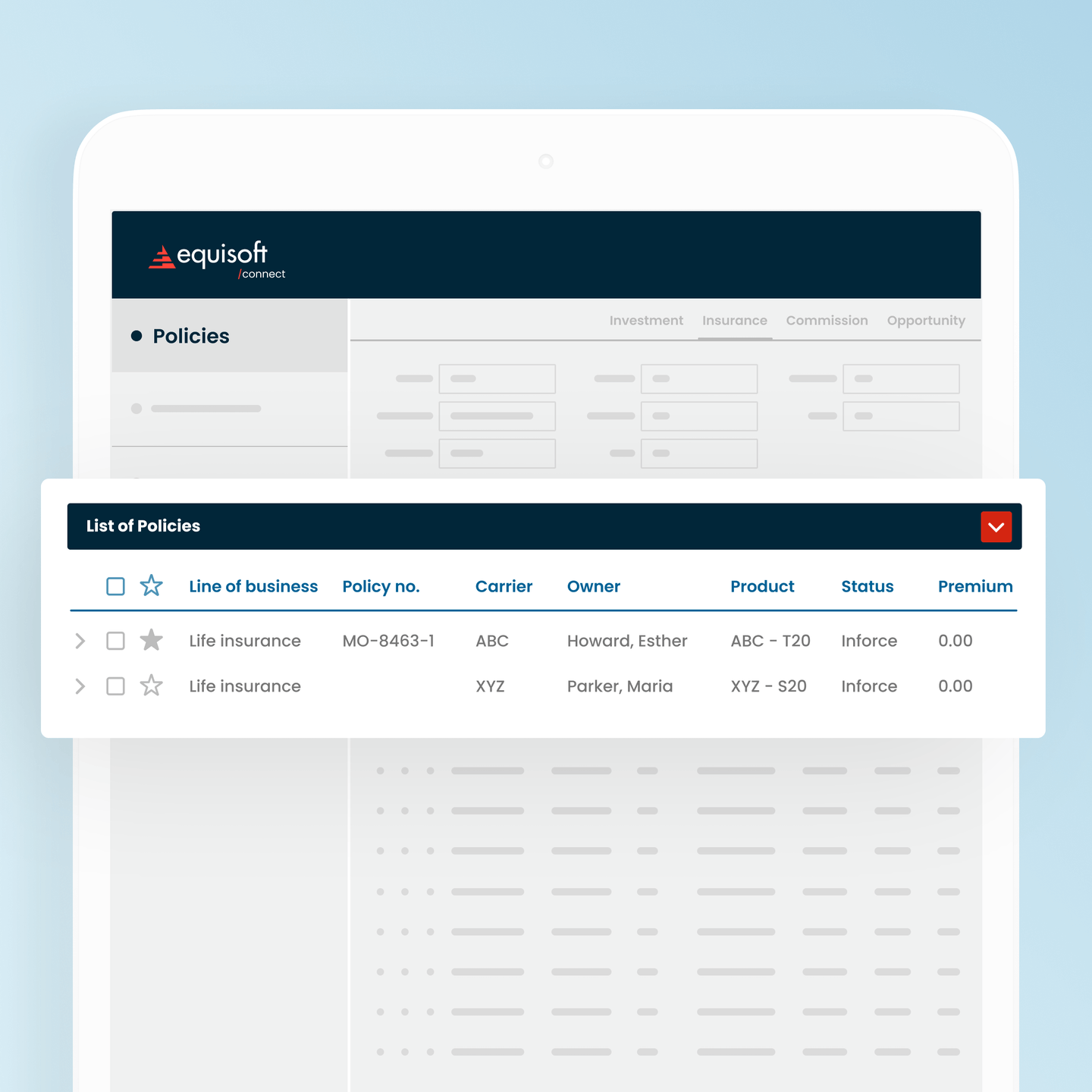
Equisoft

Image Credits: Equisoft

It was a prescient move. Today, Equisoft’s annual total revenue stands around $150 million; in 2022, total revenue and annual recurring revenue both grew by 45% year-over-year. With over 250 corporate clients, Equisoft’s solutions are now used by more than 100,000 advisors in North America alone, Romero says.

Acquisitions bolstered Equisoft’s expansion. In 2021, the firm bought Altus, a U.K.-based financial services firm with a transaction platform for pension administrators and asset managers. And in 2022, Equisoft purchased CompuOffice (Equisoft’s eighth acquisition to date), a developer of life insurance analysis and research software.

“Over the past two years we have more than doubled our revenue and now have over 900 employees,” Romero said. “We’re hoping to continue on our growth trajectory this year.”

So what, exactly, does Equisoft do? At a high level, the company partners with customers to solve problems of the wealth management and insurance variety. Equisoft’s core offering is centered on back office and policy administration tools for life insurance customers, but the company also sells frontend solutions to complement its bread-and-butter software lineup.

“Our go-to-market strategy is focused on leveraging our digital products to win new customers and provide them with a solution for a faster, more cost-efficient transformation or with a component for incremental value added,” Romero said. “This strategy is supported by our policy administration system and data migration services.”

For example, Equisoft uses AI and machine learning to offer what it calls “data-driven predictions,” or “next best actions,” to promote efficiency and ideally reduce human error in insurance workflows. Think automatically extracting key info from insurance contracts or algorithmically processing customer onboarding documents.

“Equisoft’s offerings enable companies to undergo much-needed digital transformation,” Romero said, citing a McKinsey study that predicts automation will influence 25% of the insurance sector by 2025. “AI can fill in the manual, repetitive and mundane labor gaps and allow insurance industry professionals to do other things that add the most value to policyholders.”

Equisoft positions its software and services as disruptive, but — despite the recent downtrend — insurtech has been a red-hot industry. According to a recent report from BCG, insurtech companies raised $14.4 billion across 644 deals in 2021, surpassing the total raised in 2020 by about 87% and reaching a cumulative 10-year total of $43.8 billion from 2012 to 2021.

Equisoft intends to ride the wave with a renewed focus on mergers and acquisitions, expanded service offerings and geographic expansion,” according to Romero; $138 million in the bank will certainly help.

“The life insurance, wealth and asset management industries are large, highly competitive and fragmented. These markets are subject to changing technology, shifting client needs and introductions of new products and services,” Romero continued. “We believe our global end-to-end platform and deep industry experience differentiate us from competitors who do not necessarily provide an integrated, scalable, configurable and highly efficient platform. Moreover, our global footprint and broad expertise allow us to be among the few players that operate across geographies and languages.”

Insurtech giant Equisoft lands $125M investment, eyes acquisitions by Kyle Wiggers originally published on TechCrunch


How an entrepreneur, who didn’t know how to cook, started a recipe company

Unless you are an avid food prepper, “what’s for dinner” is probably the phrase uttered everyday in most households.

Ten years ago, SideChef founder and CEO Kevin Yu set out to make it easier to answer that question by creating an all-in-one cooking, shopping and meal planning app. He later brought on Cadence Hardenbergh as co-founder and COO.

Recipe management itself not a new concept, and SideChef is among a group of startups bringing technology to a sector where handwritten recipes kept in a folder or Rolodex is the norm. We’ve seen companies like Galley Solutions and meez do it for restaurants, while Pestle, Whisk, Foody and even Instacart are creating apps for consumers.

However, SideChef’s “secret sauce,” if you will, is its more than 12,000 shoppable recipes that can be added to your cart and all of the ingredients needed to make that recipe are delivered or made available for in-store pickup from Walmart. There is also a “create your own” feature so that account holders can upload their own recipes and even share them publicly.

Cadence Hardenbergh Kevin Yu SideChef recipe app

SideChef co-founders Cadence Hardenbergh and Kevin Yu. Image Credits: SideChef

The app is free to download and now has over 20,000 “smart recipes” that users can filter by dietary preferences, ingredients you already have in your kitchen, cuisine or cook time. There is a monthly subscription of $4.99 that comes with a premium version providing recipes from SideChef culinary experts.

Prior to starting the company, Yu was a video game developer for eight years, working with Warcraft and Blizzard. He admits that he didn’t know how to cook at the time, but was curious if there was a step-by-step guide via an app that helped people cook. When SideChef launched in 2014, it was named “Best App of the Year for Google Play.”

“That was really big validation for us,” Yu told TechCrunch.

Following that, the company got its first seed round and built up its platform so that tablets, iPhone, Android and even smart home hubs can read off the step-by-step cooking instructions. Yu described it as “the start of the journey in which our mission is to allow anyone to be able to cook.”

However, there was a point where he realized that monetizing recipe users was not the same as video game users: chiefly that people are not going to go into the app and spend a bunch of money buying recipes. So, he went out looking for business models and saw how online grocery, though still low penetration, was becoming a trend.

“Our idea was to take the structured data we had, map out all the ingredients and send lasagna to you in a single click,” Yu added. “We know everything that they need, and the serving size, so we can match some of the grocery database to be able to send the right amount of pasta sauce or pasta.”

SideChef linked up with Instacart around 2016 for the grocery delivery and also went on to work with kitchen appliance makers like Sharp, GE and LG Electronics.

Those new business models have paid off: The company doubled its revenue growth three years in a row, boosted in part by the global pandemic, when Yu said more people started cooking at home.

At the same time, the smart kitchen side led the company to its previously unannounced Series A with LG and now another $6 million in Series B funding. The seed, Series A and Series B give SideChef a total of more than $16 million from institutional investors, including Ideate Ventures, AB Electrolux, Peacock Capital Group, V-ZUG AG, Ilion Capital, Empower Investment, Innolead Investment, LG Technology Ventures and KZone LLC.

The new funding enables SideChef to move into its next phase of growth that includes an end-to-end cooking platform supported by smart kitchen technologies like image recognition devices to allow automated cooking and further monetization of the platform, including online grocery purchasing, contextual marketing and data insights.

“I believe we have the most structured data format of a recipe in the world,” Yu said. “What started as teaching myself how to cook became kind of a ‘Rosetta Stone’ to connect the entire industry.”

How an entrepreneur, who didn’t know how to cook, started a recipe company by Christine Hall originally published on TechCrunch


5 investors discuss what’s in store for venture debt following SVB’s collapse

There are many questions around the implications of Silicon Valley Bank’s (SVB) collapse that won’t be answered for a long time. But there’s...