Thursday, February 23, 2023

Making layoffs suck less: How to announce job cuts and retain top performers

There is no way to sugarcoat it: For many founders, 2022 was a tough year to be a boss, and 2023 is not shaping up to be any easier. The tech industry layoffs may have slowed, but they haven’t abated and there will certainly be more to come.

Staff reductions have become commonplace, but that doesn’t make cutting jobs any easier; especially if you’re the founder of a startup. Of course, all job cuts are difficult, but at a startup, they can feel personal. Founders are laying off people who have helped them build the company from scratch; the people who assembled IKEA furniture in the first office and who pulled late nights and long weekends. Layoffs at a startup can fracture the motivation and trust of those who remain.

Over the past 15 years, I’ve had to preside over layoffs at previous jobs, and I’ve also worked with some founders in the past year who’ve had to let team members go. There is no perfect way to handle such situations, but I have learned a few things that might be helpful for founders facing potential layoffs.

Letting people go will never feel good, but with some thought and planning, founders can manage the process well and come out the other side stronger.

Before the layoffs

When layoffs are necessary, it is important to manage the situation with compassion and clarity. You must treat each job loss with the empathy it deserves. Here are four strategies to consider:

Don’t delegate fully

Yes, your head of people will be your key wing person, but you should never dump the layoff process on others. You’re the founder, so you own the process and the outcome. Care about the details, work closely with your team, and if the company is small enough, have the tough conversations yourself.

This may feel like one of the worst moments in your company’s trajectory, but your team will respect you when you take responsibility for overhiring or any missteps that led to this point.

When employees hear they’ve lost their jobs from a CEO or another respected leader, they leave feeling valued. Also, remember to make one deep round of layoffs instead of several over many months. A slow, repeated process saps morale and makes everyone feel unsafe.

Don’t do mass layoffs on Zoom

This idea always sounds nice on paper. It’s efficient!

It’s also one of the worst ways to announce bad news. No one wants to learn they’ve been laid off in front of their co-workers and be forced to react to the news in real time. That said, sometimes group notifications are required given the size of the team impacted.

Consider if you have the capacity to handle the layoffs with one-to-one conversations — it is your best option. If that isn’t feasible, you can use Zoom or send an email first. But you should still follow up one-to-one if you can.

You need to do what’s right for your business, but don’t lose sight of the power of a personal conversation for showing the people you’re letting go that you respect them. They’re going to walk out the door and tell their friends what working at your company is like. Make that last impression the best it can possibly be.

Create a communication plan

Making layoffs suck less: How to announce job cuts and retain top performers by Ram Iyer originally published on TechCrunch


Trust & Will secures $15M after doubling revenue

Drafting a will and planning for what happens to your estate once you pass away is well, not exactly fun. Both tasks can also be very pricey endeavors, not to mention just painful to do for many reasons.

And so it’s no surprise that many people put off the tasks, perhaps living in denial they are not immortal.

In fact, one 2022 survey found that about two-thirds of Americans have no estate plan. That’s not good because then the loved ones you leave behind are stuck with having to figure it all out, and in some cases, have to fight for assets you would have probably left for them had you taken the time to draft a will. Interestingly, that same survey — conducted by Caring.com — found that 50% more young adults (aged 18 to 34) had estate planning documents than before the pandemic.

One startup out to help take the pain, and expense, out of the estate planning process by digitizing it is seeing demand for its services grow. And now that startup, Trust & Will, has raised an additional $15 million in funding from a group of high-profile financial institutions to build on its momentum.

Amex Ventures, Northwestern Mutual Future Ventures, SEI Ventures and USAA all participated in the new financing, bringing the San Diego-based company’s total funding to $48 million since its 2017 inception.

The funding follows a period in which Trust & Will saw its revenue “more than double” year-over-year, according to CEO and co-founder Cody Barbo, who declined to reveal hard revenue figures but added that the company has seen its business double every year since 2020. He also declined to divulge Trust & Will’s current valuation, telling TechCrunch only that it raised at a higher valuation than its last round — which included a strategic investment from UBS — at the end of 2021.

“We’re in turbulent times as macroeconomic trends continue to impact the tech sector at large, so raising capital in this environment is truly remarkable,” Barbo said. “We’re proud that this capital gives us plenty of runway over the coming years, and will allow us to achieve profitability with strong cash reserves.” The company also plans to use the capital to scale operations and “further integrate with leading financial institutions,” Barbo added. Currently, it’s partnered with a number of banks, credit unions, other fintechs, insurtechs and nonprofits to educate and offer discounts to their members/customers on estate planning.

At the end of January, Trust & Will crossed over 478,000 cumulative members, and is on track to cross 500,000 this quarter, Barbo said. That compares to 311,753 cumulative members at the end of January 2022.

The capital infusion from Northwestern Mutual Future Ventures represents the firm doubling down on its first investment in the company in 2020.

Trust & Will pledges to provide an “easy and secure” way to create estate plans and settle estates online, with the ability to customize legal documents that adhere to individual state and county guidelines. In October, the startup launched Trust & Will Probate with the goal of streamlining probate and estate settlement with “affordable options.”

The company primarily earns transactional revenue that customers pay upfront. It also charges an annual membership that customers pay on an ongoing basis to have the ability to make updates to their estate plan. 

“Estate planning is an essential pillar of sound consumer financial wellness. Yet today, the process is complex, antiquated, and expensive,” said Margaret Lim, managing director at Amex Ventures, in a written statement. “Trust & Will is modernizing the estate planning industry with a simple, fast, and affordable way to set up an estate plan online.” Lim added that Amex is not only investing in the company but also is excited “to explore opportunities to partner with them.”

Want more fintech news in your inbox? Sign up here.

Got a news tip or inside information about a topic we covered? We’d love to hear from you. You can reach me at maryann@techcrunch.com. Or you can drop us a note at tips@techcrunch.com. Happy to respect anonymity requests.

Trust & Will secures $15M after doubling revenue by Mary Ann Azevedo originally published on TechCrunch


Wednesday, February 22, 2023

Spoke AI is using generative AI to pull signal from workplace noise

As generative AI’s fast-unfolding power to supercharge content-creation amps up concern over what automation might mean for free access to quality information online, Berlin-based startup Spoke AI is gearing up to apply generative AI in a more bounded (but still noisy) context: Internally, within businesses — pitching information workers on tools to help them stay on top of inbound comms by automatically summarizing what’s coming at them across a range of third party tools.

The startup’s vision — eventually — is to be able to offer AI productivity tools that can serve workers across the whole company. But it’s starting by targeting AI-powered aggregation and summarization tools at project managers specifically.

The thinking here is this cohort of desk workers tends to tap into a wide range of third party software programs — such as Slack, Jira, Github, Miro, Figma and Notion — and may therefore have a greater need for assistance to stay on top of so many decentralized, incoming pings. Later, once the startup has worked on honing its tech and building up fresh training data-sets, the plan is to go vertical by vertical, launching products that can serve all sorts of information workers.

Spoke AI opened up access to its first beta tools earlier this week — and says it has around 20 testers, with a wait-list of over 500 companies wanting to give the tech a try. Early interest is coming from businesses of a range of sizes from SMEs with around 10 staff up to companies of some 250 staff. It has also larger enterprises in its sights for one of the first features it’s developing.

Its pitch has grabbed early interest from investors as the Q1 2021-founded startup is announcing a €2 million (~$2.1M) pre-seed round of funding led by the early stage Northern European focused byFounders fund, with participation from Possible Ventures. The funding includes a grant from the European Regional Development Fund via Berlin regional development bank, IBB. Prior to the pre-seed, the team had also taken in some angel funding to build their MVP.

“The way that we apply [AI] is to basically reduce the noise that people face in their daily work across many different tools and platforms that they use,” explains co-founder Max Brenssell. “Initially, this is for product managers, who typically work across eight to 10 different tools. We help we help them stay on top of all of that work and communication across those different tools, by using AI to aggregate, prioritise and summarise this communication.”

The startup’s starter package — or “workplace operating system”, as its marketing bills it — consists of a search feature that can pull data across a range of third party tools, such as conversations or tickets the user has been tagged in, aggregating this inbound into a “smart inbox” experience which layers on AI-generated “contextualized summaries” as well. Initially, it plans to pilot this with a handful of larger companies.

It is also offering AI-powered summarization “in the context of search”, per Brenssell — a feature it refers to as a “Generative Knowledge Base” (or “intelligent search”) — in the form of a browser plug-in. The search feature allows users to search across connected tools in their “smart inbox” to find answers “in summarised form, rather than finding a link to an outdated page”.

Spoke AI is also offering its automated summarization as a Slack plug-in to earlier adopters — idea being to provide functionality where its target users are already spending a lot of their time, while tapping into existing trusted environments rather than demanding users upload what may be commercially sensitive content to an unknown platform.

There’s a long history of productivity tools offering integrations and aggregations that propose to pull relevant but distributed data into one easier-to-keep-tabs-on location. The added value here is the use of generative AI to produce contextual summaries on top of that in order to — in theory — restore the context that might otherwise be loss as messages are pulled out of their native apps and aggregated into a centralized repository.

Close attention to security and privacy is one point of differentiation Spoke AI claims vs legacy approaches to boosting productivity via aggregation.

“The real secret sauce is really in the summarization that works for this specific use case — has to work in a very kind of very concise, reliable way. And also in a data privacy and data security [safe] way. So this is how we are positioning it and how we’re building it as well,” says Brenssell. “We do work with pre-trained language models, like the ones that are at the core of [OpenAI’s] GPT. But we do a lot of pre- and post-processing in terms of, for example anonymizing data — cleaning the data so that it’s improved from the privacy and safety perspective.”

He says Spoke AI envisages this component potentially powering an additional revenue stream — i.e. if it can sell data anonymization as a service (via an API) to other businesses that want to apply AI models like GPT to their own custom data-sets, in addition to selling AI summarization.

Brenssell also says it might look to turn the core summarization capabilities into an API too — as another tactic for monetizing the technology.

For now, it’s offering a free version of its summarization tech in Slack plug-in form. For the smart inbox feature he says that, at least initially, this will be offered as a SaaS — with tiered pricing depending on the number of integrations, security features etc.

Accuracy is obviously one core component to the startup’s proposition. If the summaries it’s generating fail to properly reflect the context around the notifications Spoke AI might end up creating more work for users — rather than saving them precious time.

Brenssell notes it has built feedback loops into the beta product so users can rate the automated summaries and help it improve the product over time. It is also focusing on showing workings for the automation — so users can track back and figure out the inputs that the AI drew on to build a summary. Creating transparency over this is an early focus, he says.

“This is something that users ask a lot, obviously, how can I trust this?” he notes. “What we tried to do always is to create transparency around where does the data come from that flowed into the summary, and then giving the user kind of a trail, where they can then go deeper if they want to, and really understand where we’re pulling the data from that goes into summary.”

Another question to ponder is whether AI summarization is really enough to sustain a standalone business in its own right? Or whether it may be more useful features that could be added by existing productivity giants. (Microsoft, for example, is a major investor in OpenAI’s ChatGPT conversational interface for generative AI and has talked about bringing the technology to a range of its own software tools. While Google already uses AI for certain ‘smart’ features, such as in its email product, albeit with rather patchy results.)

Asked about this, Brenssell says: “We absolutely expect every one of the big [players] like Notion, Slack etc, to launch AI features. And some of them have already done so — which I think is great. The problem that we’re really solving, though, is that we really summarise and increase your productivity across a range of different tools. Product managers are the most extreme example of that today, because they work across 10 different tools on a daily basis. But we do see that trend also in other verticals, increasingly, where you have more and more specialised tools.

“At some point, you then have communication and information across each of these tools, right? So we really see the value in building this very flexible, integrations focused summarization layer — so that you can use all of those tools that make you more productive in very specific tasks and areas. But you can also stay sane, by keeping an overview across the communication that happens on our system.”

“Lots of companies that work with Jira from Atlassian, they prefer to use Notion over Confluence, because it’s the more flexible tool for documentation. And these kinds of things we see, increasingly, because there are just more and more better tools out there,” he adds. “People don’t want to necessarily bind themselves to just one product. But they really want to be able to pick and choose the best tools for their team for their workflow for their company. So that’s kind of what’s what we see in the market. And that’s what we’re obviously also betting on.”

Isn’t applying generative AI to fight information overload when automation is itself predicted to vastly complicate the signal-to-noise problem — a little bit, well, self defeating? AI to counter AI is an arms race the movies suggest might not end that well…

Brenssell says it’s an “interesting point”, adding that it will be “really interesting to see where, where generative AI tools in the sense of really generating content are going in the next few years”. But for Spoke AI’s target arena he reckons the risk is low — arguing that business comms aren’t an obvious target for automating with AI, whereas “most of the generative AI applications, for example, copy creation, or writing outreach emails, are more external facing”.

“We’re really focusing on how teams work within their companies, and how they can become more efficient there. And there, we haven’t seen so many [uses of] generative AI,” he adds.

On the competition front, he concedes certain products do already offer summaries related to features within their own products, such as Notion and Intercom. He also points to inbox aggregators which can, for example, pull in WhatsApps and iMessage into one interface — or put b2b email and Slacks into one inbox. “But nothing that really builds in the summarization, which we believe in is just as the big the big differentiator,” he argues.

But how defensible is the idea of using AI for summarization? With powerful AI models like GPT already out there, what’s to stop others building out the same feature? On this, he suggests the team’s focus on “data privacy” and ethical data use — in addition to pushing on product performance so the tech can serve up “concise and reliable” summaries — will help it carve an edge. “[Summarization is] not as easy to do as generating, for example, content using AI,” he argues. “Obviously, the underlying technology is evolving. We’re following that. But we do think that by building the right pieces — like, for example, when it comes to anonymizing data, then I think that’s where we can keep the edge on the AI side.

“And then the second bit is really on the kind of product application side. Just building an extremely well-integrated user experience that works super well across your different tools — rather than forcing you to switch from one to the other, from your existing tools like Slack, to a new tool. This is not something that we believe in, because it does create a lot of friction. So we’re really trying to find a way to fit our summarization into existing workflow, and into taking a very integrated [approach].”

The startup is using a blend of AI models and custom training for the summarization — with Brenssell saying it’s “currently powered by a combination of fine-tuned pre-trained language models (e.g. Luminous, GPT-3.5), self-hosted open-source technology (e.g. GPT-J, BLOOM, technologies developed by Microsoft and Stanford), and custom models trained in-house (e.g. for Named Entity Recognition, PII Detection, Data Pseudonymization, Question / Answer Identification, Semantic Search)”.

“Having worked with NLP technologies over the recent years and seeing the rapid advancements, we believe that in a space where the core technology will become more and more commoditized, it is still possible and crucial to differentiate,” he also tells TechCrunch. “We think that differentiation in our space mainly comes via building with a clear focus on data privacy, responsible, human-centred AI, and augmentation instead of automation. Building trust with users will be paramount and security- and user experience-enhancing data pre- and post-processing will play a crucial role. We’re eager to rapidly validate specific use cases with easily accessible technologies and then double down by building proprietary datasets based on implicit and explicit feedback, further fine-tuning and training our models.”

Commenting on the pre-seed raise in a statement, Casper Bjarnason, investor at byFounders, added: “As work becomes increasingly distributed and asynchronous, companies need the tools to efficiently share information and create alignment. Spoke is building exactly that, and when we first met the founding team we were blown away by their product vision. We’re so excited to partner with Max, Jack, and Carl on their journey ahead!”

Spoke AI is using generative AI to pull signal from workplace noise by Natasha Lomas originally published on TechCrunch



Byju’s has discussed shutting down coding platform WhiteHat Jr

Byju’s is weighing whether to wind down WhiteHat Jr, a coding platform that it acquired over two years ago at an enterprise value of $300 million, as the edtech group looks to cut expenses and eliminate a business unit that has drawn considerable criticism to the firm.

The Bengaluru-headquartered firm, India’s most valuable startup at $22 billion valuation, has held conversations in recent weeks about shutting down what was once touted as one of its best acquisitions, three sources familiar with the matter told TechCrunch. It has not reached the decision yet, according to a separate person familiar with the matter.

The discussions come at a time when Byju’s is cutting costs across the company. The firm, which has laid off thousands of employees and pared back on marketing expenses, was until recently spending about $14 million a month on the coding platform, one of the sources said.

A Byju’s spokesperson declined to comment.

Byju’s acquired WhiteHat Jr in 2020 at an enterprise value of $300 million. A considerable amount of the payout was tied to future growth metrics. Byju’s eventually spent less than $235 million on the acquisition deal, one of the aforementioned sources said who, like others, requested anonymity discussing private matters.

The coding unit has drawn criticism from many for its misleading claims and aggressive tactics to court students. WhiteHat Jr famously also sued some of those critics, a move that attracted the firm even more backlash. It later withdrew the lawsuit. WhiteHat Jr founder Karan Bajaj (pictured above) left Byju’s a year after the acquisition.

Byju’s — which counts Sequoia India, Lightspeed Venture Partners, Tiger Global, B Capital, UBS and General Atlantic among its backers — has spent the past one year addressing many criticisms levelled at the firm. Byju’s said last month that its sales people no longer visited students’ homes to pitch to their parents and the firm now conducts a test to determine whether a kid’s parents can afford to subscribe to the service before signing them up.

Byju’s has discussed shutting down coding platform WhiteHat Jr by Manish Singh originally published on TechCrunch



Daily Crunch: Spotify says new AI DJ feature currently in beta testing has ‘stunningly realistic voice’

To get a roundup of TechCrunch’s biggest and most important stories delivered to your inbox every day at 3 p.m. PST, subscribe here.

Helloooooo from team Daily Crunch! Haje is back from dealing with all sorts of little disasters, and Christine is still going strong. Let’s goooooo.

It’s still Black History Month, so for today’s feature, get yourself a TC+ subscription (use code DC for a discount), and read why our very own Dominic-Madori believes that for Black founders and investors, ringing Nasdaq’s opening bell symbolizes progress.

Christine and Haje

The TechCrunch Top 3

  • The beat goes on: Our music listening is getting way too smart for its own good. Spotify’s new feature, called “DJ,” is injecting some artificial intelligence into our music — because what doesn’t have AI powering it at this point — and claims to be so good at knowing what you want to listen to that you’ll have a personalized music experience every time you tap the DJ button. It will even give you commentary on what you’re listening to. Sarah has more.
  • United States for the win: Mary Ann spoke exclusively with Klarna’s co-founder and CEO Sebastian Siemiatkowski and learned that the U.S. is now the payment giant’s largest market. She has the scoop on how the U.S. surpassed Europe.
  • Hey! You! Get into my car: Uber redesigned its app to create a more simplified and personalized experience for customers so you can see all the ride-hailing giant can offer. Rebecca walks us through the changes.

Startups and VC

Whatever you do, don’t miss our Wednesday Equity show — this week Natasha M interviewed Kaisa Snellman, an economic sociologist and an associate professor of organizational behavior and academic director of the INSEAD Gender Initiative, digging into how data shows that female check-writers alone aren’t enough to close the female fundraising gap.

A year after completing its special purpose acquisition with FirstMark Horizon Acquisition Corp. to go public, Starry Group Holdings, an internet service provider, said that it filed for bankruptcy in efforts to reduce its debt while maintaining customer and network operations in five cities, Christine reports.

And another few to keep you piqued:

Go long or go short? A VC reveals when it’s time to sell and how to maximize buyer interest

Alarm clock on a white plate with a knife and fork on blue background. Intermittent fasting, Ketogenic dieting, weight loss, meal plan, and healthy food concept.

Image Credits: puhimec (opens in a new window) / Getty Images

Will your startup IPO and grab a giant slice of your market, or is it a value-add that will be acquired by a hard-charging unicorn?

“When you can’t quite make it to product-market fit, there’s a third choice that too many entrepreneurs, and their investors, overlook: selling out,” says Kittu Kolluri, founder and managing director of Neotribe Ventures.

In an article aimed at early-stage founders, Kolluri shares a detailed framework with timelines that can help decide whether it’s time to look for a buyer or keep reaching for the stars.

“How can you choose? While it isn’t a trivial decision, it’s also not as hard as you might think. There are only two gates: value and growth.”

Three more from the TC+ team:

TechCrunch+ is our membership program that helps founders and startup teams get ahead of the pack. You can sign up here. Use code “DC” for a 15% discount on an annual subscription!

Big Tech Inc.

“Hey @Bing.” That’s what you can text now to bring Bing into your conversation. The search engine may have had its ups and downs, but that is not stopping Microsoft. Frederic writes that the company now brings the new AI-powered Bing to mobile and Skype so you can ask questions in a chat mode.

This week, the Supreme Court heard arguments related to Section 230 of the Communications Decency Act, which shields internet companies from liability for the user-generated content they host. Taylor writes, “It’s become an unlikely nexus of controversy in recent years.” Why? “Plaintiffs…argue that the tech platforms in question should face legal liability for the Islamic State content that they hosted or promoted in the lead-up to attacks that together claimed more than 150 lives,” she reports.

What do you want? More stories!

Daily Crunch: Spotify says new AI DJ feature currently in beta testing has ‘stunningly realistic voice’ by Christine Hall originally published on TechCrunch


South African car subscription service Planet42 raises $100M equity, debt

Planet42, a South Africa-based car subscription company that buys used cars from dealerships and rents to customers via a subscription model, has raised $100 million in equity and debt from a wide range of investors.

Naspers, through its early-stage investment vehicle, Naspers Foundry, co-led the $15 million equity round (the SA-based investor also led Planet42’s previous $30 million round in late 2021) alongside ARS Holdings. The equity round welcomed participation from existing and new shareholders, including Rivonia Road Capital; the Los Angeles-based global alternative asset manager provided a $75 million credit facility. Planet42 also received $10 million in debt funding from private investors.

According to the company, the new financing, comprised of equity, credit facility and debt, will rapidly scale its business and provide a million cars globally to people excluded from traditional car financing.

So far, the Estonia-founded mobility startup that offers rent-to-buy car subscriptions has bought over 12,000 cars for its customers in South Africa and Mexico. When co-founder and CEO Eerik Oja spoke to TechCrunch in an interview in December 2021, Planet42 claimed to have distributed more than 7,000 cars to customers in South Africa; according to a statement released by the company, it purchased over 5,000 vehicles in the African country in the last 12 months. Also, the six-year-old mobility startup commenced an expansion drive into Mexico last year and has delivered 250 cars to customers there. 

Planet42 says its expansion to Mexico is part of its strategy to address transport inequality on a global scale. Only half the world’s urban population has adequate access to public transportation, according to the UN, and many of those excluded from access to reliable public transport are wage-earning workers in emerging markets who, despite having bank accounts and stable incomes, are unable to get financing from traditional financial institutions to buy vehicles of their own. 

In South Africa, 70% of vehicle finance applications get rejected by banks, according to Cars.co.za, Planet42 dealers, which has increased from 700 in 2021 to 1,000 dealerships, report up to 90% rejection rates. Planet42 is one of the few upstarts, including Moove, Autochek and FlexClub, focused on the African market tackling this inequality via different mobility offerings.

For Planet42, it uses proprietary scoring algorithms to assess risk in underbanked customer segments. And with its algorithms, customers can find out what budget suits them and choose new or pre-owned cars from Planet42’s dealerships network. After that, Planet42 buys the car and rents it to the customer on a subscription basis. Planet42 claims that of all the customers served so far, 89% would have had no other means of gaining access to a personal vehicle. Dealers in Planet42’s South African network have reported an average increase in sales of 26% since becoming partners, the company said in a statement. 

“Safe and reliable transport is a key driver of social and economic inclusion in emerging economies. It enables people to access opportunities like jobs, education and public services more easily when public transport is often unreliable, painfully slow, unsafe – and usually all those things at once,” Oja, who founded Planet42 with CFO Marten Orgna, said in a statement. “We are here to make transport more accessible and are constantly working on making Planet42’s car subscription offering accessible to people unfairly ignored by banks.”

The company has raised over $150 million in equity and debt from investors such as Naspers, Change Ventures, Startup Wise Guys, Martin Villig (Bolt), Ragnar Sass (Pipedrive), and Andrew Rolfe. It became carbon-neutral certified in 2021. According to Daniel Zinn, the founder and managing partner of Rivonia Road Capital Rolfe, one of Planet42’s newest investors, “Rivonia Road is excited to partner with Planet42 by providing the capital needed to address this market inefficiency and help democratize access to mobility for thousands of underserved consumers around the world. 

South African car subscription service Planet42 raises $100M equity, debt by Tage Kene-Okafor originally published on TechCrunch


Tuesday, February 21, 2023

European VC firms Amadeus and Apex partner for €80m early-stage ‘deep tech’ fund

U.K.-based Amadeus Capital Partners and Austria’s Apex Ventures are pooling their collective venture capital (VC) resources for a new fund specifically targeted at early-stage deep tech startups

The duo have raised an initial €28 million ($30 million) for the Amadeus Apex Technology Fund, with plans to close it out at €80 million ($85 million). The fund has already made its first investment, too, participating in a hitherto undisclosed second-closing of German space startup Okapi-Orbits’s seed funding round to the tune of $1 million.

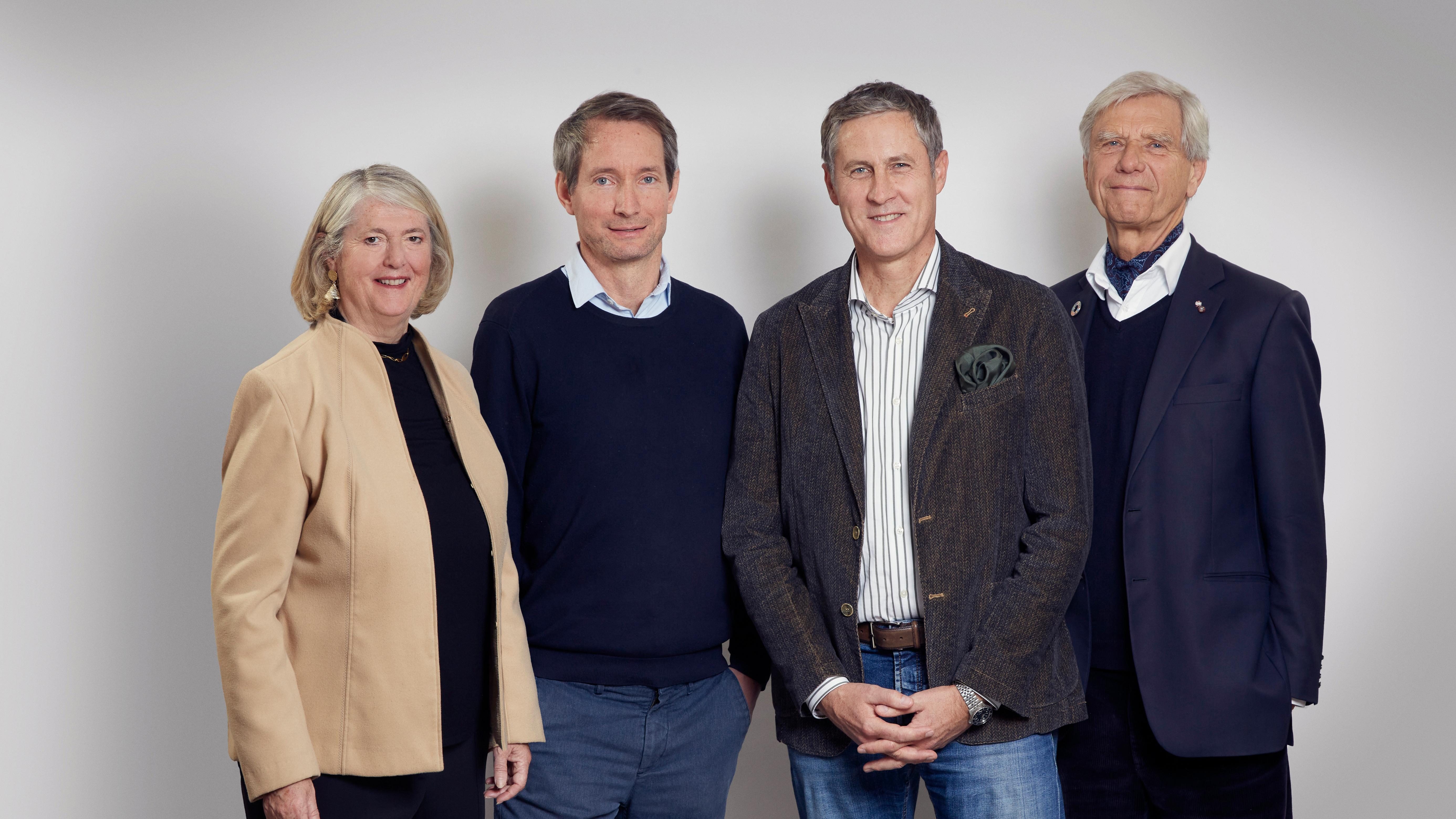
The fund’s core investment team includes Amadeus’ co-founders Anne Glover and Hermann Hauser, who are joined by Apex partners Andreas Riegler and Wolfgang Neubert.

Amadeus Apex Technology Fund: Anne Glover (Amadeus), Andreas Riegler (APEX), Wolfgang Neubert (APEX), Hermann Hauser (Amadeus) Image Credits: Amadeus Apex Technology Fund

Early-stage

The goal of the Amadeus Apex Technology Fund is to invest between €1-1.5 million in seed and Series A stage startups with “unique and defendable technology,” and will include AI, quantum computing, mobility and outer space, robotics, and other areas of the deep tech sphere. Moreover, the fund’s core focus will be on the so-called DACH region, incorporating Germany, Austria, and Switzerland, though there is scope to meander into nearby markets — though this won’t include the U.K.

“The partnership also allows for early-stage investments in other European markets outside the U.K., such as Poland, Denmark and the Netherlands, which are on our radar for everything from quantum tech to photonics and AI,” Riegler explained to TechCrunch. “We’ve focussed on this region because we recognize it as a perfect breeding ground for early-stage deep tech innovation, with top universities and a large developer pool. At the same time, deep tech funding is still low, which presents a huge opportunity for growth.”

Founded in 1997, Cambridge, U.K.-based Amadeus Capital Partners has made more than 260 investments over the past 25 years, with exits to its name including network security company Forescout which was snapped up by a duo of private equity firms for $1.9 billion in 2020, and self-driving startup FiveAI which was acquired by Bosch last year. Apex Ventures, meanwhile, has made some 40 investments since its formation in Vienna six years ago, most recently joining a €2.7 million funding round into German biophotonics startup Refined Laser Systems.

So while both VC firms have different histories, they have each been investing into the deep tech realm off their volition just fine until now — so why partner up on this new fund?

“We have collaborated with [Amadeus Capital’s] Hermann Hauser for many years — he was an investor in our [Apex’s] first fund and an advisory board member of the firm, and we have multiple joint investments,” Riegler said. “This subsequently led to a close relationship with the Amadeus Capital Partners team. The Amadeus team wanted to expand their early-stage footprint in Europe and turned to Apex Ventures for our local expertise, deal flow and syndication experience.”

And for Apex, a relative newcomer to the VC scene compared to Amadeus, it taps a quarter-century of investment experience.

“We greatly benefit from access to over 25 years of experience and a network in deep tech,” Riegler said.

European VC firms Amadeus and Apex partner for €80m early-stage ‘deep tech’ fund by Paul Sawers originally published on TechCrunch


OpenAI’s Foundry will let customers buy dedicated compute to run its AI models

OpenAI is quietly launching a new developer platform that lets customers run the company’s newer machine learning models, like GPT-3.5, on dedicated capacity. In screenshots of documentation published to Twitter by users with early access, OpenAI describes the forthcoming offering, called Foundry, as “designed for cutting-edge customers running larger workloads.”

“[Foundry allows] inference at scale with full control over the model configuration and performance profile,” the documentation reads.

If the screenshots are to be believed, Foundry — whenever it launches — will deliver a “static allocation” of compute capacity dedicated to a single customer. Users will be able to monitor specific instances with the same tools and dashboards that OpenAI uses to build and optimize models. In addition, Foundry will provide some level of version control, letting customers decide whether or not to upgrade to newer model releases, as well as “more robust” fine-tuning for OpenAI’s latest models.

Foundry will also offer service-level commitments for instance uptime and on-calendar engineering support. Rentals will be based on dedicated compute units with three-month or one-year commitments; running an individual model instance will require a specific number of compute units (see the chart below).

Instances won’t be cheap. Running a lightweight version of GPT-3.5 will cost $78,000 for a three-month commitment or $264,000 over a one-year commitment. To put that into perspective, one of Nvidia’s recent-gen supercomputers, the DGX Station, runs $149,000 per unit.

Eagle-eyed Twitter and Reddit users spotted that one of the text-generating models listed in the instance pricing chart has a 32k max context window. (The context window refers to the text that the model considers before generating additional text; longer context windows allow the model to “remember” more text essentially.) GPT-3.5, OpenAI’s latest text-generating model, has a 4k max context window, suggesting that this mysterious new model could be the long-awaited GPT-4 — or a stepping stone toward it.

OpenAI is under increasing pressure to turn a profit after a multi-billion-dollar investment from Microsoft. The company reportedly expects to make $200 million in 2023, a pittance compared to the more than $1 billion that’s been put toward the startup so far.

Compute costs are largely to blame. Training state-of-the-art AI models can command upwards of millions of dollars, and running them generally isn’t much cheaper. According to OpenAI co-founder and CEO Sam Altman, it costs a few cents per chat to run ChatGPT, OpenAI’s viral chatbot — not an insignificant amount considering that ChatGPT had over a million users as of last December.

In moves toward monetization, OpenAI recently launched a “pro” version of ChatGPT, ChatGPT Plus, starting at $20 per month and teamed up with Microsoft to develop Bing Chat, a controversial chatbot (putting it mildly) that’s captured mainstream attention. According to Semafor and The Information, OpenAI plans to introduce a mobile ChatGPT app in the future and bring its AI language technology into Microsoft apps like Word, PowerPoint and Outlook.

Separately, OpenAI continues to make its tech available through Microsoft’s Azure OpenAI Service, a business-focused model-serving platform, and maintain Copilot, a premium code-generating service developed in partnership with GitHub.

OpenAI’s Foundry will let customers buy dedicated compute to run its AI models by Kyle Wiggers originally published on TechCrunch


Soylent acquired by Starco Brands as nutrition company shifts into its ‘natural next stage’

Soylent Nutrition is joining public company Starco Brands as part of an acquisition that will keep the plant-based food technology company operating as a separate unit under its current CEO Demir Vangelov.

As part of the transaction, Vangelov told TechCrunch that he will join Starco’s board and is getting shares in the new company, while himself and Soylent’s shareholders will become the largest single voting block in Starco. Other financial details were not disclosed.

Bloomberg first reported last May that Soylent was exploring a possible sale, which isn’t unusual, but financially speaking, the company was doing well: Vangelov said Soylent was profitable and had been growing over the past few years, including nearly achieving its projected goal of $100 million in run rate for 2022. Getting to profitability, however, was a complicated journey.

Origins of a nutrition company

Founded in 2013 in San Francisco by Rob Rhinehart, Soylent is focused on what it calls “complete nutrition,” developing a line of shakes, powders and bars meant to provide a daily dose of vitamins, minerals, fats, carbohydrates and protein. Products are sold in 28,000 stores, like Walmart, Target and Publix, and adding Walgreens in 2021.

Over the past decade, the company, now based in Los Angeles, raised more than $133 million in venture-backed funding, attracting capital from firms including Google Ventures, Andreessen Horowitz and The Production Board.

Soylent has also had its fair share of growing pains. In 2016, the company made a voluntary recall on its bars after customers got sick. It later determined the cause was algae-based ingredients and reformulated its powder.

Despite that setback, the company went on to raise $50 million in 2017. Then later that year, Rhinehart stepped down as CEO, naming Bryan Crowley to that position, while Rhinehart stayed on as chairman.

Crowley at the helm lasted three years before Soylent would shake up its executive team again, this time putting Vangelov in the role of CEO and Rhinehart leaving. Vangelov joined the company in 2018 after previously serving in executive roles at Califia Foods and Oberto Foods.

“When I took over the company, we were losing money and not realizing growth,” Vangelov said. “On my to-do list when the board hired me was to think about the economics and fix the products to see if we could get back to growth.”

He set on a path to rebuilding Soylent’s economic infrastructure, including warehousing, shipping, the team and its partners. The company also redesigned its products to improve function and taste, he said.

With an improved product, came growth into different channels and with a different set of consumers, Vangelov said.

“Since then, we have been consistently rated as the No. 1 tasting protein shake out there in the marketplace, not just plant-based, but at any time,” he added. “Second, we were able to start investing back into the brand because we were profitable and didn’t require new investors to come in or to go and raise money constantly.”

Next moves

This brings us to 2022, when Vangelov said he started thinking about how to infuse growth into Soylent and saw two options: raise money again or partner with someone who can help the company grow quickly. He and the board chose to partner with Starco Brands.

And just who is Starco Brands? The public company, part of The Starco Group, creates and acquires consumer products like household cleaning, automotive and personal care items. It was started in 2010, then going by the name of Insynergy Products.

Insynergy went public in 2012 and changed its name to Starco in 2017. It was in that same year that it came out with its line of Breathe aerosol cleaning products. In December 2021, the company teamed up with singer Cardi B to launch one of its more popular brands, Whipshots, a vodka-infused whipped cream.

During the past six months Starco has been busy: It changed up its leadership, including naming Ross Sklar as CEO, who had been with the company since 2015. It also went on an acquisitions tear, acquiring Art of Sport, the athlete-inspired personal care brand co-founded by Kobe Bryant, in September. Then in January, Starco acquired fragrance creator Skylar. Soylent is its third acquisition in that time frame.

Speaking about the Soylent acquisition, Sklar said in a written statement that “Soylent is one of those rare brands that successfully transitioned from Silicon Valley tech startup to mainstream with mass distribution, thanks to Demir and team’s operational execution and a global mission to improve human health and nutrition.”

Meanwhile, Vangelov said that Soylent’s 20-person team, which learned about the acquisition Monday, will stay with the company.

There are also some new products coming down the pipeline, but he could not disclose details at this time.

“It comes to a point in a company’s evolution where you cannot move to the natural next stage, which is really taking a mature-ish business to the next level of its growth without having a different skill set,” he said. “Also, you need capital to do so. By partnering up with Starco Brands, we are essentially solving those two issues. They are the right marketers and people who we can work with to accelerate growth, and they also understand how to launch innovation.”

Soylent acquired by Starco Brands as nutrition company shifts into its ‘natural next stage’ by Christine Hall originally published on TechCrunch


Ex-WeWork director raises millions for Den’s tiny home plans

If it wasn’t for WeWork’s failed IPO, Mike Romanowicz probably wouldn’t be building a proptech business right now. The entrepreneur left his position as director of product management and strategic partnerships at the famous co-working company in January.

At the time, Romanowicz detailed construction specs on small homes – that he had begun as a side hustle – were landing a couple of thousand dollars in revenue per month. He doubled down on his idea by investing $10,000 of his own money – which he used to relaunch the business under the name Den.

Den, which launched in July 2020, announced today that it has raised $3 million in venture capital in a round co-led by Gutter Capital and Crossbeam Venture Partners. It is far less capital than some of Den’s largest competitors have raised, including but not limited to Atmos, which has raised nearly $20 million in funding, Homebound, which has raised around $148 million, and Welcome, which has raised nearly $35 million.

Yet, Den’s founder is confident that their approach – and lean capital strategy – will help them win. While many proptech businesses require massive capital intake to construct physical homes, Den’s main product is a digital platform built around a more refined design and construction process. What that means is that a customer can come to Den for help with all the stages of homebuilding, from finding a design to picking the right land. Think less construction, and more, end to end project management.

From his view, there are two main categories of how housing is delivered in the United States: custom housing, which an individual customizes every single dimension of their home, or speculative housing, a turnkey house constructed by developers with the goal of someone buying or renting the location in the future. The latter – a fully-executed home – requires a different level of capitalization, he says, and the former, is, well, incredibly expensive.

Den, meanwhile, wants to offer a home that is well-designed with crystal clear specifications, and then hand hold the homeowners through the process. Romanowicz stands by the fact that very few people, even at architecture firms, don’t fully specify the dimensions of a house and allow many decisions to happen after the process has begun. “It creates a compounding effect that adds time and cost and removes your ability to accurately depict when a project is going to end,” he said. “People are constantly promoting prefabrication as a solution, but for us, we’re trying to think about airtight specifications.”

Image Credits: Den

Going back to that financing round, though, Romanowicz says that Den wants to stay asset light on purpose. The company was making revenue through digital spec plans, which he describes as a high-margin asset light product, before raising any external capital. He’s hoping the bootstrapping mentality paired with a modest first round will give the company optionality in today’s economy.

“Let’s continue to be asset light, because it’s just like a strategic advantage for us,” he said. “So our focus has been process, design, user experience, the intellectual property of the design and the technology – that means we can move faster, we don’t need to raise millions of dollars to build spec homes and sell them at market rate like some of the other folks in the category.”

Still, he didn’t deny that Den may one day get more into the procurement business. Monetization options down the road, he said, can be anything from monetizing on the sale of a property, to procurement to financing and financial services around different types of insurance from homeowners to builders. “We have a lot of problems, challenges to get through before we can even scratch that itch.”

Today, the biggest hurdle is the “operational challenge of staying focused.” Luckily, he thinks the market is ready for it.

“There’s big developing groups, state by state, that really just need a better marketing and customer acquisition engine,” he said. “And that’s what we’re here to provide.”

Ex-WeWork director raises millions for Den’s tiny home plans by Natasha Mascarenhas originally published on TechCrunch


Layoffs spell opportunity for some fintech startups

Welcome to The Interchange! If you received this in your inbox, thank you for signing up and your vote of confidence. If you’re reading this as a post on our site, sign up here so you can receive it directly in the future. Every week, I’ll take a look at the hottest fintech news of the previous week. This will include everything from funding rounds to trends to an analysis of a particular space to hot takes on a particular company or phenomenon. There’s a lot of fintech news out there and it’s my job to stay on top of it — and make sense of it — so you can stay in the know. — Mary Ann

Now hiring

Hello, hello! I’m feeling good this week because I finally kicked off something that has been in the works for a little while: tracking fintech companies that are hiring. It’s not fun covering layoffs, and unfortunately we’ve had too many of those. So I thought by also shining a spotlight on fintechs that are hiring rather than firing, our coverage would be a bit more balanced and give laid-off workers (and anyone else generally looking!) a way to see what positions are available out there.

After the article published on February 16, I had several more companies reach out about news of open roles at their companies.

  • Kikoff is hiring for 10 roles (a mix of hybrid and remote), including senior product manager, associate product manager, senior product designers, engineers and a growth marketing manager. The consumer fintech company is focused on helping people build credit and raised $30 million in June 2021.
  • Addepar, which makes software to track investment performance, is also actively hiring with roughly 50 open roles across the U.S., UK and India (also, many roles have the option for remote work).  In June of 2021, the company raised $150 million at a $2.17 billion valuation. Today, it has about 850 clients and over $4 trillion in client assets on its platform.
  • Nium is hiring and has a dozen open roles. The B2B payments company raised $200 million at a unicorn valuation in 2021.
  • 401(k) provider Human Interest, which recently increased total funding to $500 million, including an investment from BlackRock, has 23 open roles, including in engineering, product and revenue.
  • With offices in six countries, spend optimization company Emburse has just appointed new CXO Johann Wrede and is hiring for nine open roles, including in sales, engineering and customer success.
  • Collective, an all-in-one back-office finance platform for the self-employed, which has raised over $28 million in funding, is hiring for five roles across engineering, marketing and member services (tax, accounting). Collective raised its latest round, a Series A, in May 2021.

And I’m positive there will be more to come in next week’s edition of The Interchange. Stay tuned, and please feel free to share with anyone looking for a new opportunity!

Now Hiring Neon Sign

Image Credits: Vicki Been / EyeEm (opens in a new window) / Getty Images

Weekly News

TechCrunch’s Tage Kene-Okafor did a stellar job of reporting out this story: Prince Boakye Boampong, the founder and CEO of Dash, which provides an alternative payment network with connected wallets allowing interaction between mobile money and bank accounts in Africa, has allegedly been temporarily suspended pending an investigation into financial impropriety, according to people with direct knowledge of the situation.”

After Affirm’s challenging week, I did a bit of a deep dive on the space and discovered that while consumer-focused BNPL (buy now, pay later) companies are struggling, a number of B2B-focused companies are continuing to raise funds. Speaking of BNPL, tech giant Apple is apparently moving forward with its plans to offer its own buy now, pay later service and according to Bloomberg, “laying out rules for how it will approve transactions.”

In this TechCrunch+ piece, Amsterdam-based Grant Easterbrook (fintech consultant and co-founder of Dream Forward) focuses “on fintech ideas that received some degree of initial hype and momentum, but ultimately did not live up to their promise.” He looks at ideas that “failed to go mainstream and change financial services in the way the founders originally intended.” Super interesting read.

On February 15, Lightspeed Venture Partners’ Ansaf Kareem published a very detailed blog post titled “The Alchemy of Fintech Valuations,” in which he summarizes fintech sectors, the closest public comps, the key metrics to pay attention to and where multiples are today. He writes that his hope is that it “gives entrepreneurs a better benchmark to work off of when scaling their businesses.” Check it out here.

On February 7, Austin-based SMB-focused Sana Benefits announced that it was cutting about 19% of its staff. It’s not clear how many people were impacted but as of last summer when it raised a $60 million Series B, the startup had about 170 employees, according to Austin Inno. TechCrunch had covered its $20.8 million Series A raise back in 2020. In a blog post/letter to employees, CEO and co-founder Will Young wrote that the company’s “focus on accelerating growth and product development came at the cost of higher risk tolerance and greater expenses.” As part of its severance package, the company is kindly letting its employees keep their laptops, acknowledging that “having one is crucial for job searching.”

It’s great to see more women in leadership roles in the fintech community. Two examples here:

Former NEA general partner Liza Landsman joined fintech startup Stash, which calls itself the “anti-Robinhood,” as its new CEO. Her appointment became effective February 6. Landsman had been an independent Stash board member since mid-2022 and has previously served in operations and leadership roles at Jet.com, Citigroup, BlackRock and E-Trade. At NEA, a venture firm with over $25 billion in AUM, she focused on fintech and consumer products. The company also has formed a new B2B business led by Brandon Krieg, former CEO and now head of business development. My good friend and very talented journalist Suman Bhattacharyya covered the moves here. Last October, TechCrunch covered the company’s milestone of passing $125 million in annual revenue and adding a crypto offering.

And

Fintech-focused QED Investors recently announced the hiring of Melissa Ho as a principal focused on fintech investments across multiple stages in Southeast Asia, with an emphasis on early-stage companies. Ho is QED’s first employee in Singapore. Previously, she led the investment team at Wavemaker Partners, a Southeast Asian seed VC fund investing in enterprise, deep tech and sustainability companies. There, she was responsible for the Singapore, Indonesia, Malaysia and Bangladesh markets, plus the primary verticals of SaaS, B2B marketplaces, proptech, edtech, commerce and consumer internet. Last August, the firm made its first investment in Africa. It also is quite bullish on LatAm fintech.

ICYMI: From Natasha Mascarenhas: “Pipe, an alternative financing platform that was last privately valued by investors at $2 billion, announced its new chief executive, an appointment that comes months after the company’s three co-founders stepped down from their posts in a stunning, unusual shake-up. The new chief executive, Luke Voiles, is joining Pipe after working as the general manager of Square Banking at Block, formerly Square. He was also the CEO and president of QuickBooks Capital. Voiles’ role will begin on February 20.” More here.

On the real estate front, Opendoor and Zillow have teamed up to offer homeowners in Atlanta and Raleigh a new way to explore multiple home-selling options when visiting Zillow. Customers who “start their selling journey” with Zillow can now simultaneously request both a cash offer from Opendoor and an estimate of what their home could sell for on the market with a local Zillow Premier Agent partner. A seller who decides to accept the Opendoor offer will be able to sell their home on their own timeline using the Opendoor platform. Sellers who opt to sell their home on the market will be paired with a local Zillow Premier Agent partner.

Fintech for good

I recently caught up with Adam Nash, who has a few positions under his belt. He’s an investor in, and a board member of, companies such as Acorns, Figma, and Kabbage. He has also held executive and technical roles at Dropbox, LinkedIn, eBay and Apple. On the fintech front, he’s also the former CEO of Wealthfront and more recently he co-founded Daffy. As TC’s Connie Loizos wrote last year: “Daffy provides access to what it claims is the lowest-cost, and lowest-friction, way to set up and use a donor-advised fund (DAF), a kind of 401(k) for charitable giving. With DAFs, one donates some money (or stock, or even cryptocurrencies), receiving a tax break at the time of the contribution, and that donation moves into a managed investment account, where it hopefully grows over time. At some later date, the donor directs the funds to the charity or charities of his or her choice.”

He told me that since its 2020 inception and late 2021 launch, the not-for-profit has amassed nearly 10,000 members and raised close to $30 million for charities. Account sizes range from as little as $10 to more than $2 million.

Nash added: “Many of our members use Daffy to set aside $10 a week or $100 a month for charity. Other Daffy members contribute in the tens of thousands and even millions when they have a financial windfall like a bonus, company exit or a stock windfall, for example…Most donor-advised funds out there are partnered with investment management firms, and make their money by charging a percentage of assets. And so they don’t really want small accounts. They want people who can put hundreds of thousands of dollars aside for charity, but that’s not even a 1% thing. That’s like a .1% ability. So, we’re very excited about Daffy.”

Daffy is free for those members who are just getting started and have an account balance under $100. Despite the downturn and higher inflation, Nash says that Daffy saw an all-time high of donations in the fourth quarter of 2022 — 3x times that of the fourth quarter of 2021. Members contribute in a variety of ways: 20% cash (ACH, debit/credit card), 20% stock/ETFs, 20% crypto, and 40% DAF (donor-advised fund) transfers. Despite all the crypto and stock market turns in 2022, Nash said that Daffy saw the number of crypto contributions increase by 100% and stock and ETF contributions increase by over 128% in Q4 2022 compared to Q4 2021.

Fundings and M&A

Seen on TechCrunch

Puzzle is building a modern accounting package for today’s API-enabled startups

Tiger Global and Ribbit invest another $100 million in PhonePe

Ledge aims to build automation tools for finance teams

IFC leads $17M investment in South African insurtech Naked

Kenya’s fintech Power set to scale after $3M seed round

Singapore-based neobank Aspire raises $100M from Lightspeed and Sequoia SEA

Andreessen Horowitz backs ModernFi’s deposit marketplace for banks

Neobank Vexi raises millions to offer young Mexicans lower interest rate credit cards 

a16z, GV back Thatch in its effort to simplify health benefits for startups and their employees

How one Brazilian startup’s pivot to corporate cards has paid off

And elsewhere

Goose, an insurance “super app,” closes $4M Series A funding round

Vaas kicks off with US$5 million for its debt management platform

Latino-first neobank Comun raises $4.5M in seed funding

Hala acquires UAE-based startup Paymennt.com to expand its operations in the SME sector

Fintech AdalFi raises funds in sign of life for Pakistan VC market

That’s it for now. For those of you in the U.S., I hope you enjoy the long weekend, and Happy President’s Day! To everyone else, hope you’re having a great weekend and wishing you all a wonderful week ahead. Thanks again for your support, and oh, if you want something fun to listen to, check out the Equity podcast, featuring myself, Natasha Mascarenhas and Rebecca Szkutak!

Layoffs spell opportunity for some fintech startups by Mary Ann Azevedo originally published on TechCrunch


5 investors discuss what’s in store for venture debt following SVB’s collapse

There are many questions around the implications of Silicon Valley Bank’s (SVB) collapse that won’t be answered for a long time. But there’s...