Monday, May 2, 2022

Zepto, a 10-minute grocery delivery app, raises $200 million at $900 million valuation

Instant grocery startup Zepto has raised $200 million in a new financing round as it looks to expand its 10-minute delivery service to more cities in India and grow its network of dark stores.

Existing backer Y Combinator Continuity led Zepto’s Series D round, valuing the Mumbai-headquartered startup at about $900 million, up from $570 million in its December Series C round and $225 million in a round unveiled in late October.

Kaiser Permanente, the giant healthcare firm, which also operates a venture arm, as well as all key existing investors including Nexus Venture Partners, Glade Brook Capital, Contrary Capital and Lachy Groom, participated in the new round, the startup said Monday evening.

There’s no secondary transaction in the new round, which brings the startup’s to-date raise to $360 million.

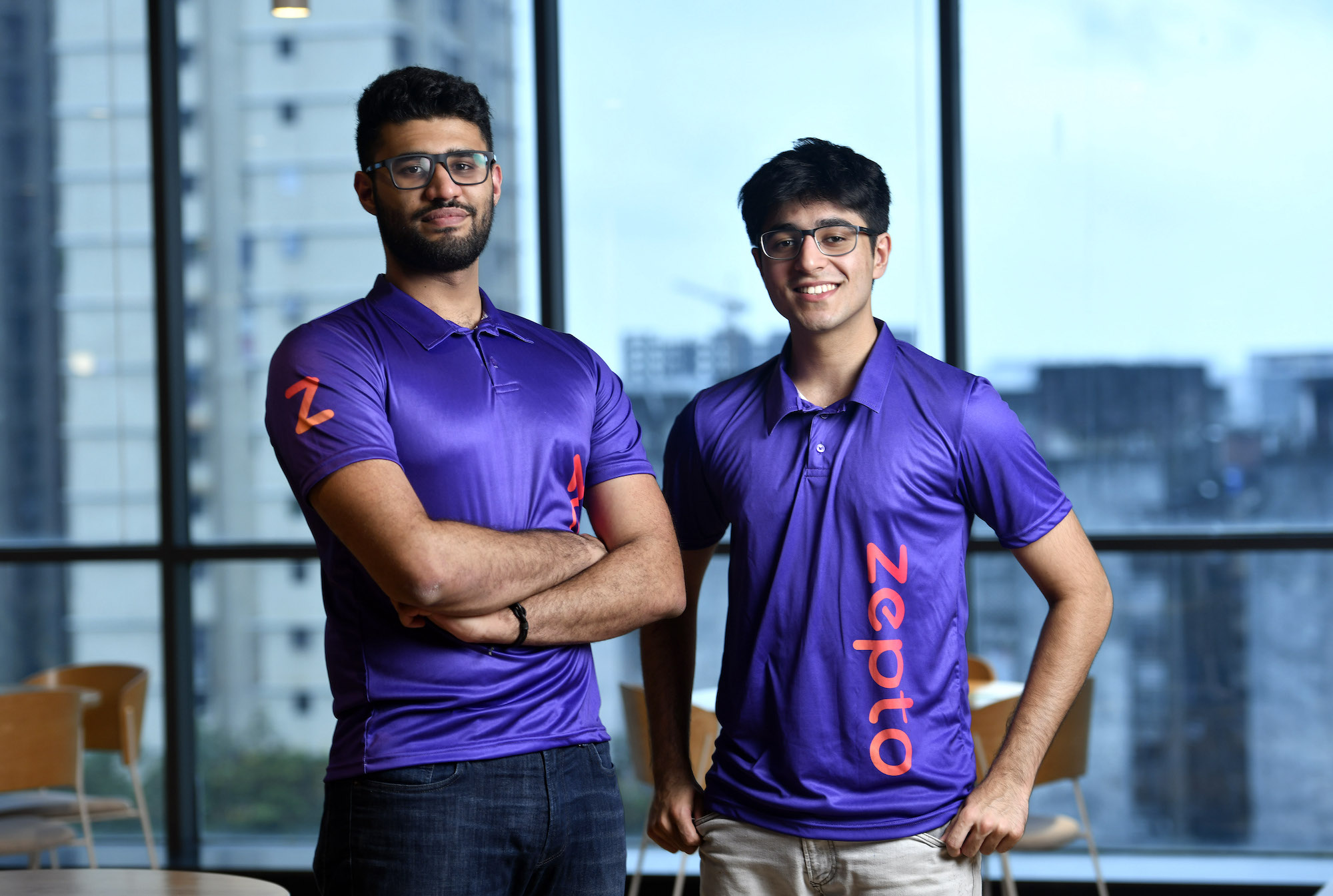
At 19, Aadit Palicha and Kaivalya Vohra co-founded Zepto. The duo, who had previously worked on a number of projects, including a ride-hailing commute app for school kids, and dropped out of Stanford two years ago, took Zepto out of stealth mode in November last year.

Its 10-minute delivery service is today operational in 11 cities across India and it processes hundreds of thousands of orders each day, Palicha, who serves as Zepto’s chief executive, told TechCrunch in an interview.

The startup’s current annualized revenue is between $200 million to $400 million, he said, a figure he is determined to grow to “at least $1 billion” by the quarter ending March next year.

The surge in revenue comes as the startup has consistently grown by over 50% each month in recent months, he said. In the most recent quarter, the startup grew its revenue by 800% while slashing its expenses per order by more than five times, he said.

At 19, Kaivalya Vohra and Aadit Palicha co-founded Zepto. Image Credits: Zepto 

In India, Zepto is among the earliest startups attempting to prove the quick commerce model, a category that has taken off in several markets, including North America and Europe. However, a number of startups operating in the space have either scaled down their efforts or shut down completely, as many venture investors lose appetite for fast delivery.

Zepto competes with Swiggy, India’s most valuable food delivery startup and one that has committed to investing more than $700 million on its quick commerce service, called Instamart.

A number of other players, including Blinkit, formerly known as Grofers, are also attempting to win a slice of the market. The SoftBank-backed startup recently agreed to an acquisition offer by larger food delivery firm Zomato, TechCrunch reported earlier, which in recent months has expressed interest in expanding to the quick commerce category, an area where it has historically performed poorly.

Zomato last month began a pilot of 10-minute delivery of food items in its home city of Gurugram. Zepto is also piloting a service to deliver a range of prepared food items, including hot beverages and snacks within its signature 10-minute promise in select areas in Mumbai, it said.

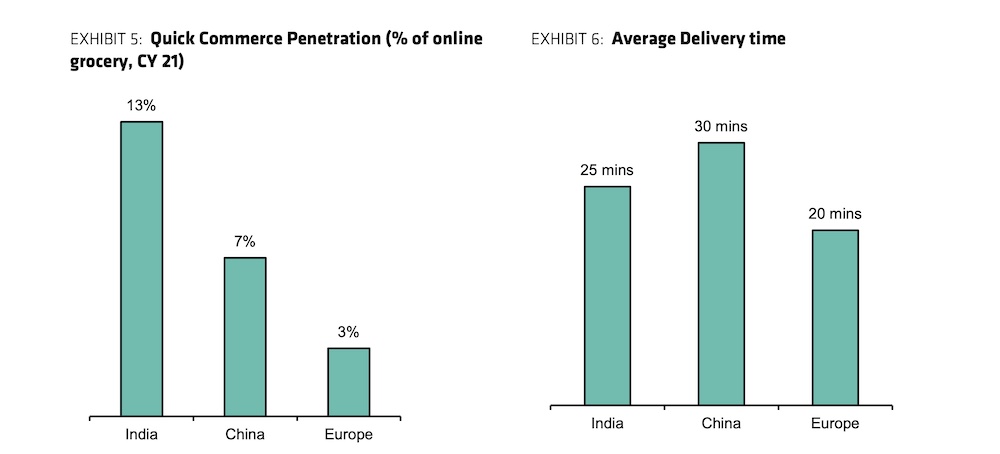
At stake is a $45 billion market, according to analysts at Sanford C. Bernstein. In a report earlier this year, the firm’s analysts reported that India is leading other global markets in the adoption of quick commerce.

The analysts said customers’ increasing willingness and ability to a pay premium for superior quality products and the growing market for home delivery have contributed to the growth of quick commerce in the country.

A look at the quick commerce market in India, China and Europe. (Data and image: Bernstein)

The average size of an order placed on an instant delivery service is currently about $6 in India, compared to $12 to $15 for traditional online grocery orders, they said. “But recent cohorts have shown improving stickiness, with basket size increasing with increase in usage. Quick commerce models have seen improving monthly order frequency (mature cohorts at 3-4 times a week, with healthy AOV of 400-500 Indian rupees). Quick commerce players are focused on driving a high frequency basket which will drive better economics,” they added.

For Zepto, instant grocery delivery is just the beginning in a decade-long journey ahead, said Palicha. Though he declined to reveal the startup’s audacious plans for the future, he said it’s fair to assume Zepto will expand to categories beyond grocery in the long-term, especially those that are currently underserved by giant e-commerce players.

The startup plans to expand to an additional 12 to 20 cities in the next 12 months and set up a few hundred more dark stores, which it uses to store inventory. These dark stores are optimized for fast delivery, said Palicha. There, the startup stores the most commonly ordered items and a catalog of SKUs in different price ranges. The startup also plans to nearly double its workforce to 2,000 by the end of this year.


LinearB wants to help development teams optimize their workflows

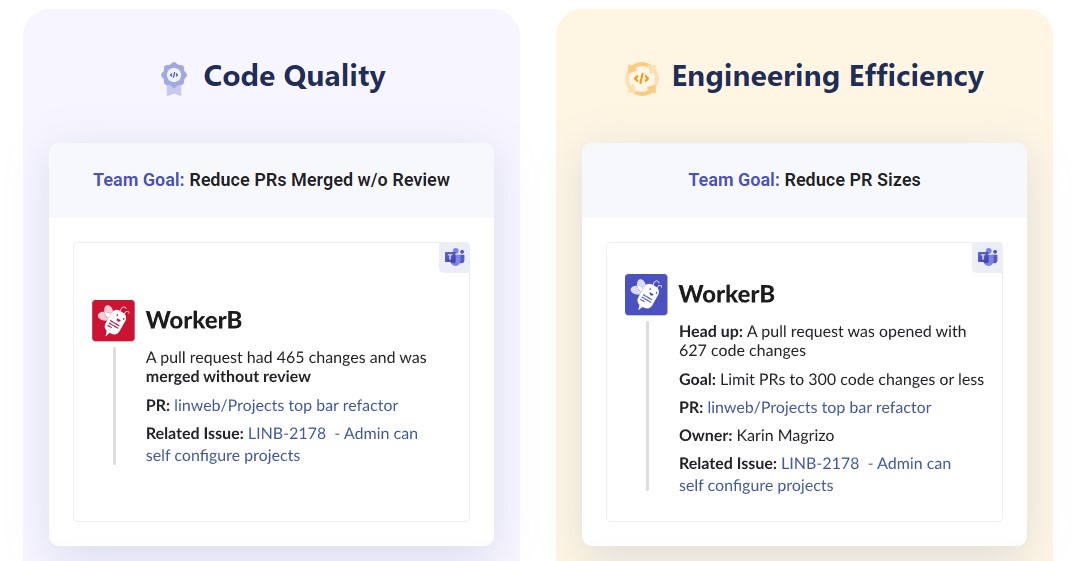
LinearB, a startup that helps engineering leaders optimize the workflow of their development teams, today announced that it has raised a $50 million Series B round led by Tribe Capital. New investor Salesforce Ventures, as well as existing investors Battery Ventures and 83North, also participated in this round, which brings the company’s total funding to $71 million.

The company says it managed to grow its user base from 1,500 development teams in 2021 to over 5,000 today. It currently counts Bumble, BigID, Cloudinary, Unbabel and Drata among its users.

One of LinearB’s most important promises is that it goes beyond simply giving engineering managers access to more dashboards about developer efficiency. Instead, LinearB wants to also provide them with more insights into how they can optimize the development workflow as well. It does so by integrating with a wide variety of existing DevOps tools to aggregate data about how teams work. It tracks metrics like cycle time, deployment frequency, mean time to restore when things go off the rails and change failure rates.

Image Credits: LinearB

That data is at the core of what LinearB does and provides something akin to a baseline for developer productivity in a given company. But from there, users can then also dig deeper to see where there are bottlenecks in their workflows or which team members may have a bit too much on their plate right now.

In addition, LinearB then also helps teams set their own goals so they can track their own progress, and also helps them automate routine tasks like creating Jira tickets (because while it’s often at the core of what a development team does, nobody enjoys managing Jira tickets).

This focus on providing value for everybody from the VP of Engineering down to the individual developer is also a core tenet of the service, LinearB CEO and co-founder Ori Keren told me. Both he and his co-founder Dan Lines previously worked as VPs of R&D and engineering — and that was the user persona they had in mind when they started building the service.

Keren tells me they had some early success with that, but decided that in order to really provide the most value for their customers, they had to change course. “Our true philosophy is that improvement has to come from the bottoms up,” he said. “You got to have the developers using that tool, you got to have team leaders, frontline managers. So really quickly, we identified that if we want to be a successful company — I wouldn’t say we pivoted, but we kind of adjusted quickly and said: when you onboard to the tool, it has to have something for every persona in the engineering organization: the developers, the team leaders and also for the engineering managers.”

That’s something the team learned in early 2020 and with the COVID pandemic hitting just around this time, a lot of companies saw the need to accelerate their own projects around accelerating their development processes. And while developers may not care too much about tracking the cost of their projects and instead about cycle time, both draw from the same data.

The company says its users are seeing deployment speeds increase by 64% during the first 120 days of using the project. “We’re not just building a tool that helps dev teams, we’re creating a community of engineering leaders that want to improve the way software development happens,” said LinearB COO and co-founder Dan Lines.

The company plans to use the new funding to expand across its own development teams but also to expand its go-to-market efforts. In terms of product, the team is doubling down on its workflow optimization tools, Keren said. “We’re going to invest a lot in developer workflow optimization,” he said. “We believe that developer productivity, if you want to be great at it, you have to be helping developers — these are the people who are doing the work.”


Google unveils new options for removing personal data from search results

Gooood [your time of day] startup fans! It’s a brand new week and we’re flippin’ psyched that it’s… wait, it is May? How’d that happen? In any case – May 2nd 2022, here we go. Spring is a good time to do a bit of a spring clean; we loved Zack’s guide to how to remove your personal data from Google Search introduction. And if you’re on Android, Carly’s run-down of the operating system’s privacy-forward features are worth a skim, as well. 

HOLD THE PRESS. Well, don’t, because we schedule these newsletters in advance BUT! When it hits your inbox, click this right away, because someone is about to catch a falling rocket with a helicopter and it’s the single-most A-Team meets MacGyver thing we could imagine. 

See you tomorrow for extremely on-the-pulse references to 1980s TV shows tomorrow Christine and Haje

The TechCrunch Top 3

  • Glamping may not be so bad with this at your campsite: A battery the size of a cooler, that has wheels, plugs and air conditioning? Yes please. Being in Mother Nature may be fun for some, but battery maker EcoFlow is going after those who only occasionally have to do it. Factor in, too, a great origin story where the company went from a Kickstarter project to a $1 billion company in five years.
  • Open gets its horn: We’re not sure, but when your business is mentioned as having “dramatically changed the relationship between banks and fintechs,” we think that’s a sign you are doing well. Indeed, India-based neobank Open was rewarded with a $1 billion valuation. This is also taking place in a country where Manish reported, “just a few years ago, most banks in India were skeptical of neobanks and it was very difficult to persuade any of them for a partnership.” Raise a glass Open!
  • What happened at UiPath: By all accounts, the robotic process automation company had been doing well, bringing in investment dollars and a high valuation. It even did well on its first day as a public company last year. Since that time, share price is down, and so is valuation, prompting Alex and Ron to dive into why that might be.

Startups and VC

Over on Lucas and Anita’s shiny new Chain Reaction podcast, Sequoia’s Shaun Maguire is predicting that a lot of VCs are going to pull back; and exploring the regulatory challenges that are opaque to a lot of crypto investors. 

Meanwhile, Alex posits that no one told the crypto world that startup megadeals aren’t as plentiful anymore, and Natasha throws up her arms in frustration about all the weird shapes investors are wrappening themselves into in an effort to avoid calling spades spades. Folks, a rose is a rose, and it smells as sweet by any other name. And a seed round is a seed round, no matter its olfactory qualities. 

Can you smell what the Rock is cooking: 

2022 cybersecurity product-led growth market map

One lock and many different keys lie on a yellow background

Image Credits: Nataliya Romashova/EyeEm (opens in a new window) / Getty Images

To paint a detailed picture of the competitive landscape for product-led growth cybersecurity companies, investor Ross Halieliuk tracked over 800 products in a market map that includes more than 600 vendors.

His map uncovered several trends redefining PLG adoption right now in the cybersecurity industry, and some of it is bad news for early-stage startups.

In this environment, most CISOs are experiencing “vendor overload,” which means small players that lack a robust network and fat marketing budgets can’t participate in the same sales channels. 

If your investors won’t approve a series of invitation-only dinners with your target clients, what are your options?

(TechCrunch+ is our membership program, which helps founders and startup teams get ahead. You can sign up here.)

Big Tech Inc.

Going from Open to wanting to close our eyes to rub them and make sure we read this right: India’s anti-money laundering agency said over the weekend that it “seized assets worth about $725 million from Xiaomi India for breaching the country’s foreign exchange laws in a major blow to the Chinese phone maker that commands the Indian smartphone market.” Wow. 

In Apple news, the company ran into a bit of trouble with the European Union, which reported some preliminary findings related to an antitrust case: Apple was found to have made it so competitors could provide “NFC-enabled contactless payments on the iPhone to develop other mobile wallets and compete fairly with Apple Pay,” claiming this type of technology should be open to anyone. Now it’s Apple’s turn to respond to the charges. Meanwhile, you can now get Apple Music on Roku

We hand-picked these next items just for you. Enjoy:


Amazon aggregator Thrasio begins layoffs, names new CEO

A day of reckoning has come for Thrasio, one of the bigger startups buying up and consolidating third-party Amazon sellers. TechCrunch has learned from sources that the company, valued last year at between $5 billion and $10 billion, is going to be laying off a proportion of its employees this week. That news is coming at the same time that Thrasio is changing its leadership: today it announced that Greg Greeley, a former president of Airbnb and a longtime Amazon executive, is joining its board and taking on the role of CEO this August.

He will be succeeding Carlos Cashman, one of the co-founders of the company, who will remain on Thrasio’s board as a director.

The layoffs and new CEO appointment are the latest developments in a series of ups and downs for Thrasio in the last six months that underscore some of the challenges in the aggregator business model:

– In April 2021, when Thrasio was announcing a $100 million raise, co-founder Josh Silberstein – who at the time was co-CEO at the company with Cashman – told TechCrunch that Thrasio was eyeing up a public listing to raise more money for expansion, either through a traditional IPO or via a SPAC; it was also appointing a new CFO to oversee the process.

– The SPAC idea started to take shape over the summer, potentially valuing Thrasio as high as $10 billion. But then the new CFO left in July, just three months after joining; Silberstein subsequently left the company in September; and by the beginning of October, the SPAC option was delayed, reportedly due to problems that arose during a financial audit.

– Yet by the end of that month, Thrasio announced another private fundraising, a whopping $1 billion deal led by Silver Lake, which was when it hit its $5-10 billion valuation.

– Last week, people were sharing an email allegedly looking for investors in the company via a special purpose vehicle at a $2.7 billion valuation. Tellingly, the sender has gone silent (meaning: it may well be a hoax). The company declined to comment.

Unfortunately, the layoffs are not a hoax. TechCrunch confirmed the rumors with the company, and we have also been shown an internal memo that explains how they will be carried out: people will be getting informed by their managers over the next two days (Tuesday and Wednesday).

The company said in the memo that it “made the decision to reduce the size of the Thrasio team,” but it has not confirmed how many employees will be impacted.

We understand that the layoffs will be part of a bigger reorganization. In that memo to employees, Cashman and Thrasio president Danny Boockvar write that in order to keep Thrasio on its trajectory, the company would need to make certain “strategic and operational changes.”

“This is not an easy decision – especially within a culture like ours that is shaped around community and sharing,” they added.

Employees being let go will receive “severance, healthcare, job support, and accelerated vesting of some of your options,” as well as career transition support and an alumni network for continued support, the memo mentioned. Their final working day will be May 13.

Thrasio’s growth

Thrasio was founded in 2018 by Cashman and Silberstein, to capitalize on a very Amazon-like economy of scale: the Amazon Marketplace has millions of businesses and brands selling on it (nearly 2 million active sellers by one estimate) and there is a business to be built in bringing some of them together to run more efficient production, marketing and analytics, and fulfillment across them.

The businesses would be picked up by Thrasio, which would invest in tech to run them better and more profitably as e-commerce operations, both on Amazon and potentially outside of it as well – a new kind of Procter & Gamble for the twenty-first century.

It raised nearly $3.4 billion in funding to build out its business, acquiring hundreds of brands, with investors including the likes of Silver Lake, Advent International, Oaktree, Upper90, Harlan and more. When it raised its $1 billion round last October, it was buying businesses at a rate of 1.5 per week and had some several hundred brands in its portfolio.

Dozens of other aggregators followed in Thrasio’s wake – some 150 according to Thrasio’s estimates, collectively raising some $15 billion in capital to fuel those ambitions – eyeing up the same opportunity as Thrasio was chasing. Thrasio itself became a top-five seller on Amazon.

Where Thrasio is headed

It’s not clear why a financial audit would have stalled Thrasio’s SPAC last year, but it speaks to some of the challenges of running a business and accounting for it when it’s evolving at a fast pace, and at its heart is about bringing multiple other businesses together.

The concept of consolidating repetitive processes across multiple retailers sounds like a great idea in theory.

“What happens when you get into that price range is that it gets hard to grow your business and manage it,” Silberstein told me last year, citing SEO, marketing and supply chain management as some of the challenges. “That means as you grow from $1 million to $10 million, the margins would decrease and it gets even harder to make returns. We simply observed the reality that all these great companies had reached a point between a lack of access to capital and simply not being able to keep doing what they do. We thought, if we acquire 10-20 of these we would have the scale to build best in breed supply chain, marketing and so on. We would fix the problem.”

But in reality Thrasio has been building a business spanning a number of different consumer categories, geographies and demographics. Integrating even similar businesses can be costly and difficult (and it often goes wrong).

And aggregators generally position themselves as solving those issues with tech, but in some cases, aggregators are not building as much technology as you might think: they are buying in third-party tools to help with SEO, fulfillment and more.

In that context, the move to bring in Greeley – whose roles at Amazon included running its global Prime program – suggests that the company wanted a more seasoned executive at the helm to keep its long-term strategy on the right path, especially given Greeley’s background and track record in the consumer marketplace space.

Cashman has also been grappling with another controversy outside of Thrasio. He is facing a lawsuit being brought against him by Stacy Chang, an investor who left Founders Fund to join Cashman in a new venture capital firm called Arrowside Capital. She alleges he dismissed her after deciding not to move forward with the firm, and she is seeking damages, including for work she says she did over a six-month period.

Thrasio also alludes to growing too big, too fast in the joint memo to employees. “Now, as we assess our strategy for the road ahead, we need to take the time to properly absorb and grow the businesses we have acquired, make sure we have rigorous processes and controls, and then look to re-scale our team in the optimal areas for growth.”

They went on to say that some of that included “refining” its M&A team to be able to handle acquisitions and integrate them into the company’s processes, as well as “undergoing our transformation in an environment with a pandemic, a war, a sharp rise in inflation, supply chain disruptions and changing consumer behaviors.”

This is unlikely to be the final chapter for Thrasio, which remains the owner of hundreds of big-selling e-commerce brands. But the big question will be whether it continues as a single entity under Greeley, and whether it continues to grow as it has; or whether it takes a course to “rationalize” some of the many investments and acquisitions it has made over the years.

“Just four years ago, the innovative team at Thrasio created an entirely new way for this community of entrepreneurs to achieve their business goals and see the reach of their products expand – and Thrasio continues to blaze the trail,” Greeley noted in a statement today. “It’s been truly remarkable – and it’s still early in a marketplace with nearly $400 billion in total third-party sales in 2021 and trillions more in the broader retail ecosystem.”


Don’t worry about VCs’ returns if you can exit your startup early

If you’ve been watching the recent wave of shows on disgraced startups (from Theranos to WeWork), you might be under the impression that startup founders have no sense of responsibility.

In my experience, however, the opposite is much more common: Entrepreneurs tend to feel guilty about things that are just part of startup life. For instance, many founders feel quite badly about merely admitting that they wouldn’t say “no” to a good enough acquisition offer, or telling their investors they’d do so.

Why does it matter if founders tell investors that they might take an exit before their company reaches IPO scale? I think the reasoning goes something like: “What’s good enough for me might not be good enough for my backers,” or a life-changing amount of cash for a founder might be too small an investment multiple for an investor.

And sometimes, these concerns is not just guilt rearing its head, but also the fear that VCs won’t let an acquisition go through if it happens too early in a startup’s lifecycle.

There are many reasons to stick it out at your startup, but if you’re worried about your investors when faced with an exit, here’s why you shouldn’t be.

Time is another element of VC math that founders don’t always consider — a 3x multiple in six months is not the same as a 3x multiple in three years.

In VC Land, 1 > 10

Letting people down is never pleasant, but that’s how it can feel to sell a startup early. Will investors be disappointed that your company never fulfilled its destiny? Well, yes, but only to a certain extent, and that’s where portfolio math comes into play.

Investors hedge their bets by making many investments, though they still hope that each of those bets pay off. However, they also know that it won’t happen. They’re in the game fully aware that that some of their investments will simply have to be written off, and a handful more will land somewhere in between success and outright failure.

But investing in startups still makes sense, because outliers will return their original investment value many times over.

In venture capital, big home runs have become a fixture. They have a name, too: “Fund makers,” and they signify an investment that generates more liquidity than the entire fund backing it.

In a 2014 post on TechCrunch, VCs John Backus and Hemant Bhardwaj coined a new term for these fund makers: “dragons.” They encouraged fellow investors to favor them over unicorns. “Unicorns are for show. Dragons are for dough,” they wrote.


No one told the crypto world that startup megadeals aren’t as plentiful anymore

The pace at which startups raise rounds worth $100 million or greater is slowing, according to early data.

Looking at historical periods stretching back a year, TechCrunch’s analysis of Pitchbook data shows Q2 2022 is on pace to undershoot the first quarter’s tally of so-called mega-rounds. And data from Crunchbase shows a similar decline.

When you consider that Q1 2022 saw fewer rounds worth $100 million or more than both the final two quarters of 2021, we’re seeing a slowdown in late-stage, private-market investment.


The Exchange explores startups, markets and money.

Read it every morning on TechCrunch+ or get The Exchange newsletter every Saturday.


It’s not a shock that the there are fewer large venture capital rounds happening. Indeed, we anticipated it, given the retrenchment we’ve seen in software valuations more generally, and the fact that the risk climate for private-market dealmaking has become more conservative in recent months. A massive public-market selloff coupled with geopolitical instability and inflation concerns will do that.

While the late-stage venture capital market is becoming more staid, the crypto world is seeing immense deals that are raising hundreds of millions of dollars. The contrast is notable. Let’s talk about it.

It’s still a good time to raise huge rounds

What makes it hard to grok the changing venture capital market is the fact that we’re coming off all-time highs. So while the data indicates that there were between 100 and 132 venture rounds worth $100 million or more (PitchBook and Crunchbase data, respectively) thus far in Q2 2022, we have to understand that there is still a lot of money flowing today compared to historical norms, even if the numbers represent a near-term decline.

Looking behind, it seems clear that 2021 will prove a high-water mark for venture capital activity for some time. There’s little indication that 2022 will be able to beat last year’s tally, and with economic clouds on the horizon, anyone betting that 2023 is going to be straight up lit is wagering against prevailing wisdom.


An early TikTok exec just launched a dating app, Spark

A former president at musical.ly (now known as TikTok), Alex Hofmann has already done something that seems impossible: he helped build an app that could compete with social giants like Meta, YouTube or Snapchat. After ByteDance acquired musical.ly for around $1 billion in 2018, Hofmann left the company to become an investor, but he soon decided he wanted to make apps again. So, Hofmann founded 9count, the parent company to apps like Everland, Helpline, Juju and the friendship-making app Wink, which has millions of users.

“There’s a trend that I observed in China that a lot of tech companies there don’t just build one product, but multiple products,” Hofmann told TechCrunch. He noted that a company like Meta grows by acquiring apps like Instagram and WhatsApp, while Twitter continues iterating on the same flagship app. “Having one product is is super exciting, of course, but we do see the trend that there are more and more different interest groups. Serving them with just one product can work, but there is a higher chance that you can connect with more people with different products.”

So far, Wink is 9count’s most successful app, which is popular among younger users who want to make new friends online (Hofmann says that the app has a content moderation team of 15 people who work 24/7). But Wink connects people without regard to location, so long as the users speak the same language. This design is intentional — the company didn’t want to face the security issue of people meeting up in real life, since the app is available for users 13 and up.

“But it was interesting that some of the 18-plus-year-old users asked us, ‘Oh, it would be great if I could look for people in my city,'” Hofmann said. “So that was one of the reasons why we said, you know, maybe it would make sense to actually create a dating app.”

A person holding a phone that show a grid interface of a dating app

Image Credits: Spark

Unlike many popular dating apps, Spark doesn’t ask you to swipe left or right. Instead, you can see people around you all at once in a grid, kind of like on Grindr. But unlike Grindr, you thankfully can only receive messages from people if you’ve both “sparked” (or liked) each other.

“For us, it was really trying to understand what would replicate the real world in the best possible way,” Hofmann said. “So for instance, at a party, you’re not going to spend your time mentally thinking ‘yes’ and ‘no’ as you look at each person around you.”

Similar to an app like Bumble, once you send a like or a message on Spark, the request only lasts 24 hours.

“We really want users to quickly respond, so no one has to play the waiting game as they do in other apps right now,” Hofmann said.

Spark has already “soft launched” in hundreds of countries, climbing to #1 in the iOS app store in Ireland and the Netherlands within a day. While the app is free to use, there’s also a subscription option, which gives users standard paid dating app perks like the ability to see everyone who liked you, extra “sparks,” and more. Hofmann noted that the exact pricing and benefits are still subject to change, but that right now, a subscription is $19.99 per month, with slight discounts if you subscribe for three or twelve months at a time.

When it comes to safety, Spark uses Hive, an AI moderation tool, to make sure that users aren’t uploading harmful or NSFW content to their profiles. Like Wink, Spark has a 24/7 trust and safety team. Spark also hired a security expert to spot bugs and vulnerabilities on the platform before they can be exploited by bad actors.

Of course, no matter what safety measures are in place on a dating app, users should always exercise caution when meeting strangers in person. Match Group, the parent company to apps like Tinder, OkCupid and Hinge, invested in Noonlight to enable security features like emergency assistance, location tracking and photo verification. That business decision followed an investigative report by ProPublica and Columbia Journalism Investigations, which revealed how Match Group allowed known sex offenders to use its free apps.

Founded in 2018, 9count has raised $21.5 million in funding led by Redpoint and GGV Capital. Its newest app Spark is available now on iOS.


How to failwhale the blockchain

Hello and welcome back to Equity, a podcast about the business of startups, where we unpack the numbers and nuance behind the headlines. Every Monday, Grace and Alex scour the news and record notes on what’s going on to kick off the week.

This is not a live show week, so Equity will simply come out on Friday as usual. That said, we do have a Twitter space scheduled for today with our own Kirsten Korosec, so follow us on Twitter and we will see you there.

Equity drops every Monday at 7 a.m. PDT and Wednesday and Friday at 6 a.m. PDT, so subscribe to us on Apple Podcasts, Overcast, Spotify and all the casts.


Accern lands $20M for AI that analyzes financial documents on the web

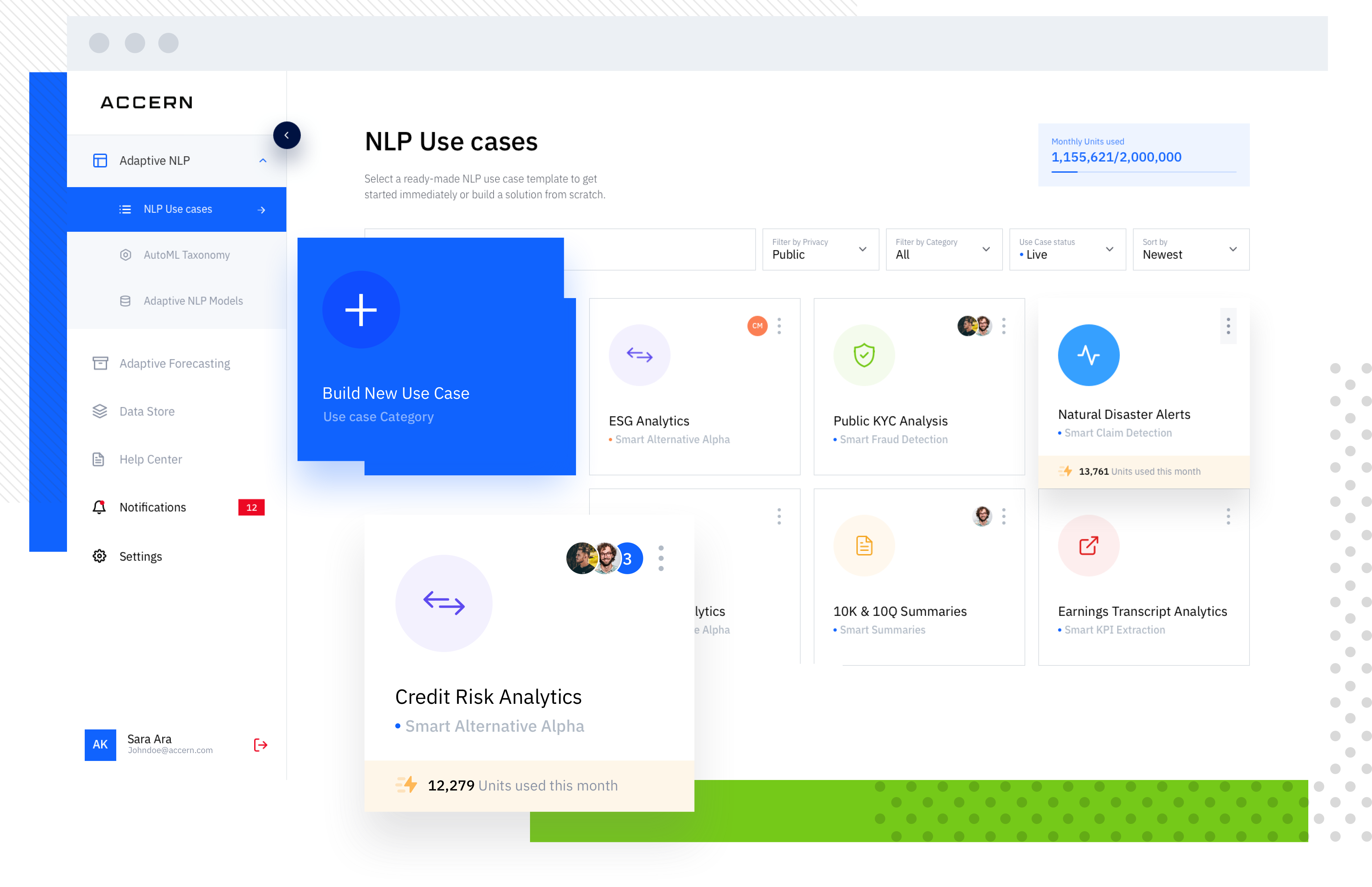
Accern, which uses AI to analyze online conversations around particular companies, trends, and industries, today announced that it raised $20 million in a Series B round led by Mighty Capital alongside Tribe Capital, Shasta Ventures, Gaingels and Fusion Fund and others. CEO Kumesh Aroomoogan says that the new capital will be put toward “product-led growth,” expansion into new markets, and R&D on Accern’s AI technologies.

“More than 80% of the world’s data is unstructured. Unstructured data requires a hyper-manual process to structure data at scale, consuming expensive data science resources throughout an organization,” Aroomoogan told TechCrunch via email. “Due to the extreme human capital and time costs, unstructured data isn’t efficiently analyzed and is often left out of historical data decisions. The end result affects all organizations’ decision-making capabilities and adds additional risk to their respective portfolios and balance sheets.”

Kumesh Aroomoogan, a former research analyst for Wall Street firms including Citigroup, cofounded Accern with Anshul Vikram Pandey in 2014. Originally, New York-based Accern focused on monitoring the web for — and curating — a narrow set of financial information, particularly that pertaining to stocks. But the company later broadened its scope to other aspects of corporate finance, like credit and fraud monitoring and compliance.

To customers, Accern provides AI-powered apps and natural language processing (NLP) models trained to recognize, classify, and extract domain-specific financial language. The service can scan public sources including news publications, blogs, and SEC filings to gauge consumer sentiment, for example, or predict how supply chain disruptions might impact a business.

Accern also offers a visual dashboard users can tap to build custom AI-powered apps as well as pre-built taxonomies that cover companies, people, places, and themes. “We currently have an extensive collection of financial service use cases our customers are building on our platform so they don’t [have to] think about what can be built on our platform or spend time building one from scratch compared to traditional NLP cloud providers,” Aroomoogan said. “All our models are trained on financial content with assistance from financial analysts and domain experts, which ensures high accuracy for the financial services use-cases.”

Even the best-designed algorithms are susceptible to biases or drift, of course, where they dip in accuracy over time due to factors like seasonality and erroneous data. But like many companies whose models are proprietary, Accern is secretive about its development processes. Aroomoogan didn’t reveal when asked which data sets were used to train its models and how the company mitigates any potential biases.

Accern

Image Credits: Accern

Instead, Aroomoogan — while refraining from naming customers — prefers to spotlight Accern’s market traction. While the startup competes with Dataminr and to some extent data analytics products from Noogata and Pecan.ai (plus data services like Reuters and Bloomberg), Aroomoogan claims that Accern’s annual recurring revenue has grown 9x since 2020

“Accern’s enterprise focus is to accelerate innovation by providing organizations with … models that enable them to more efficiently transform their unstructured data into real business intelligence — while cutting down on time and costs,” Aroomoogan said. “Many of our customers use us to enhance their existing models, business intelligence dashboards, and products with new features from text data in a no-code workflow.”

Accern has raised $20 million in capital to date. It has 80 employees currently, and plans to end 2022 with a headcount over 100.


Concerto snags $21.2M to bring co-branded credit cards to more brands

Co-branded rewards programs like Amex’s longrunning Delta partnership are a major factor in consumers’ credit card decisions. According to a GigaPoints/Ipsos poll, over half of Americans say that earning points makes them want to use their credit card more often. In a separate survey (conducted by Finder), close to a third of respondents said that they’ve used a credit card solely to rack up rewards points.

But building these programs can be challenging from a brand perspective. If chargeoffs (i.e., debt unlikely to be collected) rise, the programs — particularly if operating on tight margins — can become financially strained. Questions typically also crop up around whether the programs should be jointly managed (e.g., by the issuer and brand) and how profit sharing arrangements are to be structured.

To address some of the challenges around credit card co-branding, Dan Duncan, the cofounder of credit card issuers Mercury Financial, launched Concerto, a startup that develops credit card programs for brands using “advanced data analytics.” While acknowledging that credit card issuing and loyalty programs are certainly not new, Duncan claims that Concerto’s approach is unique in that it applies technologies including machine learning to measure and predict risk.

Concerto today announced that it has raised $21.2 million in a funding round led by Matrix Partners with participation from PayPal Ventures and GoldenTree Asset Management. GoldenTree also said that it would form a joint venture with Concerto to fund a minimum of $2 billion in credit card receivables.

“Credit cards represent one of the greatest customer acquisition and satisfaction tools available to brands, but even if they get past hurdles often imposed by banks, designing and executing an effective card program requires significant time, resources, and expertise,” Duncan told TechCrunch via email. “For that reason, cards remain one of the largest untapped opportunities … The Concerto platform disrupts all of this to give businesses the tools and the credit they need, along with the power to easily create and deploy highly customized, remarkably innovative loyalty programs people will love.”

To take a step back, co-branded credit cards — which aren’t to be confused with private label store cards — are sponsored by several parties: a brand, like a retailer, and a bank or card network such as Visa, Discover, or Mastercard. A brand must partner with a financial institution to issue a co-branded card, which often ends up being the institution that already processes credit or debit card payments on the brand’s behalf. 

Consumers generally like co-branded cards. Nearly 53% of all U.S. cardholders had a card in 2014 that was associated with a hotel, airline, or other type of merchant or group, up from 46.4% in 2010, according to Simmons National Consumer Survey data. But Duncan says that the programs can be a headache for brands. 

“Some businesses don’t have access to the financial tools or credit that larger companies enjoy — tools that would help them better compete in a modern economy,” Duncan said. “[L]oyalty and co-brand programs run by banks have not been optimized for the partner. Large banks routinely put their needs ahead of any partners’ through narrow credit acceptance. This, in turn, prevents a lot of businesses from being able to leverage credit to help fund company growth, stilling them unnecessarily.”

Expanding access

Duncan’s first venture after leaving Citicorp and Chase, where he was head of risk management for the credit card business, was Austin Logistics — a firm that developed analytics software for financial institutions. Decades later, he started CreditShop (later rebranded to Mercury Financial), which extends loans and credit cards to customers with traditionally lower credit scores.

With Concerto, Duncan aims to beat back against banks which he claims have a reluctance to promote a partner brand above their own. “The industry at large simply hasn’t innovated to serve the needs of businesses or consumers through cards effectively,” Duncan said. “The technology now exists to do so in very smart ways, if you have the motivation to apply it strategically.”

To that end, Concerto doesn’t replace a brand’s relationship with a bank or card network. But the company works with these institutions to create credit approval models using “multiple millions” of credit bureau and application data points. (Research has shown that these types of models are susceptible to biases, particularly against minorities with less data in their credit histories, but Concerto didn’t respond to a question about steps it might’ve taken to mitigate bias.) Beyond this, Concerto makes liberal use of APIs, allowing the “card experience” and rewards features to exist inside of brand’s apps and websites.

There’s evidently demand — Concerto says that it’s actively signing co-brand credit card partners across “a range of industries,” initially Major League Baseball (MLB) baseball teams. Duncan says that the Texas Rangers, Los Angeles Angels, Baltimore Orioles, and the Cincinnati Reds will roll out Mastercard-issued cards and programs in the near future with access to “exclusive experiences and memorabilia” and “periodic contests and surprises.” Very optimistically, he sees Concerto on a run rate to add 500,000 customers by the end of 2022.

“Our initial baseball team partners are establishing the foundation for future programs. The baseball team programs have allowed us to develop and deploy forward-thinking application experiences. For example, fans in the ballpark can go from seeing a QR code on the jumbotron to a card in their digital wallet to use at the concession stand in a matter of seconds,” Duncan said. “There has been tremendous interest in what we are doing so far, and we want to fully capitalize. Our funding allows us to ramp accordingly.”

Concerto competitors, Kard and Cardless, has adopted similar customer acquisitions model with success. Cardless — which handles the program creation and card underwriting for brands, as well as lending, issuance, and customer service — has launched programs with a number of sports organizations, including the Cleveland Cavaliers, British soccer team Manchester United, and the Miami Marlins.

Concerto is behind Cardless is total capital raised ($21.2 million versus $50 million). But Duncan says the goal is to “really scale up” and secure additional partners with haste.

“We also have several new features, partnerships and programs on the way, some of which will be disclosed in the coming weeks,” Duncan added. “Companies want to incentivize and reward people to get out and do more — and people are ready. After enduring the pandemic for so long, we want to help people enjoy a wealth of new experiences.


Chilean fintech Xepelin wants LatAm businesses to get paid

Fintech companies and other entities have moved the needle for consumer payments in Latin America, particularly during the global pandemic, prompting consumers to be more comfortable with digital payments.

Chile-based Xepelin aims to do the same with business-to-business payments via a SaaS payments infrastructure that includes financial information in real time, embedded financial services and data models, all to be a company’s “digital CFO” of sorts.

The company raised $230 million in an equity and debt Series A round last year, led by Kaszek, and since then expanded into Mexico, growing its client roster over five times to 15,000, growing Mexico revenue by 60 times and launching its new Xepelin Payments product 90 days ago that enables users to organize and automate payments to suppliers, with and without financing.

Since being co-founded in 2019 by Nicolás de Camino and Sebastian Kreis, Xepelin also grew its employee headcount to over 400.

“This is a huge market, but no one is really focused on pure business-to-business,” de Camino told TechCrunch. “Businesses of means have access to bank funds, but around 95% of small and medium businesses are unattended. We believe there is $5 trillion in trapped cash that needs to be unlocked, and we have a forum to address that.”

Now the company is doubling down in both Chile and Mexico, while also eyeing new countries for expansion and will hire additional employees and launch new products. Support for all of this comes from a new $111 million Series B round of funding — all equity this time — led by Avenir and Kaszek.

While this round is a doubling down for Kazsek, Avenir is a new investor joining the cap table. Kreis told TechCrunch that Avenir, having other investments in emerging marketings, was looking for “the next B2B payments platform winning in LatAm” and will help Xepelin get to the next level.

Also participating in the round were PayPal Ventures, Wellington, DST Global, Battery Ventures, MSA Novo, Endeavor Catalyst, FJ Labs, Picus, Amarena, Gunderson, Carlos Garcia, Cathay-Seaya Latam and Gilgamesh.

“We can still grow a lot in Chile and Mexico, so it is more like when is the best time to go to other LatAm countries,” Kreis added. “We also want to win Mexico.”


The Station: Elon’s Tesla share sale, Ford teases a second EV truck and GM’s Cruise spending ramps

The Station is a weekly newsletter dedicated to all things transportation. Sign up here — just click The Station — to receive it every weekend in your inbox.

Hello readers: Welcome to The Station, your central hub for all past, present and future means of moving people and packages from Point A to Point B.

Welcome to May, which we have informally dubbed “Mobility Week” over here at TechCrunch. We’ll kick off mobility month with a TechCrunch Live event focused on building a better mobility fintech startup featuring Rachel Holt of Construct Capital and Caribou CEO Kevin Bennett. TC Live, which is free, will be live-streamed beginning 11:30 a.m. PT May 4.

The session starts with networking and pitch practice submissions and then moves onto an interview with Holt and Bennett at noon, followed by the TCL Pitch Practice at 12:30 pm PT. Register here for free.

TechCrunch Live records weekly on Wednesday at 11:30 am PT / 2:30 pm ET. Click here to register for free and gain access to Caribou’s pitch deck, enter the pitch practice session and access the livestream where you can ask the speakers questions.

Reminder that the agenda is out for TC Sessions: Mobility 2022. I think we put together a pretty sweet program. A few new announcements you might have missed includes an interview we’ll have with Sterling Anderson, co-founder and CPO of Aurora, and Rebecca Yeung, corporate VP of operations science and advanced technology at FedEx.

We’ll be announcing a couple more guests in the next few days.

As always, you can email me at kirsten.korosec@techcrunch.com to share thoughts, criticisms, opinions or tips. You also can send a direct message to Kirsten at Twitter — @kirstenkorosec.

Micromobbin’

For some bizarre reason, it’s illegal to for people use privately owned e-scooters on public roads in England. Instead, e-scooters can only be legally ridden as part of government-backed rental pilots.

However, England is finally getting around to legalizing private e-scooters for use on roads. Nothing is for certain yet, but Transport Secretary Grant Shapps has said that legislation will be included in the Queen’s Speech on May 10. If legalized, private scooters will have to meet similar safety specifications as those in the public trials, namely max speeds of 15.5 miles per hour and automatic lights.

If legalized, this will also open up a huge market to the e-scooter makers of the world, and might even spark more homegrown business. Taur, for example, is a British company that has just launched operations in Los Angeles, in large part because the U.K. was dragging its heels on this piece of legislation.

It’ll also undoubtedly help English cities meet their climate goals. In the U.S., Portland has learned that emissions due to transportation are one of the main reasons the city can’t reach its emissions targets. Unfortunately, the city is considering making the problem worse by widening highways… :eyeroll-emoji:

Perhaps not all hope is lost for American cities, though. They just need to get the policy to align with demand. A new study has found that e-bike sales are outpacing electric car sales in the U.S., which makes sense given market availability of the two types of vehicles. But it’s also an encouraging finding! Many people, like parents, are also finding e-cargo bikes to be a nice replacement to the minivan as a vehicle to cart kids around.

Meanwhile in the land of shared micromobility

Bolt said it will invest about $158 million (€150 million) in 2022 to scale its scooter and e-bike operations to more than 230,000 scooters and e-bikes across 250+ cities. Earlier this year, the company raised a whopping $709 million, which is no doubt going to help fuel this expansion.

Populus is partnering with cities and operators like Bolt, Tier and Voi in a European Union-funded, data-sharing initiative that will measure carbon reductions of micromobility.

Voi is launching hundreds of e-scooters in Oslo that will be equipped with Drover AI’s computer vision, camera-based scooter ADAS tech, which will help with the ever-annoying problem of scooters on sidewalks.

In other news…

Cooper Bikes, which is owned by the makers of the Mini Cooper car, dropped four new e-bike models.

Indian e-scooter manufacturer Dispatch says it will launch a purpose built e-scooter (not a kick scooter, one of the moped-looking ones) in Q1 2023 that will be purpose-built to enable shared and commercial applications.

Ola Electric has to recall more than 1,400 mopeds after one of them caught fire.

See ya next week!

— Rebecca Bellan

Deal of the week

money the station

Elon Musk’s pursuit to buy Twitter continues to have an impact on Tesla, which is why I’m back here writing about a social media platform.

The latest example was revealed in a series of regulatory filings that showed he had sold 9.6 million shares of Tesla worth about $8.5 billion. Tesla shares fell more than 11% last week.

Musk, who still holds about 16% of the automaker, said in a tweet on Thursday: “No further TSLA sales planned after today.”  It’s unclear where the remaining funds needed in the $44 billion deal will come from. Much of Musk’s fortune is tied up in Tesla stock.

A friendly reminder that if If Musk backs out of the deal, he’s on the hook for $1 billion, per the termination fee of the deal with Twitter, so at least that amount would be covered by these sales.

Other deals that caught my attention this week …

BattGenie, a University of Washington startup that developed software to improve performance of batteries, raised $1.5 million in a seed funding round co-led by Powerhouse Ventures and VoLo Earth Ventures. The company also received a $300,000 grant from the Washington State Department of Commerce.

Blink Charging has acquired U.K.-based EV charging provider EB Charging for $23.5 million, a move that might help the company expand its reach enough to keep up with some of the larger players.

Crow Bicycle, a Spanish e-bike startup, has raised $325,000 that it will use to release a premium line of e-bikes this year, the company said.

Dat Bike is a new Vietnamese e-motorbike startup that just raised $5.3 million in a Series A to continue designing and producing components domestically to reduce costs and improve performance.

Divergent Technologies, a Los Angeles-based manufacturing startup, raised $160 million in a Series C funding round. John L. Thornton, former president of Goldman Sachs, executive chairman of Barrick Gold, and board member of Ford, has joined Divergent’s board.

FreeWire Technologies, the EV charging company, raised $125 million. The financing included a senior convertible note provided by funds and accounts managed by BlackRock Financial Management and a concurrent equity raise with institutional and strategic investors such as bp ventures, Riverstone Holdings, Octave Ventures, Gly Capital Management, Blue Bear Capital and Daishin Private Equity.

Neuron, a Singapore-based company that has carved itself into the Australia/New Zealand market, as well as pieces of the U.K. and Canada, has just raised a $43.5 million Series B that it will use to continue pursuing limited vendor permits with cities in those markets.

South 8 Technologies, a startup focused on electrolyte formulations for next-generation lithium batteries, raised $12 million in Series A round led by Anzu Partners with participation from LG Technology Ventures, Shell Ventures, Foothill Ventures, and Taiyo Nippon Sanso Corporation.

SWTCH Energy Inc. raised $13 million in new financing to expand its EV charging products to multi-family buildings across North America. The new capital includes a $10 million Series A round led by the venture capital arm of Aligned Climate Capital and a $3 million credit facility from Silicon Valley Bank. Additional Series A investors include Landmark Management Inc., Elemental Energy, IBI Group, Active Impact Investments and Pacific Reach.

Swvl, an Egyptian startup that provides shared transportation services for intercity and intracity trips, has expanded into Turkey through an acquisition of Volt Lines, a B2B transportation-as-a-service operator. The primarily stock deal was valued at around $40 million. Swvl, which earlier went public via a SPAC merger, confirmed to TechCrunch a deal to buy U.K. startup Zeelo that is estimated to be a $100 million acquisition.

Notable news and other tidbits

Autonomous vehicles

Baidu, the Chinese internet giant, and autonomous vehicle company Pony.ai have received permits to provide driverless ride-hailing services to the public on open roads in Beijing. Pony.ai also was awarded a permit in Guangzhou to operate 100 robotaxis as traditional taxis.

Ford CEO Jim Farley hinted during the company’s first-quarter earnings call that its interested in expanding its  partnership with autonomous vehicle technology company Argo AI to focus on middle mile deliveries.

General Motors expects expenses for its autonomous driving subsidiary Cruise to about $2 billion this year.

Local Motors no longer exists with the exception of one last asset: its domain name. That is being auctioned now and as of press time the highest bid was about $8,500.

The Indy Autonomous Challenge racecar, which was programmed by team PoliMOVE from Politecnico di Milano and the University of Alabama, set a new land speed world record of 192.2 miles per hour at the historic Kennedy Space Center.

Michigan State University introduced the Karsan Autonomous e-ATAK bus, an electric autonomous vehicle that will run on campus. The project is through a collaboration with the Michigan Office of Mobility and Electrification, bus manufacturer Karsan and San Francisco-based AV company ADASTEC.

Mobileye has begun testing its self-driving vehicles in Miami and Stuttgart. It’s unclear just how many vehicles are in either test fleet.

WeRide is launching its Robosweeper, a mass-produced self-driving sweeper vehicle, in China. The company is gearing up for a large-scale road test in May with a fleet of more than 50 vehicles to be conducted in Guangzhou.

Earnings

Ford reported a multibillion dollar loss in the first-quarter due to an eye-popping write-off on the value of its stake in Rivian, an EV company that has seen its stock drop by nearly 70% since its IPO. Ford also revealed its supply chain strategy and expressed a positive outlook for 2022 backed by its efforts the past few years to secure battery and EV manufacturing in-house and serious demand in its EV lineup.

In a separate yet related note, Amazon also reported a massive loss due to its Rivian holding.

General Motors’ first-quarter earnings report and accompanying analyst call Tuesday highlighted the company’s grand ambitions for electric vehicles and autonomous vehicles — and the money it is willing to put behind them. Three items stuck out to me and reporter Jaclyn Trop: its $2B spending plan for Cruise, a proposal to tie the compensation packages of highest-ranking executives to EV quality and sales targets and its low-cost EV plans.

Electric vehicles, batteries and charging

Ford held a splashy event celebrating the launch of production of its new F-150 Lightning EV. During that event, CEO Jim Farley said Ford will build a second EV truck.

The government of Saudi Arabia, which is connected to the kingdom’s Public Investment Fund that owns 61% of Lucid Group, agreed to buy 100,000 of the automaker’s electric vehicles over the next decade.

Vehicle-to-grid and vehicle-to-home charging — also called bidirectional charging — have long been the stuff of demonstration programs. TechCrunch contributor Jim Motavalli explores whether bidirectional EV charging is ready for the home market?

West Virginia Democrat Joe Manchin criticized a potential expansion of the federal EV tax credit, calling it “ludicrous.” Instead, he argued that the money should be used for the development of the hydrogen.

Elon Musk

Sorry, y’all this guy was in the news so much that he is getting his own section this issue.

Elon Musk announced The Boring Company would attempt to build a working hyperloop and less than a week since company raised $675 million at a $5.7 billion valuation. A day after the hyperloop announcement, Musk tweeted that the company plans to begin “full-scale” testing of hyperloop this year.

A judge rejected Musk’s attempt to terminate a 2018 settlement with the U.S. Securities and Exchange Commission that requires oversight of some of his Tesla-related tweets.

Meanwhile, a Delaware judge sided with Musk $13 billion lawsuit brought by Tesla shareholders, which accused the executive of coercing the electric vehicle company’s board into buying SolarCity back in 2016. While the court found that Musk “was more involved in the process than a conflicted fiduciary should be,” it ultimately ruled in favor of the “technoking” on all counts. Shareholders still have the option to file an appeal.

In-car tech

Nissan has tapped Luminar to help it develop a new ADAS system that it hopes will drastically reduce accidents. The automaker expects its new tech will be available on every new model by 2030.

People

Hertz hired Ned Ryan as chief product development officer. Ryan, who most recently was at Ford, is a serial entrepreneur. He launched in 2013 a flexible rideshare financing company called Breeze that was purchased by Ford in 2016. He also founded Canvas, a vehicle subscription service that was acquired by Fair.com at the end of 2019.

Passport, a transportation software and payments company, hired D. Burt Arrington as general counsel and corporate secretary. Arrington previously worked at the law firm of Squire Patton Boggs (US) LLP.

Morgan Motor Company hired Lamborghini executive Massimo Fumarola as CEO, replacing Steve Morris. The UK-based company said that Morris will become executive chairman.

Nuvocargo, a logistics startup focused simplifying U.S.-Mexico cross-border trade, hired Jay Gerard as head of customs. Gerard has more than 20 years of logistics and operational management experience and was most recently Global Customs Director, North America, at Flexport.

Waze hired Harris Beber as its chief marketing officer to lead all global partnerships and marketing. Harris most recently worked at Vimeo, where he scaled the company’s of 260M+ video professionals, businesses, and brands and helped take the company public in 2021. He previously served as CMO at The Nature’s Bounty Company, and held various senior marketing positions at Amazon, Shutterfly and 1-800-Flowers.com. In 2010, he sold his retail eCommerce business, Giftback.

Supply chain

Volkswagen Group has been asked by Sen. Mark Rubio for more information regarding planned joint ventures with two Chinese companies to supply nickel, cobalt, lithium and other materials used to make batteries for electric vehicles. The companies have been accused of having a record of alleged human rights violations such as forced labor and human trafficking, Bloomberg reported.


Sunday, May 1, 2022

Building a better mobility fintech startup on TechCrunch Live

QED incubated this auto financing company in 2016 and Kevin Bennett became CEO in 2018 and soon after raised its first seed round. It started as MotoRefi, and rebranded in November 2021 to Caribou. But the mission remains: Transforming consumers’ financial relationship with their cars. Since the founding, Bennett has raised $74 million for the company, including early angel funding from Rachel Holt. At the time, she was a rising executive in Uber — a post she left in 2020 when she co-founded Construct Capital. Hear how Bennett pitched early investors, and what investors like Holt can provide to mobility companies.

This event opens on May 4 at 11:30 am PT / 2:30 pm ET with networking and pitch practice submissions. The interview begins at 12 pm PT followed by the TCL Pitch Practice at 12:30 pm PT. Register here for free.

TechCrunch Live records weekly on Wednesday at 11:30 am PT / 2:30 pm ET. Join us! Click here to register for free and gain access to Caribou’s pitch deck, enter the pitch practice session and access the livestream where you can ask the speakers questions.


5 investors discuss what’s in store for venture debt following SVB’s collapse

There are many questions around the implications of Silicon Valley Bank’s (SVB) collapse that won’t be answered for a long time. But there’s...