Sunday, April 3, 2022

Better.com teaches us how not to downsize a company

Over the past four months, digital mortgage lender Better.com has conducted a mass layoff not once, but twice. The company also badly botched a mass layoff not once, but twice. 

First, on December 1, Better.com laid off about 900 employees via a Zoom video call that ended up going viral. It was hardly the first company to lay people off over Zoom during a global pandemic. But it was the manner in which it was handled that offended so many.

CEO and co-founder Vishal Garg was universally criticized for being cold and unfeeling in his approach. He also added insult to injury by days later publicly accusing affected workers of “stealing” from their colleagues and customers by being unproductive.

On top of that, just one day before, CFO Kevin Ryan sent an email to employees saying that the company would have $1 billion on its balance sheet by the end of that week. In the weeks following the layoffs, Garg “apologized” and took a month-long “break,” employees detailed how he “led by fear,” and a number of senior executives and two board members resigned.

Then, on March 8, the company laid off an estimated 3,000 of its remaining 8,000 employees in the U.S. and India and “accidentally rolled out the severance pay slips too early.” Many workers reported that they initially found out by seeing a severance check in their Workday accounts — the payroll software the company uses. When execs realized their mistake, those employees said, they deleted the checks from some people’s Workday accounts. According to one affected employee who wished to remain anonymous, the severance checks arrived without any additional communication from the company.

As we look back on these two layoffs, it’s clear that we can all likely agree on one thing: Better.com could have handled both incidents better. Obviously, layoffs are hard no matter the circumstance but sometimes necessary — especially in times like these, when we’re seeing startups again considering layoffs as a way to control cash consumption and attract new capital. We spoke to a trio of HR experts who offered some advice on how to make a layoff less painful for all involved.

“This is an example to all companies of what not to do,” Lisa Calick, director of HR Advisory Services at Wiss & Company, said of Better.com’s handling of the situation. “Communication around involuntary terminations should always be handled with tact, respect and consideration for the affected individuals.”


Fintech Roundup: Goldman Sachs buys another startup, Fast hits a speed bump and BaaS gets hotter

Welcome to my weekly fintech-focused column. I’ll be publishing this every Sunday, so in between posts, be sure to listen to the Equity podcast and hear Alex Wilhelm, Natasha Mascarenhas and me riff on all things startups! And if you want to have this hit your inbox directly once it officially turns into a newsletter on May 1, sign up here.

Fintech M&A hasn’t been as robust as one might expect in recent months. So when Goldman Sachs announced this week it was buying NextCapital – a fintech company that provides automated advice to corporate retirement plan participants – my ears perked up.

NextCapital was a fintech company before fintech became cool. Founded in 2013 (or 2014 depending on the source), the Chicago-based company has raised over $82 million in funding over its lifetime from investors such as FinTech Collective and Oak HC/FT, according to Crunchbase.

In a statement, Luke Sarsfield, co-head of Goldman Sachs Asset Management, said: “Employers are looking to provide their employees tailored solutions and customizable advice that can better support individual saving and investing needs to help improve retirement savings outcomes. We believe personalization represents the future of retirement savings and will drive the next wave of innovative retirement solutions.”

The move is an interesting one as the investment giant has for years been strategically scooping up fintech companies. Again, according to Crunchbase, Goldman Sachs has acquired 27 companies over time. Last September, it announced it was acquiring buy now, buy later fintech GreenSky for $2.24 billion in an all-stock deal that was a reflection of its continued push into consumer finance. That deal closed last week.

In the case of NextCapital, which uses algorithms and automation to allow users to invest in retirement funds, Goldman didn’t say how much it was shelling out. But CNBC reported that “the acquisition ranks among the top five asset management deals New York-based Goldman has done, according to the Financial Times.”

It’s another example of an incumbent recognizing that it makes more sense to buy a company that has developed technology that it wants rather than building it out itself – a process that would take far longer and require more resources than a simple acquisition would.

Early investor FinTech Collective said it backed NextCapital at a time when robo advisors were just coming to market.

“We felt that the underlying infrastructure supporting the shift from investment product to digital advice was a more durable, interesting space to be allocating capital to,” the firm said in a recent newsletter.

It also noted that Goldman’s intent to buy NextCapital “follows several moves by multiline incumbents (e.g. Morgan Stanley and JP Morgan) to diversify into steadier income streams and to build out their own stacks in wealth and asset management.”

Over the years, Crunchbase data indicates that Goldman has also invested in over 900 companies, and led 343 of those investments. At the height of the dot.com boom in the first quarter of 2000, the bank had invested in a record 53 startups. In Q2 of 2000, that number dipped slightly to 46. And of course, by Q3, it had plunged to just 13.

Its investment activity started picking up again starting in late 2018 and the bank backed 30 startups in the fourth quarter of 2019 alone. In Q1 of this year, it wrote checks to 17 companies, according to Crunchbase data, including to a few that TechCrunch has covered including corporate spend startup Ramp, tech-enabled homebuilder Homebound and Indian food delivery giant Swiggy.

I, for one, will be curious to see who else Goldman backs or buys in Q2.

Fast slows its roll

Last week, The Information published a piece revealing that Fast, which offers a one-click checkout service for online merchants, generated just $600,000 in revenue in 2021. Its biggest competitor, Bolt, raised “roughly 50 times that figure,” according to The Information. 

TechCrunch last reported on Fast in January of 2021, when the startup raised a $102 million Series B financing led by Stripe. Other backers include Index Ventures, Susa Ventures and Global Founders Capital. When it tried later in the year to raise a $100 million Series C financing at a valuation of over $1 billion, it didn’t find any takers, according to the Information.

But wait, there’s more. The publication went on to report on April 1 (and no, it was not an April Fool’s joke), that Fast was seeking a buyer after its failed fundraise attempt.

Reportedly, the startup hired about 400 employees last year, and burned through about $10 million a month for most of that period. $600,000 divided by 12 = $50,000 in revenue a month. Spending $10 million a month when your product is only generating $50,000 in the same timeframe doesn’t seem smart. As my extremely talented colleague, Ingrid Lunden, put it: “This is the story for a lot of startups, but maybe particularly ironic when it’s a fintech startup built to process and make money…A lot of these payment companies are built precisely on economies of scale. Margins are super thin on the transactions, and the tech costs a lot to build and operate, which is why growth/reach/size matter.”

Add to this equation a CEO -– Domm Holland – who is known for his “brash style” and had his share of controversy in Australia prior to starting Fast. Holland’s former startup Tow.com.au, which aimed to be “the Uber of towing,” failed in what at least one person described as a “disaster.” In February, NPR published an article noting that Holland’s previous venture was embroiled “in a multimillion-dollar billing dispute with the Australian state government over towing and impounding fees that led to the startup’s liquidation in 2018.”

It added that “the way Holland has rewritten and polished his past raises questions about how far the envelope can be pushed before crossing ethical lines.”

Also, according to NPR, As Ilya Strebulaev, a professor of finance who studies the venture capital industry at Stanford University told NPR: “Failure is not a curse. But what’s important is how the failure happened.”

So what’s next for Fast? Will Holland resign? Will Bolt scoop it up? Or will some retailer just buy its technology? Or will it just die a slow death?

TechCrunch reached out to Fast for comment. It had not responded by the time of writing

Fundings across the globe

Funding activity seemed to pick up some this week, although still not as crazy as it felt last year.

Here’s just a trio that I covered:

I got the scoop on Cross River Bank raising $620 million in a round co-led by Andreessen Horowitz – going from “tiny to mighty with a $3B+ valuation and a crypto-first strategy.”

Cross River Bank is not just any bank. The Fort Lee, New Jersey-based institution is also a technology infrastructure provider that quietly powers lending and payments for many of the fintechs that top VCs are also backing — a reverse of sorts of the more common fintech-powering-bank dynamic we’re used to. As fintech has exploded in recent years, so has Cross River Bank’s business — as well as investor interest.

Founder and CEO Gilles Gade told me the company, which powers the likes of Affirm and Coinbase, views crypto as front and center of its future efforts. Profitable since 2010, the bank is also ready for an international expansion.

Notably, David George, general partner of the Growth Fund at Andreessen Horowitz, told TechCrunch:

“When Coinbase was first starting out and looking for a partner bank, many traditional financial institutions had blanket policies that prevented them from participating in crypto.” Cross River, on the other hand, had the foresight to lean into this new frontier and support Coinbase, and many other leading crypto companies, who are still happy partners to this day.”

I also got the exclusive on a trio of Palantir alums who just raised $25 million in a Series B led by Founders Fund for their new finance startup, Mosaic. This is interesting because both Palantir and Founders Fund were co-founded by Peter Thiel. 

“Mosaic is born out of our experience as CFOs and as domain experts over the past decade,” CEO Bijan Moallemi said. “We are trying to create a Strategic Finance category. If you think about the way that CFOs do their work, 80% of their time is mostly manual, right? It’s pulling down data from disparate systems, it’s doing ad hoc Excel formulas, it’s often one-off analyses. Only 20% of their time is more strategic, making an impact on the business.”

Mosaic wants to flip that ratio on its head. 

Meanwhile, I also wrote about January, which wants to use technology to make debt collection a more humane and efficient process. That company just raised $10 million to keep growing.

“We started off by solving the really, really hard problem of how do you collect at scale in a really compliant manner or really compassionate but still really effective manner, and that enabled us to solve some of the larger problems in the industry,” CEO Jake Cavan told TechCrunch. “We have to stop treating individuals like criminals and start making the system work, because debt isn’t going away.”

And here’s more that either my awesome colleagues wrote or that I thought were interesting but just couldn’t get to:

Yonder, a UK-based fintech founded in 2021, raised £20M ($26M) in a round led by Northzone and LocalGlobe to bring its lifestyle credit card to market. The company says its vision is to “rebuild customers’ relationship with credit.” Its three co-founders are Clearscore alumni, who have pulled in talent from (Transfer)Wise and Monzo to build out Yonder’s team.

CEO Tim Chong came up with the concept soon after he moved to the UK from Australia and attempted to apply for a credit card. Despite having a “solid” credit history back home, the best he could qualify for was an Amex with a ‘child-safe’ credit limit and hefty fees. Yonder’s first aim is to solve the problem of access to credit cards for expats and anyone with a thin credit file, with a sign-up process and credit suitability evaluation based on transaction history from daily spending habits instead of relying entirely on traditional credit checks, which Chong feels are discriminatory.

Australian fintech Zepto raises $25M Series A to enhance payment infrastructure

Egyptian financial super app Khazna raises $38M from Quona Capital and Lendable

Latin American nocnoc raises $7M seed round to help global sellers connect with local marketplaces across LatAm

Sequoia leads $80M funding round for Swiss startup Yokoy

Why Salesforce and Silicon Valley Bank are pouring $50M into this fintech startup

Poplar Homes, a property management company for single family rental investors, raised a $53 million Series B 

Payments and infrastructure, oh my 

From the wonderful and oh-so-talented Christine Hall: Payment cards provider CarbonPay, which focuses on sustainability, now has a corporate prepaid offering called CarbonPay Business Ctrl. Visa and Stripe are powering the card, and businesses can get physical cards, lodge cards or virtual cards and pay using ApplePay and GooglePay in the U.S.

Whenever company employees in the U.S. and U.K. use the card, their carbon footprint is offset automatically. For example, for every £1 or $1.50 spent, CarbonPay says it will offset 1 kilogram of carbon dioxide at no extra cost. The company keeps track of carbon footprints through a partnership with Sustainability-as-a-Service company ecolytiq.

Later this year, CarbonPay plans to unveil another business card option and personal card offering

Our own Romain Dillet reported on how ​​Visa surprised the European fintech industry last year when it announced that it would acquire Tink for €1.8 billion ($2.15 billion at the time of the deal). Klarna now wants to compete directly with Tink with a new business unit that has its own brand — Klarna Kosma.

Like Tink, Klarna offers an open banking application programming interface (API) with Klarna Kosma. Tink and Klarna are also both headquartered in Stockholm, Sweden. There are other open banking API companies, such as TrueLayer and Plaid. And it’s been a competitive space as Visa also tried to acquire Plaid but that deal fell through.

With this new strategy, Klarna is essentially saying that it’s open for business. If you’re building a financial product and need to interact with bank accounts, you have one more option.

Also, Fortune reported that payments giant Adyen on March 31 announced that it is moving into providing banking services — making it a Banking-as-a-Service (BaaS) provider. Alex Wilhelm and I talked about how this is another example of how so many companies are realizing the value of providing infrastructure. In this case, Adyen says it is launching a suite of embedded financial products that will allow platforms and marketplaces to create tailored financial experiences for their users, including small business owners and individual merchants. As Alex put it: “Stripe did this but now everyone is coming for banking infra, I think, as a way to drive more enterprise software revenues and get away from consumer incomes.”

Meanwhile, fellow fintech enthusiast Ron Shevlin in February summed it up nicely in a recent Forbes piece, writing that “the rise of interest in banking as a service is the result of the growing embedded finance trend.”

In other infrastructure news…

Plaid’s CTO detailed to Ron Miller how he grew his engineering team by 17.5x in 4 years.

Cross-border payments platform dLocal is one of the most notable Latin American startups in recent history — the company became Uruguay’s first unicorn in 2020 and went public on the Nasdaq in 2021. DLocal’s founders had first launched AstroPay, another digital payments platform that now has over five million users.

Now, dLocal and AstroPay co-founder Sergio Fogel has teamed up with AstroPay’s former head of product, Gonzalo Strauss, to launch another fintech out of Montevideo, Uruguay, called Datanomik. Datanomik’s goal is to connect financial institutions across LatAm through its B2B open finance API, which gathers a company’s banking information on one platform, Strauss told TechCrunch, as told by Anita Ramswamy, who is starting a crypto-focused podcast with Lucas Matney (exciting!).

A few more interesting news items seen on TechCrunch:

Visa launches NFT program as it considers the digital art a new form of e-commerce

PayPal makes its ‘Happy Returns’ service free with PayPal Checkout, expands to 5,000+ locations

Robinhood’s stock pops 25% on the news of extended trading hours

Per Axios’ Dan Primack, Carta has launched a free program to help employees understand equity. As Dan says: “Such an incredibly important thing. Always stuns me how many people, particularly startup employees, don’t understand how their own comp works.”

As the Russian invasion of Ukraine continues, one fintech startup is doing its part to help people being affected by the war.

Igor Khmel is CEO of SaveChain, a new neobank for underbanked people globally to open U.S. bank accounts. Khmel tells TechCrunch that while SaveChain is still in its infancy (the company plans to launch its app by July), he wants to use its technology to help Ukrainians now by powering a new fintech-humanitarian initiative called HelpUkrainedirect, which provides ‘Temporary Basic Income’ to Ukrainian refugees via direct donations in crypto & USD. 

Through its initiative HelpUkraineDirect (HUD), the company says its goal is to provide Ukrainians with direct financial relief, leveraging blockchain technology and existing banking and volunteer infrastructure to pioneer a ‘Temporary Basic Income’ (TBI) scheme for refugees via direct donor-to-refugee money distribution. The aim is to provide hard-pressed individuals with $100/month for 3-6 months, according to Khmel. Crypto and tax-deductible donations can be made at https://HelpUkraineDirect.org.

Pipe-in hot

HubSpot, a $24 billion software company, announced a new partnership between HubSpot for Startups and buzzy alternative financing platform Pipe. Under this new partnership, HubSpot for Startups customers gain access to $100 million in “fee-free funding,” while Pipe customers will receive a 30% discount on HubSpot’s CRM Suite. 

In other Pipe news, Yas Moaven has been promoted to the role of the company’s Chief Marketing Officer. Previously, Yas has worked in what she calls the “trifecta of male dominance:” auto, finance, and technology. Prior to joining Pipe, Yas was one of the first employees at Fair.com, the car subscription app. Before Fair, Yas worked in marketing and communications for Sotheby’s, TrueCar, and the L.A. Tourism Board where she led branding, growth marketing, communications, and capital raising. Love to see more women in executive roles in fintech!

Well, that’s it for this week. Thanks for reading! Now get off your computers and enjoy the rest of your Sunday!! See you next week.




Saturday, April 2, 2022

From a whirlwind, clarity

Welcome to The TechCrunch Exchange, a weekly startups-and-markets newsletter. It’s inspired by the daily TechCrunch+ column where it gets its name. Want it in your inbox every Saturday? Sign up here

Saying goodbye to Q1

What a week.

If you were plugged in to the startup news cycle recently, you’ve been busy. Y Combinator dropped hundreds of new startups onto the market, Instacart’s repricing continued to reverberate, and it feels like we’re discovering that some parts of the startup market are already in a period of correction.

That’s starting to feel like a summary of the first quarter: A hot early-stage market and a late-stage startup climate in a cooling period. We’ll better understand the full Q1 picture when we get all the incoming venture capital data, but early marks do match that summary.

What’s ahead is going to prove utterly fascinating. Q2 will see a host of startups need to raise new capital, and many will find the investing landscape utterly foreign compared to when they last looked for capital. What will that force? Will unicorns tap venture debt? Will we see a parade of down-rounds? Smaller inside deals to bolster runway? I don’t know.

Listening between the cracks, the public conversation about a startup pullback may actually be somewhat late. If it was happening internally earlier in the year then we might have picked up on it.

But what we can say is that the news hurricane of the last few weeks has been clarifying. From falling tech stocks to retreating unicorns and infinite early-stage hype, we are in a strange period, but one that I think we can now put a bow atop and move on from. Here’s to Q2.

TechCrunch+

This little newsletter launched out of my daily column for TechCrunch+, TechCrunch’s reporting that sits behind our paywall. Launched a few years ago under the Extra Crunch brand, our experiment into the subscription media space has been a fascinating journey.

Last week we announced that I would take over as Editor in Chief of TechCrunch+, something that I am very excited about. And frankly more than a little humbled, but saying so is past cliche at this point so we can move on.

A few notes on what’s ahead seem fair at this juncture, as The Exchange’s regular entries have been a staple of the TechCrunch+ posting flow since late 2019, which means that you all are veterans of the project. Thank you, by the way.

TechCrunch+ has reached material scale, which means we have a strong cohort of subscribers, hard evidence that we’re doing something worthwhile and that the larger TechCrunch community is willing to endorse that work. The even better news is that we’re investing in TechCrunch+ this year, with more staff and lots of neat ideas ahead. Our goal is to not only do more reporting and writing, but also to widen our lens somewhat to ensure a broader content mix.

That’s why Jacquelyn is aboard to write about the fascinating, infuriating, and quickly evolving world of crypto. We’ll have more names to announce shortly in other areas, including the areas where I have traditionally written for you.

That TechCrunch+ is not only alive, but growing is great news if you care about startups. One very nice thing about having a subscription service as part of a publication is that you can afford — literally — to go a bit more niche than you otherwise might be able to. This means that The Exchange has been able to, at times, focus down to a single startup topic and spend endless time gutting through its mechanics. Our work covering the 2021 venture boom, the 2020 consumer fintech explosion, and 2022’s startup slowdown that we mentioned above are a few examples.

TechCrunch is building this year. And part of that work is accelerating TechCrunch+. I think I am supposed to end this with some sort of pitch, right? I’ll try: Give TechCrunch+ a try this year when it makes sense. When the right article makes you curse the paywall, I hope that we earn your attention, and, well, money, this year.

Hugs, be kind to one another, and I’ll talk to you Monday. — Alex


International startups shrug off US insurtech meltdown

Given the recent run of concerned headlines that insurtech companies have generated, you’d be forgiven for anticipating that the startup category would find itself in dire straits. Not a bit of it.

As The Exchange explored recently, insurtech fundraising was strong in 2021 despite some notable public-market misfires from the sector in the year. After a strong fundraising period, a number of U.S.-based insurtech startups went public in 2020 and 2021. After some initially strong trading, the cohort has since been decimated by valuation declines.


The Exchange explores startups, markets and money.

Read it every morning on TechCrunch+ or get The Exchange newsletter every Saturday.


In the wake of the mess, we anticipated that startups building insurance products would dry up somewhat, while upstart tech companies targeting the back end of the global insurance market would prove more active. And yet. The latest Y Combinator cohort featured a number of insurance-focused technology companies, and some of them want to actually write policies.

Subscribe to TechCrunch+Not all, of course. Our hunch about where insurtech startups are working on the mechanics of the existing insurance industry is coming good. We were just too pessimistic about the rest of the insurtech category.

Can’t stop, won’t stop

That the insurtech startup category is not dead should not be a surprise at this point. In the wake of 2021’s surprisingly strong data, there’s reason to believe that 2022 could bring more of the same. Using a Crunchbase query initially compiled by its News team, updated to constrain it to just Q1 2021 and Q1 2022 data, here’s the lay of the land for insurtech startups in capital terms:

  • Q1 2021: $3.209 billion in recorded fundraising
  • Q1 2022: $2.796 billion in recorded fundraising

If you are looking at the two numbers and wondering why we’re not shouting about a roughly $400 million decline on a year-over-year basis, let us help. Venture capital data collected by groups like Crunchbase, PitchBook, and CB Insights has to deal with the pace and depth of private-market disclosures, which are different from what public companies drop. They are laggier and less complete. So we expect the Q1 2022 number to “fill in” some as time passes, bringing it closer to its year-ago comp.

What matters more than any wiggle in the dollar amount is the simple fact that insurtech fundraising has not fallen apart. Indeed, it’s still chugging along. Good news, we reckon, for the startups building in the space today. Let’s talk about what they are focused on.


Friday, April 1, 2022

Hear from these amazing investors and founders on TechCrunch Live this April

TechCrunch Live has an exciting slate of episodes scheduled for April. The speakers come from a variety of disciplines, backgrounds and locations. Like always, each episode features an entrepreneur presenting their early pitch deck along with the investor who funded the company. We want to know how the founder hooked the VC, what makes their partnership work and how other founders can improve their storytelling and pitching.

TechCrunch Live helps founders build better venture-backed businesses. We do this by bringing together startup founders and the investors who back them to talk about what, precisely, helped close the deal. What metrics are the investors looking at? What questions did the founders answer that made the VCs want to learn more? How did the founders communicate their grand vision, and what was the step-by-step plan to get there?

TechCrunch Live is also home to the TCL Pitch-off, where founders in the audience can get on our virtual stage to pitch their startup to our esteemed guests and get their live feedback.

As with any TechCrunch event, this weekly series also features networking so you can meet and greet other attendees.

The event goes down every Wednesday at 11:30 am PT / 2:30 pm ET and is free to attend. Networking and the pitch-off submissions start at 11:30 am PT, followed by the interview at 12 pm PT and the live pitch feedback session at 12:30 pm PT. Only TechCrunch+ members get access to the complete library of on-demand content, so if you haven’t yet, sign up now!

And without any further ado, here is a look at the outstanding guests joining us on TechCrunch Live in April.


Anish Acharya (a16z) + Alex Bouaziz (Deel)

April 20 – 11:30 am PT / 2:30 pm ET

Alex Bouaziz co-founded Deel after running into major hurdles hiring remote workers for another venture. Since its founding in 2018, the company has raised $629 million. We hope you’ll tune into the April 20 episode of TechCrunch Live to hear from Alex and Anish Acharya, general partner at a16z and the lead investor on Deel’s Series A. We’re excited to hear how Deel pitched itself to a16z and what lessons Bouaziz and Acharya learned along the way. Presented by J.P. Morgan.

Register for TechCrunch Live with a16z and Deel

Image Credits: Andreessen Horowitz / Deel


Mathilde Collin (Front) + Frederic Kerrest (Okta)

April 27 – 11:30 am PT / 2:30 pm ET

Mathilde Collin, co-founder and CEO of Front, raised capital from a handful of less than traditional VCs including Okta’s COO and co-founder, Frederic Kerrest. Join TechCrunch Live on April 27 to hear Collin’s unique fundraising strategy and how early stage startups can fundraise outside of traditional investors. Kerrest, who moonlights as a podcaster, led Front’s Series C and has a book coming out with the same title as his wonderful podcast: Zero to IPO. 

Register for TechCrunch Live with Front and Okta


Please click here to find information about all upcoming TechCrunch events


Daily Crunch: Amazon says it’s ‘disappointed’ after Staten Island fulfillment center workers unionize

To get a roundup of TechCrunch’s biggest and most important stories delivered to your inbox every day at 3 p.m. PT, subscribe here.

A fine day to you, and welcome to Daily Crunch for Friday, April 1, 2022! It was a slow news day at TC Towers because we double-checked every PR pitch for April Fools’ Day silliness and every PR agency in the world advised their clients to set embargoes to literally any other day of the year.

Alex and Mary Ann held down the Equity fort this week in a particularly enjoyable episode covering – among other things – Instacart lowering its valuation. Now if you’ll forgive us, we’re just going to listen to Rick Astley on repeat. Trick’s on you, 900 people who were trying to fool us into clicking on those links. – Christine and Haje

P.S. Before we forget – TechCrunch Disrupt is back with an in-person event in October. Join us! We even have a twofer offer code for you, so you can bring a friend!

The TechCrunch Top 3

  • Another Amazon center votes to unionize: The big news for today was not a laughing matter for Amazon, but had employees at the e-commerce giant’s JFK8 fulfillment center in Staten Island happy to go into the weekend. They voted to unionize. Brian has been keeping a close eye on this for TechCrunch, and he reports that Amazon is likely to challenge the vote results and has seven days from today to do so.
  • This is not a drill: In case you missed this one from last evening, President Joe Biden plans to enact the Defense Production Act so that the U.S. can stave off a possible shortage of minerals and materials necessary for batteries used for electric vehicles and energy storage.
  • Sad SaaS?: Speaking of valuations, it’s not just Instacart that might see lowered valuations. Alex Wilhelm unpacks a Silicon Valley Bank report that suggests that late-stage software-as-a-service companies may also see lower valuations, and startups trying to raise some later-stage capital may not have as attractive a price.

Startups and VC

A quiet news day today, but a few fun gems bubbled to the surface:

As a startup nerd with a particular penchant for the art of VC pitching, I’m psyched to attend Lotti Siniscalco’s Pitch Deck Teardown at TC Early Stage in a couple of weeks.

The how and why of raising OT security capital

hand holding a padlock and in the background the html code on a computer screen

Image Credits: SOPA Images (opens in a new window) / Getty Images

Operational technology, which allows critical infrastructure to operate 24/7, is one area facing significant cybersecurity risk, and with the U.S. government taking steps to mitigate the threat, security firms addressing this area stand to benefit the most, writes Matt Gatto, a managing director at Insight Partners.

In a guest post for TC+, he explains how recent attacks on critical infrastructure, pending regulation, and rising concerns over Russian cyberattacks are creating new opportunities in OT.

“It’s a good time for OT security providers to seek funding,” says Gatto. “The combination of increasing OT cyberattacks and the emergence of government regulations is fueling a funding frenzy.”

(TechCrunch+ is our membership program, which helps founders and startup teams get ahead. You can sign up here.)

Big Tech Inc.

  • It’s electric!: The U.S. Department of Transportation announced some new domestic fuel economy standards for 2024 that will put the country closer to President Joe Biden’s goal that half of the vehicles sold in the U.S. be battery-electric by 2030. This means carmakers will have to figure out how to go from the industry standard of 37 miles per gallon to 49 mpg.
  • GoPro’s new battery packs a triple punch: Just when you thought it was safe to go back into your camera bag for a new battery, GoPro unveils a new Volta battery grip that gives you three times the amount of shooting time. It’s great for perfecting your next Michael Bay impersonation.

April’s Fools!

Image of Formlabs' 2D printer, an April Fools' Day joke

Image Credits: Formlabs

I don’t know about y’all, but I’m on my very last nerve, and between elections, pandemics, invasions, and the drummer of my favorite band passing away recently, I’ve lost at least 95% of my sense of humor over the last couple of years. Still, tech startups try to prank the ever-loving bejesus out of us every year. Here are the top five least cringe April Fools’ Day jokes this year.

  • 3D printing darlings Formlabs announced it is launching a 2D printer. Given my extremely mixed results with the early printers I had from Formlabs, I’d be hesitant to order one, but let’s face it; if they launched a 2D printer, it’d probably be better than a lot of the other garbage I’ve had on my desk over the years, so who knows. I’m 99% sure that this is a joke, unfortch.
  • Twitter trolled its user base, saying it is working on an edit button. It’s been the platform’s most-requested feature since we all first commenced tweeting in the aughts, and everyone knows at this point that it probably ain’t gonna happen. (Besides, it’s an awful idea.) But yeah. Way to rile up the masses!
  • Heardle makers had a subtle April Fools’ Day joke that 100% got me this morning. The Wordle knock-off for music fans is super fun; the indignation I had that it wasn’t available to play today really let me down, made me cry, and hurt me.
  • tvTV launched a TV made especially for Apple TV. I particularly appreciate the lengths the company went to to make renderings for a product that doesn’t make sense in so many dimensions that I’m worried it might create a wormhole and suck us all into an alternate universe, where 2D printers exist, there’s a Twitter edit button, and Apple TV becomes a cartridge for a toaster.
  • And finally, a dumb beer subscription site pulled a dumb stunt to sell its dumb products through what can only be described as dumb bait-and-switch dumbness. I hope their dumb marketing team and the dumb executives that greenlit the dumb idea get it into their dumb heads that you can’t just defraud people and get away with it. They say that all attention is good attention, but consider this my dumb hot take: That was dumb. Let’s not do that sort of dumb thing again, and don’t give dumb companies your money. </soapbox>


TechCrunch+ roundup: YC demo days, pitching warm up drills, Kentucky’s Bitcoin miners

The sidewalks along University Avenue in Palo Alto used to be a great place to do business.

For decades, there were several blocks where angels and VC partners camped out at café tables, taking pitches between lattes. The pandemic put a stop to that, however.

These days, when you have an opportunity to sell an investor on your idea, it will likely be via a video call, not over a croissant or a shawarma.

Considering how many calls investors take on a daily basis, “this new pitching model presents a new problem for founders,” says Flint Capital partner Andrew Gershfeld, whose firm reviews approximately “1,500 online pitches per year.”


Full TechCrunch+ articles are only available to members
Use discount code TCPLUSROUNDUP to save 20% off a one- or two-year subscription


To cut through the noise, he recommends that founders create a “teaser trailer” to share with their network before they begin approaching angels and VCs. Not a complete deck, but an embellished elevator pitch meant to whet investors’ appetites before you serve them the full meal.

Says Gershfeld, “since we’re not getting the same in-person meeting opportunities, this is how founders can hook investors’ attention.”

His post identifies the essential elements of a teaser trailer and includes a template for how to structure the presentation “for the best impact.” It’s remarkably detailed.

I empathize with Palo Alto café owners, but remote pitching is a skill every founder needs, and it’s an effective way to level the playing field when it comes to fundraising. Start here.

Have a great weekend,

Walter Thompson
Senior Editor, TechCrunch+
@yourprotagonist

April 5 Twitter Space: “How to Pitch Me” with Arvind Gupta

On Tuesday, April 5 at 2:30 p.m. PT, I’m hosting a Twitter Space with Arvin Gupta, a partner at Mayfield Fund.

We’ll discuss general pitching strategies and talk about what he’s looking for at the moment before we take questions from the audience, so please click here to set a reminder so you can join the conversation.

5 things first-time founders must remember when working with VCs

Image of a yellow envelope with a red notification dot.

Image Credits: Carol Yepes (opens in a new window) / Getty Images

Nothing beats experience like experience, which is why we were happy to run this article written by Zach DeWitt, winner of the 2013 TechCrunch Meetup and Pitch-off.

DeWitt, who became a VC after selling Drop, Inc. to Snapchat in 2016, shares five essential lessons for first-time founders wandering in the wilderness in search of an investor who’ll be “a true partner.”

There’s an inherent power imbalance when asking a stranger for money, but “VCs should work to earn your trust,” writes DeWitt.

“In many ways, it’s like finding the right spouse.”

Why Nigeria leads the way in YC’s participation in Africa

YC Demo Day Winter 2022

Image Credits: TechCrunch

With 18 of the 24 African startups in Y Combinator’s Winter 2022 batch hailing from Nigeria, the country is showing the depth and breadth of its technical talent.

In a well-researched report, Tage Kene-Okafor examines how factors such as YC going remote, increased investor interest, and relationships with previous Nigerian YC graduates helped this bustling ecosystem direct more companies into the accelerator than many other tech markets this year.

Bitcoin miners are dusting off Kentucky coal towns, spurred by state crypto tax incentives

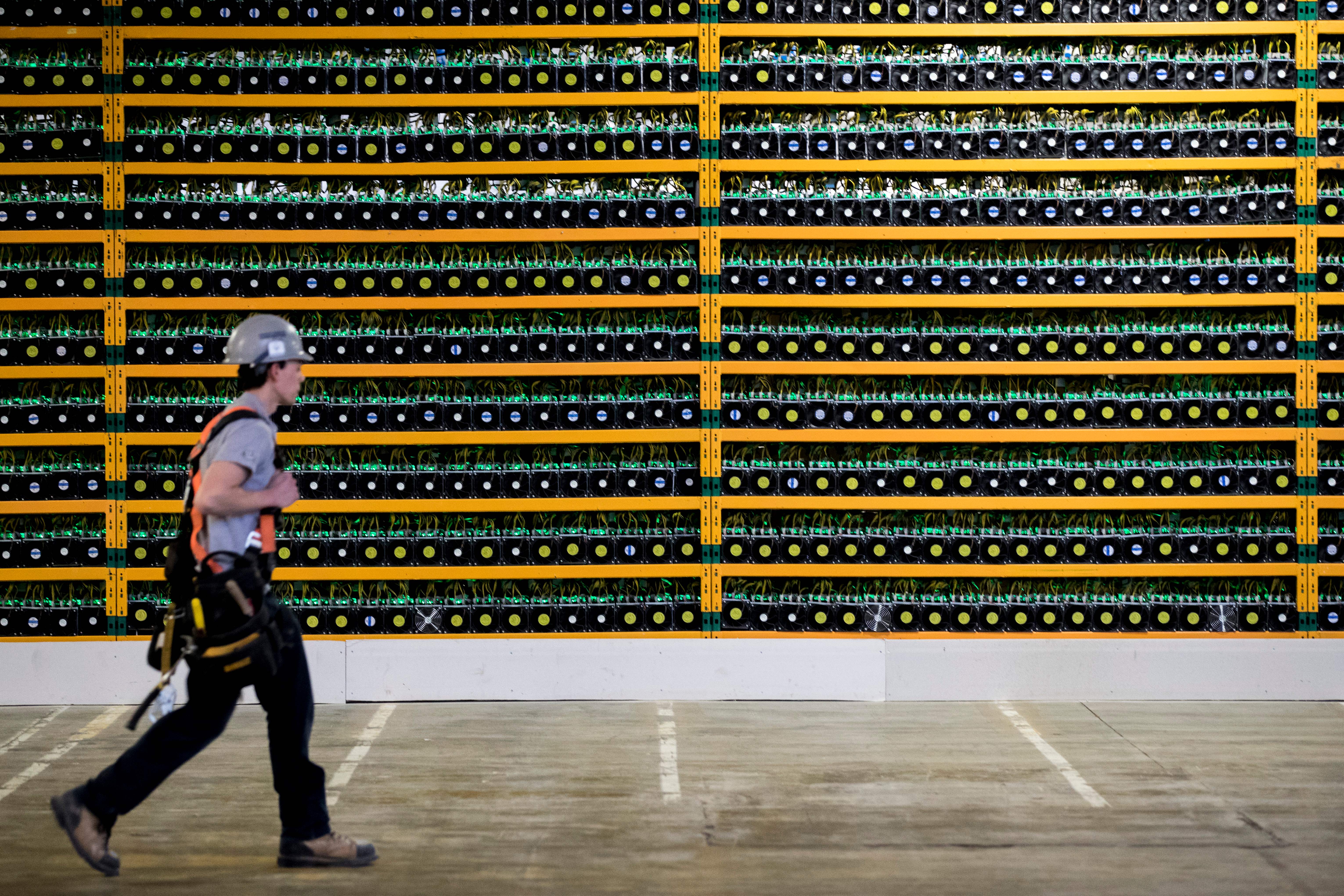
Image of a person walking past a wall of bitcoin mining rigs

Image Credits: LARS HAGBERG/AFP (opens in a new window) / Getty Images

To extract fuel buried hundreds of feet below, the coal industry reshaped Kentucky’s landscape, flattening entire mountaintops and using the waste material to fill in creeks and valleys.

But now that demand for coal is dropping as utilities shift to cleaner energy sources, the state is using incentives to attract Bitcoin miners, reports Jacquelyn Melinek.

In 2022, Kentucky represents “18.7% of the United States’ total Bitcoin hashrate,” she writes.

Today, Bitcoin miners are setting up shop in abandoned factories, warehouses and sure, former coal mines around Kentucky to use coal-generated power to run their rigs.

“Bitcoin miners are buyers of last resort for energy,” said Nick Hansen, CEO of Bitcoin hashrate management platform Luxor.

“They’ll buy any energy up to a certain price and they can do it anywhere the internet is available.”

Our favorite startups from YC’s Winter 2022 Demo Day, part 1

YC Demo Day favorites

Image Credits: TechCrunch/Bryce Durbin

Y Combinator’s Winter 2022 Demo Day this year featured 414 startups from 42 countries across over 80 sectors.

That’s a lot of companies to consider, but in keeping with TechCrunch tradition, Alex Wilhelm, Natasha Mascarenhas, Devin Coldewey, Christine Hall and Mary Ann Azevedo list their favorite startups from day one.

Our favorite startups from YC’s Winter 2022 Demo Day, part 2

YC Demo Day favorites

Image Credits: TechCrunch/Bryce Durbin

Day two of Y Combinator’s W22 uncovered a few trends: many startups are building for the Southeast Asian market, fintech is still a winner, Nigerian startups are hitting it out of the park, and India was again well-represented.

To wrap up our coverage, Christine Hall, Alex Wilhelm, Devin Coldewey and Mary Ann Azevedo selected a few companies to watch from the startups that presented on day two.

Despite tooling limitations, DAO optimists see new use cases for a democratic, token-based future

Image of a hand inserting a speech bubble into a white piggy bank against a purple background.

Image Credits: Boris Zhitkov (opens in a new window) / Getty Images

Many online communities are looking to decentralized autonomous organizations (DAO) to raise funds so they can bring their ideas to life, but without tools and software to make it easier for people to participate, adoption has been slow.

However, some investors and consumers are hopeful that as tooling develops, DAOs will generate more use cases than individuals pooling their resources to buy NFTs or objects of popular interest, reports Jacquelyn Melinek.

“There will be a lot of evolution [for DAOs] as we start to fit the technology into human behavior,” Sarah Wood, head of operations at Upstream, said. “I see a world where you can use a DAO for your book club, or whatever you want.”

Dear Sophie: What can we do to help employees who are Ukrainian citizens?

lone figure at entrance to maze hedge that has an American flag at the center

Image Credits: Bryce Durbin/TechCrunch

Dear Sophie,

We have several employees who are Ukrainian citizens; one is on OPT and the other is on STEM OPT. We want to make sure they can continue to live and work in the United States.

Our most immediate concern is for the F-1 student whose OPT status is expiring in June. We registered her in this year’s H-1B lottery and are hoping she’s selected this week to apply.

In the meantime, we heard that Ukrainians are eligible for TPS. Does that include F-1 students on OPT? Should our other Ukrainian employees also apply for TPS even though their work visas are good for a few more years?

What is the process for applying for TPS?

— Strong Supporter

Goldman Sachs’ OTC Bitcoin options trade can pave way for more institutional involvement

An image of a screen at a trading post on the floor of the New York Stock Exchange is juxtaposed with the Goldman Sachs booth

Image Credits: Richard Drew/AP

Goldman Sachs has been active in crypto for a while now, but its Bitcoin options trade last week may have paved the way for more institutional investment firms to begin exploring the cryptocurrency ecosystem, pending regulatory clarity, reports Jacquelyn Melinek.

“The trade itself doesn’t mean much, but the fact that it happened and opens the ability for Goldman Sachs to trade this risk is massively significant, and this is just the beginning,” said Tim Grant, head of Europe at Galaxy Digital.

“As soon as you get into that part, that set of hurdles, you’re intellectually and operationally free to do other things. It’s not the trade itself, it’s that this will allow us to go in a multitude of directions.”

The how and why of raising OT security capital

hand holding a padlock and in the background the html code on a computer screen

Image Credits: SOPA Images (opens in a new window) / Getty Images

Operational technology, which allows critical infrastructure to operate 24×7, is one area facing significant cybersecurity risk, and with the U.S. government taking steps to mitigate the threat, security firms addressing this area stand to benefit the most, writes Matt Gatto, a managing director at Insight Partners.

In a guest post for TC+, he explains how recent attacks on critical infrastructure, pending regulation, and rising concerns over Russian cyberattacks are creating new opportunities in OT.

“It’s a good time for OT security providers to seek funding,” says Gatto. “The combination of increasing OT cyberattacks and the emergence of government regulations is fueling a funding frenzy.”

Co-founders of Ukrainian startup Delfast discuss navigating through a crisis

Daniel Tonkopi and Serhiy Denysenko, co-founders Delfast

Image Credits: Bryce Durbin

Founded in 2014, e-bike startup Delfast has offices in Los Angeles and Kiev.

But after Russia invaded Ukraine, co-founders Daniel Tonkopi and Serhiy Denysenko started relocating family members and employees, finding ways to support their country’s defense, and, “running a startup during a war,” reports Rebecca Bellan.

Daniel Tonkopi:

We all work now in two shifts. The first shift is our usual work and the second shift is our voluntary work. In Kyiv, half of our engineers are at war now. They are in the Territorial Defense Forces, which is like an official civilian army.


3 things you can do right now to support Ukraine’s IT sector

“The calls and texts started early, asking for power supplies and tools for fixing engines,” said Katia Ryzha, who lives and works in Ivano-Frankivsk, a small city in Western Ukraine.

Since the war began, Ukrainian soldiers at the front line have requested tools and other hard-to-find items from their friends and colleagues around the country. “Our team coordinated scavenging garages, basements, and tool sheds, as most of these supplies are hard or impossible to find now in Ukraine,” Katia shared.

Katia is the head of the projects and delivery management department of U.S.-based tech company, Softjourn, which has an R&D office and many employees in Western Ukraine. Although we were shocked when the war began, our team managed to unite efforts and organize support to guarantee the safety of our colleagues and their families.

Our team, along with the greater tech community in Ukraine, has been united in helping the war efforts. This includes joining Ukraine’s IT army, planning trips to resupply soldiers on the front lines, and donating money and military gear to the army.

Katia says that while volunteering is important for the war efforts, it is even more critical to fight on the economic front.

Sergiy Fitsak, co-founder and managing director of Softjourn, said, “By working, we’re helping fuel the war effort. Each dollar we earn helps strengthen the Ukrainian economy at a time when it’s critically needed to fund military efforts, provide humanitarian relief to those most affected, protect our communities, and feed and care for our families and neighbors.”

For Katia and many of our colleagues living in Ukraine, working has become an act of resistance. In a similar vein, when companies choose to purchase licenses for products built in the country, or to work with consulting companies that may have part or all of their teams there, they nurture the economy, which safeguards the future of Ukraine.

As members of the global tech community, we are uniquely positioned to help at this critical juncture. Here are three ways you can pitch in:

Continue looking to Ukraine for your IT and tech needs

Prior to the war, Ukraine was home to a $6.8 billion tech industry, according to the IT Ukraine Association. While some companies have had to close or temporarily suspend operations, many are still working and even growing.


5 investors discuss what’s in store for venture debt following SVB’s collapse

There are many questions around the implications of Silicon Valley Bank’s (SVB) collapse that won’t be answered for a long time. But there’s...