Thursday, March 3, 2022

To achieve enterprise sales success, tailor your approach to CIOs

Technology vendors who have been successful over the long term all have something in common: they know how to sell to chief information officers.

They understand that the work isn’t over after the handshakes and signatures — effectively managing and nurturing a vendor-CIO relationship requires attention.

I’m a VC now, but my five CIO stints over the past two decades have taught me plenty about the before and after of the enterprise sales process. My daily conversations with existing CIOs reaffirm these insights and shed light on other important steps.

I’ll tackle the relationship-nurturing piece further down. First up, here is what CIOs look for in solutions and how you can tailor your sales approach accordingly.

CIOs sponsor and decide, not buy. CIOs rarely make decisions unilaterally. They will most often sponsor a buying decision in collaboration with key members of their team. The mistake most companies make is going straight to the CIO without buy-in from the leadership group immediately under them. Build confidence with that team first. From there, you’ll have better insight into whether the product you’ve built fits into the overarching strategy the CIO has put into place.

Begin by getting alignment on the actual deployment. How are things working? What could be better? Starting here signals that their needs supersede your own.

CIOs care about value. Make sure your ROI is definitive. People are always willing to pay a premium to solve problems, but you have to be prescriptive about what you do. And whatever that value prop is, be sure it’s aligned with the CIO’s larger vision. CIOs want solutions for the longer term, so think about how you position your product as a long-term solution rather than a reference-point solution.

Most CIOs already suffer from tool fatigue, managing a budget that includes hundreds of SaaS applications. If you want the CIO’s attention, position your offering as one that will continue to add value over time. Show that your solution can scale and that you have a vision for the future. CIOs are often wary of procuring products they think may disappear or be acquired.

Talk about your deployment plan. Make sure you have a clearly articulated plan for deployment and change management. Many CIOs will say no to a solution simply because their teams aren’t set up to deploy well. Think about how you can deploy a solution and add value without relying on the customer’s resources.

Remember that a CIO’s team has been building, buying, deploying and managing solutions long before you showed up. How does your solution fit into the team’s process and, more importantly, how do you deploy successfully?

Have your references ready. Have a reference that’s relevant to the CIO before you reach out. CIOs expect to be sold to and cold-called; it’s not a surprise when it happens, nor is it jarring. But it happens a lot, and to break through the noise, it really helps to have a peer CIO who can reference the solution.


Wednesday, March 2, 2022

Snowflake acquires Streamlit for $800M to help customers build data-based apps

Snowflake helps customers store and manage oodles of data in the cloud without cloud vendor lock-in. Streamlit is a startup that developed a popular open source project for building data-based apps. Seems like a pretty good match, and today Snowflake announced it was acquiring Streamlit for $800 million.

BenoĆ®t Dageville, co-founder and president of products at Snowflake, said the company became familiar with Streamlit as customers were using it, as were people in-house, and as they talked it seemed increasingly like a good fit. “We have both the same vision — Streamlit and Snowflake — which is all about democratizing access to data. I would describe it very simply as making it super easy to interact with data,” Dageville told me.

He said that Streamlit fills in a big missing piece in the platform by allowing data scientists and others to interact with the data and build apps that bring the data to life for non-technical users. Snowflake has all the technical pieces for accessing and managing the data in the cloud, but they lacked a native data visualization piece, and that’s what they’re getting with Streamlit.

Streamlit co-founder and CEO Adrien Treuille said that he and his co-founders began talking to Snowflake last fall and over time it became readily apparent that they would match up well together, not just technologically, but also culturally. “I think there’s a really deep cultural alignment beyond the technical and business alignment between the two companies,” Treuille explained.

When the startup launched in 2018, it was the brainchild of some former GoogleX and Zoox employees looking to build an open source project to make it easier to build custom applications to interact with data. As Treuille told me at the time of the launch, they wanted to build a flexible tool:

“I think that Streamlit actually has, I would say, a unique position in this market. While most companies are basically trying to systemize some part of the machine learning workflow, we’re giving engineers these sort of Lego blocks to build whatever they want,” Treuille explained.

It reached version 1.0 last October, and was working on a commercial cloud service. That piece will eventually become part of the Snowflake platform. While the company plans to integrate the Streamlit technology into the Snowflake platform, of course, the plan is to continue to build and support the popular open source project and the community behind it. Treuille says there are tens of thousands of people using the platform and millions using apps built on top of Streamlit.

Snowflake launched in 2012 and raised $1.4 billion before going public in September 2020. Streamlit launched in 2019 and raised $62 million.

The deal is going to have to pass regulatory muster. The hope is that it gets done sooner than later, certainly this quarter, but Dageville said that would be up to the various regulatory bodies involved. Snowflake stock is down almost 23% in after-hours trading after reporting slowing revenue growth.


As war escalates in Europe, it’s ‘shields up’ for the cybersecurity industry

In unprecedented times, even government bureaucracy moves quickly. As a result of the heightened likelihood of cyberthreat from Russian malactor groups, the U.S. Cybersecurity and Infrastructure Security Agency (CISA) — part of the Department of Homeland Security — issued an unprecedented warning recommending that “all organizations — regardless of size — adopt a heightened posture when it comes to cybersecurity and protecting their most critical assets.”

The blanket warning is for all industries to take notice. Indeed, it’s a juxtaposition of sorts to think the cybersecurity industry is vulnerable to cyberattack, but for many nation state groups, this is their first port of call.

Inspired by the spike in attacks on cybersecurity agencies globally, a report from Reposify assessed the state of the cybersecurity industry’s external attack surface (EAS). It coincides with CISA’s warning, and highlights critical areas of concern for the sector and how they mirror trends amongst pharmaceutical and financial companies, providing vital insight into where organizations can focus their efforts, and reinforce the digital perimeter.

The first step to resiliency is to reduce the likelihood of a damaging cyber intrusion in the first place.

The report examined 35 cybersecurity companies and their 350+ subsidiaries with shocking results: during only a two-week period in January 2022, more than 200,000 exposed assets were uncovered at top firms, 42% of which were identified as high-severity issues.

As CISA outlines in its “Shields Up” guidance, the first step to resiliency is to reduce the likelihood of a damaging cyber intrusion in the first place. Recognizing the problem is only the first in a series of actionable moves organizations can make to minimize their external weaknesses to bad actors.

If addressing digital perimeter exposures is the foundation, zoning-in on problem areas is the framing. A deep dive into these deficiencies points to clear solutions all industries – cybersecurity or otherwise – can embrace to protect themselves.

What do companies need to do?

Many factors, including the transition to remote work environments, increased reliance on third-party vendors, digital transformation and offloading services onto the cloud, have significantly increased companies’ external attack surface.

According to the report, the rise of remote access sites saw 89% of identified assets classified as part of the unofficial perimeter. Similarly, 87% of databases were unaccounted for, along with 67% of development tools and 62% of all network assets.

Databases were found to be among the most vulnerable to cybersecurity threat, with over half (51%) of cybersecurity companies hosting an exposed database. Nearly all (97.14%) of security agencies have exposed assets on their Amazon Web Services (AWS), and 86% of those analyzed have at least one sensitive remote access service exposed to the internet.


Without sustainable practices, orbital debris will hinder space’s gold rush

Look up at the sky — hundreds of discarded satellites, spent upper-stage rocket bodies, and mission-related objects circle Earth, posing a risk to space-based services and future missions that will support what is projected to be a trillion-dollar space economy.

According to the European Space Agency, more than 36,500 cataloged objects larger than 10 cm are currently orbiting Earth, along with millions of pieces smaller than 1 cm. Not surprisingly, any collision in orbit can be catastrophic. Traveling at more than 7 km per second — faster than a high-speed bullet — even a 1 cm piece of debris can cause significant damage to a spacecraft and end an entire mission.

Today’s sustainability crisis in space is the result of 60 years of exploration and utilization that have largely ignored the environmental consequences of space activities and treated satellites and other space assets as single-use objects.

The consequence of this approach is an unsustainable model that increases costs and puts the tremendous promise of the space economy at risk. Low-Earth orbits are already so populated that satellite operators are forced to assess conjunctions and perform debris-avoidance maneuvers that consume valuable resources and can disrupt services.

Who’s taking responsibility?

Technical measures alone cannot solve the space sustainability problem. The on-orbit servicing market must be driven by national space policies and international standards that directly support satellite servicing. National regulatory policies are struggling to keep pace with the advancement of technology, the growth of the satellite population, and the development of new activities in orbit.

While multilateral UN provisions, such as the 1967 Outer Space Treaty and the 2019 Guidelines for the Long-term Sustainability of Outer Space Activities, provide high-level guidance, specific licensing practices must be created and implemented by national regulatory agencies in individual countries.

There is no template for the implementation of these guidelines and high-level agreements on an internationally coordinated basis, and global space activity is not under the control of any single national or international entity. Hence, there is no common set of rules that govern global space activity and no mechanisms to ensure the proper disposal of hardware at the completion of space missions. Nor is there any coordinated effort to clean up the decades of space debris already accumulated in orbit.

Attitudes are changing, however, and over the past year, we have seen a significant shift in the urgency around the issue. In June 2021, G7 member nations released a statement confirming orbital debris as one of the biggest challenges facing the space sector and pledged to commit to the safe and sustainable use of space.

While this statement represents a valuable acknowledgment of the scope of our problems with space sustainability, it’s only a step in the right direction. Key players across the international community, from national governments to private commercial companies, must start developing and coordinating space traffic and environmental management.

On-orbit services – the key to a sustainable future

To date, satellite operators haven’t had options for reducing the risks to their satellites in orbit. However, on-orbit servicing is changing this risk scenario. D-Orbit, Astroscale and ClearSpace are joining forces to move the space sector into an era of sustainability, turning on-orbit servicing into an emerging reality.

On-orbit servicing is comparable to roadside car servicing on Earth. Nobody would ever abandon a car in the middle of the highway because the fuel tank is empty or the battery charge runs out. Yet this is exactly how most satellite operators have worked since the dawn of the Space Age, leaving these metaphorical “orbital highways” more congested.

According to applications submitted to the U.S. Federal Communications Commission and International Telecommunications Union, the number of satellites in low Earth orbit is projected to increase by anywhere from 10,000 to 40,000 satellites by 2030, and a single system of over 300,000 satellites has recently been proposed. This growth promises to make a serious issue exponentially worse.

The deployment of a geostationary satellite typically costs $150 million to $500 million. Over the next 15 years, more than 100 geostationary satellites will reach their planned retirement age, driving satellite operators to pursue options for extending the value of their assets, rather than just replacing them. By extending the life of a satellite, servicing enables commercial and institutional operators to be more deliberate in how they use their capital.

Satellite operators — particularly those building larger constellations — can install a low-cost interface on their satellites before launch to reduce the cost and complexity of any future service that might be required. When a satellite fails or reaches the end of its life, a servicer spacecraft can remove it, much like a tow truck assists broken-down cars on a roadway, keeping orbits clear and reducing collision risks to other satellites, including those belonging to the same constellation.

When we extend removal services to on-orbit inspection, operators can assess the condition of their satellites more completely when anomalies arise. With on-orbit relocation services, operators can deliver their satellites from initial deployment to their intended operational orbits, make adjustments to compensate for natural decay, reposition assets within a constellation to address coverage issues, or relocate them to compensate for faults, all without expending their own fuel budget.

As with any other long-term plan requiring significant investments in research and development — like the space race of the 1950s — national governments have an essential role in jump-starting sustainable orbital infrastructure. Active debris removal services are set to emerge, with both the European Space Agency and the Japan Aerospace Exploration Agency funding debris removal missions in low-Earth orbit in partnership with private entities like ClearSpace and Astroscale.

While solving this global issue requires significant public and private investments, along with systemic changes in the industry, the potential rewards are virtually unlimited. The space economy — a new, unbounded playing field — has the potential to impact life on our planet and open a new frontier across our solar system and beyond.


Tier Mobility acquires Spin from Ford, marking entry into North America

Tier Mobility, the Berlin-based micromobility operator that has been steadily taking over Europe, is making a sweeping entry into North America by acquiring Spin from automaker Ford. Tier will acquire all of Spin’s 50,000 e-scooters and e-bikes, bringing the German company’s total fleet to 300,000.

The companies would not disclose the terms of the deal, but last October, Tier raised $200 million, much of which the startup said would be used for strategic investments and acquisitions. Ford, which purchased Spin for $100 million back in 2018, will maintain a strategic investment in Spin, according to Spin CEO Ben Bear.

The news comes a few months after Tier purchased e-scooter company Wind Mobility’s Italian subsidiary, marking Tier’s entry into the Italian market, as well as its purchase of bike-share startup Nextbike, signaling Tier’s move into the multi-modal space. The Spin buy will give Tier a global footprint of more than 520 cities and communities in 21 countries, making it the largest shared operator in the world. Competitors Bird and Lime claim a footprint of 350 and 200 cities globally, respectively, although they use different metrics on their scorecards.

Micromobility companies like Tier need to scale in order to reach profitability, but they’re trying to scale at a time when cities are clamping down on the number of operators allowed on the streets. Buying up rivals in cities that have won permits is a tried and tested way to circumvent the system.

Just a few weeks ago, Spin laid off a quarter of its staff as it prepared to wind down operations in some U.S. markets, Germany, Portugal and Spain. At the time, Bear said the move would help accelerate the company’s path to profitability via its strategy of pursuing exclusive or limited vendor markets. Spin has retained 100% of those permits over the last five quarters, the company says, which would make it doubly attractive as a partner for Tier across the Atlantic.

Tier will maintain the Spin brand and organizational structure in North America, where Tier doesn’t currently have a presence, but Spin’s operations in the United Kingdom will be folded into the overall Tier brand to create a “global superpower together,” Bear told TechCrunch.

“With this deal, we’re going to be able to modernize our fleet and bring over 100% swappable batteries, which will just take our operational efficiency to the next level,” said Bear, who noted only 50% of Spin’s e-scooters had swappable batteries at the moment, but those that are swappable can be swapped into Spin’s e-bikes, as well.

“This is really a unique opportunity to create a number one global player in shared micromobility in the time of consolidation and what we’re really excited about with Tier is just the consistent values alignment that they’ve shown,” said Bear. 

Both Tier and Spin believe in operating with employees rather than gig workers, they’re both interested in pursuing close partnerships with cities and they have both explored new ways to charge vehicles in their respective markets. Spin, for example, has set up Spin Hubs, or electric two-wheeler parking and charging infrastructure, which are designed to increase foot traffic in certain areas while keeping scooters parked neatly. 

Similarly, Tier’s Energy Network involves placing battery charging stations in retail stores across its coverage area where riders can swap a scooter’s battery at the end of their ride to earn free credit, all the while bringing foot traffic to shops and cafes.

Tier is considering bringing its Energy Network to cities across the U.S. based on the good reception it has gotten in Europe.

“We think that it’s something that could be especially interesting for universities,” Lawrence Leuschner, CEO and co-founder of Tier, told TechCrunch. “Spin has been very successful not only in cities, but also universities, where there are a lot of students who would be super interested to swap a battery and have a free ride.” 

Spin has also worked with computer vision company Drover AI to pilot camera-based safety systems that can detect and correct dangerous rider behavior, like riding or parking on sidewalks. Tier has started working with startup Fantasmo to implement its Camera Positioning System, which asks users to take a photo of a building nearby when they want to end a ride, allowing Fantasmo’s 3D maps to confirm that the rider is in a city-approved parking space.

As a joined force, one of Tier’s top priorities, aside from updating Spin’s North American e-scooter fleet, is to expand the company’s e-bike footprint in North America, which Leuschner says is a huge opportunity.

“It’s going to be very important to create a bike that is really made for sharing,” said Leuschner. “It’s just the question of time until we are approaching the 50-50% mark of scooter and bikes. In Europe we see more and more e-bike tenders. We applied for three bike tenders recently, and we won all of them. We are also seeing in Europe scooter and bike tenders together.”

E-mopeds, which Tier operates in some parts of Europe, will not be a priority for the North American market, says Leuschner.

Tier’s last funding raise of $200 million was only the first tranche of a larger Series D, so there may be more consolidation in the company’s future. At the time of the raise, Tier reported its value at $2 billion. Leuschner would not share an updated valuation, but he did say the company is not looking to go public any time soon, partly because the company isn’t ready, partly because the markets are too volatile at the moment.

Correction: An earlier version of this article said Tier would have a fleet of 500,000 vehicle. Tier’s fleet will increase to 300,000 vehicles. 


Dear Sophie: 2 questions about the latest immigration news

​​Here’s another edition of “Dear Sophie,” the advice column that answers immigration-related questions about working at technology companies.

“Your questions are vital to the spread of knowledge that allows people all over the world to rise above borders and pursue their dreams,” says Sophie Alcorn, a Silicon Valley immigration attorney. “Whether you’re in people ops, a founder or seeking a job in Silicon Valley, I would love to answer your questions in my next column.”

TechCrunch+ members receive access to weekly “Dear Sophie” columns; use promo code ALCORN to purchase a one- or two-year subscription for 50% off.


Dear Sophie,

Next year, I will be graduating with a master’s degree in finance.

My goal is to co-found a fintech startup while on an F-1 OPT. I heard that I may be able to qualify for STEM OPT given the expanded list of STEM fields. Will I be able to continue working at my startup on STEM OPT?

— Focused Founder

Dear Focused,

Yes, you might be eligible for a 24-month STEM OPT extension in your field of finance based on recent legal updates. The U.S. Department of Homeland Security, which oversees U.S. Citizenship and Immigration Services (USCIS), recently added financial analytics and 21 other fields of study to the list of qualified STEM degrees. Talk to the international student office at your university to confirm your STEM eligibility based on your degree field.

Getting STEM OPT work authorization while continuing to work at the company you co-founded can be complex, so I would recommend working with an experienced immigration attorney. Creating and working for your own company is allowed under OPT, but you can only qualify for the STEM OPT extension if you can demonstrate that despite your co-founder status, you have a bona fide employment relationship with your company and that all regulatory requirements are met.

Under the STEM OPT requirements, your company must also devise a formal training plan and learning objectives for you and enroll in the USCIS E-Verify system.

A composite image of immigration law attorney Sophie Alcorn in front of a background with a TechCrunch logo.

Image Credits: Joanna Buniak / Sophie Alcorn (opens in a new window)

You’ll want to ensure your startup complies with all STEM OPT requirements and obtain guidance on other immigration options that will enable you to continue living, growing and thriving with your startup in the U.S. Your future startup should also consider registering you for the H-1B lottery if you qualify.

This year’s registration period is from March 1-18. Qualifying for STEM OPT gives you more chances to be selected in each year’s H-1B lottery, and your company can register you multiple years in a row.

Expanding the list of qualified STEM fields for STEM OPT is part of a larger effort by the Biden-Harris administration to expand immigration policies to attract and retain global STEM talent, spur innovation, and strengthen the U.S. economy. The new policies also affect the J-1 educational and cultural exchange visa, the O-1A extraordinary ability visa, and the EB-2 NIW (National Interest Waiver) green card. Discuss with your attorney if any of these other immigration options might work for you.

Last night, in fact, President Joe Biden said in the State of the Union Address:

We can do all this while keeping lit the torch of liberty that has led generations of immigrants to this land — my forefathers and so many of yours.

Provide a pathway to citizenship for Dreamers, those on temporary status, farm workers, and essential workers.

I believe that you and many others pursuing advanced education and creating leading-edge startups in the United States would definitely be considered “essential workers,” so let’s focus on getting immigration reform through as well.

Best wishes for your journey.

— Sophie


Dear Sophie,

What’s the latest on the startup visa that was introduced in Congress last year?

— Founder in Florida

Dear Founder,

The startup visa is still alive in Congress! Last month, Rep. Zoe Lofgren’s (D-CA) startup visa — which was included in her Let Immigrants Kickstart Employment (LIKE) Act — was added to the America Creating Opportunities for Manufacturing, Pre-Eminence in Technology, and Economic Strength (COMPETES) Act (H.R. 4521).

The America COMPETES Act, which the House recently passed along party lines, is the House’s version of the Senate’s U.S. Innovation and Competition Act (S. 1260.) It is a sweeping bill that seeks to invest in domestic semiconductor manufacturing and boost research and technology to make the U.S. more competitive against China. The Senate approved its legislation last year. Pretty cool, right? We sure are excited.

The House legislation creates a W (non-immigrant) visa category for startup founders and essential employees who have an ownership stake in their startup, and they and their startups meet certain qualifications.

To qualify for a W visa for an initial three years:

  • The startup must be a U.S. corporation that is less than five years old.
  • The W visa candidate must have at least a 10% ownership stake in the startup.
  • The W visa candidate must play a central and active role in the startup.
  • The startup must have received at least $250,000 from U.S. investors or at least $100,000 in federal, state, or local government grants.

There’s more! Families of W visa holders would be eligible for dependent W visas. The legislation allows for W visas to be extended for three additional years if certain conditions are met. W visa holders can become eligible for green cards, which are exempt from the annual numerical and per-country limits.

In addition to creating a startup visa, the America COMPETES Act also would exempt individuals and their families from the numerical and per-country limits on green cards if those individuals have a doctoral degree in a STEM field.

If you can spare a bit of time, you can help to generate support for the startup visa: share your entrepreneurial journey with your senators to encourage them to include the startup visa in the Senate competitiveness bill, and let them know why a startup visa is needed to keep the U.S. competitive and innovative.

In the meantime, if you’re looking for options that are available to you right now, consider International Entrepreneur Parole (IEP). Please note that the minimum investment and grant requirements increased by nearly 6% last year. Take a look at this previous Dear Sophie column in which I talk about the IEP and other visa and green card options for startup founders.

Be sure to check back here for updates on the startup visa.

—Sophie


Have a question for Sophie? Ask it here. We reserve the right to edit your submission for clarity and/or space.

The information provided in “Dear Sophie” is general information and not legal advice. For more information on the limitations of “Dear Sophie,” please view our full disclaimer. “Dear Sophie” is a federally registered trademark. You can contact Sophie directly at Alcorn Immigration Law.

Sophie’s podcast, Immigration Law for Tech Startups, is available on all major platforms. If you’d like to be a guest, she’s accepting applications!


Tuesday, March 1, 2022

Mercury restricted a number of accounts linked to African startups and didn’t exactly say why

Yesterday, Mercury, which describes itself as a bank for startups, restricted several accounts linked to African tech startups, TechCrunch has learned. 

The number of companies involved with this restriction is unknown. But some sources told TechCrunch that they range from a dozen to 30 — including well established YC-backed startups and newer upstarts. 

According to our sources, Mercury did not give any prior notice that it would take this action, nor did it explain why the action was taken in its first email to the affected startups. 

“Hi, Your access to the Mercury account for [company’s name] has been temporarily restricted. Let us know if you have any question or concerns,” read the first email Mercury sent out. 

Upon further questioning, Mercury, who holds over 4 billion in customer deposits for its 40,000+ businesses in over 200 countries, told some of these startups that their accounts had been flagged and placed under review by its compliance team after it noticed some “unusual activity” and couldn’t provide further details until its review was complete. 

“We don’t have a definite date for when this will be completed, but we will provide an update as soon as we have one. We’re prioritizing the review of your account with our bank partner. We do apologize for any inconvenience this may cause,” it said in another email. 

Some founders and tech stakeholders have taken to Twitter to express their disappointment at Mercury’s decision to block these accounts without any concrete reason. For a number of these startups, Mercury’s restriction came at an inconvenient time — the end of the month — when major obligations such as salaries and taxes ought to be attended to; now, those will have to wait, the founders say. 

A couple of founders, who chose not to be named, said Mercury’s move might be linked to the ongoing conflict between Russia and Ukraine, which has seen the company’s partner bank review its exposure to “high risk” regions such as Africa. However, in an email sent to one of the founders whose startup was affected, Mercury tried to point out that its intention wasn’t for the founder and his business to “feel singled out or held to a different standard.”

It’s hard to think that isn’t the case, considering how startups from other regions don’t seem to have experienced a similar problem, judging by activity linked to the situation on Twitter.

A spokesperson responding to TechCrunch’s request for comment said Mercury is aware that one of its backend banks has suspended the accounts of a number of Mercury customers in Africa. And while the bank was acting in compliance with its internal procedures, the suspension has adversely affected some of its customers.

“It’s top priority for us to work with the bank to resolve this matter as quickly as possible. We’re reaching out to the customers impacted directly and apologize for the disruption this event has caused,” it said in the remainder of the email to TechCrunch. 

Meanwhile, CEO Immad Akhund reached out via email to those affected:

Hi everyone,

I am the CEO of Mercury. Since many of you have emailed/messaged me directly I thought it would be best if I just reached out directly.

We found out yesterday that our partner bank noticed unusual activity and asked us to lock and investigate a large set of accounts with linked activity. We are working through our due diligence on all those accounts and will be in touch with you individually with questions if we have any on your account or activity.

Since it’s a reasonably large set of accounts it’s taking us some time to work through all of them but it’s the highest priority for us internally and we have more than 10 people working on this.

We apologize for this sudden inconvenience and hope to put better practices in place to avoid this in the future. We will be in touch directly as we make progress and feel free to email me on this email if you have follow up questions.

Regards,

Immad


Daily Crunch: Drone service Wing completes 200K commercial deliveries, partners with supermarket chain

To get a roundup of TechCrunch’s biggest and most important stories delivered to your inbox every day at 3 p.m. PST, subscribe here.
Hello and welcome to Daily Crunch for Tuesday, March 1, 2022. Akin to how it takes nation-states a little time to get sanctions up and running, tech companies don’t roll out responses to geopolitical changes in a moment. But today we have notes on what tech companies are doing in response to Russia’s invasion of Ukraine.

Before we get into the news, however, our Sessions: Mobility event is going to flat-our rock. See you there! – Alex

The TechCrunch Top 3

Startups/VC

TechCrunch has been tracking growth in the number of startups in the market selling their wares via API for some time now. The boom in API-first startups fits neatly into the evolution of software pricing away from traditional SaaS methodology toward a more on-demand model. Anyway, I wrote a bit about a new index of API-led startups that GGV is putting together. As a teaser, it includes links to around 84 trillion API startups, in case you wanted a look at the segment.

  • Jolla looks to cut ties with Russia: It’s tough to build an operating system if you are not a major tech platform company. Hell, Microsoft taught us with Windows Phone that even if you are a platform company, it’s hard. So when Jolla, which is building a “mobile Linux-based alternative to Google’s Android,” decides to cut ties with Russia, where it has users, it’s an Actually Material Choice.
  • Uppbeat raises $6.15M to make sure your video has music: Lots of video is made and uploaded to the internet every day. And if you want to make money from it, you will often want to avoid music, as including tunes can get your duckets took. So, Uppbeat has built a service that provides free music for folks to use in their clips. And it has grown to 500,000 users, which I thought was notable.
  • Commsor wants to scale community beyond capitalism: I normally rewrite headlines in this newsletter for length and to make small jokes, but Natasha Mascarenhas’ headline is perfect so I’ve left it unchanged. Commsor has built what she describes as “an operating system to help other startups manage their communities.” So does every startup need a community? Nope, it turns out.
  • Zero Systems wants to automate professional services: I like the idea behind Zero Systems. Ron Miller describes its goal as bringing automation to “professional services like law firms,” which makes good sense. The real value at a law firm is not its ability to say, handle humdrum paperwork. It’s in having legal minds at the ready. So, why not automate the other stuff? The startup just closed a $12 million Series A.
  • Figma is bringing whiteboarding to iPad: Figma is worth $10 billion, recall.
  • Instacart loses head of payments to startup: Instacart, worth eleventy-nine quadrillion dollars after raising lots of money during the pandemic, is an IPO candidate this year or next. So to see it shed some staff along the way is not a huge surprise, though the company likely won’t be happy to lose someone from its fintech team. Regardless, Forage – which is building payments tech for governments – is likely stoked at the recent poaching.
  • OpsLevel raises $15M for microservices management: I kinda know what a microservice is. It’s a small discrete unit of application that you string together into a larger system, right? I think so. Anyway, if you have a lot of them, I reckon it would be hard to get them all in order? That’s kinda the idea behind microservices management, which is what OpsLevel does. And it just raised capital to keep at it.

And there was so much more: Satellite startup Vu is about to put tech into orbit, Veev just raised $400 million for pre-fab homes, Nayya raised $55 million to provide recommendations for healthcare and other benefits, Subspace raised to make blockchains less carbon-intensive, and Starship Technologies – a very good name, I would add – raised $42 million for a fleet of terrestrial robots. I retract my naming praise!

10 investors discuss the no-code and low-code landscape in Q1 2022

White light bulb.Similar photographs from my portfolio:

Image Credits: malerapaso (opens in a new window) / Getty Images

When we published our last low-code/no-code investor survey in August 2020, the former president had decided to ban TikTok, Epic was filing antitrust cases against Apple and Google, and movie theaters around the U.S. were shuttering to slow the spread of the then-novel coronavirus.

Seems like a long time ago.

Since then, many of the key trends and themes we surfaced have come to pass: Airtable clinched an $11 billion valuation in December 2021 after raising a $735 million Series F with help from Salesforce Ventures and Michael Dell’s MSD Capital.

Not to be outdone, Microsoft’s Power Fx low-code programming language now connects hundreds of apps.

A year and a half ago, many companies were starting to get comfortable with no-code and low-code software. Today, “it’s transforming entire categories of enterprise software,” says Navin Chaddha, managing director at VC firm Mayfield.

To learn more about how the space has evolved in the last year and a half “and when they expect their investments to start paying off,” Karan Bhasin interviewed:

  • Sri Pangulur, partner, and Paul Lee, partner, Tribe Capital
  • Ganesh Bell, managing director, Insight Partners
  • Renato Valente, general partner, Iporanga Ventures
  • Mo Islam, partner, Threshold Ventures
  • Tommi Uhari, founding partner, Karma Ventures
  • Navin Chaddha, managing director, Mayfield
  • Alex Nichols, vice-president, and Laela Sturdy, general partner, CapitalG
  • Raviraj Jain, partner, Lightspeed Ventures

(TechCrunch+ is our membership program, which helps founders and startup teams get ahead. You can sign up here.)

Big Tech Inc.

  • Oh god please stop making Marvel movies: I know that everyone else cares about this, so I am including it here. News is out today that “Disney+ will now house the Marvel live-action shows that were previously available on Netflix.” This blows my mind somewhat, as I had no idea there were also live-action Marvel shows in addition to all the movies? How much Marvel can we take before we get intravenous content poisoning?
  • How Adobe’s diversity chief uses data to build a more equitable workplace: Another Ron Miller piece from today, this time diving into how companies can make real progress on diversifying their workplaces. Miller has been aces on this particular beat in recent quarters.

TechCrunch Experts

dc experts

Image Credits: SEAN GLADWELL / Getty Images

TechCrunch is recruiting recruiters for TechCrunch Experts, an ongoing project where we ask top professionals about problems and challenges that are common in early-stage startups. If that’s you or someone you know, you can let us know here.


Waabi’s Raquel Urtasun on the importance of differentiating your startup

Raquel Urtasun, scientist, founder and CEO of autonomous vehicle technology company Waabi, launched her company in June 2021, a time when it seemed like the AV industry was consolidating.

Urtasun and her team of 40 in Toronto and California came out the gate swinging with an $83.5 million raise from a series of high-profile investors, including Uber, Aurora and Khosla Ventures.

Waabi uses an AI-first approach to commercialize autonomous freight faster and more efficiently than its competitors, Urtasun told TechCrunch. As a professor in the Department of Computer Science at the University of Toronto, a co-founder of the Vector Institute for AI, and former chief scientist at Uber ATG, the self-driving unit Uber sold to Aurora, she has acquired some insights into both the industry and the science backing it up. After all, despite consolidation and gains from a few major players, no one had really figured it out yet.

So what does an AI-first approach really look like?

In February 2022, Waabi launched Waabi World, a high-fidelity closed-loop simulator that doesn’t just virtually test Waabi’s self-driving software, but can also teach it how to drive. Waabi World automatically builds digital twins of the world from data, performing near-real-time sensor simulation, manufacturing scenarios to stress-test the Waabi Driver, and teaching the driver to learn from its mistakes without human intervention. This, Urtasun said, saves countless hours of human labor to train the Waabi Driver both in simulation and on the roads.

The entirety of Waabi World is powered by AI in a way that other companies’ simulators aren’t because it relies more heavily on deep neural nets, AI algorithms that allow the computer to learn by using a series of connected networks to identify patterns in data. Historically, developers haven’t been able to figure out the how and why behind an AI’s decision-making when using deep neural nets, which is very important when putting self-driving vehicles on public roads, so they’ve fallen back on machine learning and rules-based algorithms to tie into a broader system.

Urtasun said she’s found a way to solve the problem of the “black box” effect behind deep neural nets by combining them with probabilistic inference and complex optimization. The result? The developer can trace back the decision process of the AI system and incorporate prior knowledge so they don’t have to teach the AI system everything from the beginning again.

We sat down with Urtasun to discuss the pros and cons of starting a business after working for a larger company, the surprises of being a founder and why freight will be the first AV industry to commercialize at scale.

The following interview, part of an ongoing series with founders who are building transportation companies, has been edited for length and clarity.

After working for Uber and being an academic, what are your takeaways about what it’s like being a first-time founder?

When I decided to start Waabi, I didn’t necessarily know what being a founder meant. I’ve been working in industry and in this field and whatnot, but as a founder, you need to wear so many hats and there is so much going on. I didn’t expect that. And Waabi now is very different from what it was to start with, so there’s something that surprised me.

But it’s been an incredible ride. I have to say there is nothing like building what you really believe in with a team that you love to work with. There is nothing that can’t be done.

You’re wearing many hats now, but how was it working under someone at Uber and not being in control of the whole show, in comparison?

I was part of the executive team at Uber, so I had a lot of impact and, you know, a lot of say in many things. But it’s different when you’re building — and this is not just Uber, this is in general. If you are in a large company with 1,000-plus people who are going in one direction, even if you all agree that you need to steer to something else, it is so difficult and slow to actually do this process.

From that point of view, being in a startup, which is much more dynamic, is very exciting, but it’s not Uber versus not Uber. I think any big company would be similar. But I had a great time at Uber. I learned so many things and really discovered what it meant to really be part of a big problem, and really prepared me really well for what I’m doing today.


What US startup founders need to know about the R&D tax credit

Would it surprise you to learn the government — federal and many states — is on your side when it comes to innovation? Yes, the very government that loves to collect taxes from you may be willing to give some of that money back through a particular credit that encourages innovation.

The Research and Development (R&D) tax credit lets businesses deduct R&D expenses up to $250,000 per year from payroll tax, or an unlimited amount against income tax if your startup qualifies. Over several years, this credit could save you millions of dollars.

It’s important to start the review process early not only to help avoid penalties, but to take advantage of all opportunities, and to know that not all opportunities can be leveraged at the same time.

Where to begin

It may seem obvious, but everything begins with great bookkeeping. Your records are the first and biggest step to successfully getting an accurate calculation. Additionally, it’s important to keep technical records in good order. You must be able to produce evidence of the technical R&D process. Even an investor presentation about progress on the product could be considered backup documentation for R&D.

One of the requirements to qualify for this tax credit is that activity needs to be “technological in nature.” So anything to do with engineering, physics, biochemistry, medical, hard sciences, computer sciences, or mathematics will almost guarantee you qualify. If you’re in one of these industries, you’re already meeting that minimum requirement. But if you’re not operating in one of these — say you’re in clothing or food — you might still be experimenting with technology that makes your business better.

Just because you have an available product and customers,  doesn’t mean you’re automatically ruled out. Many companies are never finished with R&D. You might be always creating new solutions, answering new questions, or thinking about how to achieve something. Even improving your product that’s already on the market could contain work that’s eligible for the R&D credit.

Finally, the only people who are going to be eligible are U.S. employees and contractors. So consider that if you’re trying to decide between being international or based in the U.S.

What you need to know about the R&D tax credit

We know innovation is expensive and often goes nowhere, but it’s impossible to innovate without investing in R&D. So, the government offers a way to make it less expensive to take the risks involved with innovation, especially for startups.


TechCrunch+ roundup: No-code investor survey, Zendesk’s next steps, Series A tips

When we published our last low-code/no-code investor survey in August 2020, the former president had decided to ban TikTok, Epic was filing antitrust cases against Apple and Google, and movie theaters around the U.S. were shuttering to slow the spread of the then-novel coronavirus.

Seems like a long time ago.

Since then, many of the key trends and themes we surfaced have come to pass: Airtable clinched an $11 billion valuation in December 2021 after raising a $735 million Series F with help from Salesforce Ventures and Michael Dell’s MSD Capital.


Full TechCrunch+ articles are only available to members
Use discount code TCPLUSROUNDUP to save 20% off a one- or two-year subscription


Not to be outdone, Microsoft’s Power Fx low-code programming language that it launched in 2018 now connects hundreds of apps. The rapid shift to digital since the pandemic began has turned many companies into converts, particularly now that DevOps talent is in such high demand.

Eighteen months ago, many people were still getting comfortable with no-code and low-code. Today, “it’s transforming entire categories of enterprise software,” says Navin Chaddha, managing director at VC firm Mayfield.

To learn more about how the space has evolved “and when they expect their investments to start paying off,” Karan Bhasin interviewed:

  • Sri Pangulur, partner, and Paul Lee, partner, Tribe Capital
  • Ganesh Bell, managing director, Insight Partners
  • Renato Valente, general partner, Iporanga Ventures
  • Mo Islam, partner, Threshold Ventures
  • Tommi Uhari, founding partner, Karma Ventures
  • Navin Chaddha, managing director, Mayfield
  • Alex Nichols, vice-president and Laela Sturdy, general partner, CapitalG
  • Raviraj Jain, partner, Lightspeed Ventures

Thanks very much for reading TechCrunch+ this week!

Walter Thompson
Senior Editor, TechCrunch+
@yourprotagonist

Why I’m using a credit facility to grow my startup

Final stone being placed by hand on a balancing miniature model bridge made of small flat rocks outside

Image Credits: Henrik Sorensen (opens in a new window) / Getty Images

Entrepreneurs who want to accelerate growth and retain more of their equity may understand SPACs, peer-to-peer lending and crowdfunding, but for some startups, securing a credit facility is also a viable option.

With a credit line, early-stage companies can ramp up hiring and product development, using additional resources to validate ideas in the marketplace. Depending on your business, extending credit to customers can also jump-start growth and lock in financial stability.

“For our business model, raising a credit facility to fund all of the spend for our customers made the most sense,” says Torpago CEO Brent Jackson.

His company secured $77 million in funding, “of which $75 million was a revolving credit facility, and the remaining was in equity.”

Doing so permitted Jackson to extend lines of credit to customers “and incorporate that debt into our capital stack in a way that minimizes the long-term cost of capital.”

In a TC+ guest post, he walks readers through the process of raising debt equity, keeping employees informed, and finding a lender to work with. “There was a lot of learning on the go,” he acknowledged.

Leverage early investors when raising a Series A, says DeepScribe’s Akilesh Bapu

Deepscribe

Image Credits: Index Ventures / DeepScribe

While raising a Series A for AI-powered medical transcription platform DeepScribe, CEO and co-founder Akilesh Bapu set clear timelines for the investors he approached.

Index Ventures partner Nina Achadjian received Bapu’s pitch deck while she was still on vacation, but the founder wouldn’t let her schedule a meeting for the following week.

As it turned out, Bapu’s instincts served him well.

“When I walked out of the meeting, I went immediately to one of my partners, and was like, ‘Finally, I found the company that is following the right approach,” said Achadjian.

After 2 rejected deals, Zendesk considers its next steps
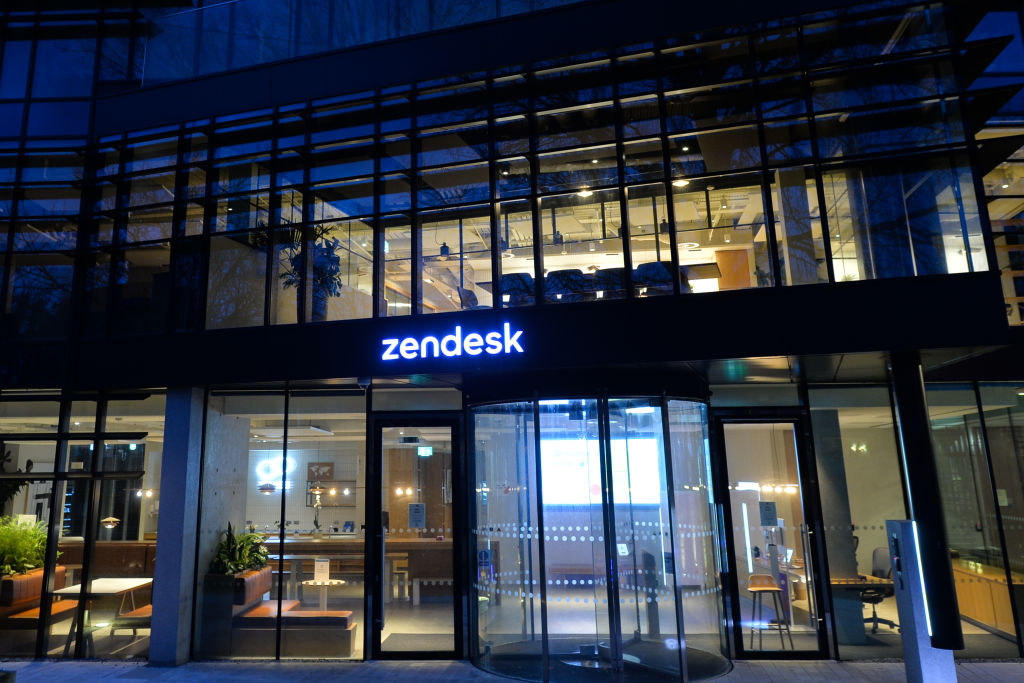
On Friday, 29 January, 2021, in Dublin, Ireland. (Photo by Artur Widak/NurPhoto via Getty Images)

Image Credits: NurPhoto / Getty Images

Zendesk is doing very well: in 2021, revenue increased 30% year-over-year. A glance at the outlook section of its earnings announcement suggests that more growth is in store.

But on the same day it released those results, the company also rejected a proposed $17 billion acquisition by a consortium of private equity firms, saying the deal “undervalued the company.”

At the time, Zendesk was angling to purchase Momentive/SurveyMonkey for $4.13 billion, but last Friday, we learned that Zendesk’s shareholders weren’t as eager to enter the customer experience business as CEO/founder Mikkel Svane.

Now that the Momentive deal is dead, Ron Miller and Alex Wilhelm performed a post mortem.

“Was Momentive’s potential revenue sufficient to justify the price tag that Zendesk was ready to pay, its plunge into the customer experience market, and the fact that it would have led the acquirer away from its core customer service orientation?

What’s your BNPL startup really worth?

Consumers are burdened by stagnant wages and inflation, but many don’t mind carrying some debt around if it means they can possess the new hotness.

This behavior is boosting the fortunes of buy now, pay later (BNPL) companies, but their valuations will hinge on finding the right mix of market, customer base and revenue model, reports Alex Wilhelm in his analysis of Australian BNPL company Zip’s proposal to buy rival Sezzle.

Sezzle and Zip’s revenue are worth much less than larger rival Affirm’s, which could be attributed to the latter’s presence in the U.S., and its higher take-rates.

“But the huge gap in worth between BNPL revenues at Zip and Sezzle and Affirm should give BNPL startups pause,” he writes.

“Is your startup more like Affirm or more like its smaller competitors? And if you are priced more like Affirm, why? Do you deserve the premium?”

Implement differential privacy to power up data sharing and cooperation

climbing ropes connected by carabiner

Image Credits: massimo colombo (opens in a new window) / Getty Images

Preserving customer privacy is paramount, but as increasing amounts of data intermingle, many organizations are falling short.

Differential privacy is the answer to this problem thanks to an approach that involves “sharing data processing results combined with random noise so that the output does not tell a would-be attacker anything statistically significant about a target,” write Maxime Agostini, the co-founder and CEO of Sarus, and Tianhui Michael Li, founder of The Data Incubator.

Agostini and Li explain how differential privacy works, how to select the right architecture to implement it, and facilitate data sharing, and include a list of open source libraries companies can get started with.




Nayya nabs $55M to expand its recommendation and personalization engine for healthcare and other benefits

Digital health came into its own during the COVID-19 pandemic, providing a socially distanced way for people to use apps, smartphone cameras, wearables and web services to connect with physicians and handle many other tasks that previously would have required attending meetings in person. That’s opened the door to a number of other online tools to enter the conversation with the promise of giving users not just a straight replacement but potentially better service than they might have experienced without it. In the latest development, a startup called Nayya Health — which has built a recommendation engine to help people choose benefits, as well as an RPA-style digital assistant to help users navigate the sometimes complex waters of insurance, clinical and workplace administration when claims do need to be made — has closed a round of $55 million.

The Series C equity round is being led by ICONIQ Growth (the VC that makes later-stage investments on behalf of a number of family offices for high-profile tech leaders such as the Chan Zuckerbergs), with Transformation Capital, Felicis Ventures and SemperVirens also participating. Iconic, Felicis and SemperVirens are all existing backers, while Transformation is a new investor with this round. The startup has been on a fundraising tear in the last year, a mark of how its service has grown during COVID-19. Since we covered a seed round for Nayya in July 2020 — five months into what became a pandemic and global shutdown — the startup went on in 2021 to raise two more rounds totaling $48 million.

Sina Chehrazi, Nayya’s co-founder and CEO, gave me a relatively wide range for the current valuation in an interview, between $500 million and $750 million. The company has however confirmed that it has doubled its valuation since the last round, when PitchBook estimated to be about $235 million, putting the actual number now likely closer to $500-600 million.

Those numbers, given they are just paper valuations, are more useful just as a marker of Nayya’s growth than telling the full story of the startup. Chehrazi tells me that he and co-founder Akash Magoon (who is the CTO) created Nayya to fill what they saw as an information vacuum in the healthcare industry, in particular in the privatized U.S. system.

Last year, he said, some 600,000 people filed for bankruptcy protection due to healthcare issues — meaning, they were being crippled by the costs and managing them. “And many of these, 63%, had insurance,” he noted. Part of the problem is the lack of information about getting the best out of a policy, combined with the fact that healthcare costs are spiraling.

“We’ve been living in a world where if you go to a hospital on the right or left side of a street, you might be paying a different amount of money for the same procedure,” he said. “People cannot understand their healthcare on the best days and struggle to use on their worst days.”

While he acknowledges that a lot of this is also institutional and should be laid at the feet of lawmakers, while that’s being worked through, Nayya’s approach, he said, is “solving the pain today, by helping people choose the right plans and use them.”

Lawmakers still have a lot to do to make healthcare affordable and usable by more people in the U.S., but they have already taken steps to make it a legal requirement for clinicians to be more transparent about costs and patient data, and that has provided an entry point for companies like Nayya (and other health tech companies) to leverage that for its algorithms.

Nayya’s algorithmic recommendations-meets-RPA engine is used by individual consumers, but its customers are employers, who contract with the company to provide its engine (and app) to its employees both to help them figure out what benefits they should take, based on their health histories and other factors such as existing doctors and which networks they are in; and then when claims are being made, it helps those individuals also figure out how to handle those to get the most out of those exchanges.

More recently, Chehrazi said that Nayya has also been contracting with insurance companies, which are getting leaned on by bigger employees to provide more transparency to employees as part of their service package.

Most importantly, he said that Nayya has no intention of becoming an insurance provider itself, describing the company’s role as more akin to being like a “Turbo Tax” for managing benefits, there to assist and making money out of that service alone. (It contacts as B2B and charges a flat monthly fee per user, regardless of how often the service is used, so no incentive is worked into the model to encourage more or less usage.)

On the basic level of per-user growth, the company has seen revenues grow 7x since last year and will grow another 3x this year, Chehrazi said. It doesn’t disclose customer numbers but said that it works both with large enterprises and companies with as few as 50 employees. It will also over time launch a product targeting freelancers and sole traders that might want to use its recommendations system — although it’s not clear if that will be sold through the companies where those people contract for work, or directly to those individuals.

Over time, Nayya has expanded into more than healthcare into providing recommendations and administrative assistance for other benefits that organizations provide to employees, including life insurance, financial planning (e.g. around pensions or for those using their salaries to regularly pay off student loans), and ancillary services like mental health and wellness.

“We believe Nayya’s exceptional growth and adoption in just over two years is a true testament to the strength of the sophisticated data-driven platform and growing market need. It’s becoming increasingly critical for employees to be equipped with effective and data driven tools to make more informed benefit decisions both at enrollment and throughout the year,” said Caroline Xie, general partner at ICONIQ Growth, in a statement. “We are thrilled to continue supporting the Nayya team as they extend their mission.”

“Investing in the future of benefits is extremely important, especially as the healthcare landscape and expectations of consumers are changing so rapidly,” added Mike Dixon, managing partner at Transformation Capital. “Nayya has successfully integrated Artificial Intelligence into the entire benefits experience – creating a consumer-driven platform that erases benefits-related confusion and stress – while solving a massive challenge almost all businesses and their employees face.”


5 investors discuss what’s in store for venture debt following SVB’s collapse

There are many questions around the implications of Silicon Valley Bank’s (SVB) collapse that won’t be answered for a long time. But there’s...