Friday, October 1, 2021

TechCrunch+ roundup: Alternative financing, Web3 adoption, India’s hot Q3 fundraising

Web3 is still taking shape, so it is hard to define.

At TechCrunch Disrupt, Houseparty founder Ben Rubin emphasized decentralization as Web3’s central feature. In today’s Web 2.0, individuals give money and personal data to network operators in exchange for access to information.

“In Web3 there is a possibility — not saying that it’s going to actually 100% gonna happen — but there is a possibility where the network owns the network,” said Rubin. “And that’s, I think, the simplest way, the shortest way I can explain it.”

In conversation with reporter Taylor Hatmaker, Rubin said NFTs show that individuals can benefit from Web3 adoption, while decentralized finance and cryptocurrency trading are more commercialized forms.


Full TechCrunch+ articles are only available to members
Use discount code TCPLUSROUNDUP to save 20% off a one- or two-year subscription


“It’s not going to be perfect, but it’s going to be a better incentive alignment than we have right now. And that will create competition on incentive alignments with their users,” said Rubin.

It’s an interesting discussion that helped me better understand the topic, although I will admit that the notion of public networks where everyone is presumed to be trustworthy is still a bit of a mind-bender.

We have many more Disrupt recaps to come in the next few days, so stay tuned.

On a personal note: I celebrated my second anniversary at TechCrunch yesterday, and I’d like to thank the incredible team I work with for making all of this possible!

Thanks very much for reading,

Walter Thompson
Senior Editor, TechCrunch+
@yourprotagonist

Early Q3 indications show India’s startup ecosystem is going gangbusters

It’s the beginning of Q4, so Alex Wilhelm couldn’t help but get an early start on parsing Q3 data. For Thursday’s Exchange, he looked at preliminary data out of India and China.

“The trendlines appear clear,” he writes.

“One more great quarter from India and a modest decline in China could see the former dethrone the latter for second place in the global startup market fundraising ranks.”

Scaling across Series A to C

Young man jumping between rocks

Image Credits: Mike Powell (opens in a new window) / Getty Images

It’s hard to find actionable, proven advice for scaling startups.

That’s because only 7% of the startups that raise seed rounds are able to grow their companies enough to land a Series C investment, according to a Dealroom study.

To create a framework for founders who are charting a path from $1 million to $25 million in annual revenue, Arthur Nobel, a principal at Knight Capital, conducted 47 interviews with founders and investors who’ve taken startups from Series A to C.

More than an overview, the article offers approaches for navigating the challenges of T2D3 (triple, triple, double, double, double) growth, specific hiring recommendations and other strategic insights.

As a bonus, the post also includes steps and visualizations you can use to create your own scaling roadmap.

“The takeaway is to initially figure out in which stage your company and departments are in and only do what is required for that stage,” writes Nobel.

Which form of venture debt should your startup go for?

Choosing a path, two doors, two roads

Image Credits: Olemedia (opens in a new window) / Getty Images

Startup founders have more options than in years past when it comes to fundraising, thanks in large part to a surplus of liquidity. Besides traditional VC, crowdfunding, venture banks and venture debt funds are all viable options.

In a detailed overview of venture debt options, Andy Weyer, managing director of technology at Runway Growth Capital, shares three use cases depicting how debt capital can benefit borrowers hoping to retain leverage for future rounds or access working capital.

“Think of capital availability as a spectrum, from low risk and low return (venture banks) to high risk and high return (venture capital), with venture debt funds sitting somewhere in the middle,” advises Weyer.

3 questions startups must answer before taking on their largest competitors

Three question marks surrounded by pencils on grunge background

Image Credits: benjaminec (opens in a new window) / Getty Images

There is no level playing field in capitalism, but it is easier than ever for a scrappy startup to go head-to-head with industry leaders.

Warby Parker is reshaping consumer expectations about eyewear, just as Poshmark and ThredUp made a direct run at eBay and the luxury resale market.

In a world where customers are more loyal to value than branding and 18-month roadmaps are the norm, startups that develop solid competitive plans have an advantage, says Sudheesh Nair, CEO of business intelligence company ThoughtSpot.

“Successful startups will inevitably draw the attention of powerful incumbents in their industry,” he writes for TechCrunch+. “They will fight you, but if you are positioned well for the challenge there has never been a better time to prevail.”

The death of identity: Knowing your customer in the age of data privacy

Magnifying glass on a large group of people

Image Credits: alphaspirit (opens in a new window) / Getty Images

End users and regulators are increasingly unhappy about how tech companies slice and dice our personal data. Many countries and regions have been enforcing new privacy guidelines, and consumers are embracing privacy features that make it harder to track them for targeted advertising and market research.

According to Ted Schlein, a general partner at Kleiner Perkins who focuses on cybersecurity and enterprise software, companies should consider shifting to pattern analysis.

“Thanks to rapid advances in artificial intelligence (AI) and machine learning (ML), companies can process and interpret first-party data in real time and develop actionable behavioral intelligence,” he says.

“Real-time analysis can help companies identify patterns of behavior to understand how customers engage, and why — all while protecting their privacy.”

What Amplitude’s direct listing says about IPO pops (and how startups can avoid them)

Alex Wilhelm could not be more clear about the audience for this edition of The Exchange:

“What follows is a dive into the IPO pricing issue and how startups are looking to get around the matter through alternative listing mechanisms,” he writes, adding that the column closes with notes from an interview with Amplitude CEO Spenser Skates.

“If you care about the value of private companies and how they are priced, this is for you. If you do not, please read anything else; you are going to be bored out of your socks.”

NBA Top Shot creator on the NFT craze and why Ethereum still isn’t consumer-friendly

Roham Gharegozlou has been betting on the potential success of NFTs for years. This year, it happened.

Gharegozlou and the team at his startup, Dapper Labs, shipped the blockchain world’s first popular game, CryptoKitties, back in 2017.

The startup then launched NBA Top Shot late last year, and it promptly caught fire and brought worldwide attention to the crypto collectibles space.

Lucas Matney caught up with the Dapper Labs CEO at TechCrunch Disrupt 2021 last week to discuss the challenges facing the crypto space, the future of Ethereum and how quickly NFTs blew up this year.

“I knew it would be fast, but NBA Top Shot went from 4,000 to 400,000 users in a matter of weeks,” Gharegozlou said.

Employers are consumer edtech’s next beta test

Top view of African American adult woman laying on ground and using laptop at home

Image Credits: Nadasaki (opens in a new window) / Getty Images

Two things are true: Edtech companies are looking for ways to grow their valuations, and a strikingly high percentage of employees are dissatisfied in their current jobs and hope to make a change.

“Employers are under fresh pressure to retain talent, which has made some turn to more comprehensive and creative benefits,” writes Natasha Mascarenhas in an article about new offerings from MasterClass and Outschool meant to help workers develop soft skills.

“Think a class on the art of negotiation by Chris Voss, former FBI hostage negotiator, or a lesson on effective and authentic communication by Robin Roberts, a ‘Good Morning America’ anchor,” she reports. “The value proposition, therefore, is more about complementary skills that could develop or upskill a workforce.”

Warby Parker makes it clear that direct listings are unicorn-friendly

Image Credits: Warby Parker

Alex Wilhelm takes a look at direct-to-consumer eyewear company Warby Parker, which direct listed this week.

“The company not only listed, but did so at a price point that was above its final private-market valuation, and its shares appreciated rapidly during its first day of trading,” Alex writes.

“For the DTC market, the results partially combat the odor that 2020’s ill-fated Casper IPO left lingering around the startup business model category.”

Dear Sophie: Any advice for getting media coverage for my startup?

lone figure at entrance to maze hedge that has an American flag at the center

Image Credits: Bryce Durbin/TechCrunch

Dear Sophie,

I’m an entrepreneur working on building up my qualifications for the EB-1A green card (or maybe an O-1A).

Toward that goal, I’ve been trying to get media coverage about my startup, but it’s competitive out there! Any advice?

— Craving Coverage

Startups have more options than ever to lower their reliance on venture capital

Following last week’s TechCrunch Disrupt event, Alex Wilhelm and Anna Heim considered startups’ various options for fundraising beyond venture capital.

They pulled notes from a Disrupt panel on revenue-based financing “to help frame our thinking around venture capital investment, and when startups may want to pursue other methods of funding.”

“With alternative capital concerns like Pipe attracting top talent while expanding to new markets, and Clearbanc rebranding to Clearco while raising $100 million earlier this year, it’s clear that the market for funds outside of traditional venture checks is maturing. Let’s talk about it.”


Intel Core i9-12900K scores high marks with overclocked DDR5 memory

A recently leaked Intel Core i9-12900K benchmark appears to show it crossing the 30,000 mark in Cinebench R23 test, but that same leaker is now showing the CPU's performance with new DDR5 RAM – and the results are impressive, if true. 

Newly published screenshots from REHWK on Twitter, first reported by VideoCardz, show the CPU running alongside the DDR5 memory overclocked to 8000 MT/s.

See more

The screenshots feature the CPU-Z software with a Gigabyte’s DDR5-6200 memory kit, according to REHWK. The Intel Core i9-12900K has been overclocked to 4004 MHz, which translates to 8008 MT/s. 

RAM timings are at 50-50-50-125-150 for CL, tRDC, tRP, tRAS, and tRC. The system used for testing was the Gigabyte Z690 Tachyon motherboard, which is designed for overclocking.

Overclocking is when CPUs use different algorithms for boosting its maximum frequency, which improves the numeric values. Benchmark tests assign scores based on speeds for a CPU’s cores and threads, with higher numbers meaning faster RAM.

CPU-Z is a type of benchmark test used to test a lot of component features, including the RAM access speed of a CPU. Timing tests are for RAM timings, which refers to maximum transfer rates in a CPU. Each category refers to a different aspect of RAM being tested, and in this case the smaller the numbers the better.

There are two types of benchmark tests: single-threaded/core or multi-threaded/core. Single-threaded/core tests are when Cinebench R23 uses only one of the CPU cores/threads to test out speeds, and these are useful to see how fast a CPU will run for simple tasks such as web-surfing, video playback, office tasks, or programming.

Multi-threaded/core tests use all available cores/threads to test out speeds, which is vital for tasks with heavy RAM usage such as gaming, video editing, or 3D modeling. In this case, the Intel Core i9-12900K has 16 cores and 24 threads that were used for this benchmark test.

Recently, a major accidental leak from the MSI website indicates that the Intel Core i9-12900K could be released November 4 of this year. And, according to leaked benchmark comparisons, the Intel CPU handily beat out the AMD Ryzen 9 5950X.


Firefox on Android is getting a super-useful time saver update

Mozilla is making it easier to access your saved passwords from its browser as part of a new update rolling out soon for Firefox on Android.

To commemorate this year's Cybersecurity Awareness month, the company has added several new features to Firefox for Android designed to help keep its user's passwords safe online.

Users of Mozilla's browser will be able to seamlessly access any of the passwords saved in Firefox's password manager. This means that they'll be able to log into any of their online accounts using their Firefox saved passwords without even having to open a webpage.

At the same time, users can also leverage biometric security, such as your face or fingerprint, to unlock the app and safely access the credentials for their online accounts.

Firefox saved passwords

In addition to making it easier to access your saved passwords, now when you create an account for any app on your Android smartphone, you can also create and add a new password which will be saved directly in Firefox. From here, you can use this new password on both mobile and desktop when signing into the online account associated with it.

Mozilla is also bringing the ability to autofill passwords on Android and users will be able to use any password saved in Firefox to log into their online accounts. However, if you have a Firefox account, then you'll be able to sync all of your passwords across both desktop and mobile devices.

Access to Firefox's password manager on Android can be further secured by using your fingerprint or face so that no one else using your smartphone can use your saved passwords to login to your online accounts.

While these new password features can help protect your online accounts, you can secure your device further by signing up for Mozilla VPN and using the company's VPN service to encrypt data sent from your smartphone. 


Our solar system may have a hidden planet beyond Neptune – no, not that one

There are eight recognized planets in our solar system, four inner rocky planets and four outer gas giants. But beyond the orbit of Neptune, dozens of dwarf planets the size of Pluto or smaller populate a region known as the Kuiper Belt, and new computer models show there may be something even bigger lurking out there – or at least there might have been in the past.

In a paper in the Annual Review of Astronomy and Astrophysics this month, Brett Gladman of the University of British Columbia and Kathryn Volk of the University of Arizona argue that new models indicate that the likelihood that a Mars-sized planet orbiting in the Kuiper Belt region is at least 50%, though they also claim that it was ejected from the solar system entirely at some point in the past.

This would be a different planet then the theoretical one currently being called Planet Nine, which is believed to be a Neptune-sized gas giant far out beyond the Kuiper Belt.

To get a better sense of how the solar system formed, researchers like Gladman and Volk typically use powerful computers to run simulations with different variables to see how changes in any one variable affects the kind of solar system that would result. In several of Gladman and Volks' simulations, something like our solar system forms when there is ninth, rocky planet orbiting in the Kuiper Belt.

"I agree that it is likely that a Mars class planet was there initially,” David Nesvorny, a Southwest Research Institute planetary scientist, told Inverse, “but the question is whether it has survived and if we have any evidence for it.”

Other planetary scientists are also finding similar results in their simulations, including Kedron Silsbee, of the Max Planck Institute for Extraterrestrial Physics, and Scott Trmaine, of the Institute for Advanced Study.

In these simulations, the outer planets were not in their original orbits, and sometimes not even in the same order, and the simulations suggest that the gas giants might have had additional help to get to their current positions. 

Some other large object from the inner solar system might have been pulled out by the gas giants and eventually pushed out towards the periphery of the solar system, or even out of it entirely.

"Our simulations found that in about half of the cases, all of the Mars-scale planets in the outer Solar System were ejected into interstellar space,” Tremaine said. “But in the remaining half, one ‘rogue’ planet was left in an orbit similar to that of the detached population of Kuiper Belt objects."


Analysis: we really don't know a lot about the solar system we inhabit

We know a lot about the solar system, but sometimes we simply don't know what we don't know, which makes understanding the full history and evolution of our home system hard to decipher.

While the order of the planets, with the four rocky worlds on the interior and the four gas giants on the outer half might seem like a natural ordering, that is really only because it's the one we grew up with as a species.

Now that we've observed other stars and their exoplanets, our solar system isn't like the majority of solar systems in the galaxy. A system like ours, with rocky inner planets and large gas giants on the outer part, only make up 10% to 15% of the solar systems out there.

What's more, we don't even know if we have an accurate census of the planets in our own solar system, with the possibility of a Mars-sized rocky world out beyond Neptune or a Neptune-sized gas giant, the currently-theorized Planet Nine, even further out than the Kuiper Belt both being possible planetary candidates.

It might take years or even decades before we know for sure, if ever. After all, space – even our tiny part of it – is a very large place.


Reid Hoffman on the evolution of ‘blitzscaling’ amid the pandemic

When LinkedIn co-founder and Greylock partner Reid Hoffman first coined the term “blitzscaling,” he kept it simple: It’s a concept that encourages entrepreneurs to prioritize speed over efficiency during a period of uncertainty. Years later, founders are navigating a pandemic, perhaps the most uncertain period of their lives, and Hoffman has a clarification to make.

“Blitzscaling itself isn’t the goal,” Hoffman said during TechCrunch Disrupt 2021. “Blitzscaling is being inefficient; it’s spending capital inefficiently and hiring inefficiently; it’s being uncertain about your business model; and those are not good things.” Instead, he said, blitzscaling is a choice companies may have to make for a set period of time to outpace a competitor or react to a pandemic rather than a route to take from idea to IPO.

That doesn’t mean startups should avoid prioritizing breakneck speed, especially in industries like fintech and edtech, where the pandemic spotlighted a lot of potential. Instead, Hoffman thinks the pandemic’s real impact on his definition is that “the benchmark for what you may need to do in order to outpace your competitors to scale in an ecosystem may have changed.”

A lot of new money

Hoffman’s broadened view of blitzscaling blends well with his firm’s recent announcement of a $500 million seed fund. The close came weeks after Andreessen Horowitz closed its own $400 million seed fund.

Greylock claims that its new fund is “the largest pool of venture capital dedicated to backing founders at one,” and explicitly said that it is “willing to write large seed checks at lean-in valuations, which gives companies more runway to hit milestones without taking on additional dilution.” It’s fair to say that Greylock’s checks could help seed-stage startups afford to blitzscale while still prioritizing runway and other business-oriented resources.


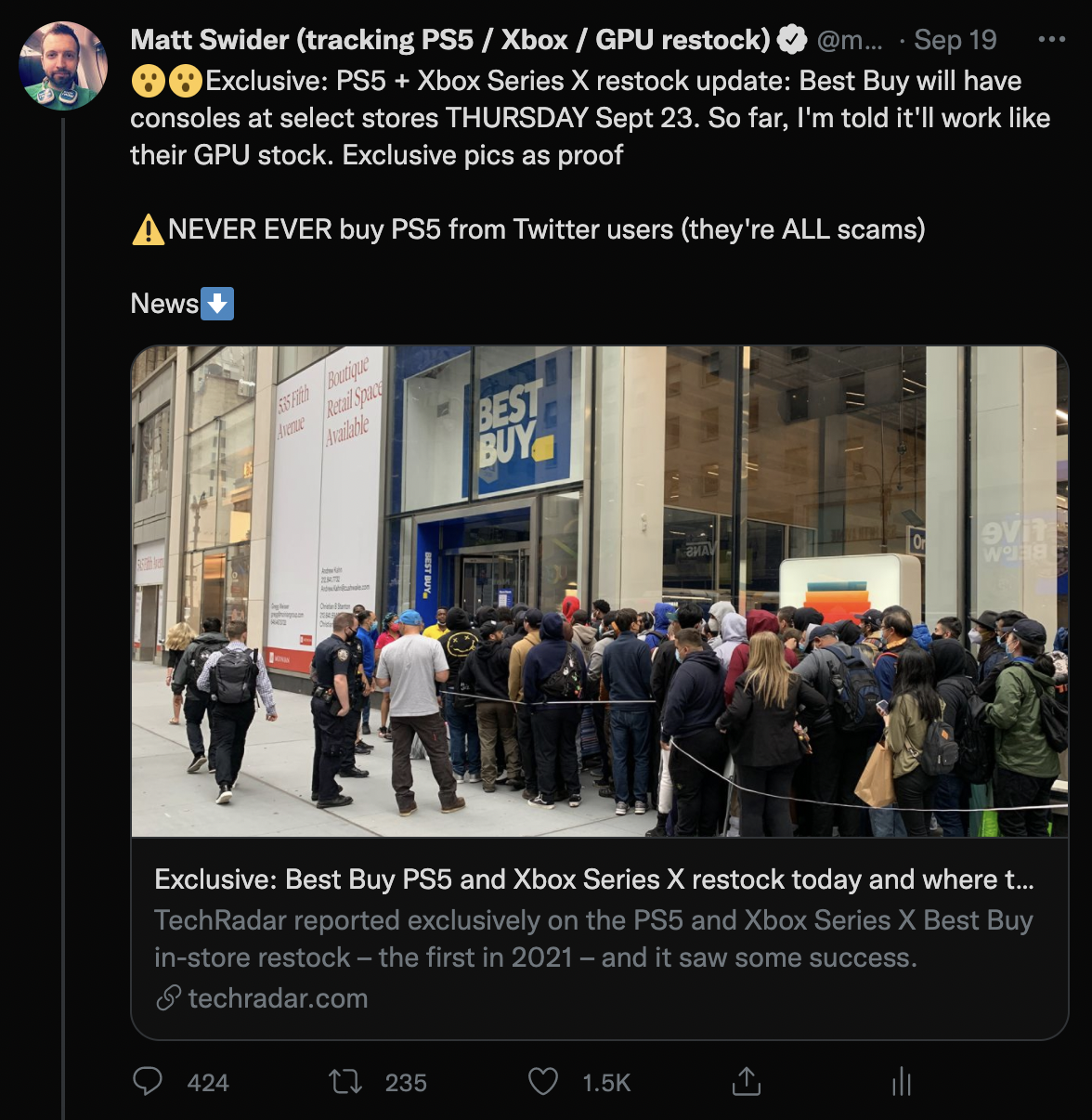
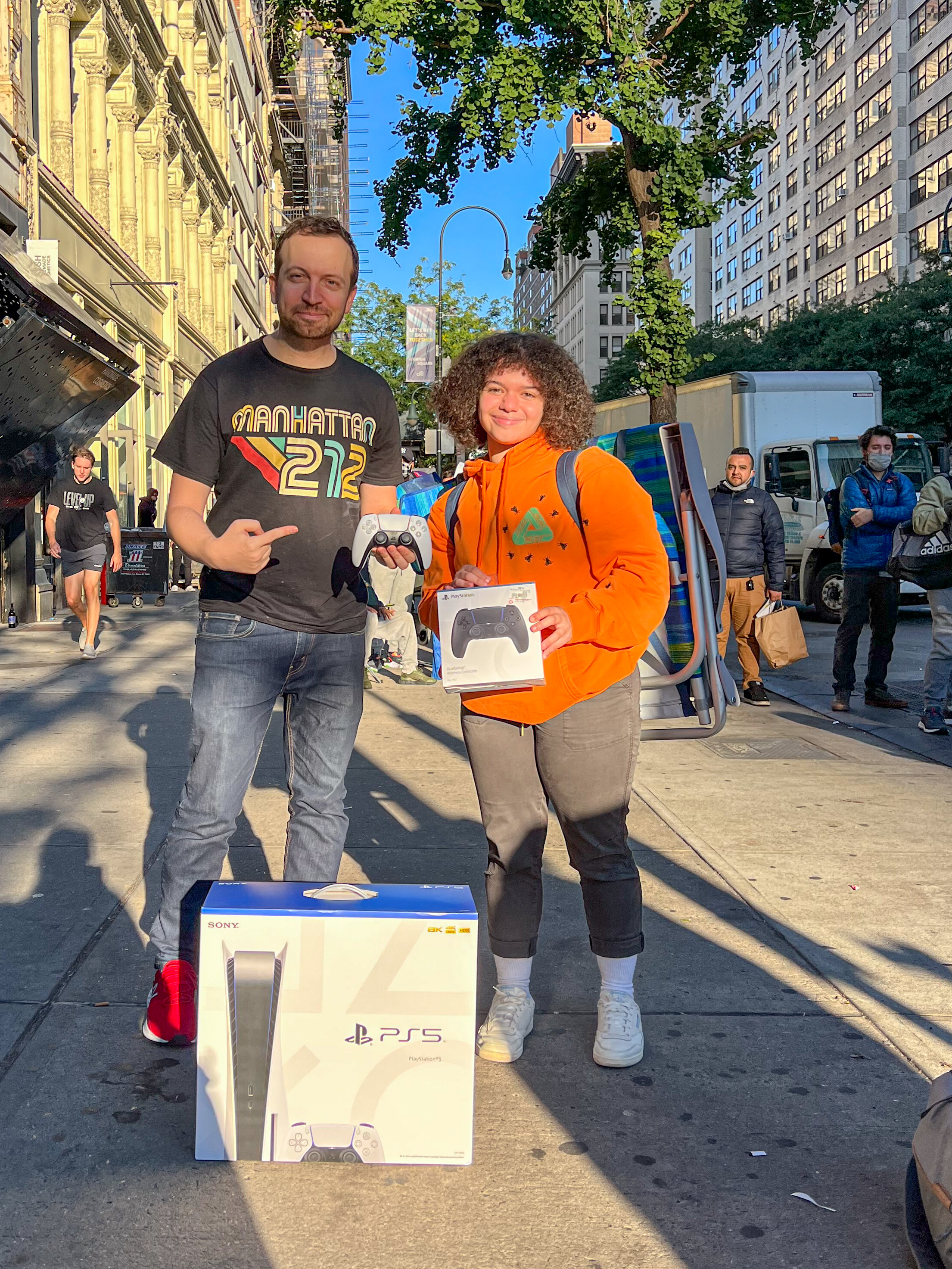
PS5 restock at Best Buy right now, Target this morning with Twitter tracker updates

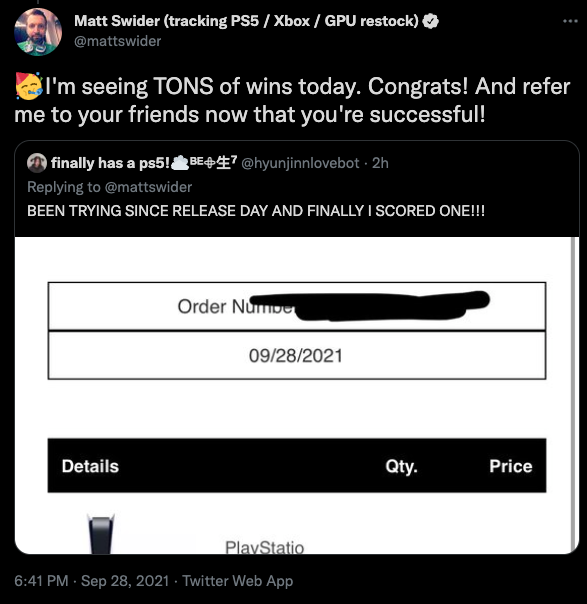
Update: The Best Buy PS5 restock was this afternoon and Target this morning, and if you didn't get either, you need to follow our PS5 restock Twitter tracker Matt Swider. Follow and turn on notifications for alerts, as Matt tweets when the PS5 is in stock in US, including stores like Target, Best Buy, GameStop and Walmart. While other sites reported the PS5 restock at Target was 'likely' yesterday at a very odd time, we put our accurate news here at TechRadar to gain your trust. Matt Swider has helped. We're faithfully tracking the next PS5 restock and offering real-time alerts, though weekend restocks are rare.

Matt has helped over 88,000 people get a next-gen console so far with these alerts:

How to buy a PS5 restock

► When? Follow our PS5 restock Twitter tracker Matt Swider and turn on notifications for instant restock news. It's the fastest way to get PS5 updates.

► Never buy from other Twitter users – ever. They're all scams. Only buy from the US stores Matt alerts you about. No one will sell a PS5 for just $550.

► Step-by-step YouTube help: Subscribe to Matt's PS5 restock live stream to get YouTube notifications and tips on how to car the console.

► Sony Direct email invite? Sign up for Matt's weekly newsletter to get insight into how to open yourself up to the email invite from Sony.

PS5 restock news today, Friday, October 1

PS5 restock Matt Swider

(Image credit: Future)

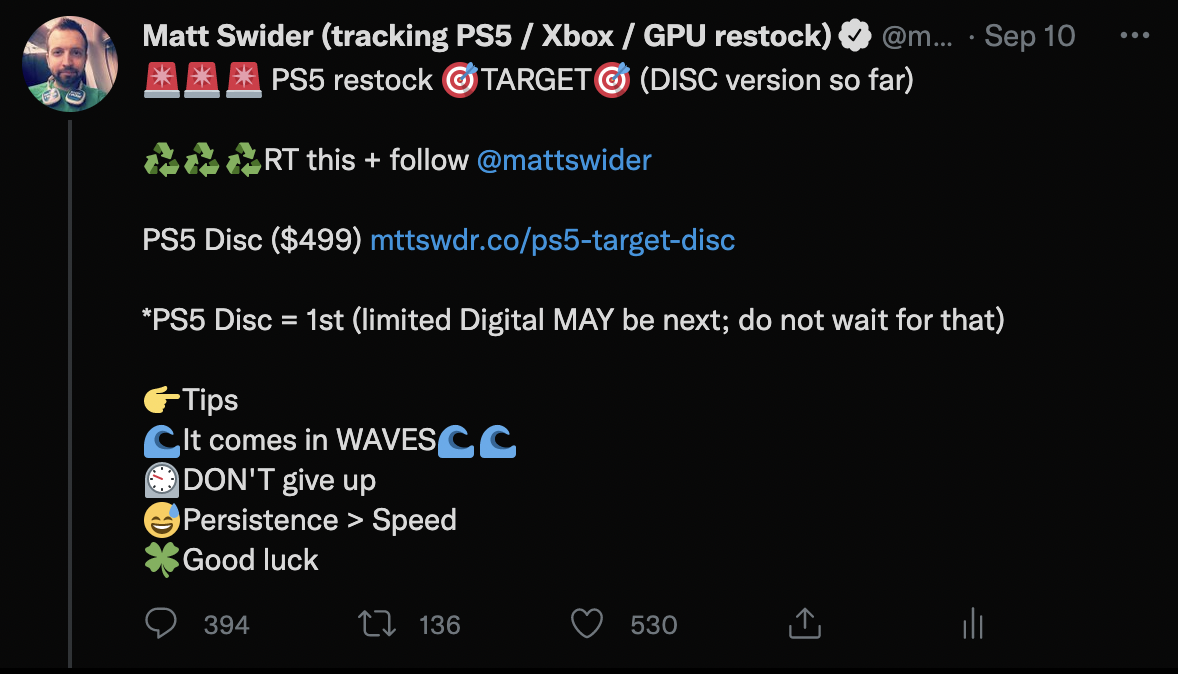
We saw both Best Buy and Target PS5 restock today. Target happened after three weeks of the US retailer not having the Sony console in stock. The $499 PS5 Disc console was for sale at 7:49am EDT, according to Matt Swider's tweet, while the $399 PS5 Digital Edition went on sale at 8:11am EDT in much smaller quantities (we know this since it sold out quickly and didn't show up in some regions of the United States).

Best Buy restocked both the PS5 Disc and PS5 Digital in a surprise restock at 1:14pm EDT. Our PS5 restock Twitter alert from Matt Swider is embedded below as proof:

See more

PS5 restock news has ramped up in recent weeks with a lot of people finally securing the PlayStation console either online or in stores, more than a year after pre-orders first went live.

Best Buy PS5 restock: pivot between online and in-store

We did say Best Buy will pivot between online and in-store restocks, and today was proof of our reporting. The Best Buy PS5 restock happened online at 1:14pm EDT, with both PS5 Disc and PS5 Digital Editions in stock.

This was the first time Best Buy used its new verify system for a PS5 restock (it first used the enhanced checkout system earlier this for the Xbox Series X). One week prior, Best Buy had an in-store restock on September 23, 2021 (the first of any major retailer in 2021), after it failed to have the console online for more than a month. It was odd because Best Buy stocked the PlayStation 5 almost weekly before that, so clearly it was changing up its strategy.

What we got right: This doesn't mean the retailer will continue to have in-store restocks of the PS5 from here on out. It may do what it does with the GPU restocks: alternating between online restocks through its website and in-store restocks on select Thursday mornings. In fact, we saw an Xbox Series X restock on Monday, September 27, so there's some precedent for online console restock dates to continue.

Best Buy restock time online: The date is harder to nail down outside of the fact that it's never in stock during the weekends or evenings. But the official restock time always falls between 9:37am EDT and 5:05am EDT, so destined for working hours in the US Eastern time zone. It's a big window, sure, but one we can easily track on Twitter.

PS5 restock Twitter alerts in US from Matt Swider

(Image credit: Twitter / Matt Swider)

The big news is that the PS5 is starting to show up in stores. No, not on shelves, but sold in stores like GameStop and Best Buy with lines wrapped around the block. 

The Best Buy RTX 3080 GPU restock events set the stage for the retailer to do the same for PS5. There have only been two in-store PS5 restocks at major American retailers, so don't expect too many of those. We had exclusive news stories about both the Best Buy in-store PS5 restock and the GameStop PS5 restock in-store event, so we'll send out alerts ahead of time so you can line up. But online PS5 restocks are more frequent.

We had on-the-ground reporting of both restock events – pretty much the only tech website doing so – and many of the people follow Matt's PS5 restock Twitter account.

PS5 restock GameStop in-store event Matt Swider

(Image credit: Matt Swider / Instagram)

Online PS5 restocks remain more frequent

PS5 restocks in person are still extremely rare, as we continue to see retailers sell the console online. Namely, Walmart, Target and Sam's Club do popular restocks that sell out in minutes.

Thursday is usually the most active day. Walmart usually restocks on a Thursday, though not every Thursday and it's back-ordered right now, while Antonline, a little-known retailer with good customer service and fast shipping, has guaranteed weekly restocks of next-gen consoles (so it could be an Xbox Series X restock on some weeks).

Target prefers Friday restocks, and today proved just that – the fifth Target PS5 restock on a Friday in a row. Target always restocks the PS5 restock in the morning, pretty much between 7am EDT and 8am EDT. In fact, there's been PS5 stock only at that time (except once) in 2021.

There hasn't been much news at club retailers in the United States. Costo hasn't had been good source of PS5 stock in several months and may be holding back until Christmas 2021, which makes sense. Sam's Club did a restock overnight this week, but PS5 availability there has been limited. 

We can confirm that some retailers are purposely holding back consoles until closer to the holidays: think early November to meet ongoing demand and tie into early Black Friday deals. So you should find a console soon enough – if you keep up with the PS5 restock news and alerts.

PS5 restock Twitter tracker Matt Swider tweet for Sony Direct

(Image credit: Twitter / Matt Swider)

Learn from our GameStop PS5 restock live stream

PS5 restock tutorials on YouTube are the best way to figure out how to checkout at each store in the US, and they're all different. We went through the step-by-step instructions on how to buy a PS5 at GameStop with a YouTube live stream.

You can actually see Matt 'cart' (almost checkout with) a PS5 Digital console bundle (he didn't because he doesn't need another PS5 console).


Target PS5 restock today

  • Next Target PS5 restock date: Probably three weeks from now
  • Last Target PS5 restock date: Friday, October 1 at 7:49am EDT
  • How to buy PS5 from Target: Follow PS5 restock tracker Matt Swider

The Target PS5 restock date was today, October 1 and we knew that the retailer had just enough consoles to do a small restock thanks to Target employees around the country sending us photos. It was enough for a small PS5 drop, with about 20 PS5 Disc consoles per store.

Target PS5 restock time: While the retailer has shifted its PlayStation 5 restock day in the past, the Target PS5 restock time is consistent: in 2021, it's always been 7am EDT to 8am EDT, with one exception: two restocks ago happened a little outside that window at 8:14am EDT. The latest restock for Friday, October 1 was 7:49am EDT.

Target PS5 restock advice: Don't pass up PS5 Disc, which is almost always in-stock first for PS5 Digital, which often goes in stock second. PS5 Digital stock is extremely low every single time – and sometimes PS5 Digital doesn't come in stock at all.

PS5 restock Target Twitter alert from Matt Swider

(Image credit: Twitter / Matt Swider)

GameStop PS5 restock dates

  • First in-store GameStop PS5 restock date for 2021: Thursday, September 30 at opening
  • Last online GameStop PS5 restock date: Tuesday, September 28 at 11am EDT
  • How to buy PS5 from GameStop: Follow PS5 restock tracker Matt Swider

The last GameStop PS5 restock happens in stores yesterday, Thursday, September 30, giving people a chance to buy PS5 consoles bundled with a game and waiting in line on Thursday morning (or even earlier). They had a chance to buy the console after spending $705 (everything is at MSRP for the extras included).

However, this past Tuesday demonstrated that GameStop isn't giving up on online restocks. It sold four PS5 bundles through its website: two PS5 Disc bundles and two PS5 Digital bundles. Again, these included extras and you needed to be a PowerUp Pro Rewards member ($15 a year), but that cuts down on resellers scooping up the PS5 for MSRP and profiting off of the very console you're trying to buy.

PS5 restock Twitter alerts in US from Matt Swider

(Image credit: Twitter / Matt Swider)

Sony Direct PS5 restocks happening more often

Sony PlayStation Direct is changing things up, with a PS5 restock dates happening more often, both with email invites to select (randomly picked PSN users) and wider virtual queues where anyone with a PSN account has a chance to buy the PS5.

It's still difficult to get beyond 'more than an hour wait' time, but as more and more people get their Sony PS5 console of choice (they're both on sale for MSRP through Sony Direct, thankfully), it'll get easier.

We'll continue to send out PS5 restock alerts from Sony Direct since they've been among the most successful. This Sony company must know someone who makes PS5.

PS5 restock Twitter alerts in US from Matt Swider

(Image credit: Twitter / Matt Swider)

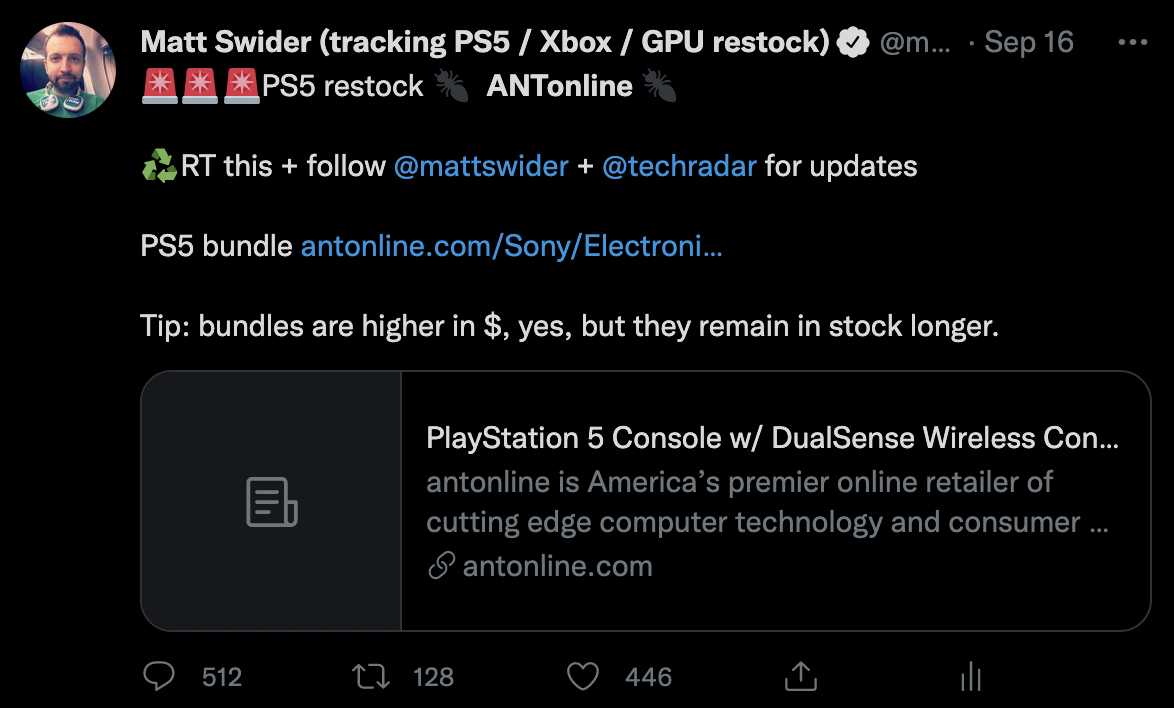
Antonline PS5 restock – one next-gen bundle a week

Antonline has been consistent with its PS5 restocks, promising – and mostly fulfilling – a next-gen console restock once per week. We say mostly because sometimes it has the Xbox Series S in there, which isn't as difficult to find in stock compared to the PS5. Anyway, because Antonline had a PS5 Digital bundle last week, there's no guarantee it'll pick a Sony console this time, but it's a next-gen console to be sure.

Keep in mind: Antonline PS5 bundles will look pricey at first, but they're at face value for all of the games and accessories included. While consoles still sell out in about three minutes (or less), the bundles slow down resellers, who can't easily profit off of the extras. So it's a benefit to real gamers who want to play the bundled games.

PS5 restock Antonline Twitter tracker Matt Swider

(Image credit: Twitter / Matt Swider)

Walmart PS5 restock dates on Thursdays

Will the PS5 restock at Walmart next week? We're always checking with our sources (we usually know a little bit in advance), but we know two things: it favors Thursdays (every Walmart PS5 restock has been on a Thursday except for one in 2021), and we know for a fact that its severely back-ordered PlayStation 5 shipments are making their way to US consumers sooner than the slated November dates (yes, not everyone has seen their 'order processing' status hasten, but a lot of people have). 

Walmart takes a long time to ship, and if it continues to offer the console with dates in November like it did in September (a two-month gap), by the time November rolls around, it's going to have to be promising consoles in 2022, and no one wants to see that on Black Friday. It needed to slow down the pace a bit. That's why we giving Walmart a 50/50 shot every Thursday, and we know it's usually at specific times: 12pm EDT, 3pm EDT or 9pm EDT.

PS5 restock Twitter alerts in US from Matt Swider

(Image credit: Twitter / Matt Swider)

Amazon PS5 restock date

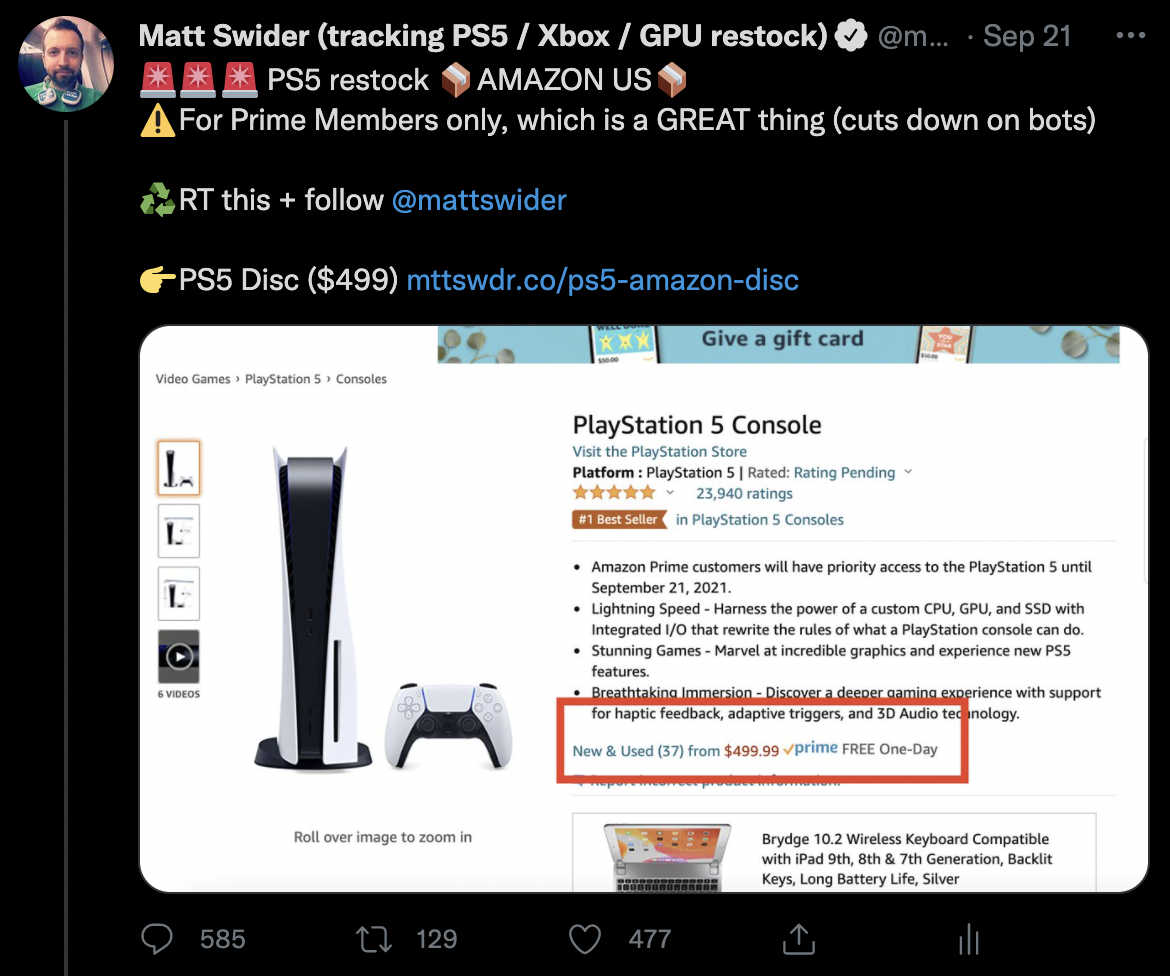
The Amazon PS5 restock dates has become easier to predict not because of sources in this case – Amazon seems to have shut down leaks – but because the online retail giant has been stocking new PS5 consoles around the 21st of every month, give or take a few days.

Specifically, we saw PS5 in stock at Amazon on September 21, August 25, July 21, June 23, May 26 and April 21 this year. That's a pretty consistent restock track record, thought here are instances in which PS5 Digital didn't show up alongside PS5 Disc (there's always less PS5 Digital inventory at stores) or got shoehorned in on a different date (like September 2) without PS5 Disc accompanying it.

The Amazon PS5 restock time was fluctuating between late mornings (10:10am EDT to 11:05am EDT with the one-off Amazon Treasure Truck drop happening at 12pm EDT) and late nights (12:03am EDT to 3:18am EDT). But we haven't seen a middle of the night PS5 drop since Amazon Prime Day, so neither we're overdue for one in October or Amazon is sticking to those late morning restocks.

It hasn't gotten any easier to buy the PS5 on Amazon when a restock happens. This is despite the fact that their latest restock date, September 21 at 11:03am EDT, did give Amazon Prime members priority access to buying the Sony console. We'll see if it gets any easier on or around October 21, 2021.

PS5 restock Twitter alerts in US from Matt Swider

(Image credit: Twitter / Matt Swider)


Best Buy has a 70-inch 4K smart TV on sale for just $549.99 ahead of Black Friday

If you're looking to score a cheap TV deal ahead of the upcoming Black Friday sale, then you're in luck. We've just spotted this 70-inch 4K smart TV from Hisense on sale for just $549.99 ($849.99). That's the lowest price we've seen and an incredible deal for a feature-packed big-screen TV.

Cheap TV deal

Hisense 70-inch H65 Series Smart HD TV: $849.99 $549.99 at Best Buy
Save $300 -  
Just ahead of Black Friday, Best Buy has this Hisense 70-inch 4K TV on sale for a record-low price of $549.99. Not only is this a fantastic price for a big-screen 4K TV, but you're also getting the Google Assistant and Chromecast built right in, and Motion Rate 120 and DTS Sound Studio.

Hisense's A6G series set features 4K HD resolution and DTS Virtual X technology for a cinema-like picture experience with bold, bright colors and an immersive audio experience. The big-screen TV also has smart capabilities, so you can enjoy your favorite movies and TV shows from apps like Netflix, Hulu, Disney Plus, and more. You're also getting a handy voice remote and the Google Assistant built-in so you can control your TV and compatible smart home devices completely hands-free.

See more of the best cheap TV deals from Best Buy below, with prices starting at just $349.99. If you don't see a bargain you like today, you can keep an eye out for upcoming deals during the Black Friday 2021 sale.

More cheap TV deals

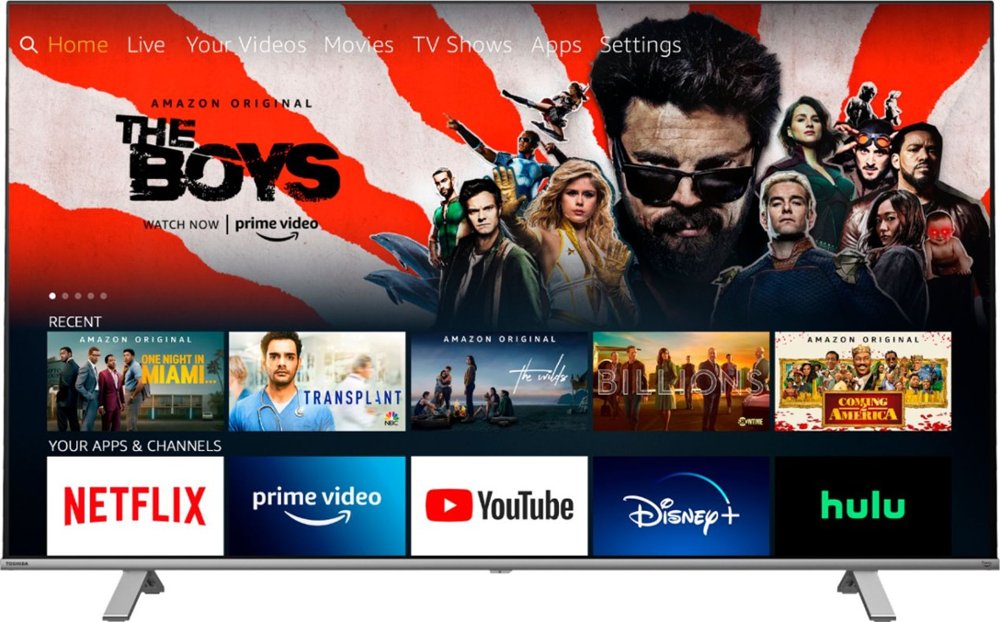
Toshiba 43-inch Smart 4K UHD Fire TV (2021): $369.99 $349.99 at Best Buy
$20 -
Best Buy has a $20 price cut on this 2021 Toshiba Fire display down to $349.99. That's the best price we've found and a fantastic deal for a feature-rich 43-inch 4K TV that comes with the Fire OS and a handy voice remote.

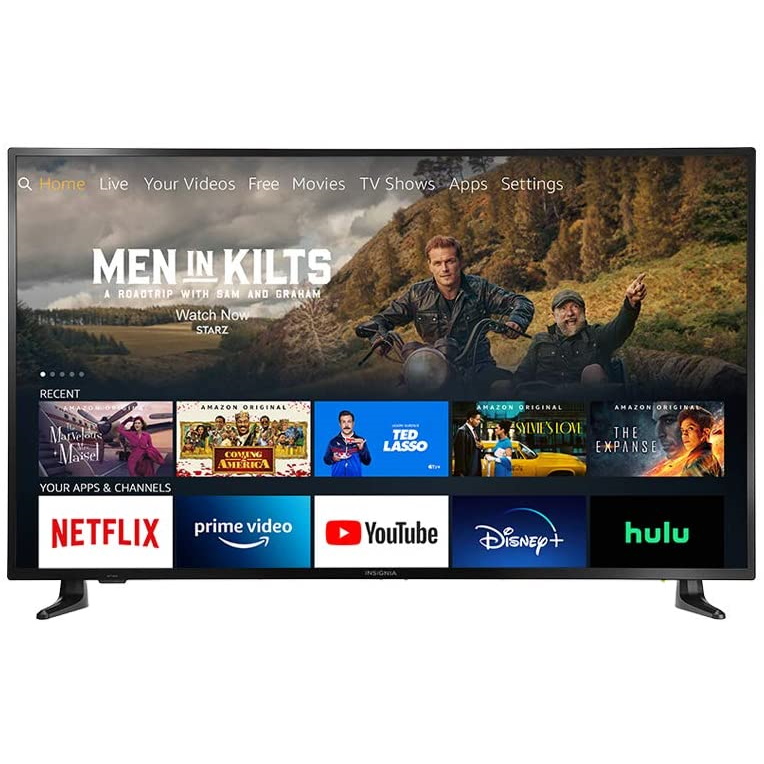
Insignia 55-inch F30 Series 4K UHD Smart Fire TV: $549.99 $379.99 at Best Buy
Save $170 -
Best Buy's latest TV deals has the all-new Insignia 55-inch 4K TV on sale for a record-low price of $379.99, thanks to today's massive $170 discount. The smart TV features HDR10, DTS Studio Sound, and the Fire experience for seamless streaming.

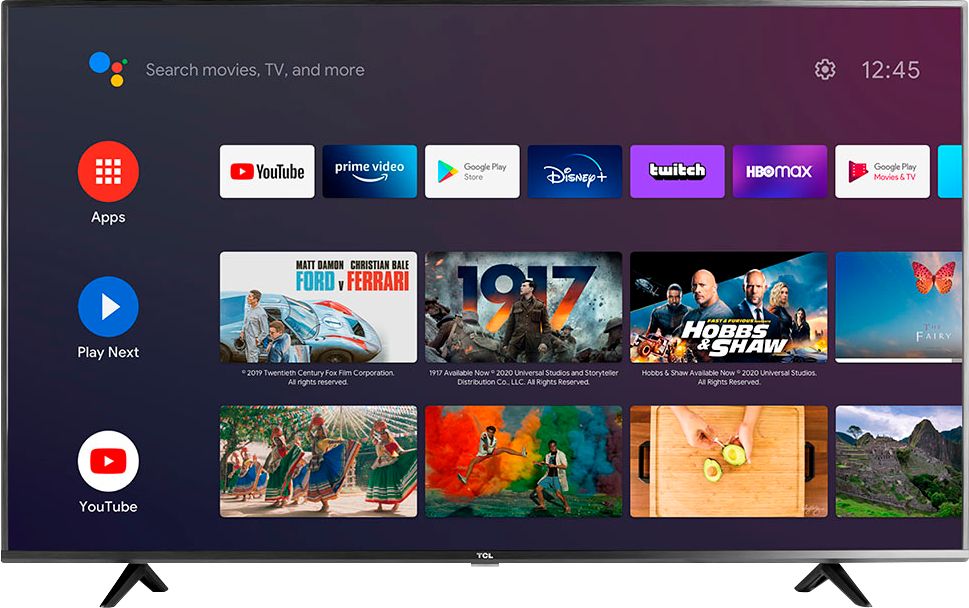
TCL 65-inch 4-Series 4K Smart Android TV: $699.99 $529.99 at Best Buy
Save $170
- This TCL 65-inch 4K TV is on sale for just $529.99 thanks to today's massive $170 discount at Best Buy's TV sale. You're getting Google Assistant and Chromecast built-in here, excellent smart capabilities, plus an easy-to-use remote that features voice search and control.

Insignia 65-inch F30 Series 4K UHD Smart Fire TV: $699.99 $549.99 at Best Buy
Save $150 -
For a limited time, you can pick up this Insignia 65-inch 4K TV on sale for $549.99 at Best Buy. This cheap smart TV comes with the Fire TV operating system and support for the Amazon Alexa voice assistant - a fantastic value for a 65-inch TV under $600.

See more of the best cheap TV deals that are happening now and the cheapest OLED TV deals and prices.

You can also look forward to upcoming offers with our guide to the best Black Friday TV deals of 2021.


Windows 11 might throttle PC gaming performance on some prebuilt PCs

Windows 11 PCs are going to be some of the hottest items this holiday season, but for PC gamers, these prebuilt systems might be significantly underpowered by default.

In a new report from our colleagues over at PCGamer, prebuilt Windows 11 PCs will come with Virtualization-Based Security (VBS), an enterprise feature already used in Windows 10 machines designed for business purposes.

As Microsoft describes VBS as using "hardware virtualization features to create and isolate a secure region of memory from the normal operating system. Windows can use this 'virtual secure mode' to host a number of security solutions, providing them with greatly increased protection from vulnerabilities in the operating system, and preventing the use of malicious exploits which attempt to defeat protections."

While that sounds laudable, and it is, anyone who knows PC gaming will tell you that any layers of virtualization you introduce into a system are going to seriously affect your gaming performance.

As PCGamer investigated, using VBS could nerf your frame rate by as much as 28%, which is the kind of performance hit you'd get by dropping to an RTX 3070 from an RTX 3080. This won't affect PCs that are upgrading to Windows 11 from Windows 10 (unless you already have a VBS-enabled version of Windows 10), and will only impact new systems. 

Microsoft believes this performance hit is worth it for the extra security.

"The United States Department of Defense (DoD) requires virtualization-based security on Windows 10 for their devices. While we are not requiring VBS when upgrading to Windows 11, we believe the security benefits it offers are so important that we wanted the minimum system requirements to ensure that every PC running Windows 11 can meet the same security the DoD relies on," the company said in an update post. 

"In partnership with our OEM and silicon partners, we will be enabling VBS and HVCI on most new PCs over this next year. And we will continue to seek opportunities to expand VBS across more systems over time."


Analysis: we're all for extra security, but yikes

Computer system security is a major issue, without a doubt.

Countless people over the years have fallen victim to some nasty malware or other that locked up computers with encrypted hard drives or hijacked them into mining bitcoin in the background and burning out graphics cards.

Security matters, especially for those buying a prebuilt PC who may be less familiar with computer systems. The only thing we can say is they're going to need to balance priorities when deciding what to buy this Black Friday, but there really ought to be an option to stick with Windows 10 so buyers can then upgrade to Windows 11 if they choose not to have Department of Defense-level security on their gaming PC.

  • We'll show you how to build a PC if you're not keen on buying a prebuilt


Concerned by the UK energy industry crisis? Here we answer the key questions

In recent weeks, the UK energy industry has seen significant energy price rises, a number of suppliers going bust and the introduction of Ofgem’s latest price cap. It’s been a turbulent time to say the least and at the moment shows no signs of letting up.

For consumers, this has also been a particularly challenging time and it has raised a lot of questions about what all this means for our energy bills and what can be done to help navigate through this industry crisis.

So to help, we’ve detailed and answered some key queries with advice and guidance that you can use to get a better understanding of how you might be affected by the crisis, and what options you have to avoid any further issues.

Why are energy bills going up?

There are a number of reasons why we’re seeing increasing energy prices, but the main cause is that wholesale energy prices (what providers pay for our gas and electricity) are at record highs. Plus, reserves of gas and electricity aren’t as plentiful as previous years. This has led to issues with supply and demand.

This stems from a number of factors, including the cold winter we had last year where as a nation we used more gas, lower amounts of gas imports from Russia, complications from Brexit and a drop in our renewable energy production due to a lack of windy and sunny weather.

Currently, prices are 250% higher than they were in January this year and have gone up 70% in the last month alone. We’re essentially enduring lots of negative factors all at once and unfortunately the costs are now hitting consumers.

What is the new energy price cap?

Ofgem’s latest energy price cap rolled out on October 1st and, as previously reported, this will see annual bills rising by £139 for those on standard variable tariffs (SVTs). Prepayment meter customers will see increases of £153, as prices go from £1,156 to £1,309.

This price cap is something Ofgem sets every six months and is designed to limit the amount suppliers can charge customers for their energy. But, while this may seem like good news in the face of the high wholesale costs, the new cap is still a 12% price rise for those on the affected tariffs.

Anyone on a fixed-rate tariff won’t see their rates change, unless their tariff comes to an end. 

Why are suppliers going bust?

With the high wholesale energy costs, the suppliers who have gone bust ended up having to pay more for the energy they were supplying to their customers than they were recouping from customers paying their bills.

So far (as of October 1 2021) nine suppliers have gone out of business – People’s Energy, Utility Point, MoneyPlus Energy, PFP Energy, Avro Energy, Green, Enstroga, Symbio Energy and Igloo Energy.

All of these suppliers had offered cheap fixed-rate tariffs that were no longer viable  in the current situation.

What happens if my supplier goes bust?

If your supplier fails, the energy regulator Ofgem makes sure that your supply of gas and electricity continues and they automatically move you over to a new provider. However, this new tariff won’t be the same as the one you were on with your old supplier and will most likely be more expensive.

What happens if I’m in credit with a supplier that’s gone bust?

If you’re still in credit and your supplier goes bust, your new supplier currently has to honour anything that you’ve built up and factor this into your new energy bills.

Can I still switch supplier?

After Ofgem has moved you over to a new supplier (this can take about a week to go through) you can still look to switch to another provider if you want – you also won’t incur any exit fees if you do.

However, the issue you have right now is that it’s highly unlikely you’ll find any cheaper tariffs on the markets when running an energy comparison - and the tariff  you end up on is likely to be amongst the best energy deals around at the moment.

With a little research you can still see who the best energy suppliers are right now, but this is more in terms of service than savings.

If I’m on a fixed tariff with a stable supplier, will I be affected?

The good news here for consumers in such a situation is that your energy bills won’t change, you’ll continue to pay the same rate for the duration of your deal.

Can I get extra help with my energy bills?

If you have concerns about being able to afford your energy bills, there are some steps you can take to help reduce them or make them easier to manage:

  • You can try to cut down on your energy use to reduce your costs. We’ve previously explained a number of top tips you might want to try.

  • Citizens Advice are recommending that consumers who have concerns should contact their current or new supplier directly to see if they can change or adapt their payment terms.

  • Schemes like the Warm Home Discount are available and those who qualify can get £140 off their winter energy bills.

What will happen to the energy industry in the future?

Unfortunately, with wholesale prices continuing to rise, we’re likely to see further increases to our energy costs, particularly as we head into the colder months. The global supply and demand problems are subsequently likely to get worse and already there’s speculation the next price cap in April will be much higher.

However, if the energy markets do start to settle down and aren’t as volatile, wholesale prices will return to normal levels and our bills will then also start to come down. Hopefully this is sooner rather than later. 


No, hackers can't drain your Apple Pay account, says Visa

Visa has hit back after cybersecurity researchers claimed possible security issues in its payment mechanisms, specifically concerning Apple Pay, could allow criminals to make fraudulent contactless mobile payments.

Rresearchers from University of Birmingham and University of Surrey used a locked iPhone to make a payment via NFC exploiting an Apple Pay feature called Express Transit that’s designed to work with Visa to help commuters pay quickly at ticket barriers. 

However Visa said that its payments were secure, and that this type of attack couldn’t be replicated outside of the lab in the real-world.

TechRadar needs you!

We're looking at how our readers use VPNs with streaming sites like Netflix so we can improve our content and offer better advice. This survey won't take more than 60 seconds of your time, and we'd hugely appreciate if you'd share your experiences with us.

>> Click here to start the survey in a new window <<

"Visa cards connected to Apple Pay Express Transit are secure and cardholders should continue to use them with confidence," Visa told TechRadar Pro in a statement.

"Variations of contactless fraud schemes have been studied in laboratory settings for more than a decade and have proven to be impractical to execute at scale in the real world. Visa takes all security threats very seriously, and we work tirelessly to strengthen payment security across the ecosystem."

Fooling the phone

The hack involves the use of a small commercially available piece of radio equipment, which is placed near the iPhone to trick it into believing it is dealing with a ticket barrier. At the same time an Android phone running a custom app developed by the researchers is used to relay signals from the iPhone to any contactless payment terminal.

Since the iPhone thinks it is paying a ticket barrier, it does so while still being locked. On the other end, the custom Android app modifies the iPhone’s communications with the payment terminal, which thinks the iPhone has been unlocked and the payment has been authorized legitimately.

In a video, the researchers successfully tricked an iPhone to make a Visa payment of a £1,000 payment without unlocking the phone or explicitly authorizing the payment

Importantly, the researchers share that the Android phone and payment terminal used in the hack don't need to be near the victim's iPhone.

"It can be on another continent from the iPhone as long as there's an internet connection," Dr Ioana Boureanu of the University of Surrey told the BBC.

Apple reportedly added that the matter was an issue with Visa’s payment system.

Via BBC


NITI Aayog, AWS, and Intel collaborate to speed up digital innovation

Indian government's policy think tank, the National Institution for Transforming India (NITI Aayog) has tied up with Amazon Web Services (AWS), and Intel to set up a new experience studio that will be a hub for collaboration and experimentation at the NITI Aayog Frontier Technologies Cloud Innovation Center (CIC). 

The studio, situated in New Delhi, will enable problem solving and innovation between government stakeholders, startups, enterprises, and industry domain experts.

The studio will help in use of artificial intelligence (AI), machine learning (ML), Internet of Things (IoT), augmented reality and virtual reality (AR/ VR), blockchain, and robotics in public sector enterprises and institutions. 

The studio will be the hub for government, healthcare, education, and nonprofit startups from India to showcase their solutions. 

The experience studio at the NITI Aayog Frontier Technologies CIC will adopt a hybrid model enabling physical and virtual workspaces to collaborate seamlessly. The studio’s digital workspace will enable state-of-the-art collaborative environments to invite experts from various verticals, government departments, research institutions, and not-for-profit organisations for hands-on workshops.

Startups will be encouraged to participate actively

NITI Aayog will use the studio to demonstrate the application of geospatial, AR/VR, drone, and IoT solutions in verticals such as healthcare, agriculture, and smart infrastructure. 

Major homegrown industry leaders like MapMyIndia in geospatial solutions, Raphe mPhibr in unmanned aerial vehicles (UAVs), and the Centre for Advanced Research in Imaging, Neuroscience and Genomics (CARING), which delivers AI in healthcare – and global leaders like Dassault Systems, and startups like Vizara Technologies and Agatsa Software are demonstrating their solutions at the studio, according to a press release from Amazon India. 

Startups will be encouraged to participate actively in the studio through hackathons, grand challenges, and other capacity building initiatives, in collaboration with the Atal Innovation Mission (AIM) and Atal Incubation Centres (AIC).

Will help solve public sector challenges

“The new experience studio with AWS and Intel will further support our mission to identify and deploy leading edge technologies to drive continuous innovation in delivering citizen services,” said Amitabh Kant, CEO, NITI Aayog.

“The new experience studio at the NITI Aayog Frontier Technologies CIC, based on the AWS Cloud Innovation Centers program, aims to quickly solve public sector challenges through collaboration and actualize innovations from experimentation and prototypes,” said Rahul Sharma, President, Public Sector – AISPL, AWS India and South Asia.

“Intel is committed to expanding access to technology resources and knowledge through our collaboration with NITI Aayog and AWS to develop, build, and support cloud services that can enrich the lives of people in India and around the world,” said Prakash Mallya, VP & MD – Sales, Marketing & Communications Group, Intel India.

The NITI Aayog Frontier Technologies CIC was established in October 2020 as part of the AWS Cloud Innovation Centers Global Program. AWS Public Sector CICs are also present across Australia, Bahrain, Canada, France, Germany, South Korea, and United States.


Thursday, September 30, 2021

Xbox Cloud Gaming lands in Australia: here’s how to sign up

It's been a long time coming, but Xbox Cloud Gaming has finally launched in Australia today, along with Japan, Mexico and Brazil, as announced at this year's Tokyo Game Show.

The Xbox Cloud Gaming beta is open to all Xbox Game Pass Ultimate subscribers from the countries listed above, granting them instant access to their country's version of over 100 cloud-enabled games.

Each of the available titles can be instantly streamed to supported Windows 10 PCs and laptops, as well as Android and iOS phones and tablets.

While every game in the Xbox Cloud Gaming beta can be played using a paired Bluetooth controller, Xbox has also gone a step further for those who don't own a gamepad – touch controls are available on a selection of games, including Hades, Minecraft Dungeons, Dirt 5, Killer Instinct and even the newly-added Scarlet Nexus, with more titles promised to receive touch support over time.

Each touch supported game has its own layout of on-screen buttons and virtual thumbsticks – you can check out the Hades image below for an example of what you can expect.

Hades touch controls via Xbox Cloud Gaming

Hades touch controls via Xbox Cloud Gaming (Image credit: Supergiant Games)

How to access Xbox Cloud Gaming

In order to access the Xbox Cloud Gaming beta, you must first make sure you're signed up to Xbox Game Pass Ultimate, which will set you back AU$15.95 per month. That not only grants you access to Xbox Cloud Gaming, but also over 100 games across Xbox consoles and PC.

If you're not already a member, you can sign up to Xbox Game Pass Ultimate now by clicking this link. Alternatively, you can click on the third option below (labelled Xbox Game Pass Ultimate). Please note, Xbox Cloud Gaming is not available for the first two options.

Once you've signed up to Xbox Game Pass Ultimate, simply download the Xbox Game Pass for Android, iOS or Windows 10 and sign-in. 

From here, you have the option of instantly streaming your chosen game via Xbox Cloud Gaming, or installing it to an available Xbox console or PC.

Hades on Xbox Game Pass

(Image credit: TechRadar / Microsoft)


Realme launches TechLife Air Purifier, Handheld Vacuum Cleaner, Robot Vacuum in India

Realme has launched three new TechLife products in India which include the TechLife Air Purifier, TechLife Handheld Vacuum Cleaner, and the TechLife Robot Vacuum.

These three new products join the existing Realme TechLife AIoT products that are already available in India. Apart from this Realme has also partnered with Dizo as part of the "1+5+T" strategy from Realme. 

New Realme TechLife product details

The Realme TechLife Air Purifier features a high CADR of 330m³/h, 5 wind mode settings, high precision Japanese SHARP air quality sensor, 3-layers filtration structure, and a smart filter change indicator. 

Realme TechLife Air Purifier is priced at Rs 7,999 and the first sale is scheduled for October 2 from midnight onwards on Realme's own website, Flipkart followed by mainline channels soon. It will also be available at a special price of Rs 6,999 during the ‘Big Billion Days’ sale.

The Realme TechLife Handheld Vacuum Cleaner features an advanced HEPA filter, a 9.5KPa Super Suction, large 2200mAh high-efficiency battery and weighs only 1.34kg. Realme TechLife Handheld Vacuum Cleaner is priced at Rs 7,999 and the first sale is scheduled for October 2, midnight onwards on realme's own website, Flipkart and soon on mainline channels. It will also be available at a special price of Rs 7,499 during the ‘Big Billion Days’ sale.

The Realme TechLife Robot Vacuum features a LiDAR smart mapping and navigation system, a 2-in-1 vacuum and mop function, intelligent surface adaptation technology, 3000Pa ultimate suction, 38 high-precision sensors, Google Assistant and Alexa Support, 5200mAh big battery.

The Realme TechLife Robot Vacuum is priced at Rs 24,999 and the first sale is scheduled for October 3, midnight onwards on Realme's own website, Flipkart and soon on mainline channels, with early access to Flipkart Plus Customers on October 2 at midnight. It will also be available at a special price of Rs 19,999 during the ‘Big Billion Days’ sale.

Want to know about the latest happenings in tech? 

Follow TechRadar India on Twitter, Facebook and Instagram!


What you should know about working with corporate venture investment committees

With global corporate-venture-capital-backed (CVC) funding reaching $79 billion across 2,099 deals in the first half of 2021, according to CB Insights, the chances are high that startups will find great opportunities with this growing investor set.

Entrepreneurs, however, are likely to discover that the investment process can be different for CVCs compared to private venture capital firms. While both types of investment firms tend to make decisions via an investment committee (IC), private VCs (inclusive of VCs with corporate backers that have an independent LPA structure) make up their ICs with firm partners and/or other venture-minded people.

As CVCs become more active, entrepreneurs often don’t understand that the decision to invest, or not, doesn’t rest solely within a subgroup of the direct investment team or with venture-minded people.

But for CVCs investing off a corporate balance sheet, the IC can include corporate-minded people, such as the CEO or business unit leaders, who generally tend to be detached from the venture mindset and the requirements for operating in the VC world. As such, entrepreneurs will realize that a successful CVC investment decision tends to have different requirements compared to a private VC firm’s decision.

So what do entrepreneurs seeking investment need to know about this relatively new but powerful participant in the funding process? I’ll do my best to demystify the role of the CVC IC and shine a light on how entrepreneurs can navigate some of the hidden pitfalls while taking advantage of the opportunities.

The arbiters of investment

While private VCs immerse themselves into the venture ecosystem, CVCs live in the middle of two very different worlds and mindsets: corporate and venture. The CVC must engage the venture ecosystem to attract deal flow while also driving opportunities that can be of strategic interest to the corporation.

To do this well, a CVC ideally should have a well-defined mandate and IC purpose statement — to deem investment opportunities as strategic, for example. A business unit leader or CEO who spends about an hour on a monthly IC session is nearly completely immersed within the corporate mindset while making a decision related to the venture world.


5 investors discuss what’s in store for venture debt following SVB’s collapse

There are many questions around the implications of Silicon Valley Bank’s (SVB) collapse that won’t be answered for a long time. But there’s...