Wednesday, September 1, 2021

3 tips to align your values with your startup’s culture

You’ve heard the phrase “leading by example,” but what about “leading with values”?

I’ve always led by example by using my values as my guide. Still, it wasn’t until I founded my first company that I fully understood the importance of embedding those values into the company, too.

Integrity, individuals, impact and innovation are the “4 I values” that drive my decisions and the actions of those at my company each day. These are not just words on a wall at our HQ or on a mousepad for our remote crew, but values that everyone in the company lives and breathes. Over the last two years, these four values became even more important and continued to guide me, my family and the leaders at our company.

As organizations map out their “return to the workplace” (NOT “return to work,” because we never stopped working) plans, we should not simply go back to how things were before. Instead, let’s all take a moment to redesign something that sets everyone up for success, with values as the compass. I think you’ll find this approach helps people not only survive, but thrive in the workplace.

Leading with values is, in my experience, the best leadership position to take, and there are three ways to accomplish this goal.

Leave behind old-school mentalities on workplace hierarchy

The tone of the company’s culture comes from the top. The culture you envision for your company will only come about if your employees believe in the practices that you are asking them to implement.

At some point in your career — probably right out of school, a few years in or somewhere in the middle — you experienced a company where treating lower-level employees with less respect is just “a part of the job.” Companies with this type of “paying your dues” mentality tend to work these lower-level employees like grunts until they burn out and leave.

Or they eventually crawl their way up into management-level positions, and the cycle perpetuates itself as they deride the newer crop of employees, eroding any semblance of a healthy culture.

This is not the way.

As a leader, if you want your work environment to indicate inclusivity, support, collaboration and have the essence of a team mentality, you must set the precedent right away. This means stripping away the hierarchy that accompanies work titles and making it clear that your company values contribution based on merit, regardless of position. You are one team, united in your purpose to deliver on your mission, based on your values. This level setting ensures that everyone has skin in the game, and no one has the leeway to treat people poorly.

Don’t get caught in an ivory tower mindset

Early on in my career, I began sharing an office when I could. Those office spaces were purposely not what anyone would consider cool or nice “digs” — not the furniture and certainly not the view. Even as CEO now, I’ve had someone on the team describe my current office as a closet. But it gets the job done.

Simple signals like this send a powerful message, and the signal must remain consistent. Don’t take a limo; rent a cheap car. Don’t fly first class; fly coach. These may seem like minor details, but one of the biggest pitfalls any CEO can encounter is falling victim to an ivory tower mindset — when you become so out of touch with the people you manage, your employees start to notice.

Make a cognizant effort to know your people. Implement a “management by walking around” strategy. Don’t sit in your office all day; get out on the floor among your people. Drop by their desks and ask them how their day is going. Eat lunch in the break room. Put in the effort to attend new hire onboarding.

Not physically back in the office? Drop into Slack channels and Zoom meetings. I once “Zoom bombed” a baby shower for one of our crew members just to hear all the well wishes, and it made my day and theirs. Overall, just be present and humanize your workspace. It pays off in spades.

Be thoughtful and consistent with workplace practices

The tone of the company’s culture comes from the top. The culture you envision for your company will only come about if your employees believe in the practices that you are asking them to implement. More importantly, you will not grow a solid culture if you don’t give these initiatives and practices 100% of your own effort.

For example, one new initiative we rolled out last year is a campaign we call “Free2Focus.” Twice a week, the SailPoint crew is asked to avoid booking meetings for a couple of hours during Free2Focus time. Not only does this address Zoom fatigue, it also gives our crew the chance to catch their breath whichever way suits them best — whether that’s taking a walk, helping with their children’s schooling or just turning off the camera for a bit.

If I want my team to show themselves some grace during the week, I’ve found that I need to apply the same practice. This means not setting up meetings during Free2Focus, not sending emails all hours of the day and night and not judging people for taking breaks when they need them. I trust my team to get the job done largely on their own time and own their own terms. I promise, your employees’ performance will be better because of it.

Being a CEO is more than building on a vision, a product or an idea. It’s about leading your people with values to accomplish mutual goals in a way that doesn’t zap them of their morale or dignity. It’s easy to get caught up in all the things that come with a job, but if you don’t put in the effort to immerse yourself and your values into the entire company, you’ll end up too big for your own good — and certainly too big for your company’s good.

It won’t happen overnight, but remember, the smallest things are often the ones that have the biggest impact. If you’re the leader, lead by example. It’s the only way to build teams that stand the test of time.


Subscription-based Bright Cellars lands more funding to personalize its wines

Bright Cellars, a six-year-old subscription-based wine seller has, like many upstarts, evolved over time. While it once sent its club members third-party wines that fit their particular profiles, Milwaukee, Wisconsin-based Bright Cellars says it’s now amassing enough data about its customers through its “palate” quizzes that it no longer sells wines made by other brands. Instead, while some of its “original” offerings are admittedly sold by other labels under different names, it is increasingly finding success by directing its winemaker partners to tweak the recipe, so to speak.

“We’re optimizing wine like you might optimize a more digital product,” says co-founder and CEO, Richard Yau, a San Francisco native whose startup entered into a regional accelerator program early on and stayed, though the company is now largely decentralized.

We talked earlier today with Yau about that shift, which investors are supporting with $11.2 million in Series B funding, led by Cleveland Avenue, with participation from earlier backers Revolution Ventures and Northwestern Mutual. (The company has now raised roughly $20 million altogether).

Yau also talked about industry trends that he’s seeing because of all that data collection.

TC: You say you’re building a portfolio of wines. What does that mean?

RY: We don’t own any land. We’re working primarily with suppliers [as do big companies like Gallo and Constellation], but at a larger scale than before, so we now get to shape what wines taste like and look like, and we can optimize across variables like how sweet should this wine be? How acidic? What do we want its color and brand and label to look like and which segment of our customers will really enjoy this wine the most?

TC: What is one of your concoctions?

RY: We have a sparkling wine that’s produced in the Champagne method — not a Champagne wine; it’s a domestic wine — using grape varietals that no one uses for sparkling wine, and it’s one of the top-rated wines on our platform. Sparkling wine has been really good for us.

TC: How many subscribers do you have?

RY: We can’t share that, but we saw an acceleration in not just new subscribers throughout the pandemic but also in terms of seeing a larger share of [customers’] wallets going to D2C, and that impacted us pretty positively. Even as things eased up over the summer, we saw that people were cooking and eating at home more [and drinking wine].

TC: What’s the average price of a bottle of wine on the platform?

RY: $20 to $25.

TC: Where are your grape suppliers?

RY: A lot are on the West Coast, in Washington and California, but we also have grape suppliers internationally, including in South America and Europe.

TC: How many wines do you offer, and how long do you trial a wine?

RY: We’ve tested around 600, and at any given time, we’ll have 40 to 50 wines on the platform. We don’t stock everything forever; those that don’t do as well, we basically eliminate.

TC: A lot of D2C brands eventually branch into real-world locations. You aren’t doing that. Why not?

RY: It’s possible that we might at some point, but we like being D2C and it makes a lot of sense in a world where our members now work from home and are home to receive packages. It lines up with e-commerce trends in general. If you’re not buying your groceries at the store anymore, you aren’t buying wines at the store, either.

TC: From where are these bottles shipped?

RY: From a variety of places, but primarily from Santa Rosa [in the Bay Area].

TC: Have you seen the impact the weather is having on California winemakers, some of whom are now spraying sunscreen on their grapes to protect them?

RY: [Climate change] has certainly affected the wine industry. One of the fortunate things about us is we have flexibility in the suppliers we’re working with, so from a business-health perspective, we haven’t been as affected by that. Because a lot of our operations are in California, we did a couple of years ago have some interruptions with distribution where we weren’t able to ship some days; we were also impacted by warm temperatures. But fortunately, so far for this year, we haven’t had any operational or supply-chain disruptions.

TC: Have you been approached by one of legacy firms about a partnership or acquisition?

RY: We’ve had conversations, more in terms of partnerships because we have lots of data and can help them. For example, we can launch a new wine and get feedback almost like a focus group to figure out who likes what. We can split test two different blends for a wine and figure out which does better. That’s where conversations with legacy wine companies have happened.

TC: So they’d pay you for your data.

RY: We’re not opposed to selling data in the future, but we’ve approached it more like, here’s an opportunity to learn about how innovation works at a larger wine company. We don’t expect to be able to do what Constellation does well — with its large salesforce and distributors in every state — but what we can do in a complementary way is understand the consumer.

TC: What have you learned that might surprise outsiders?

RY: Petite sirah [offerings] do as well, if not better than, cabernet and pinot noir on the platform. Cab and pinot are fully 50 times the market size of petite sirah, but we see that our members really like it.

People also like merlot a lot more than they think — pretty much across all demographics. People like to hate merlot, but when we look at red blends that do well . . .

TC: What do people have against merlot?

RY: [Laughs.] Have you ever seen “Sideways?” That has something to do with it, still. Meanwhile, pinot noir remains popular, but people don’t like it as much as [other wine sellers] think.


Berlin Brands Group, now valued at $1B+, raises $700M to buy and scale merchants that sell on marketplaces like Amazon

Berlin Brands Group (BBG) — one of the new wave of e-commerce startups hoping to build lucrative economies of scale around buying up smaller brands that sell on marketplaces like Amazon and using technology to run and scale them more efficiently — has picked up a big round of funding to fill out that mission. The startup has closed a round of $700 million, comprising both equity and debt, which it will use in part to continue building its fulfillment and logistics infrastructure, as well as its tech platform, and in part to buy more companies.

BBG confirmed that the investment — one of the biggest to date in the space — boosts its valuation to over $1 billion.

Bain Capital is leading the equity portion of this round. The deal will also see it buy out a previous investor, Ardian, for an undisclosed amount that is separate to the $700 million raise.

This funding round is the second announced by BBG this year. In January it announced it would be investing $302 million off its own balance sheet for M&A, and in April it announced a debt round of $240 million. This latest $700 million is different in that it includes the equity component alongside the equity.

BBG got its start initially developing its own products and selling them on Amazon and other marketplaces — founder and CEO Peter Chaljawski was a DJ in a previous life and started with a focus on audio equipment he developed for himself.

Over time, he saw an opportunity to diversify that into a wider consolidation play, where BBG would also acquire and merge third-party brands into its business, tapping into the opportunity to provide the owners of the third-party businesses an exit route and bring those smaller brands more scale, more marketing nous and more tech to improve the efficiency of their operations.

Today the mix totals 3,700 products and 14 own brands, including Klarstein (kitchen appliances), auna (home electronics and music equipment), Capital Sports (home fitness) and blumfeldt (garden). BBG says it has access to some 1.5 billion e-commerce customers across various marketplaces where it sells goods in Europe, the U.K., the U.S. and Asia. Notably, unlike many others in the same space as BBG, it is focused on more than Amazon, with some 100 channels in 28 countries.

That list of “many others in the same space” is a long one and seemingly growing by the day. Yesterday, two of them — Heroes and Olsam — respectively raised $200 million and $165 million. Others leveraging the opportunity of consolidating merchants that sell via Fulfillment by Amazon include Suma Brands ($150 million), Elevate Brands ($250 million), Perch ($775 million), factory14 ($200 million), Thrasio (currently probably the biggest of them all in terms of reach and money raised and ambitions), HeydayThe Razor GroupBrandedSellerXBerlin Brands Group (X2), Benitago, Latin America’s Valoreo and Rainforest and Una Brands out of Asia.

As more startups enter the fray, battling to buy the best of the third-party brands will become more of a challenge, and so the backing of Bain should help BBG shore up against that competition.

“With Bain Capital’s commitment and the additional funding secured, we have set our next milestone on our path to building a global house of brands,” said Chaljawski in a statement. “This allows us to tackle strategic goals of acquiring and developing brands globally, as well as the operational and logistical expansion. Bain Capital’s experience working with founders worldwide will help us continue our evolution as a leading e-commerce company in scaling brands.”

“BBG is a disruptive leader in the rapidly changing consumer goods space. Their ability to develop and scale brands that meet current consumer trends through their highly efficient e-commerce platform gives the company tremendous growth potential in a fast-growing market,” added Miray Topay, MD at Bain Capital Private Equity. “We have partnered with many founder-led management teams and look forward to helping Peter and his team achieve their goal of becoming a global leader in consumer e-commerce”.


The pandemic changed how business laptops are designed

The pandemic has changed how we conduct our day-to-day work, as well as how companies communicate, how projects are completed, and how clients and customers view products and services. With this change has come increasing demand for portable computers. Laptops, notebooks and tablet devices have been around for quite some time, but what has changed is the demand for power and features in an affordable and portable form factor.

Computing needs have been increasing for some time, especially in the creative space, where people were working from desks, desktop units, or with peripherals plugged in at all times. Now, these same employees are working from home, or a coffee shop, but without an entire desk worth of gear, attached. For many workers, the tools they need to get their jobs done were company-provided but now they are working outside of the workplace, there is no access to most of these tools. 

No more external storage, no more external graphics processors, no more external monitors or keyboards - the devices many of us rely on to get work done now have to be portable, with storage, processing power, and more, all at a reasonable cost.

Remote Working

(Image credit: Bruce Mars / Pexels)

Powerful laptops have become a necessity

Working from home doubtlessly has some advantages, allowing more time for productive work due to less time commuting and moving from meeting to meeting. It also allows for people to set whatever mood they want for work - whether that’s a dedicated home office, working from the couch, from a coffee shop, shared workspace, or changing it up day-to-day. The possibility of so many locations means that the devices remote workers choose need to be able to fit all of those spaces. 

Working remotely can be great, but it also has its drawbacks. The need for a device capable of running vital software such as Microsoft Teams, Zoom and Webex is no longer a luxury but is now a necessity - and with that comes a clear mic, quality camera, and a way to angle the camera so the focus is on your face.

Additionally, with the use of flexible workspaces projected to continue rising, remote workers need the ability to conduct all elements of their job from the device they have with them. This can include anything from presentations, word processing, video and photo editing, screen sharing, signing PDFs, and more. The need for a reliable internet connection is paramount, with the demand for services such as 10GB ethernet internet rising exponentially. 

Calling with Apple Earpods

(Image credit: ShutterStock / Dean Drobot)

Changing expectations for business laptops

These changes are subsequently changing how laptops are being made. For companies that are entirely remote, the question now is how best to equip employees with a business computer that addresses their needs.

The expectations for these laptops are rapidly changing. Previously, the expectation was to simply get work done, at work. Now, the expectation is to be able to get work done, anywhere, quickly. Business computers used to be a means to get work done, now they are the lifeline connecting employees to their jobs. 

With more people working from home every day, newer laptops are going to need to meet this demand. Thunderbolt 4 connectors are still new, however they will probably be the future of laptop connections due to their versatility and speed. With one port, users can decide what that port does. Whatever it will become, it will transfer data at breakneck speeds. All while cutting down on clutter on the laptop itself. Additionally, due to the rise in virtual meetings, it is expected that the next generation of laptops will have better, high resolution cameras built in. Perhaps even with a camera cover. One additional camera quality that would be nice to see would be the ability to unlock with your face as a standard feature. With that being said, fingerprint security should be mainstream within the next generation of laptops.

On the track of making virtual meetings better, an upgraded microphone built into the laptop would make it so individuals would not have to use a 3rd party option. Continuing down this rabbithole, it would be nice to see laptop designs that have dedicated communication buttons or shortcuts. For example, next to the speaker volume buttons there could be a mic on/off toggle. But one that works with whatever virtual meeting platform you are on.

Further, due to the increased efficiency of the newest chips available, and the readily available places to charge whilst working from home, the next line of laptops may not have the increase in battery that has been the trend up until now. There is not as much of a need for increased battery anymore, so perhaps the trend will plateau.

With that being said, there has been an increasing demand by employees to have these devices provided by the employer. Seeing as how the business computer is everything for any given employee, employers are having to adapt. For example, if one employee does not have a device that allows them to do their job well, then they are going to be seen as a bad worker - with the inverse being true as well. Therefore, a quality device, with powerful components, a hi-resolution camera and microphone twinned with powerful speakers, all at a reasonable price is more than just where business laptops could trend - but the expectation.

Hybrid Working

(Image credit: Shutterstock / metamorworks)

Transitioning to a hybrid working model

If remote work gets to the point where employers are providing employees with laptops, they are going to want to have a way to manage those devices. However, as not everyone has incredibly strong network speeds, there will need to be an adaptation to where IT can efficiently manage those that have poor connection.

Large companies like Apple and Twitter are already looking at what a hybrid work atmosphere or entirely remote atmosphere will look like. As these companies begin to set (unintentionally, or intentionally) the standard for working conditions during and post- pandemic, other companies are watching.


Half-price Samsung Galaxy S21, 40% off iPhone 12 mini and more in Telstra Day sale

Telstra Day has landed with some truly stunning deals on Samsung and Apple smartphones, as well as a discounted iPad Air for those seeking a new tablet.

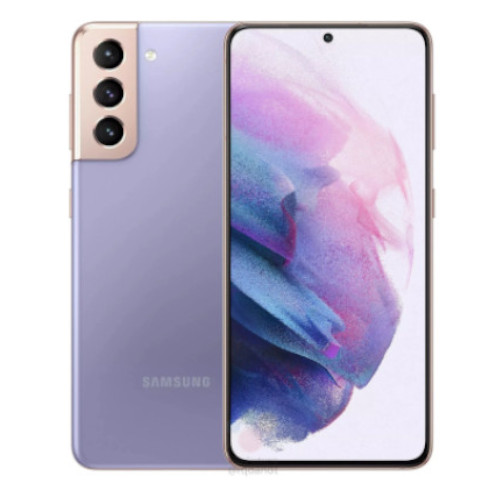
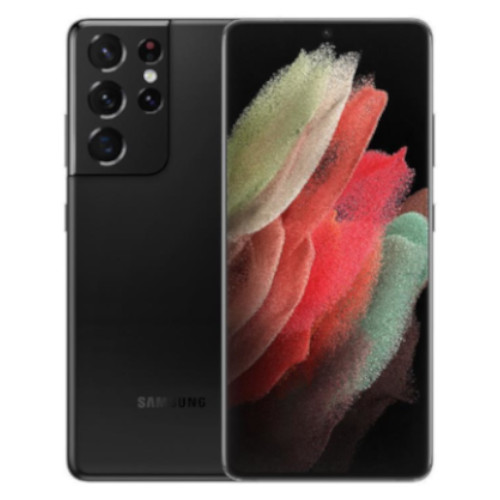
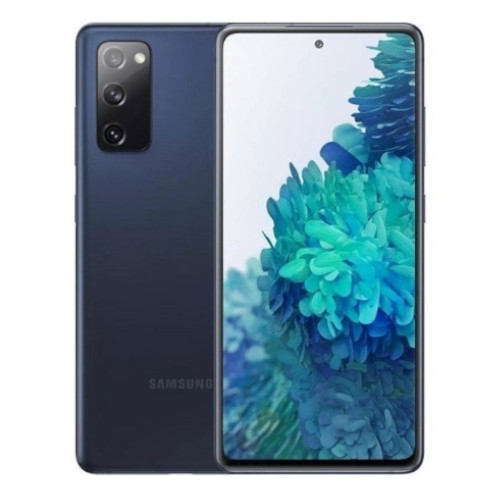
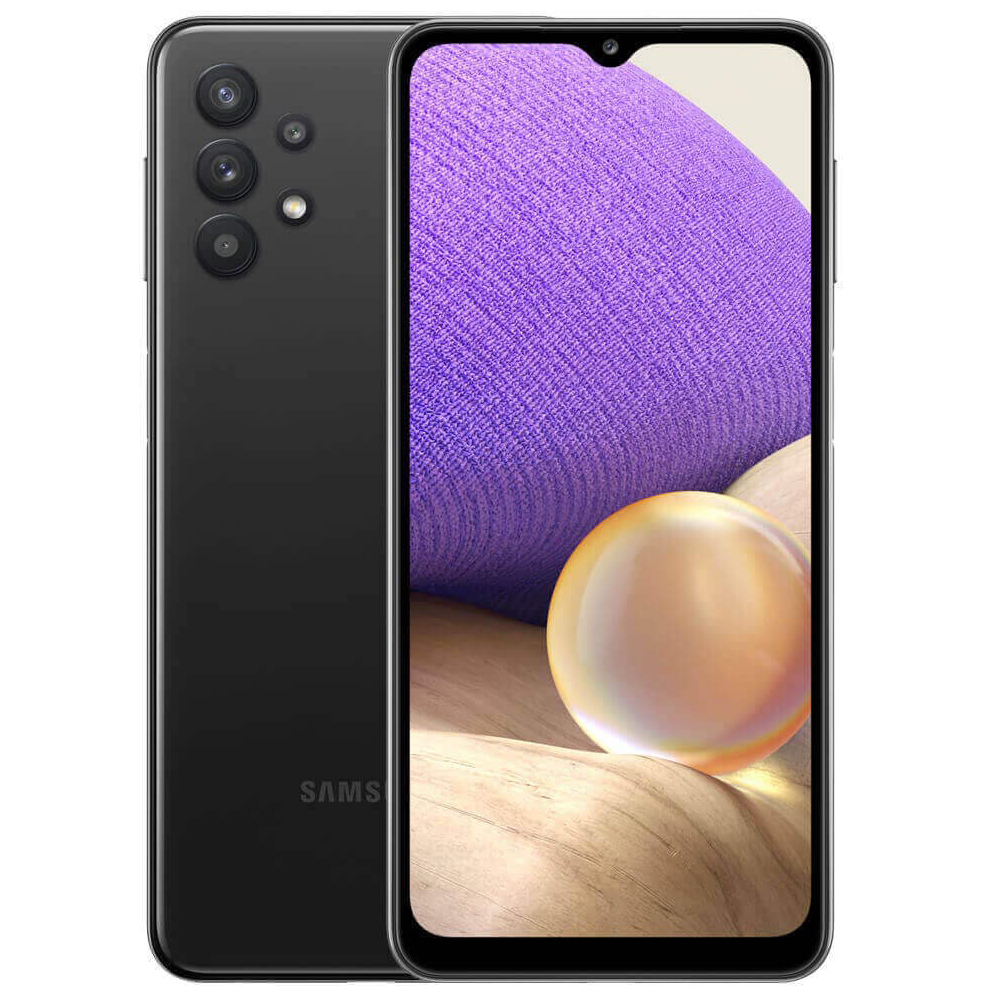
The biggest of the discounts sees the flagship Samsung Galaxy S21 handset reduced by 50%, with this half-price offer bringing it down to just AU$624. There's also 30% off the Galaxy S21 Ultra if you're after something a little more powerful, or those seeking a budget option can save 30% off either the Samsung Galaxy S20 FE or the Galaxy A32 5G.

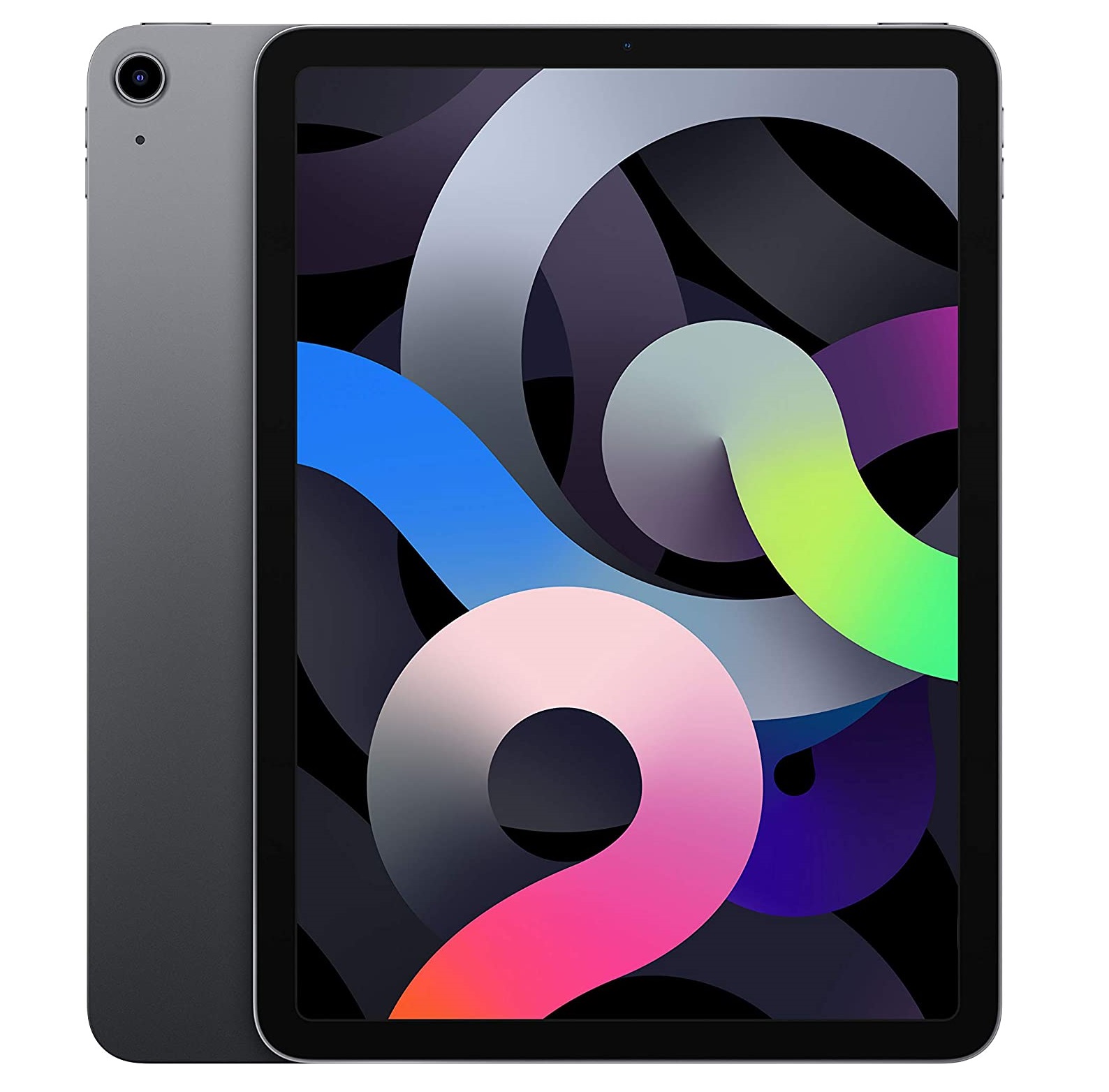
As for Apple, you can save a massive 40% off the already-affordable iPhone 12 mini – a great option for those looking out for the latest Apple experience without needing a huge screen – and a 20% discount on the latest iPad Air (4th-gen) makes for one of the best discounts we've seen on this particular tablet to date.

There's no need to pair any of these products with a Telstra plan to score the discount from the Telstra store either, as every device on sale can be purchased outright with the discount being applied at checkout.

The offers are live all day September 2 (or until stock runs out) but, as its name suggests, Telstra Day only lasts a single day, so be quick if you'd like to score a bargain!

Samsung Galaxy S21 (128GB) | AU$1,248 AU$624 (save AU$624)

If you're looking for the latest Android flagship from Samsung, saving 50% on the Galaxy S21 is as good as you'll get at the moment. This handset improves on the S20 while making it a more affordable option, boasting powerful specs, a versatile camera and premium design. You can also score the 256GB model for AU$672 rather than the usual AU$1,344.

Apple iPhone 12 mini (64GB) | AU$1,199 AU$719.40 (save AU$479.60)

For the iPhone lover that preferred the earlier, smaller models, the iPhone 12 mini is a terrific way to score all the latest power (and 5G capabilities) from Apple without needing a huge device. Ideal for one-handed use and for actually fitting in pockets, this affordable option is even cheaper thanks to its 40% discount.

Apple iPad Air 64GB (4th-gen) | AU$1,099 AU$879 (save AU$220)

The latest iPad Air shakes up the formula a bit, with a gorgeous all-screen design, huge power boost and a whole host of other quality-of-life improvements over its predecessor that bring the range into the future. While the 20% discount isn't as big as the phones are seeing on Telstra Day, it's still one of the best discounts the iPad Air has received to date.

Samsung Galaxy S21 Ultra (128GB) | AU$1,848 AU$1,293 (save AU$554.40)

If the main flagship S21 handset sounds good to you but you simply need even more power, a better camera, and a larger display – the Ultra is the go. It's the first primary lineup Samsung phone to support the S Pen (once exclusive to the Note range), so this is a great option for the power user, and the 30% discount makes the otherwise high price tag significantly more palatable.

Samsung Galaxy S20 FE (128GB) | AU$999 AU$699.30 (save AU$299.70)

In the other direction to the powerful Ultra handset above, the Fan Edition (FE) of the Samsung Galaxy S20 is a great way to get a premium flagship experience in a much more affordable package. It cuts some corners – some of the design and battery chops aren't as premium here – but the low price, coupled with an extra 30% discount, makes it especially appealing.

Samsung Galaxy A32 5G (128GB) | AU$480 AU$336 (save AU$144)

One of the most affordable of Samsung's mid-range smartphones, the A32 is an excellent way to get a 5G-capable handset for a fraction of the price of the flagship lineup. A great battery life, AMOLED display and powerful camera performance make this mid-ranger a strong performer overall, and the extra 30% discount on its already-low price means you can score some top tech for peanuts.


TurboTax maker Intuit in $10bn takeover talks with email firm Mailchimp

Intuit, the company behind both TurboTax and QuickBooks, is reportedly in talks to acquire the email marketing firm Mailchimp for $10bn.

As reported by Bloomberg, talks between the two companies are ongoing according to people familiar with the matter. If Intuit does end up acquiring Mailchimp, it would be the company's largest deal ever. 

While no final decision has apparently been made yet, discussions could still fall through. The anonymous sources familiar with the potential deal who spoke with Bloomberg also said that another buyer could emerge as several parties are interested in Mailchimp.

Intuit also recently released its Q4 financial results as well as its results for the full year, revealing in a press release that the company brought in $9.6bn in total revenue for the year as well as $2.6bn during the fourth quarter. Intuit attributes some of it success last quarter to the addition of Credit Karma to its portfolio.

Expanding its small business offerings

If the deal between Intuit and Mailchimp does come to be, it would unite two makers of small business software while giving Intuit a presence in the growing email marketing space.

While Intuit has provided its QuickBooks accounting software to businesses for decades, the company supplemented this offering with its $7.1bn acquisition of Credit Karma last year. Mailchimp meanwhile delivers digital marketing services to small businesses including social advertising, shoppable links and automation products.

Back in August, Bloomberg reported that Mailchimp was considering a sale though the company is also open to offering a minority stake according to those familiar with the matter. While Intuit has set its eyes on Mailchimp, so too have private equity firms and other large tech companies.

We'll have to wait and see as to whether or not Intuit does end up acquiring Mailchimp or if the email marketing firm decides to court another buyer instead.

Via Bloomberg


Is the Microsoft Surface Duo 2 just a month away?

Microsoft announced a new Surface event for later this month, with expectations running high that the new Microsoft Surface Duo 2 might be revealed.

Invites to the virtual event have started going out to media, stating that the company will talk about its upcoming Windows 11 launch and "devices." While there are painfully few details on the page for the event on the company's website, leaked images for the Surface Duo 2 surfaced back in July so a September 22 reveal would be timed just about right for the new dual-screen hardware from Microsoft.

See more

We're also expecting to see other Microsoft Surface hardware, including a new Surface laptop. But with the Surface Laptop 4 released just a few months ago, we're expecting more of an update than an entirely new model that features Intel's 11th-gen Tiger Lake and AMD fifth-gen Ryzen processors.

We're also hoping to see a new Microsoft Surface Pro, but most of all, we hope the Microsoft Surface Book 4 makes an appearance.


Analysis: it's time for the Microsoft Surface Book 4

The Microsoft Surface Book 3 was almost one of the best laptops going thanks to its gorgeous display, appealing design, and outstanding keyboard, but its seriously premium price tag and pretty weak hardware totally knocked it out of the running when it was released.

That was over a year ago though, so Microsoft can make up for these shortcomings with a new Surface Book 4 with the latest processors from Intel and AMD. 

And while we don't expect a discrete GPU, after the Razer Blade 14 managed to pack in an RTX 3080 mobile GPU into a very lightweight chassis, we wouldn't mind seeing Microsoft beef up the specs a bit and make the Surface Book 4 a premium workstation to justify what is certain to be a very premium sticker price.

Microsoft missed the boat with its last Surface Book model, which is a shame. We genuinely hope they rectify that later this month. 


How iPhones and Apple Watches will store your state IDs and driver’s licenses

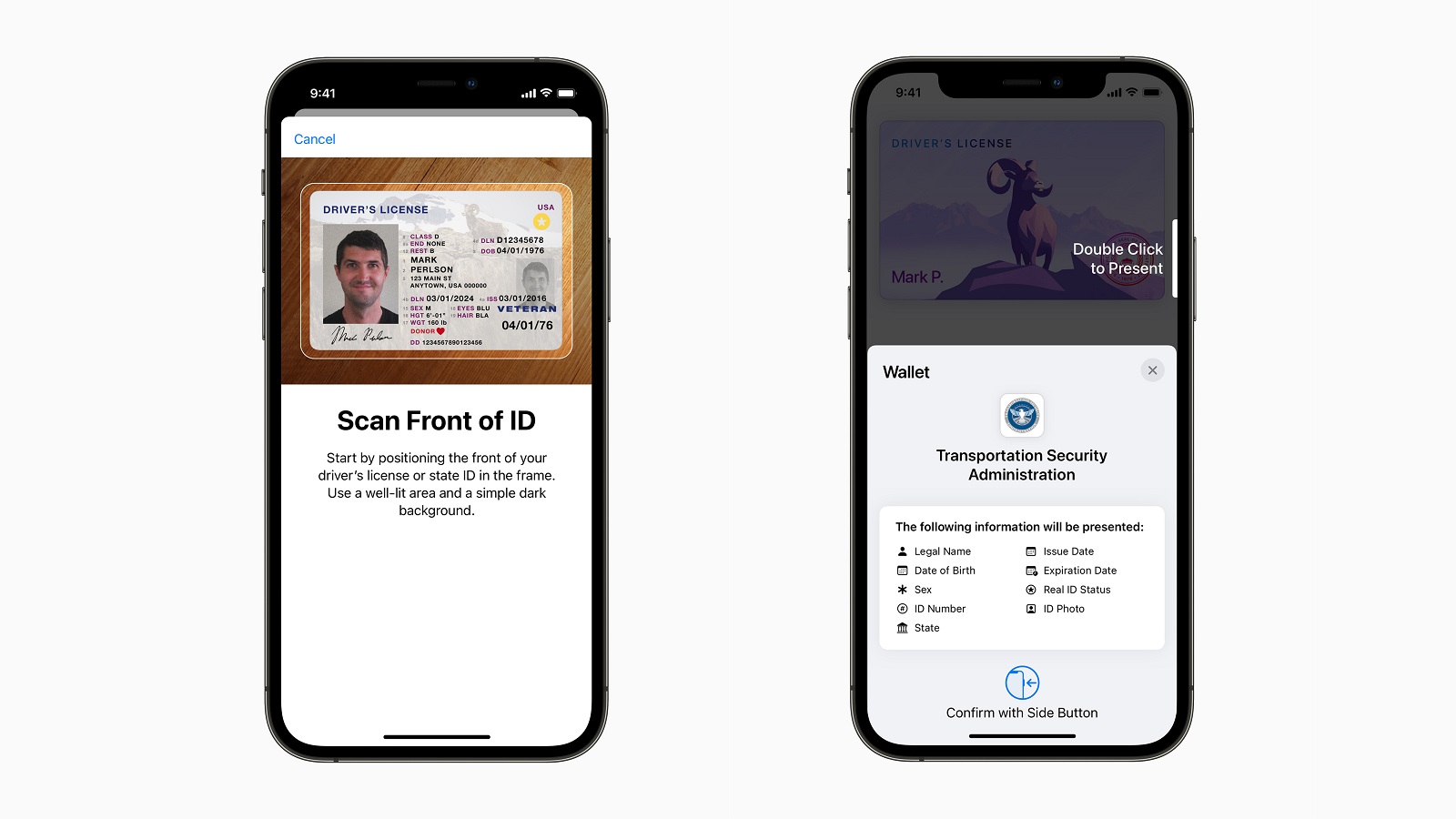
Apple has announced the first states which will let users upload their state IDs and driver’s licenses into the Apple Wallet app, allowing them to flash their iPhones or Apple Wallets the next time they need to identify themselves, whether it’s buying alcohol or walking through a TSA airport checkpoint.

The feature was first introduced at WWDC 2021, originally as one of many perks coming in iOS 15. But the feature no longer seems tied to the next version of the operating system, which we expect to launch in September – instead, it may be available to most iPhones and Apple Watches (we’ve reached out to Apple to confirm). 

ID adoption in the Apple Wallet app is rolling out on a state-by-state basis, according to Apple’s official blog post. Folks in Arizona and Georgia will be the first to be able to add their IDs to their iPhones and Apple Watches, followed by Connecticut, Iowa, Kentucky, Maryland, Oklahoma, and Utah, though we don’t have launch dates for any state. Apple also didn’t share when users will be able to use the feature at TSA airport security checkpoints. 

In addition to visibly displaying your license, like users have done with travel tickets using Apple Wallet, the feature will allow users to simply bring their iPhone or Apple Wallet close to a TSA identity reader and enable the data transfer to wirelessly transfer info, no contact or visible scanning (QR code or otherwise) necessary. 

Users still have to authenticate (via Face ID or Touch ID) themselves before the data transfer starts, conceivably preventing anyone from simply waving a device near a reader to siphon personal info. They also won’t have to unlock their device to transfer the info.

Apple Wallet state ID

(Image credit: Apple)

Data concerns for digital ID

Given its practice of privacy protection (iCloud CSAM-scanning aside), it’s no surprise Apple pre-empted questions with its own FAQ around using Wallet for IDs.

First, using the feature won’t notify Apple nor the issuing state when and where an ID was presented in Wallet. Identity data from IDs is encrypted and stored on the device, and can only be accessed through Face ID and Touch ID authentication, so strangers who get their hands on your phone won’t be able to access the info.

Apple clarified that its mobile ID implementation is based around the ISO 18013-5 mDL (mobile driver’s license) standard, which has established guidelines for protecting consumer privacy while presenting an ID. This allows a sense of security beyond what physical photo IDs are capable of, as a March 2020 white paper about the mobile driver’s license standard by the Secure Tech Alliance explains: 

“An mDL is not a photo or rendering of a physical card, which can be easily tampered with using current graphics tools. Instead, the mDL embeds all relevant data into individual data fields, allowing the data to be compartmentalized,” the white paper reads. “This framework allows mDL holders to share only the fields that they wish to share or that are required by the Verifier. The data elements are digitally signed by the DMV Issuer, allowing the Verifier to have confidence in their authenticity. The electronic reader can validate the cryptographic signatures.”

The mobile ID is not a replacement for a physical ID, as the Secure Tech Alliance stresses in an FAQ – it’s just a safer digital implementation of an existing, government-issued ID, a standard other official bodies could follow.

Analysis: more of your physical life uploaded to your iPhone?

At WWDC 2021 back in June, Apple introduced this feature alongside several others that will empower Wallet to also be used for a variety of other home and work applications, like unlocking your front door, subbing for hotel keys, and acting as a corporate badge. These features are still ‘coming soon,’ according to Apple’s blog post announcing mobile IDs.

We know Apple can feasibly do this after starting to roll out the Car Key feature to unlock car doors earlier this year, which had originally been revealed at WWDC 2020. The feature is restricted to iPhones with ultra wideband (UWB) U1 chips, which are the iPhone 11 and newer flagship models, and only certain cars will support the technology, but it still works. 

Add in the Apple Card credit card, which expanded benefits and purchasing controls in April to chosen individuals in a user’s Apple Card Family, and you’ve got a pretty wide spread of identification and payment options in your iPhone and Apple Watch ecosystem. Add in the rumored Apple Pay Later installment payment plan the company is supposedly working on and folks have fewer reasons to integrate their digital lives elsewhere.


Sphere raises $2M to help employees lobby for green 401(k) plans

In the United States, a 401(k) plan is an employer-sponsored defined-contribution pension account. However, with legacy institutional investing, most of these have at least some level of fossil fuel involvement, and, let’s face it, very few of us really know. Now a startup plans to change that.

California-based startup Sphere wants to get employees to ask their employers for investment options that are not invested in fossil fuels. To do that it’s offering financial products that make it easier — it says — for employers to offer fossil-free investment options in their 401(k) plans. This could be quite a big movement. Sphere says there are more than $35 trillion in assets in retirement savings in the U.S. as of Q1 2021.

It’s now raised a $2 million funding round led by climate tech-focused VC Pale Blue Dot. Also participating were climate-focused investors including Sundeep Ahuja of Climate Capital. Sphere is also a registered “Public Benefit Corporation,” allowing it to campaign in public about climate change.

Alex Wright-Gladstein, CEO and founder of Sphere said: “We are proud to be partnering with Pale Blue Dot on our mission to reverse climate change by making our money talk. Heidi, Hampus, and Joel have the experience and drive to help us make big changes on the short seven-year time scale that we have to limit warming to 1.5°C.” Wright-Gladstein has also teamed up with sustainable investing veteran Jason Britton of Reflection Asset Management and BITA custom indexes.

Wright-Gladstein said she learned the difficulty of offering fossil-free options in 401(k) plans when running her previous startup, Ayar Labs. She tried to offer a fossil-free option for employees, but found out it took would take three years to get a single fossil-free option in the plan.

Heidi Lindvall, general partner at Pale Blue Dot, said: “We are big believers in Sphere’s unique approach of raising awareness through a social movement while offering a range of low-cost products that address the structural issues in fossil-free 401(k) investing.”


Logitech launches new wireless technology for the enterprise, aimed at hybrid work

Logitech is expanding its enterprise offerings by introducing a new high-performance, secure wireless technology called Logi Bolt for its wireless keyboards, mice and other business accessories.

Logi Bolt aims to provide a solution to key imperatives for enterprise IT by delivering a secure wireless connection, a robust wireless signal and cross-platform compatibility for mice and keyboards. 

As Logitech designed Logi Bolt for hybrid work, the new secure wireless technology is able to conquer IT challenges that can arise when employees are working from home or if they have already returned to the office.

GM of B2B for creativity and productivity at Logitech, Joseph Mingori explained how the company is bringing its expertise when it comes to creating consumer products to the enterprise in a press release, saying:

“For decades, consumers have trusted Logitech to deliver products that help them create, communicate, work and learn at home and on-the-go. Now we look to expand that expertise to employers and offer a stellar employee experience as they evolve their requirements in a rapidly changing landscape. We have redefined our enterprise offering to support individual work setup solutions on a global scale while launching our new, wireless technology solution – Logi Bolt – enabling secure and robust connections to meet today’s evolving business needs. These offerings prioritize the needs of enterprise IT to keep their diverse workforces productive, collaborative and secure no matter where they work.” 

Logi Bolt

Security is at the heart of Logi Bolt and the new offering delivers a secure level of wireless connectivity for Logitech's mice and keyboards by using Bluetooth Low Energy Security Mode 1 Level 4 (also known as Secure Connections Only Mode) when paired with a Logi Bolt USB receiver.

Logi Bolt USB receivers can also provide a strong, reliable and drop off free connection for up to 33ft (10m) even in congested wireless environments such as large offices with up to eight times lower average latency when compared to other commonly deployed wireless protocols in congested, noisy enterprise environments.

At the same time, Logi Bolt devices are more universally compatible than peripherals from other device makers and they work with just about every operating system and platform including Windows, macOS, iOS, iPadOS, Linux, Chrome OS and Android.  Users can also connect their Logitech devices via Logi Bolt USB receivers when security and signal strength are paramount but they can also use Bluetooth Low Energy wireless technology for convenience.

Logitech devices that feature the company's new Logi Bolt technology are available for pre-order now through its global resellers. 

  • We've also rounded up all the gear you'll need to work from home successfully


Virtual events startups have high hopes for after the pandemic

Few people thought of virtual events before the pandemic struck, but this format has fulfilled a unique and important need for companies and organizations large and small during the pandemic. But what will virtual events’ value be as more of the world attempts to return to life before COVID-19?

To find out, we caught up with top executives and investors in the sector to learn about the big trends they’re seeing — as the sequel to this survey we did in March 2020.

Certain use cases have been proven, they say. Today, you can find numerous small niche events available year-round that might have been buried in the back of a larger in-person conference before 2020. For organizations, internal virtual events can also be instrumental in helping connect and promote engagement for remote-first teams.

However, some respondents acknowledged that low-quality virtual events are growing ever more common, and everyone agreed that there is much more work to be done.

We surveyed:

Xiaoyin Qu, founder and CEO, Run The World

With the pandemic hopefully becoming more manageable soon, do you feel a return to in-person events is inevitable?

Certain types of events will go back to in person. Obviously, something to do with a President’s Club — the company rewards you with a party in Hawaii — that kind of thing will not go virtual. I think events more focused on increasing reach will continue to trend toward virtual.

“Hybrid is just another buzzword to say that both online and offline events formats will coexist. Of course they will.”

We’re also seeing that many events are getting smaller, more niche. Before the pandemic, if we look at a general pediatric conference, for example, an attendee may only be interested in two topics out of the 200 offered. But now we’ve seen that there’s a rise in many niche events that focus on very specific topics, which helps streamline these events for attendees.

I think such events are still going to happen virtually just because they’re easier to organize and people can have more in-depth conversations. Internal virtual events for employees is another category that is getting more traction, because companies have been going remote. So many the internal events like the company happy hour — events that help employees engage better — we think that’s still going to happen virtually. So there are a number of use cases we think will continue to be virtual and are probably better virtual.


Help TechCrunch find the best growth marketers for startups.

Provide a recommendation in this quick survey and we’ll share the results with everybody.


What sort of trends do you think will emerge once in-person events are possible again?

Another important trend we’re seeing is that a lot of organizers have begun hosting events more frequently. They were doing large conferences in the past, but now they’re pivoting or they’re rethinking their strategy. They realize that hosting maybe 10 events a year is better than hosting one big event every year. A traditional conference is usually multiday, with maybe 200 different topics and 100 different speakers. Now a lot of people are thinking about spreading it out throughout the year.


LastPad is a reusable menstrual pad that does away with disposable towels

Direct to consumer online sales have helped a number of female-focused startups get products to market in recent years — often pitching better designed and generally more thoughtful feminine hygiene products than mainstream staples.

The lack of innovation in the mainstream market for feminine hygiene has certainly created a gap for startups to address. Examples in recent years include companies like Thinx (absorbent panties for menstruation) and Flex (a disc-shaped tampon alternative for wearing during sex). Or Daye — which makes CBD tampons for simultaneously treating period cramps.

Even so, there still hasn’t been a critical mass of product innovation in the category — to the point where alternatives can trickle down (no pun intended) and influence the trajectory of the mainstream market. The core products on shelves are, all too often, depressingly familiar — disposable pads and tampons — even if they may (sometimes) now be made of organic cotton or have some other mild design tweaks.

The most notable change to the available product mix is probably period pants — which have recently started to appear on mainstream shop shelves and seem to be selling well in markets like the U.K., as The Guardian reported recently.

In the average drug store, the other non-disposable alternative you’ll most likely see is the menstrual cup. Which is not at all new — but has finally got traction beyond its original (very) niche community of users, which is another signal that consumers are more open to trying different solutions to deal with their monthly bleeding versus the same old throwaway wadding.

While free bleeding — an old movement which has also seen a bit of wider pickup in recent years — can also be seen, at least in part, as a protest against the poor quality of mainstream products for periods.

All of which makes this forthcoming product launch rather interesting: Meet LastPad, a reusable (rather than disposable) sanitary towel.
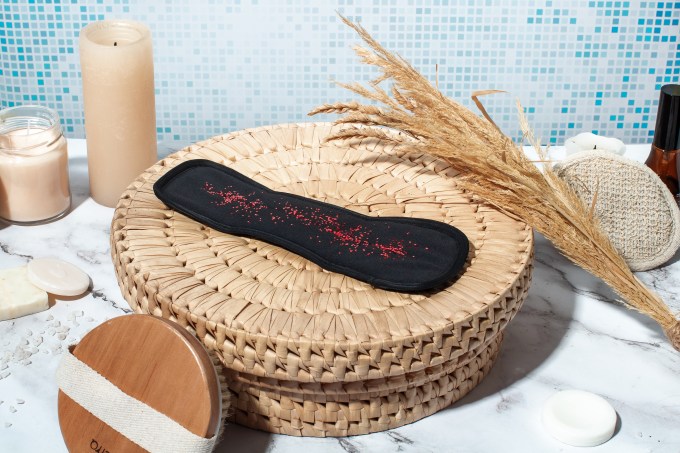
Image Credits: LastPad

The first thing you’ll likely notice is that the pad is black in color — which certainly rings the changes versus the usual white stick-on fodder. The company behind LastPad says it worked with an unnamed “luxury lingerie manufacture” on look and feel — and, well, judging by the product shots alone it shows.

The bigger behind-the-scenes change is that it’s been designed for sustained, repeat usage. So each LastPad comes with its own fabric pouch (in a range of colors) for folding up and storing after use (and until you get a chance to pop it in the wash). The pad can also stay in its pouch for washing so there’s no need for additional handling until you’re getting it out of the washing machine to dry.

LastPad is the brainchild of Danish designer and entrepreneur Isabel Aagaard, whose company LastObject has — for the past three years — been taking aim at the wastefulness of single-use hygiene and beauty products, designing reusable alternatives for what are unlovely but practical items — like Q-Tips and tissues*.

In total, LastObject has sold around 1.5 million products so far — across its existing range of beauty, hygiene and travel-focused items. But LastPad marks its first push into a really female-focused product category.

A reusable (washable) sanitary pad is clearly a big step up on the design challenge front versus making reusable (silicone) Q-Tips or (cotton) tissues or makeup rounds — because of the complexity involved with designing a wearable, intimate hygiene product that can handle the variable and often messy nature of periods, and keep doing so, use after use.

It needs to be both comfortable and reliable — as so many disposable pads actually aren’t.

So it’s not too surprising that, per Aagaard, the company has been working on designing and prototyping LastPad for two years. Now they’re finally ready to bring it to market — launching the LastPad on Kickstarter today — with a goal of shipping to early backers next February.

“We’re seeing amazing conversions [for the LastPad pre-campaign],” she says, discussing how much demand they’re expecting. “This is our sixth [crowdfunder] campaign — and it’s looking really good. So I think the demand is bigger than I actually imagined. Because this is also the first product that is only for women. And we were very much in doubt that we should put it on Kickstarter because it’s a very male-dominated platform but it’s looking really positive.”

“We already started working on this two years ago so it’s really been a process. And also because we wanted it to be really innovative. Because right now you can see on the market there’ll be pads that are more like home sewn or do it yourself — and we wanted to really make an exclusive, very, very innovative version of that — that has a lot of the benefits that the single-use version has.”
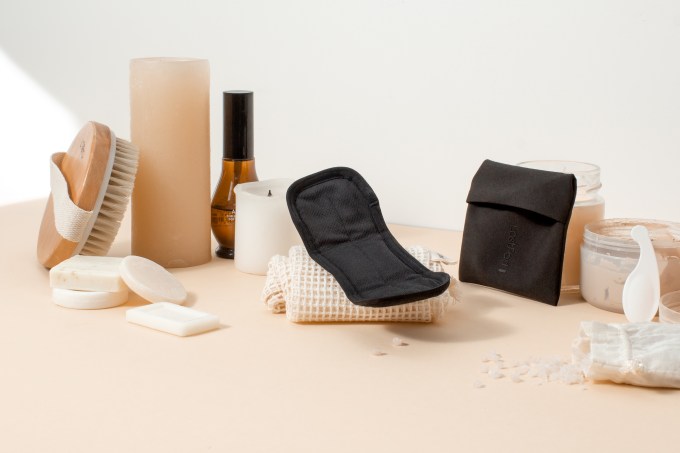
Image Credits: LastPad

Each LastPad is made up of three layers: A woven top to help keep the pad feeling dry against the skin by quickly funnelling menstrual fluids down into — layer two — a central absorbent section (made of bamboo) — which sits above a TPU base to ensure no risk of leaks.

“The first layer is a woven material that is really, really fine — it has a little bit of silver in it so that the odours will disappear. It’s also woven with small funnels so that the blood disappears very quickly into the middle layer — because it’s so important that you’re not like wet. Because that’s awful. So it dries quite quickly when you’re wearing it,” explains Aagaard. “And then the middle layer is 100% bamboo — it’s absorbent like crazy; 40% more absorbent than, for example, cotton. And it also has anti-bacterial properties. And then the bottom layer is a TPU [Thermoplastic Polyurethane] — which is just a leakproof cover; it’s comfortable, it’s not like a plastic bag but it does make sure that you cannot bleed through it.”

While disposable sanitary towels rely on an adhesive layer to enable the consumer fix the pad to their panties, LastPad has to do that a bit differently too given it’ll be going through the wash. So the pads have wings — which wrap around the gusset of the panties and fix together underneath with a (soft) Velcro fastening.

That’s not all: There’s a (sticky) silicone strip running around the back side of the pad which helps prevent it from moving around — and, per Aagaard, will happily survive repeat washing (in fact if it’s not used for a time, she says dust may temporarily reduce the stickiness — but says that immediately resolves just by wetting it again).

“Where I felt that we really made a huge difference is that on the back side of the pad — it has wings [with] a Velcro [fastener] that’s completely soft and you don’t feel it; even if you’re biking — that was like the big test — and then it has a silicone strip in the back and at the bottom, like a sticky silicone… so it doesn’t move around in your pants.”

Practically speaking, it won’t be possible for a LastPad user to use just one LastPad to see them through their period — given the need to wash and dry them between uses. So a pack of several reusable pads will be necessary to entirely replace disposable pads and ensure there’s always a clean towel available to swap out the used pad.

But LastObject’s idea is, much like you own several pairs of socks and briefs, you’ll have a set of LastPads to see you through until after laundry day.

The product comes in three different sizes and thicknesses to cater to different flow levels, too. So the consumer may end up owning a range of reusable LastPads — from a panty liner option to a day flow and heavier-duty night pads.
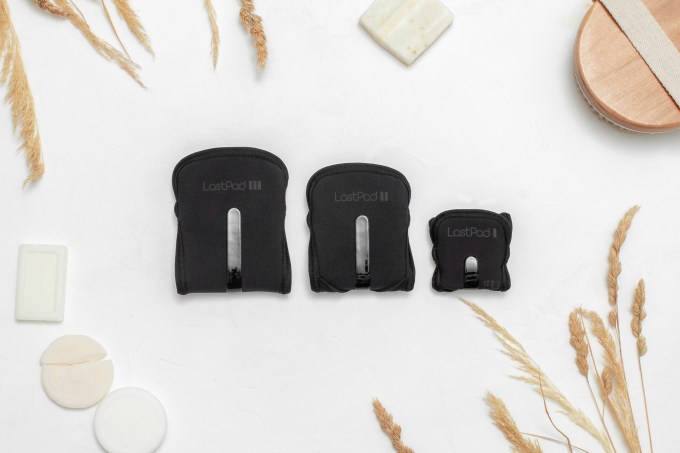
Image Credits: LastPad

“It wasn’t as simple as I thought it was going to be — but that’s also because you have to understand the viscoses of blood, for example, compared to water,” Aagaard tells TechCrunch. “And also a flow — it’s not just blood. There’s a lot of other stuff that come out. So it’s taking all of these things into consideration.”

“We’ve been testing it for so long,” she goes on. “That was our main thing with this product. A lot of the other [LastObject products] were very much about printing it, looking at it. Using it of course — but it took us long before we had it in actually a silicone form. Because that is also expensive. Whereas [LastPad] we could sew quite quickly just here at the office and [test it]… So we’ve just been testing it constantly — how’s the feeling? Getting it out to a lot of different women that wear different panties that have different cycles. So it’s really been about testing.”

Pricing for LastPad will be around $60 for three pads — so around $20 per pad. Which is obviously a lot more expensive than the per unit cost of disposable towels. But LastObject says it will offer packs so if a consumer buys more pads it should shrink the per pad cost a little.

Aagaard says the product has been tested to withstand at least 240 washes — which she suggests will mean it’s able to last at least a couple of years, saving likely hundreds of disposable pads from being consumed in its stead.

Although it’s maybe less likely to save consumers money — depending on which disposable pads you’d buy and how many you’d used per cycle (basic disposable pads can cost as little as ~20c each) — as LastObject recommends owning nine of its LastPads which could cost around $80 or more). But the target user is evidently someone with enough disposable income to be able to pay a premium for an eco alternative.

Given the price-point, it does also look more expensive than the menstrual cup — an existing and highly practical alternative to disposable menstrual products — which can cost around $30 (for one reusable cup; and you can get away with owning just one) and, typically, a cup will also last for years as it’s made of silicone.

However the menstrual cup won’t suit every woman — and does require access to clean water to rinse and sanitize — so having more non-disposable alternatives for periods is great.

Aagaard says she’s a fan of the menstrual cup but suggests LastPad can still be useful for its users as a back-up to catch any leaks and/or provide an added layer of reassurance.

While, with period pants, she says the issue she finds unpleasant is the feeling of wetness when wearing them.

On LastPad’s environmental credentials, the washing process required to keep reusing the pad does obviously require some resources (water, soap etc.) but — as is the case with other LastObject products — the company’s claim is that it’s still substantially greener to wash and reuse its non-disposable products versus consuming and binning single-use items that have to be continually produced and shipped out (generating ongoing CO2). Such products can also pollute the environment after they’ve been thrown away — and plastic waste is of course a huge global problem (including from thrown-away sanitary products).

LastObject will be publishing a third-party LCA (lifecycle assessment) for LastPad to back up its eco claims for the reusable product — comparing it to using disposable sanitary pads. But Aagaard is confident it will be substantially better when compared against most disposable alternatives.

“You’ll be putting a wash on anyway; [LastPads] don’t take up that much space; you’re not going to wash them just them; it is with your other laundry; and if you wash them at a cold wash I think that the LCA report will look really good,” she suggests when we ask about the eco credentials.

“We’re doing this with all our products where we’re taking them through a third party who’s testing everything and putting them up against [alternatives] and having these considerations with CO2, with water, with chemicals — with the whole pack… So we’ll be doing that more specifically; right now… the alternative of a [disposable] pad — they are so differently produced. It’s crazy. So I could say the worst [for comparative purposes] or I could say the best — and ours is about 12x better than that.”

“When we got the LCA report for the LastTissue and LastSwab they were so much better than I have imagined,” she adds.

From this year the European Union has started banning the sale of some single-use plastic items (such as Q-tips and disposable cutlery) as reducing plastic waste is one of the goals for regional lawmakers. And — globally — regulators are increasingly looking for quick wins to shrink the environmental impact of the fast moving consumer goods market’s long standing love affair with plastic.

But some disposable product categories are simply more essential than others — which makes it hard for lawmakers to just ban plenty of wasteful, polluting products. So developing innovative, reusable alternatives is one way to help lighten the usage load.

“The most sustainable pad that you can ever have is actually the one that you don’t produce but that would just be free bleeding — and I think that 99% of women are not ready for that,” adds Aagaard. “So can we make some solutions on some of the things that we actually have to take care of?”

While LastObject is sticking with Kickstarter to get LastPad to market, Aagaard confirms that once they see how much early adopter demand it’s getting they plan to produce enough to also sell via some of the other outlets where they currently sell their products — such as e-commerce sites like Amazon and of course their own web shop.

So far, the U.S. has been the main market for LastObject’s reusable wares, per Aagaard — which she attributes to mostly using Kickstarter to build a community of users. But she adds that the company is starting to see more traction in Europe as it’s increased the number of regional distributors it works with.

So what’s next for the company after LastPad? The product direction they’ll take is an active discussion, she says.

“We can keep going the beauty way, we can go more personal care but we have to also [not] go in too many directions. I personally have a lot of fun things I want to do in the bathroom still, because I feel like it’s a space where not a lot of designers have actually really been investigating some of the products that we’re using. Both in beauty but also in personal care. Like in the floss and toothbrush but also in diapers and wipes and all of that. So I think that there’s some innovation that could be really fun. But… this one took two years and I’m so happy about the result and I couldn’t have spent two months less on it. Then we wouldn’t have had the solutions that we’ve gotten to. So that feels very important.”
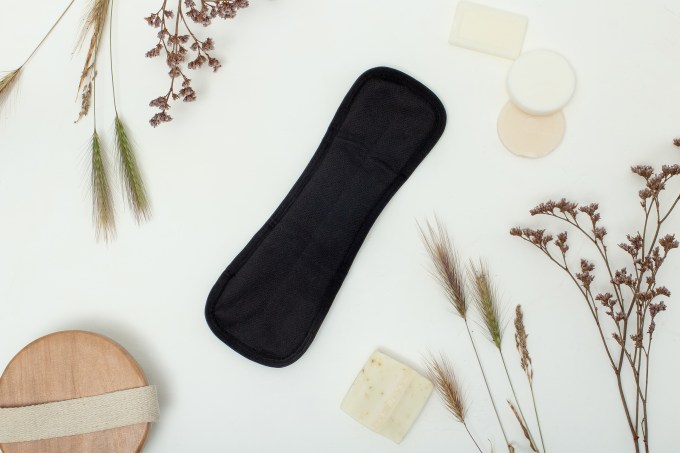
Image Credits: LastPad

*Washable tissues are also of course not new. Indeed, Wikipedia credits the invention of pocket squares to wipe the nose to King Richard II of England who reigned in the 14th century. But the traditional (fabric) handkerchief — which was used, laundered and reused — became yet another casualty of the switch to single-use, disposable, cheap consumer goods that’s since been shown to have such high environmental costs. So perhaps reversing this damaging default will bring more ‘historical product innovation’ back into fashion as societies look to apply a modern ‘circular economy’ lens.




Danish startup Responsibly raises $2M to benchmark supply chains on climate, diversity

If the world is to reach net zero, and avoid climate disaster, it needs to make every product sustainable, and that means every purchase. But to do that you need a lot more transparency, so that means more data on suppliers to improve sourcing and benchmarking companies. While companies are often doing their best, the problem with issues like CO2 emissions lies in the supply chain.

Danish startup Responsibly reckons it has the answers in providing retailers, builders and others with a supply network a scorecard against this supply chain of providers. Thus, a company can check if any level of its supply chain is involved in deforestation, water pollution, as well as human rights violations or gender pay gap issues.

It’s now raised a $2 million pre-seed investment round led by Flash Ventures. Also participating is Pirate Impact (the family office of Fabian & Ferry Heilemann) and Michael Wax, founder and CEO of Planetly Benedikt Franke.

The startup will now soft-launch the first version of its platform, which will look at the supplier data of more than 10,000 suppliers for pilot customers.

Responsibly’s co-founder and CEO Thomas Buch Andersson said: “If we can make it as easy for purchasers to evaluate how their suppliers compare on a planetary agenda, as it is to compare them on price, then we think we can unlock the huge force for change that’s sitting in the world’s procurement departments.”

Johann Nordhus Westarp, founding partner at Flash Ventures said: “The timing is perfect, and companies will fundamentally change the way they procure in the next couple of years. Price- or value-driven procurement will give way to impact-driven procurement. Companies are acting somewhat blindly today, treading-water to solve the ‘problem of the day’. Responsibly helps them finally get visibility into their procurement footprints and make forward-thinking decisions for all the right reasons.”

According to CDP, some 40% of global GHG emissions are driven or influenced companies through their purchases and the products they sell. Meanwhile, Gartner found that 23% of supply chain leaders expect to have a digital ecosystem by 2025, up from only 1% today.

Speaking to me over a call Buch Andersson said: “The space for responsible sourcing has really evolved quite a lot over the past 20 years. We are building a layer on top of all of the different data providers to essentially allow the procurement team to flexibly read any information, interpret it and then use it for sourcing decision making.”

Responsibly competes with EcoVadis and Integrity Next.


Amazon sale slashes the M1 MacBook Air to $849.99 – the lowest price ever

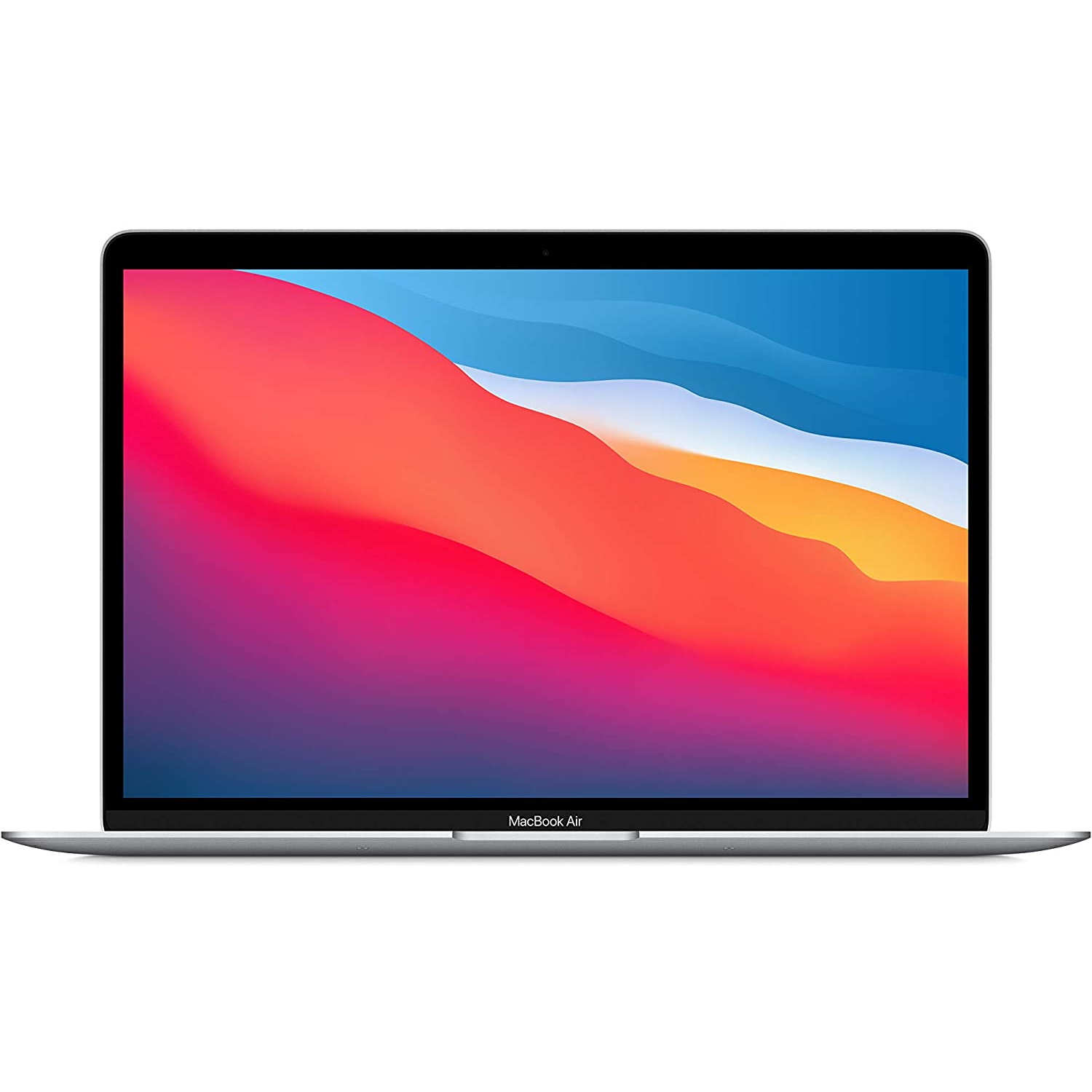
Upgrade your machine and save money with this incredible deal we've spotted at Amazon. For a limited time, you can get the M1 MacBook Air on sale for $849.99 when you apply the additional $100 discount at checkout. That's a total savings of $150 and the lowest price we've found for the powerful 13-inch laptop.

MacBook Air deal

Apple MacBook Air (2020): $999 $849 at Amazon
Save $150 -
You can get the 2020 MacBook Air on sale for a record-low price of $849.99 when you apply the additional $100 savings at checkout. The 13-inch laptop features Apple's powerful M1 chip, 256GB of storage, 8GB of RAM, and provides up to 18 hours of battery life.

The 2020 MacBook Air features a 13.3-inch Retina display and packs Apple's powerful M1 chip with an 8-core CPU and 8-core GPU to deliver exceptional speed and power. Perfect for students, the compact laptop weighs just 2.8 pounds, includes Touch-ID, and provides an impressive 18 hours of battery life.

As we've mentioned above, this is the best deal we've seen for the 2020 MacBook Air and a fantastic price for a powerful laptop. The additional savings from Amazon is a limited-time offer, so you should take advantage now before it's too late.

More MacBook deals

See more laptop offers with our roundup of the best cheap laptop deals and you can see more of the best MacBook deals that are happening now.

You can also see more bargains with our roundup of the best Labor Day laptop sales that are happening right now.


Tuesday, August 31, 2021

Samsung’s new Galaxy A22 is Australia’s cheapest 5G-ready phone

In the race to deliver the cheapest 5G smartphone in Australia, a new contender has landed in pole position thanks to the arrival of Samsung's Galaxy A22 5G handset, which is available to purchase from today for an incredibly affordable price.

At AU$349, Samsung's 5G-ready Galaxy A22 has snuck ahead of Oppo's A54 by AU$10, despite offering twice the internal storage capacity. It's also AU$20 cheaper than Vivo's Y52 smartphone.

Samsung Galaxy A22 5G: specs and availability

Sporting MediaTek's MT6833 Dimensity 700 5G (7nm) chipset, the Samsung Galaxy A22 offers ultra-fast cellular network speeds – so long as your phone plan allows for 5G access.

You also get a 6.6-inch FHD TFT 'Infinity-V' display with a 90Hz refresh rate, 4GB of RAM, 128GB of onboard storage (with slot for microSD expansion up to 1TB), a side-mounted fingerprint scanner and a 5,000mAh battery with 15W fast charging capability. 

Additionally, the Galaxy A22 offers a rather decent triple camera array on its rear, led by a 48MP f/1.8 primary camera, a 5MP f/2.2 ultra-wide lens and a 2MP f/2.4 depth sensor. On the front, you get an 8MP f/2 selfie camera.

Offered in Grey and Mint colour options, Samsung's Galaxy A22 is available to purchase now from JB Hi-Fi and Samsung's online store. You can also pick it up on one of the following plans:


5 investors discuss what’s in store for venture debt following SVB’s collapse

There are many questions around the implications of Silicon Valley Bank’s (SVB) collapse that won’t be answered for a long time. But there’s...